




Antique Ceramic Pot Pourri
These antique ceramic pot pourri vessels fill a room with scent while bringing porcelain and gilt bronze artistry to a mantelpiece.
Antique Ceramic Pot Pourri
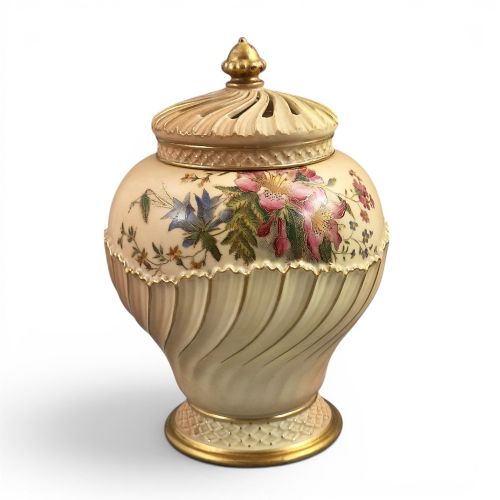
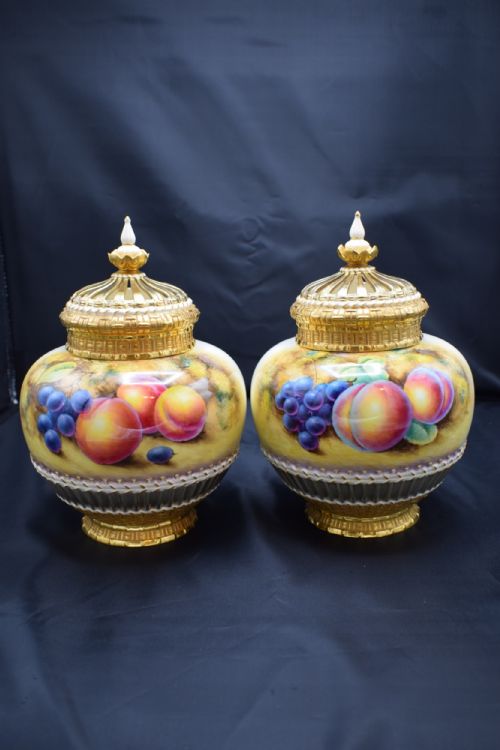
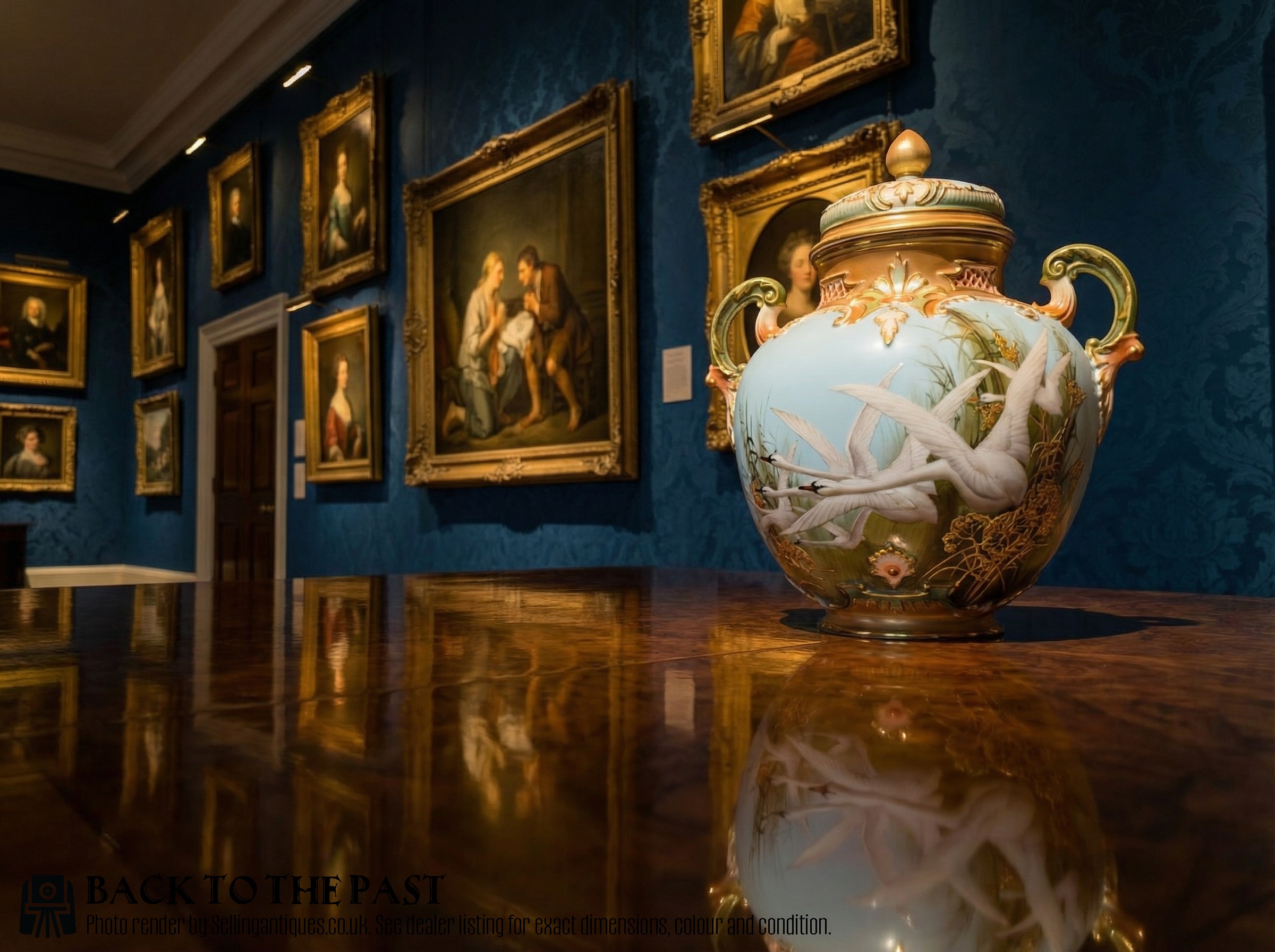
An antique ceramic pot pourri vessel is a decorative jar, vase or urn designed with a pierced cover to release dried scented herbs and flowers into a room. These pieces range from substantial nineteenth-century jars to twentieth-century specimens, often taking the form of ovoid jars and covered urns.
The selections available here lean heavily towards fine English porcelain, particularly blush ivory and painted fruit designs produced by prominent factories. Buyers frequently encounter nineteenth-century revival styles alongside Edwardian and mid-twentieth-century interpretations of these fragrant containers.
Materials and Construction
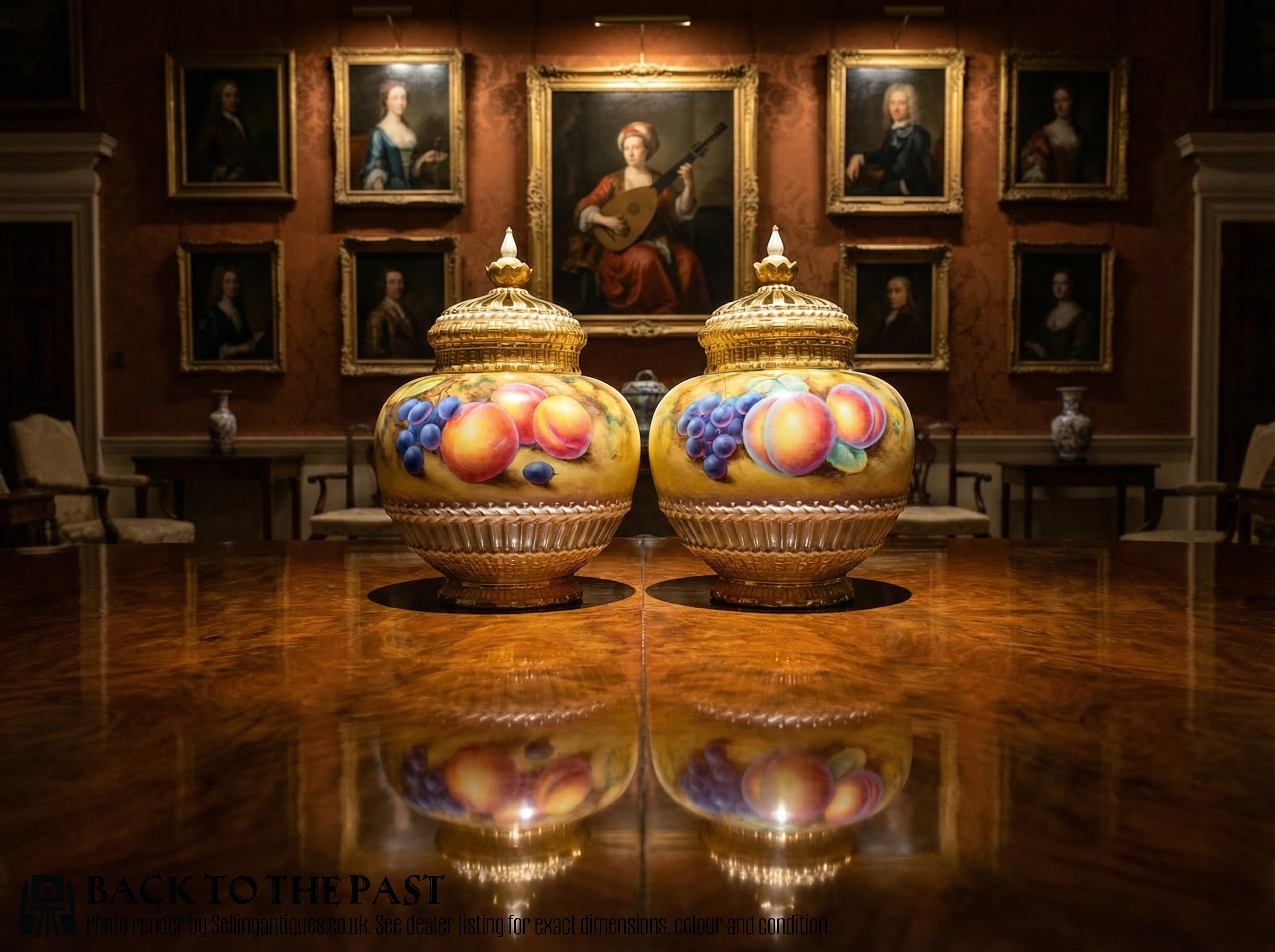
Pottery makers shaped these vessels from ceramic and porcelain bodies, frequently mounting them with gilt bronze and ormolu mounts to elevate their status. Details often included hand-painted fruit, floral motifs, and raised gold leaf applied as gilding.
Covers were pierced with intricate holes or formed as crown tops to allow scent to disperse from the interior pot pourri jar without spilling its botanical contents.
Antique Ceramic Pot Pourri Retail Price Guide 2026
Typical asking prices for ceramic pot pourri among the pieces listed under this phrase on Sellingantiques today, from the lower quarter to the upper quarter. They describe what is for sale here now, not the wider market.
Listings feature works from the nineteenth century through to the nineteen sixties, dominated by porcelain bodies and gilt bronze mounts.
Defining Quality
Quality rests upon the crispness of the porcelain moulding, the delicacy of the pierced cover, and the skill behind the hand-painted decoration. Signed works by established artists command attention through superior brushwork and refined botanical detailing.
The integration of metalwork also dictates worth, where finely chased ormolu mounts and heavy gilding separate standard production pieces from exceptional exhibition examples.
Royal Worcester·Samuel Alcock·Masons Ironstone·Moorcroft Macintyre and Co
The Antique Ceramic Pot Pourri Glossary
- Pot pourri
- A mixture of dried petals and spices placed inside a pierced vessel to scent a room. The container itself took the name of its contents.
- Ormolu
- Gilded bronze used for mounts and decorative feet on nineteenth-century porcelain vessels. This technique provided a rich metallic contrast to the ceramic body.
- Blush ivory
- A soft, cream-coloured ceramic ground developed by manufacturers to mimic ivory. It typically served as a subtle backdrop for pastel floral painting.
- Imari
- A decorative style inspired by Japanese export wares, featuring rich iron red, underglaze blue, and gold. It appears on traditional English ironstone pot pourri pieces.
- Ovoid
- An egg-shaped vessel form common in pot pourri jars and covered urns. This rounded silhouette maximised the internal volume for dried botanical mixtures.
Antique Ceramic Pot Pourri: Frequently Asked Questions
How do I use a pot pourri jar?
Place dried scented botanicals inside the ceramic body and secure the pierced cover on top. The openings allow the natural fragrance to diffuse gently into the surrounding room.
Ensure you clean the interior carefully if changing scent blends to avoid mixing conflicting herbal aromas over time.
How are covers different from standard vases?
Pot pourri vessels feature pierced lids or crown tops designed specifically for ventilation. Standard vases have solid necks and rims intended to hold water and fresh stems.
Using a pierced cover prevents the vessel from functioning as a traditional flower holder while identifying its original aromatic purpose.
What periods do these pieces span?
The selection encompasses nineteenth-century revival pieces alongside Edwardian blush ivory wares and mid-twentieth-century painted fruit studies. Earlier examples often feature neoclassical or rococo influences in their gilt bronze mounts.
Later twentieth-century items continue traditional factory painting techniques on porcelain blanks.
How do I identify blush ivory?
Blush ivory presents a matte, cream-coloured ceramic surface that resembles polished elephant tusk. Factories used this finish as a neutral base for soft floral and botanical illustrations.
It is frequently found on Edwardian and turn-of-the-century decorative jars and urns.