
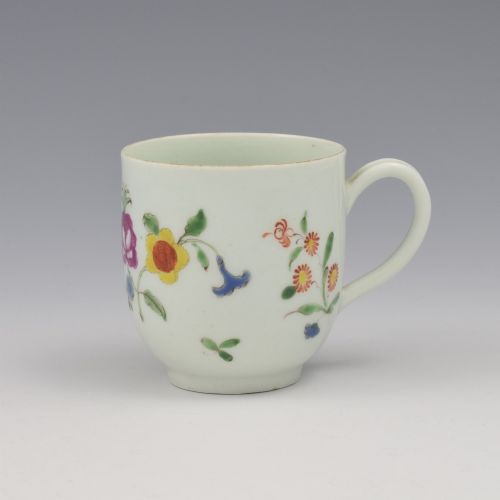
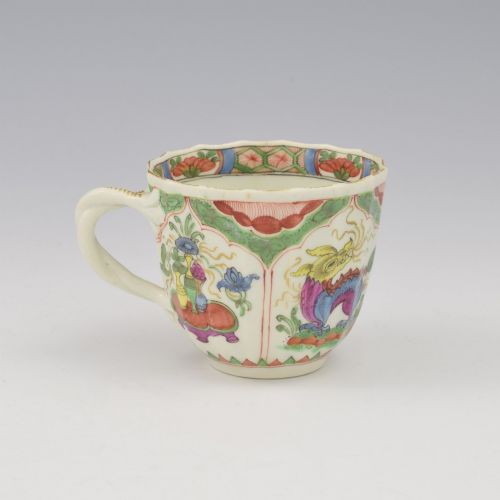


Polychrome Porcelain Mug
These polychrome porcelain mug pieces unite vibrant enamel palettes with historic forms, offering collectors tactile pieces of eighteenth-century and nineteenth-century ceramic history.

Polychrome Porcelain Mug
A polychrome porcelain mug represents a durable drinking vessel decorated with multi-coloured pigments fired onto a ceramic body. When you search for a polychrome porcelain mug, you encounter drinking vessels spanning the eighteenth century and the nineteenth century, including Georgian and Victorian examples.
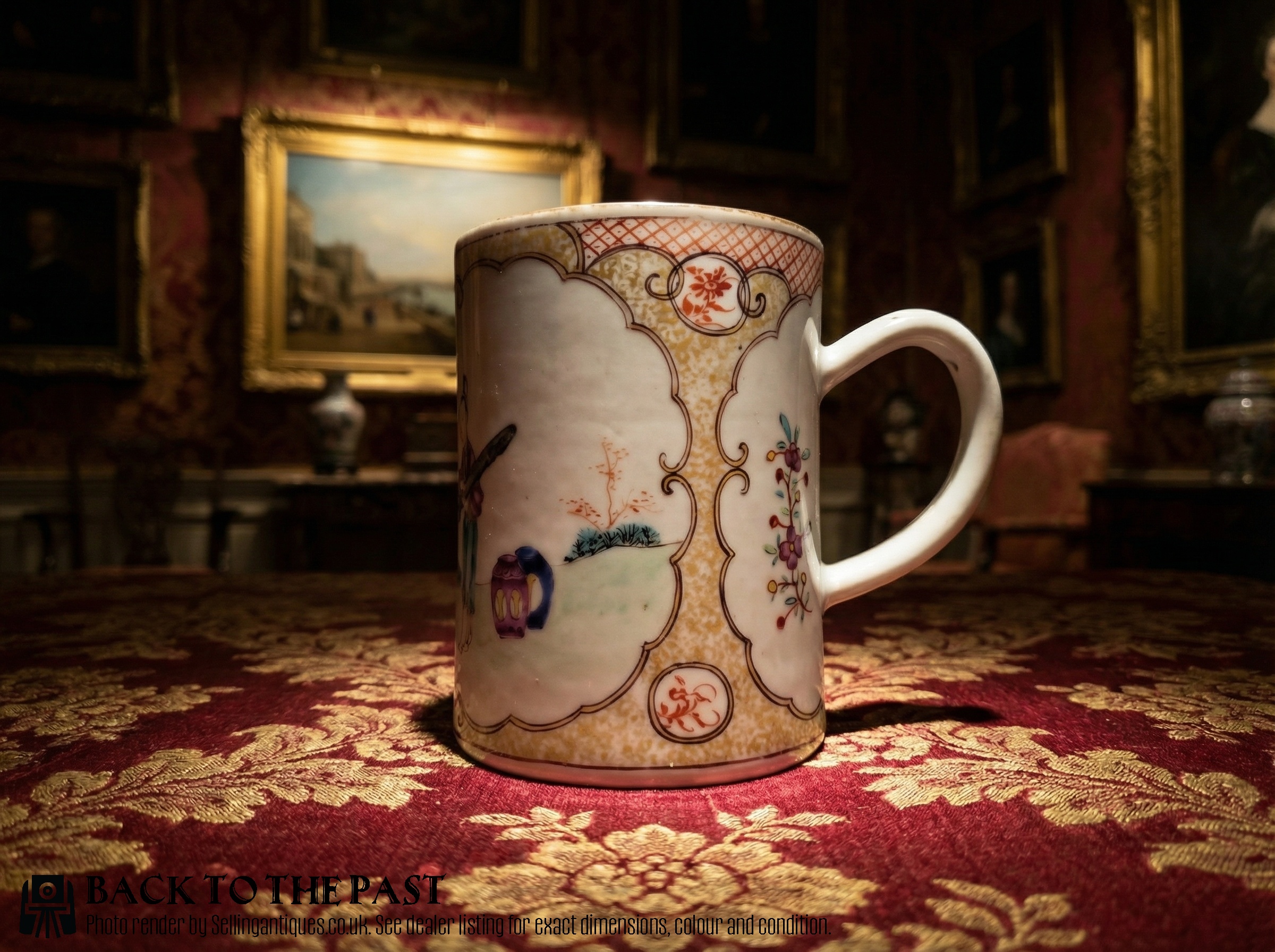
The selections on this page bridge domestic utility and decorative export art. You meet English porcelain factories alongside Chinese Export pieces created during the Qianlong period.
Vessels take the form of handled mugs, tankards, and coffee cups. Chinese export tankards and eighteenth-century English factory pieces dominate the available selection.

Materials and manufacture
Potters shaped these objects using porcelain, soft-paste porcelain, and earthenware bodies. Makers applied glaze to seal the ceramic substrate before adding decoration.
Workers painted designs using overglaze enamel and enamel pigments, occasionally adding gold leaf accents. Firing fixed these colours onto the glazed surface.
Polychrome Porcelain Mug Retail Price Guide 2026
Typical asking prices for polychrome porcelain mug among the pieces listed under this phrase on Sellingantiques today, from the lower quarter to the upper quarter. They describe what is for sale here now, not the wider market.
Early porcelain drinkers risked chipping their teeth on stiff overglaze enamel rims while enjoying morning coffee or evening ale.
Evaluating the pieces
Quality rests in the crispness of the overglaze enamel painting and the control shown in hand-painted motifs like Chinoiserie figures or floral patterns. Finer pieces display stable glazing and well-proportioned handles.
The distinction between standard domestic wares and superior examples involves the complexity of the palette and the precision of the porcelain body.
Richard Chaffers·Dr Wall·Duesbury and Kean·Lowestoft Porcelain
The Polychrome Porcelain Mug Glossary
- Polychrome
- Decoration utilising multiple colours. This technique defines the vibrant appearance of these ceramic mugs.
- Overglaze enamel
- Pigments applied on top of fired glaze and fixed with a secondary low-temperature firing. This method allows for bright surface colours.
- Soft-paste porcelain
- A ceramic composition containing glass frit and white clay, fired at lower temperatures than hard-paste porcelain. English factories utilised this material extensively in the eighteenth century.
- Chinoiserie
- European artistic interpretations of Chinese and East Asian motifs. This style appears frequently on eighteenth-century English porcelain.
Polychrome Porcelain Mug: Frequently Asked Questions
How do I date a polychrome porcelain mug?
Dating relies on stylistic markers, paste composition, and factory attribution. Eighteenth-century pieces often display soft-paste bodies and specific hand-painted enamel palettes.
Nineteenth-century examples show different manufacturing signatures and glaze characteristics compared to Georgian wares.
Were these mugs used for drinking?
Many of these vessels served functional roles for beverages like beer, ale, or coffee in domestic settings. Larger tankards held substantial liquid capacity for daily consumption.
Export pieces often combined functional forms with intricate decorative schemes intended for display as much as use.
What is Chinese Export porcelain?
Chinese Export porcelain refers to ceramics manufactured in China specifically for Western markets. These pieces combine traditional Chinese ceramic techniques with European-requested shapes and subject matter.
Qianlong period items on this page exemplify this cross-cultural trade.
How should I clean my mug?
Care requires gentle hand washing with lukewarm water and mild soap. Avoid harsh scrubbing brushes or chemical detergents that might damage overglaze enamels and gold leaf.
Porcelain remains vulnerable to thermal shock, so avoid sudden temperature changes during cleaning.