
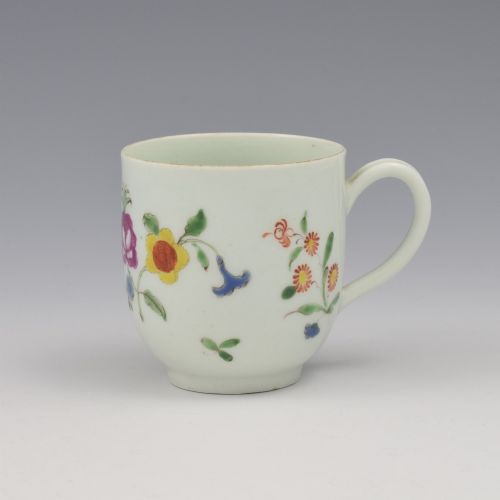
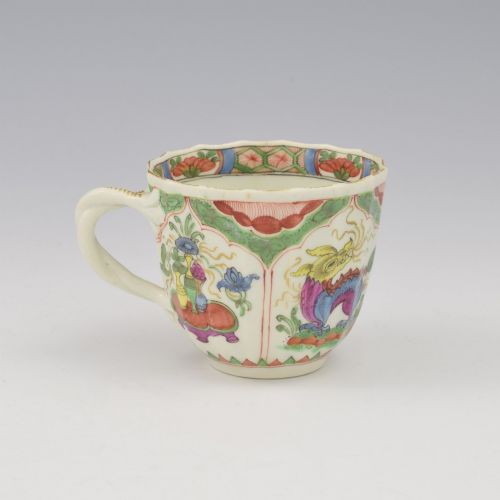
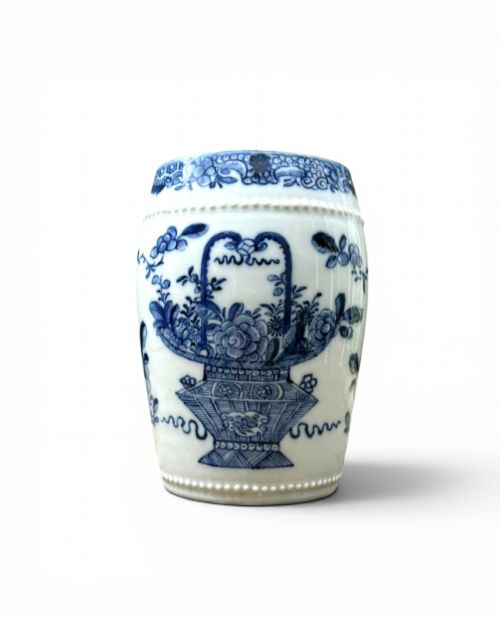


18th Century Porcelain Mug
An 18th century porcelain mug brings the refined weight of the Georgian period to a table, combining utilitarian form with exquisite painted detail.
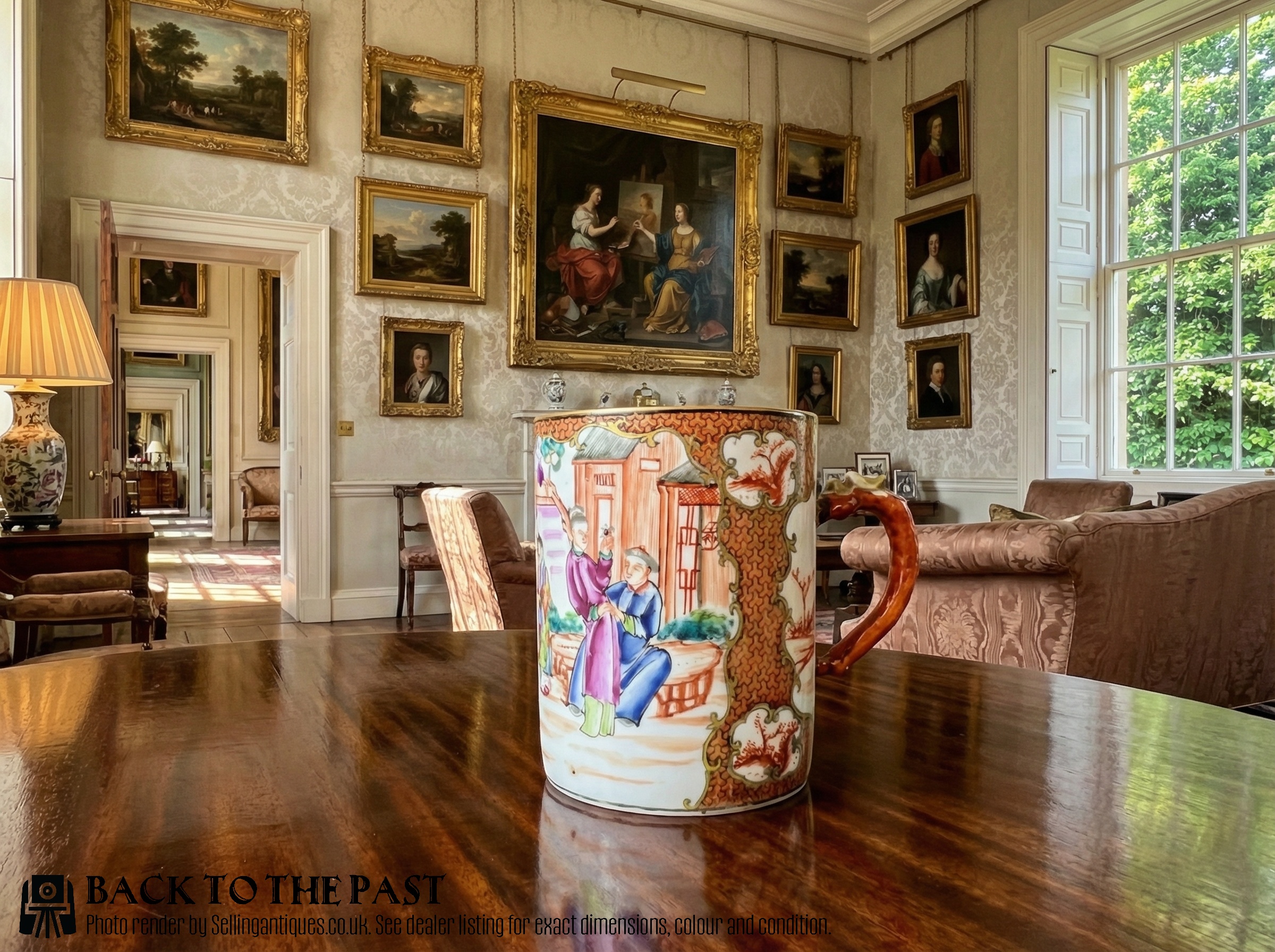
18th Century Porcelain Mug
An 18th century porcelain mug encompasses both domestic English productions and ambitious Chinese export wares made for Western markets. The forms range from straightforward cylindrical tankards to barrel shapes and smaller coffee cups.
English works on this page lean heavily toward First Period Worcester and factories such as Liverpool and Lowestoft. Alongside these sit substantial Chinese export pieces spanning the Kangxi and Qianlong periods.
How they were made
Makers utilised soft-paste porcelain in English kilns, whereas oriental works relied on hard-paste bodies. Decoration was applied using cobalt underglaze pigments or vibrant overglaze enamel palettes.
Gilding with gold leaf frequently accented the painted surfaces, while cobalt glaze provided deep blue tones beneath a clear protective finish.
Decoration spans cobalt underglaze, polychrome enamels, and gold leaf on both soft-paste and hard-paste bodies.
What varies in quality
The sophistication of the painted ornament sets standard wares apart from exceptional examples, particularly in multi-figure Mandarin scenes or detailed botanical and avian motifs. Crispness of cobalt underglaze transfer and the richness of enamel colours determine the visual depth of a tankard.
Scale also dictates distinction, as larger barrel shapes and substantial mugs demand greater technical skill from the potter to maintain structural integrity during high-temperature firing.
Richard Chaffers·Duesbury Kean·Lowestoft Porcelain
The 18th Century Porcelain Mug Glossary
- Soft-paste porcelain
- A ceramic composition containing glass frit and white clay, fired at lower temperatures than true hard-paste porcelain. This body produces a warm, slightly creamy ground often seen on English eighteenth-century wares.
- Cobalt underglaze
- Pigment applied to the raw ceramic body before glazing and firing, yielding characteristic blue designs. It reacts with the kiln heat to create durable decoration that sits beneath the glossy surface.
- Overglaze enamel
- Coloured glass powders painted onto an already fired and glazed piece, requiring a subsequent low-temperature firing. This technique permits vivid palettes including pinks and greens.
- Famille Rose
- A palette dominated by opaque pink enamel introduced during the Qing Dynasty. The style became immensely popular on Chinese export porcelain destined for European homes.
18th Century Porcelain Mug: Frequently Asked Questions
How do I tell English pieces from Chinese export examples?
English pieces typically employ soft-paste porcelain with characteristic potting quirks and factory-specific enamel palettes. Chinese export mugs display hard-paste bodies and distinct Qianlong or Kangxi stylistic traits.
Examining the base and the weight of the ceramic often reveals the regional manufacturing differences clearly.
What is the difference between a mug and a tankard?
In eighteenth-century nomenclature, the terms often overlap for cylindrical handled drinking vessels. Tankards tend to denote larger, straighter forms suited for ale, whilst mugs cover a wider range of sizes.
Both shapes frequently share identical decorative programmes such as Chinese export Chinoiserie.
Why do some pieces feature Chinese figures on English porcelain?
Chinoiserie was a dominant decorative fashion across eighteenth-century Europe. English factories frequently copied or reinterpreted oriental designs to satisfy contemporary tastes for exotic imagery.
Worcester and Liverpool artists rendered these fantastical scenes with characteristic brushwork.