
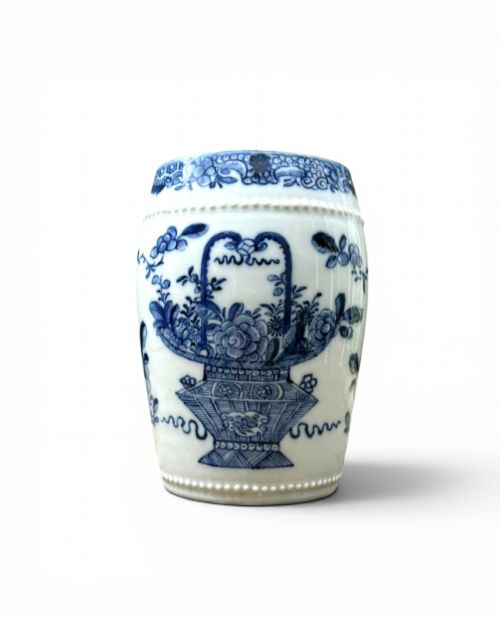


18th Century Chinese Mug
An 18th century chinese mug brings handcrafted porcelain utility to the table, offering a tangible piece of Qianlong period artistry.
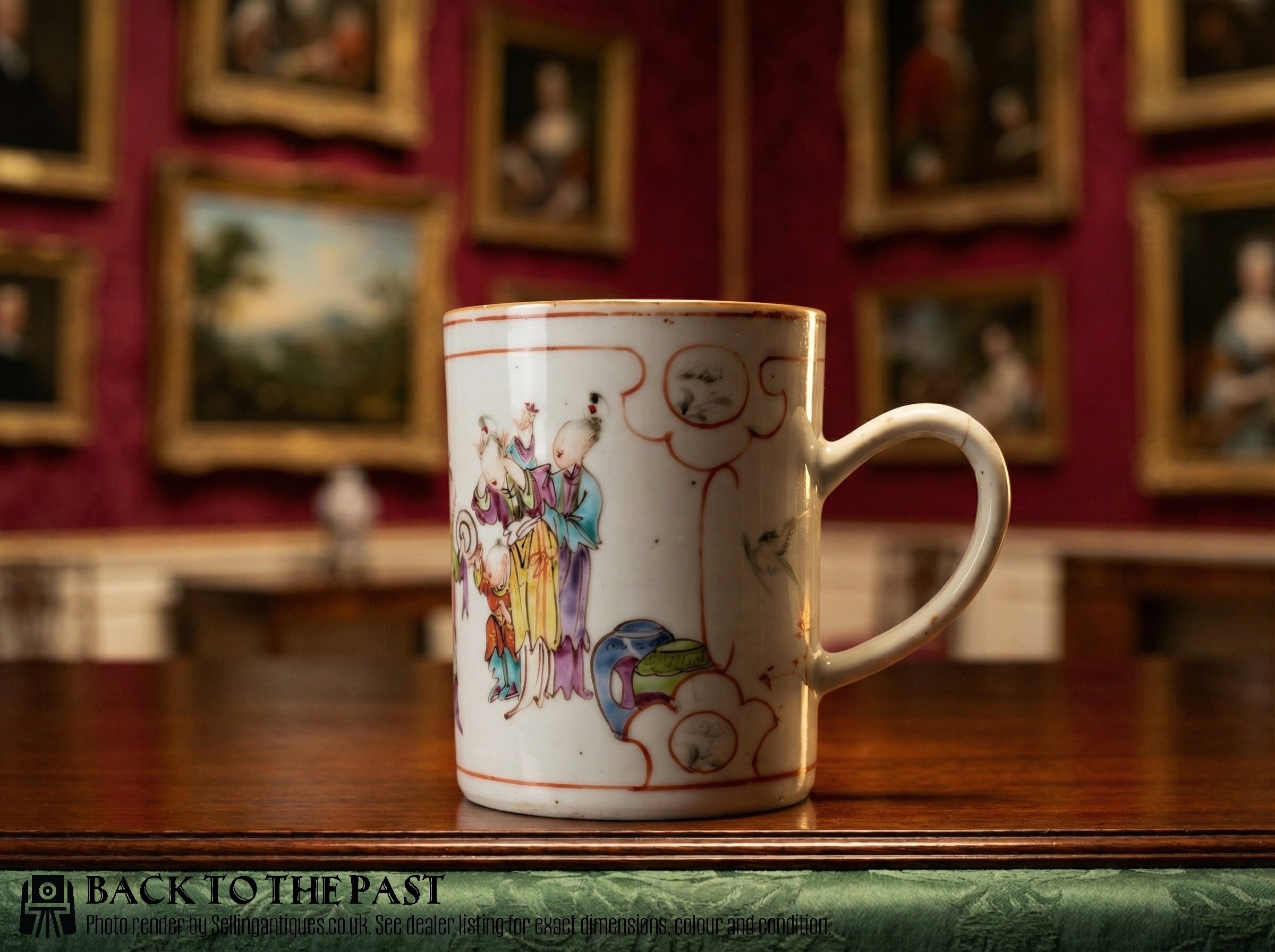
18th Century Chinese Mug
An 18th century chinese mug represents the intersection of Eastern ceramic production and Western utility, taking the form of robust drinking vessels produced for export markets. These pieces span barrel shaped mugs and tankards designed to hold beverages during the Qing Dynasty.
The versions most commonly met on this page belong to the Qianlong period, showing Chinese export styles adapted for European and British tastes. Collectors encounter porcelain tankards decorated with detailed enamels and underglaze cobalt.
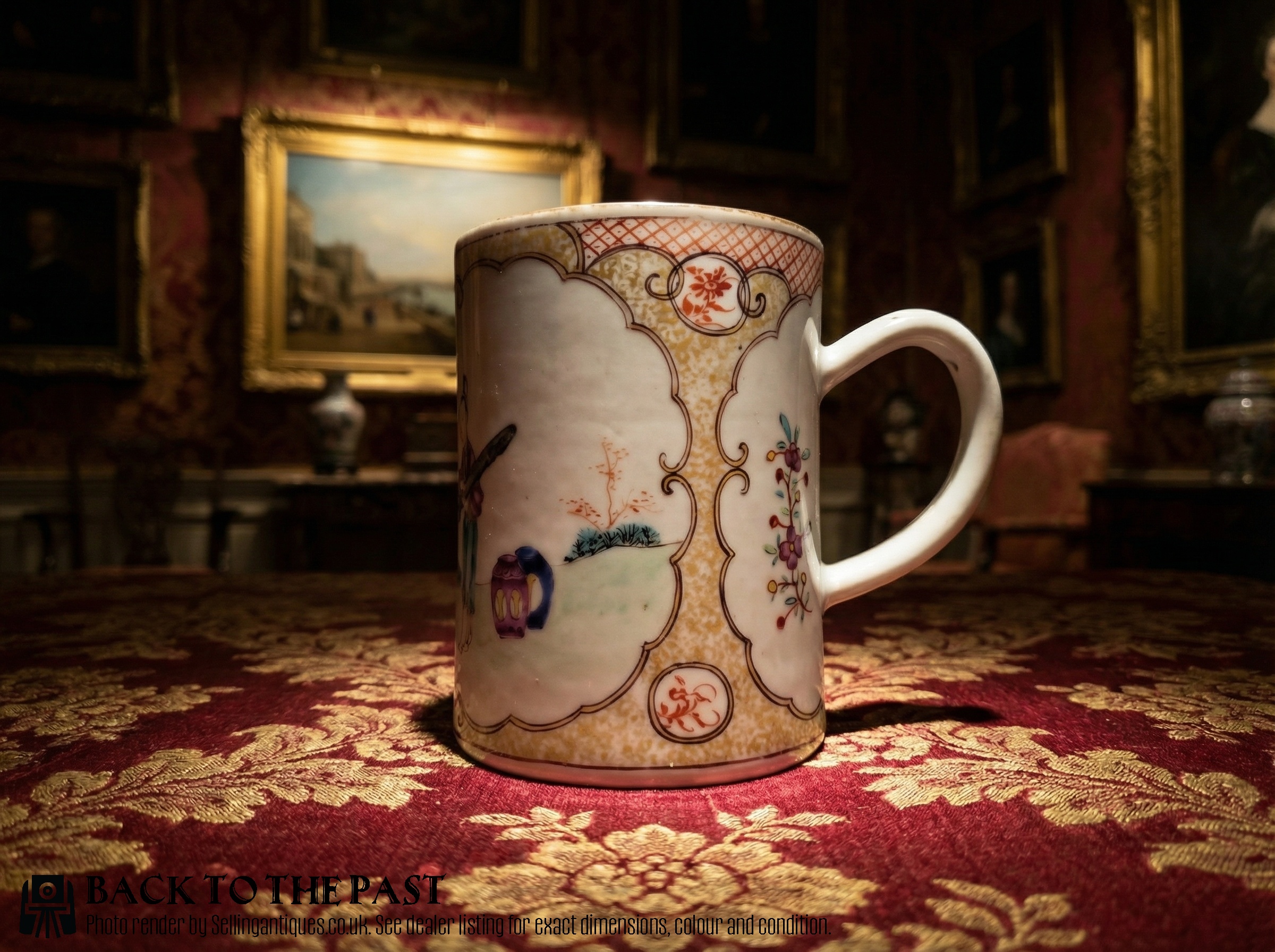
Materials and Manufacture
Every piece relies on hard paste porcelain fired at high temperatures to achieve a dense, impermeable body. Artisans shaped the clay on the potter's wheel into cylindrical or barrel forms before attaching sturdy handles suited for daily lifting.
Decoration involves cobalt underglaze applied before the glaze firing, alongside enamel colours added above the glaze in subsequent kiln runs. This technique produces the bright palettes seen in Famille Rose and Famille Vert wares.
18th Century Chinese Mug Retail Price Guide 2026
Typical asking prices for 18th century chinese mug among the pieces listed under this phrase on Sellingantiques today, from the lower quarter to the upper quarter. They describe what is for sale here now, not the wider market.
A barrel shaped mug imitates wooden cooperage in solid ceramic, proving that 18th century potters enjoyed playing optical tricks with clay.
Assessing Quality and Execution
The hierarchy of quality rests on the precision of the hand painting and the clarity of the porcelain body. Superior examples display crisp enamel work with steady brushstrokes and well-defined contours across the floral or figural motifs.
Proportion and potting weight also dictate standing, where finer vessels maintain an even wall thickness and balanced form without distortion from the kiln firing. The richness of the enamel palette further separates standard production from exceptional export commissions.
The 18th Century Chinese Mug Glossary
- Qianlong Period
- The era of the Qing Dynasty spanning the 18th century, marked by prolific porcelain export production. This reign produced the majority of decorated mugs found today.
- Famille Rose
- A palette of opaque enamel colours dominated by pink or rose shades, introduced during the Qing Dynasty. It allowed for nuanced shading in floral and figural designs.
- Famille Vert
- A green-dominant enamel palette used on Chinese porcelain during the Qing Dynasty. It relies on translucent green hues alongside iron red and other contrasting colours.
- Cobalt Underglaze
- Pigment applied to the raw porcelain body beneath the clear glaze before firing. This blue decoration remains durable and impervious to wear.
- Chinese Export
- Porcelain manufactured in China specifically for overseas markets in Europe and the West. These objects often combined traditional Eastern techniques with shapes requested by foreign buyers.
18th Century Chinese Mug: Frequently Asked Questions
What were 18th century chinese mugs used for?
These vessels served as drinking mugs and tankards for ale, beer, or hot beverages in European households. Their sturdy handles and thick porcelain walls made them practical for daily consumption.
Over time, many transitioned from functional tavern and dining table use into display cabinets as decorative antiques.
How do I identify a Qianlong period mug?
Identification relies on recognising the characteristic porcelain body, potting style, and decorative palettes associated with the 18th century. Look for Famille Rose or Famille Vert enamels applied over hard paste porcelain.
Barrel shapes and traditional tankard forms with applied handles are typical structural markers for this era.
What is the difference between Famille Rose and Famille Vert?
Famille Rose is defined by its use of opaque pink and rose enamels, which allowed artists to achieve softer gradations of colour. This palette became prominent in the 18th century.
Famille Vert relies primarily on green enamel combined with iron red and other contrasting pigments, producing a brighter and more vibrant overall appearance.
Are these mugs made of porcelain or pottery?
They are constructed from hard paste porcelain, a dense and vitrified ceramic material fired at extreme temperatures. This composition makes the vessel resonant when struck and completely non-porous.
Pottery is softer and more absorbent, whereas these export pieces possess the refined white body characteristic of Chinese kilns.
How should I display an antique mug?
Displaying these pieces requires a stable shelf or cabinet away from high-traffic edges where accidental knocks might occur. Adequate interior lighting highlights the detailed enamel work and cobalt underglaze.
Keep them out of direct sunlight to protect the stability of the overglaze enamels over many years.