
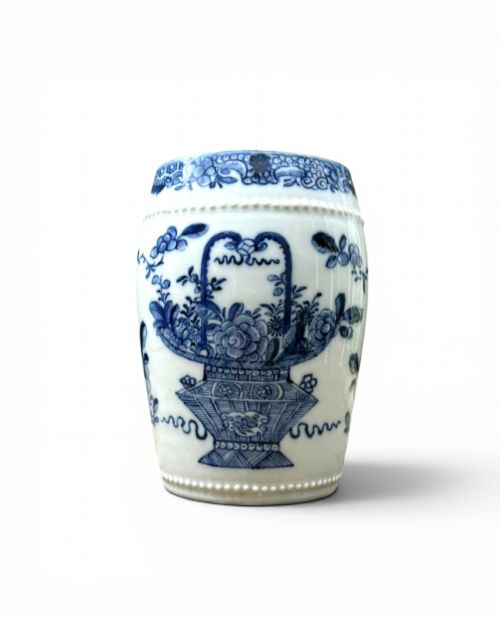


Blue White Porcelain Mug
These blue white porcelain mug examples are hand-painted 18th Century drinking vessels decorated in cobalt underglaze, prized for their historical export designs and delicate porcelain bodies.
Blue White Porcelain Mug
A blue white porcelain mug represents a sophisticated form of drinking vessel produced during the 18th Century. Buyers searching this phrase encounter fine ceramic items shaped as barrel forms or traditional mugs and tankards.
The pieces available on this page reflect both Chinese Export manufacture and Georgian Chinoiserie aesthetics from English factories. These items showcase the cross-cultural exchange of decorative motifs during the 1700s.
Originating from distinct potting traditions, these vessels range from Qianlong period Chinese wares to English productions like First Period Worcester. Each piece demonstrates the enduring appeal of cobalt blue decoration upon a white porcelain ground.
What Varies in Quality
The sophistication of the painted narrative scenes separates standard production from exceptional artistry. Pieces decorated with detailed pictorial compositions like 'La Promenade Chinoise' demand superior brushwork from the artisan.
Body translucency, potting precision and the purity of the white porcelain ground dictate the overall refinement of each vessel. Early barrel-shaped forms with well-balanced proportions and stable handles represent the higher tiers of 18th Century manufacture.
Listings feature 18th Century pieces utilising porcelain, cobalt underglaze, and cobalt glaze within Chinese Export and Georgian Chinoiserie styles.
The Blue White Porcelain Mug Glossary
- Cobalt Underglaze
- A blue pigment applied to ceramic pieces before the glaze and firing process. This technique ensures the decoration remains protected beneath a glassy surface for centuries.
- Chinese Export
- Porcelain manufactured in China specifically for Western markets during the Qing dynasty. These items often combined traditional Eastern forms with European decorative preferences.
- Georgian Chinoiserie
- A Western stylistic interpretation of Chinese artistic motifs popular during the 18th Century. It appears frequently on English porcelain of this era.
- First Period Worcester
- The initial phase of production at the Worcester porcelain factory in England, lasting from 1751 to 1783. Collectors highly value these early soft-paste and porcelain creations.
Blue White Porcelain Mug: Frequently Asked Questions
How old is a blue white porcelain mug?
These ceramic drinking vessels date back to the 18th Century, specifically the 1760s and 1770s. They originate from both Chinese export workshops and English factories.
The materials and decorative styles correspond directly to this Georgian era. Cobalt underglaze painting was the dominant method used during this period.
What is Chinese export porcelain?
Chinese export porcelain refers to wares made in China expressly for European and American markets. These objects often adapted Western shapes while retaining traditional Oriental painting techniques.
Items like barrel-shaped mugs illustrate how Eastern manufacturers catered to Georgian drinking customs.
What is Chinoiserie style?
Chinoiserie is the European interpretation and imitation of Chinese and East Asian artistic traditions. It manifested in decorative scenes featuring imagined landscapes, pavilions and figures.
English factories frequently applied these whimsical motifs to porcelain mugs during the mid-to-late 18th Century.