
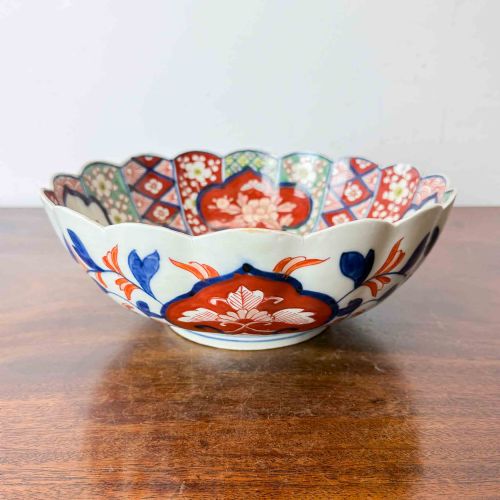





Meiji Period Imari Dishes
These meiji period imari dishes bring hand-painted cobalt underglaze, enamel and gold leaf into interiors with the distinct palettes of nineteenth and early twentieth century Japan.

Meiji Period Imari Dishes
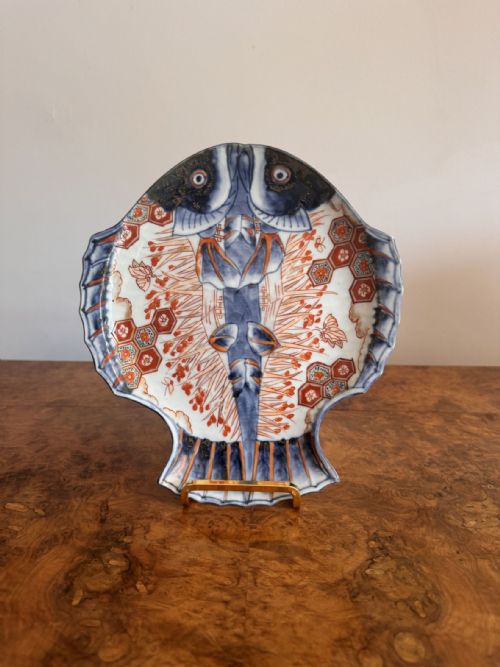
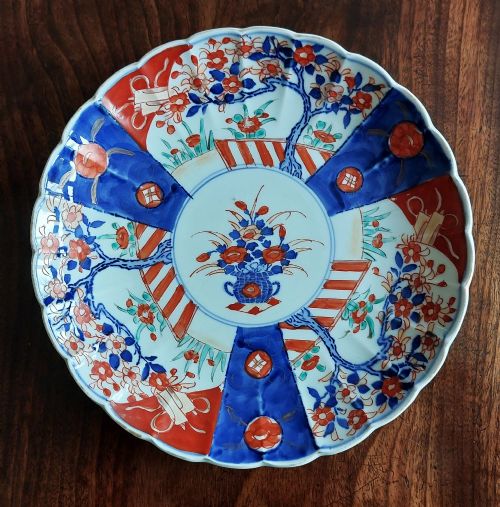
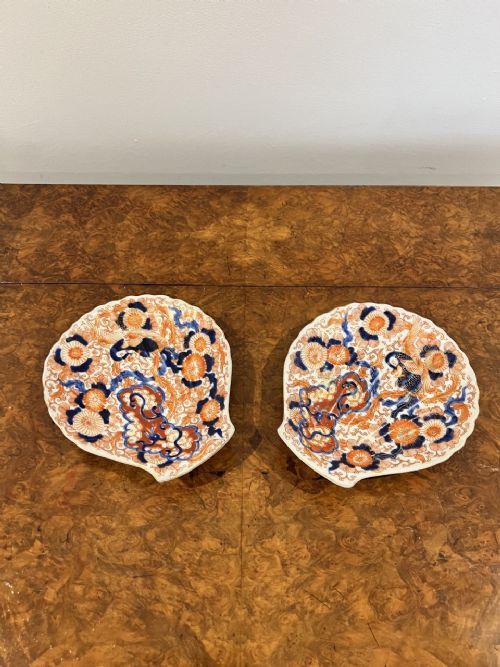
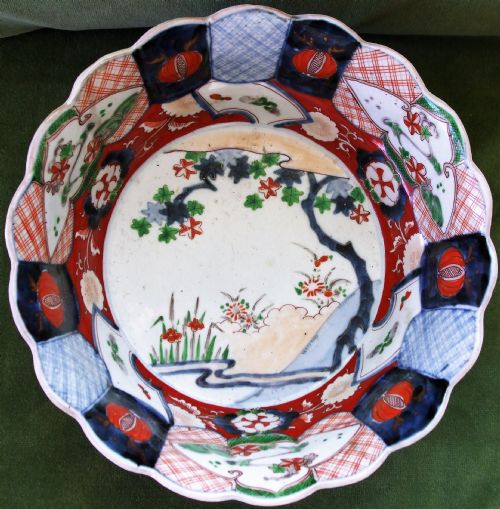
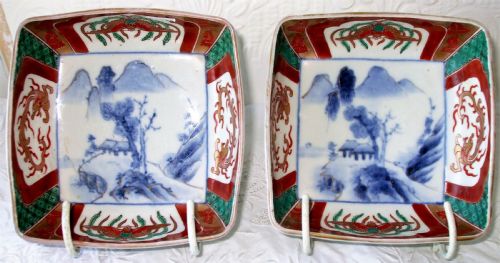
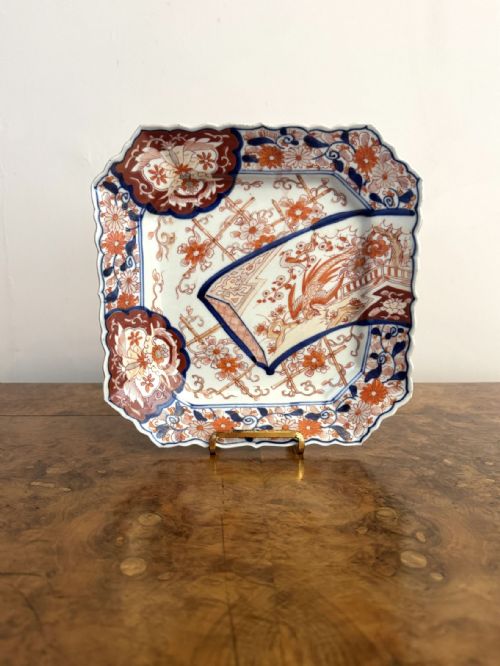
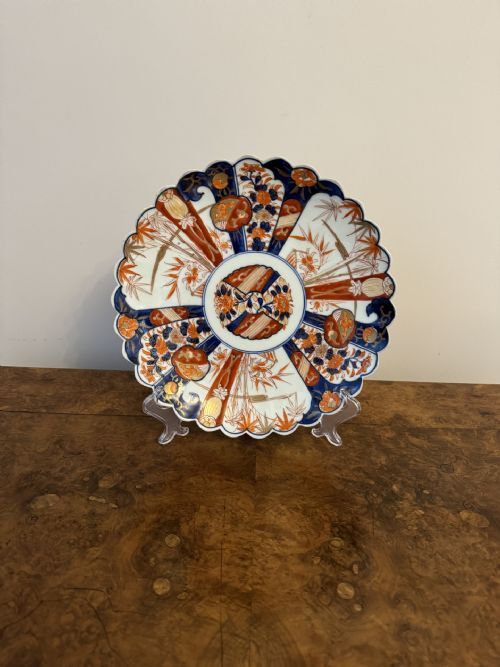
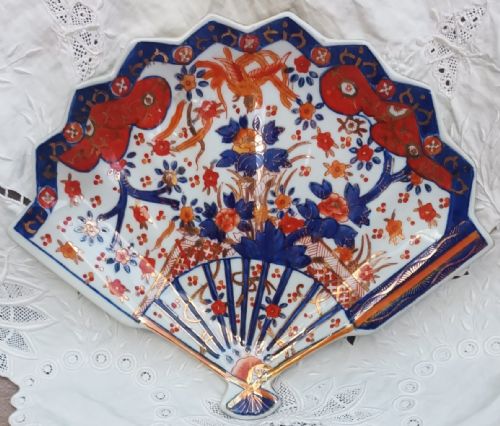
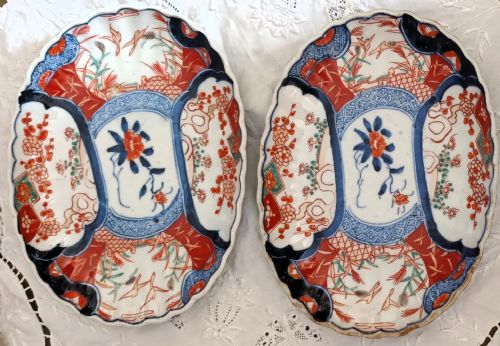
When someone searches for meiji period imari dishes, they encounter porcelain vessels created during the late nineteenth and early twentieth centuries, primarily spanning the Meiji era and Victorian periods. The inventory here leans heavily towards decorative plates, chargers and bowls, alongside distinct forms shaped like fish, shells and squares.
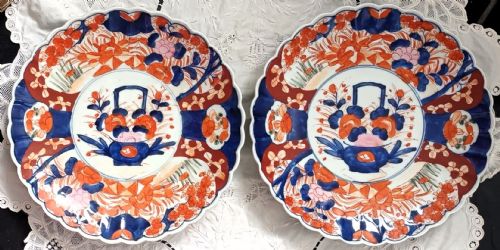
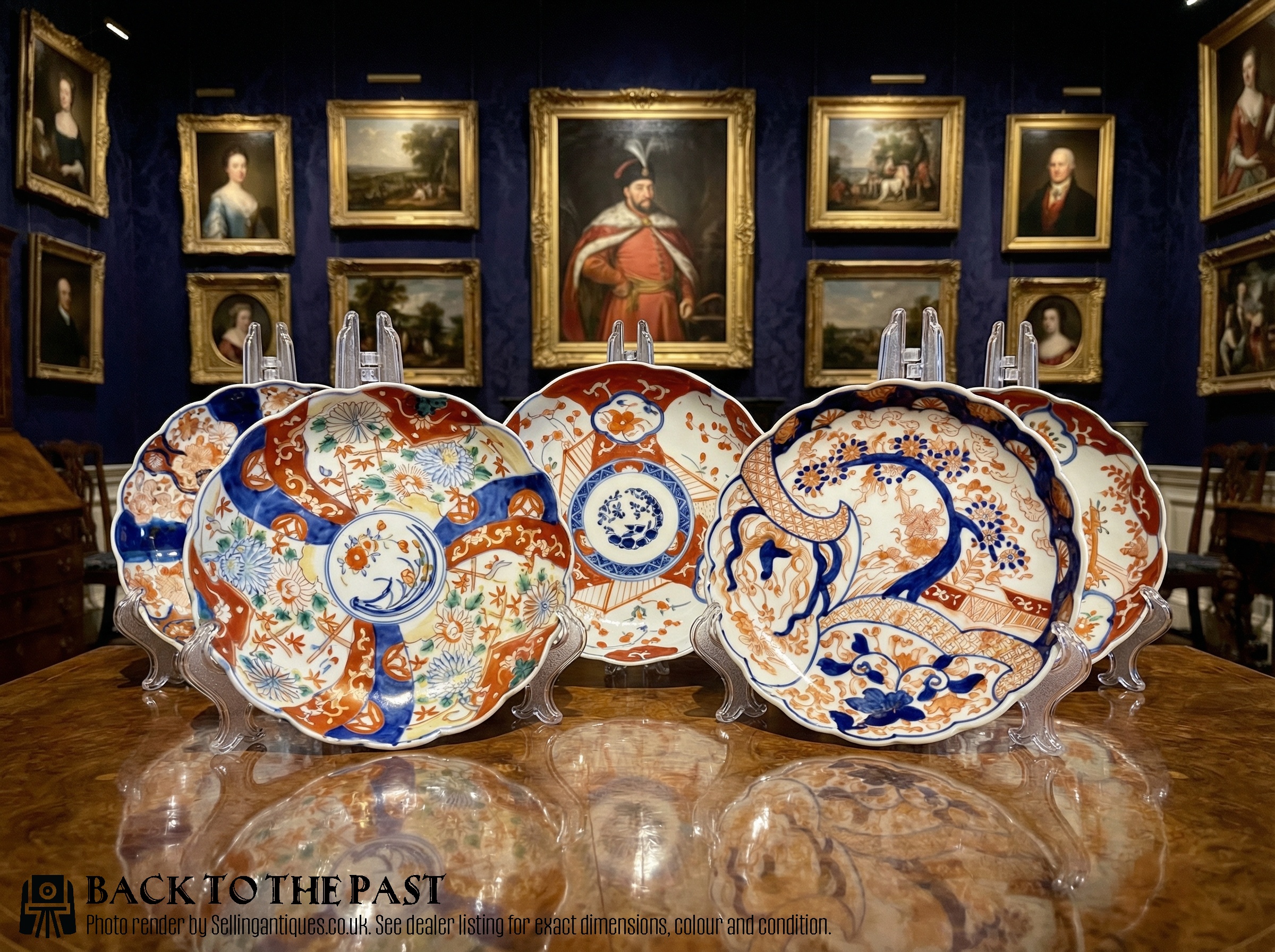
Most examples originate from Arita kilns, carrying the traditional aesthetic of Japanese Imari production adapted for both domestic use and export markets. Buyers frequently meet scallop-edged plates and large chargers decorated with floral and exotic bird motifs, alongside pairs and larger sets.
The forms range from small bowls to substantial chargers and wall plates, showing how nineteenth-century makers experimented with contour alongside surface pattern. These pieces combine utility with display value, designed originally to catch the eye in reception spaces.
How they were made
The foundation of these objects is porcelain, shaped into standard round bodies or moulded into unusual forms such as fish, shells and squares with scalloped edges. Artisans worked clay bodies to support detailed decorative schemes before firing.
Colour is applied using cobalt underglaze beneath the clear glaze, combined with enamel overglazes and highlights in gold leaf, gilt or gilding. This layering technique gives the surfaces their characteristic depth and contrasting tones.
Fish and shell shaped plates swim among the round bowls, proving potters enjoyed playing with dinner before it was served.
What varies in quality
The distinction between standard output and finer items rests in the crispness of the hand-painted cobalt underglaze and the precision of the enamel work. Superior examples display carefully controlled brushwork on complex floral and bird motifs rather than rushed repetition.
Form also divides the range, moving from standard circular plates to unusual moulded shapes like fish and shells that demand greater skill from the potter. The sparing yet effective use of gold leaf or gilding further separates ordinary domestic wares from exhibition-standard pieces.
The Meiji Period Imari Dishes Glossary
- Imari
- A style of Japanese porcelain named after the port town from which wares were shipped to Europe. It typically combines cobalt blue, iron red and gold on a white ground.
- Meiji Period
- The era in Japanese history spanning from eighteen sixty-eight to nineteen twelve, characterised by modernisation and significant export of decorative arts.
- Charger
- A large decorative plate or dish intended for display on a wall or sideboard rather than for serving food at table.
- Cobalt Underglaze
- A blue pigment applied to the raw clay body before glazing and firing, ensuring the colour remains permanent and protected beneath the glass surface.
- Enamel
- Opaque or translucent glass-like material applied over the fired glaze and heated again at a lower temperature to add secondary colours.
Meiji Period Imari Dishes: Frequently Asked Questions
How do I display a charger safely?
Large chargers and wall plates work best secured with sturdy, rubber-coated wire hangers designed specifically for heavy porcelain without placing stress on the rim.
Position them away from direct sunlight and heavy foot traffic to protect the enamel and gilding from accidental knocks.
Were these pieces meant for daily use?
While originating as practical ceramics, many items from this era served decorative purposes in European and Japanese interiors alike.
Their survival in good condition suggests owners often treated them as display pieces rather than everyday tableware.
How can I tell Meiji period pieces apart?
Dating relies on stylistic markers, typical export patterns and the specific shade of cobalt underglaze combined with enamel and gilding.
Pieces from this era often bridge traditional Japanese motifs with forms tailored for Western Victorian tastes.
Can I clean these dishes with water?
Gentle dusting with a dry, soft cloth remains the safest method for routine maintenance of antique porcelain surfaces.
Avoid soaking or using harsh detergents, as older enamel and gold leaf decorations can be sensitive to moisture and abrasion.