







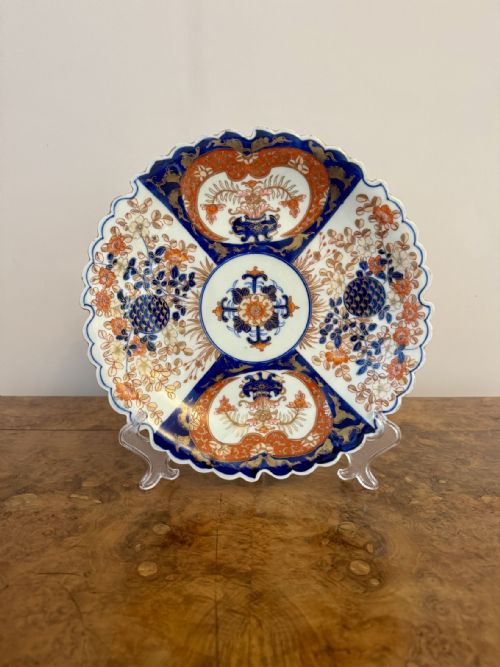
Japanese Floral Porcelain Plates
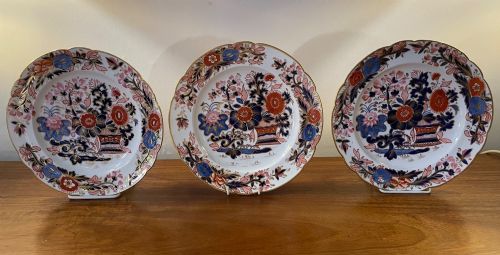
These japanese floral porcelain plates bring rich cobalt blue and vibrant enamel palettes from the nineteenth and early twentieth centuries straight to the wall or table.
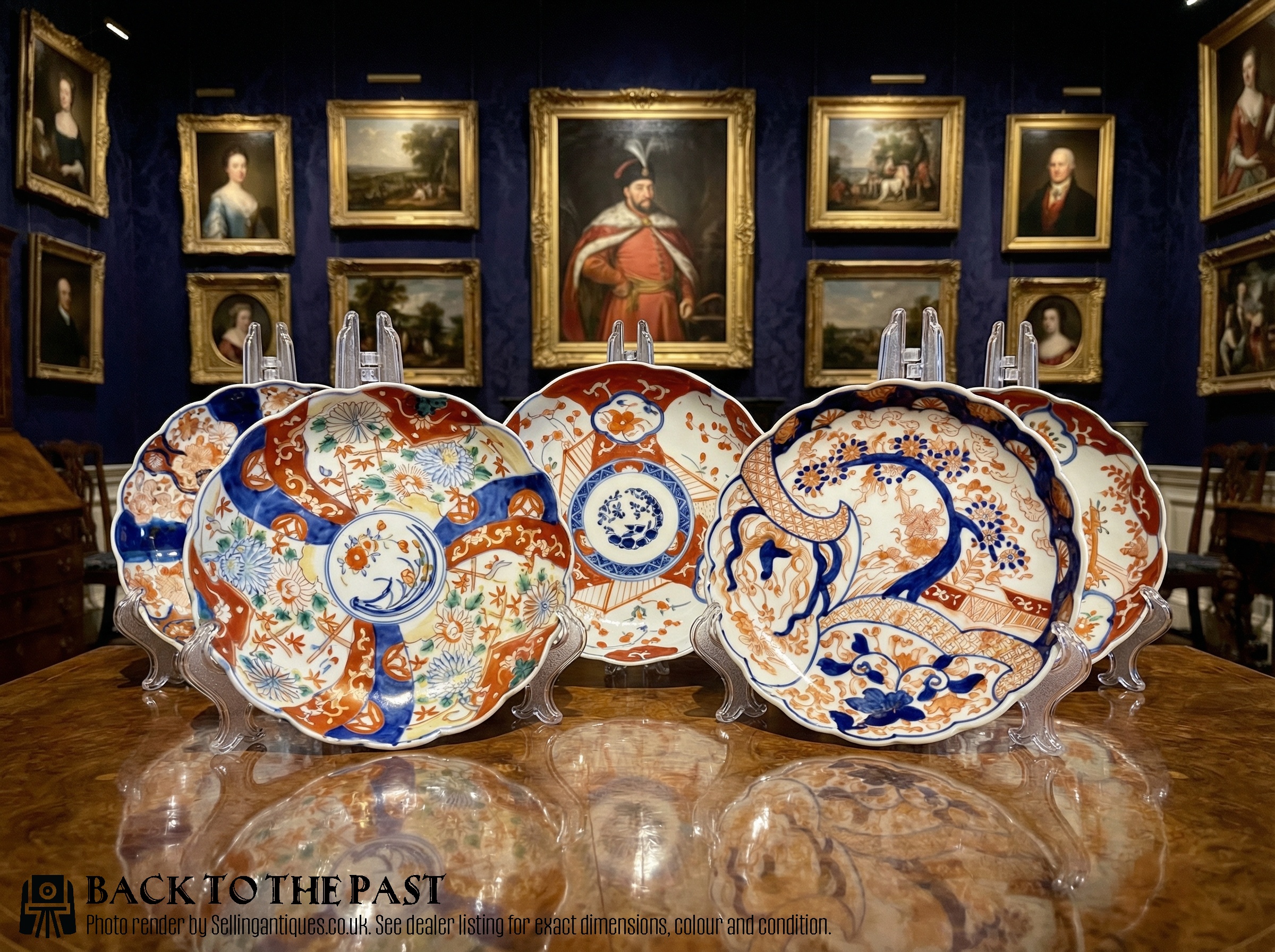
Japanese Floral Porcelain Plates
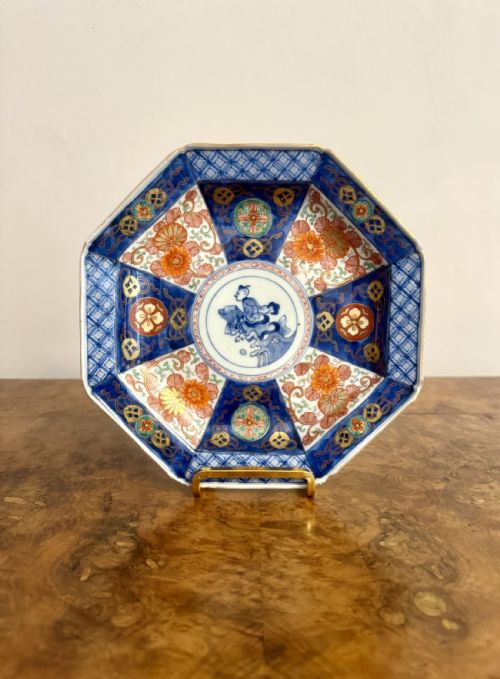
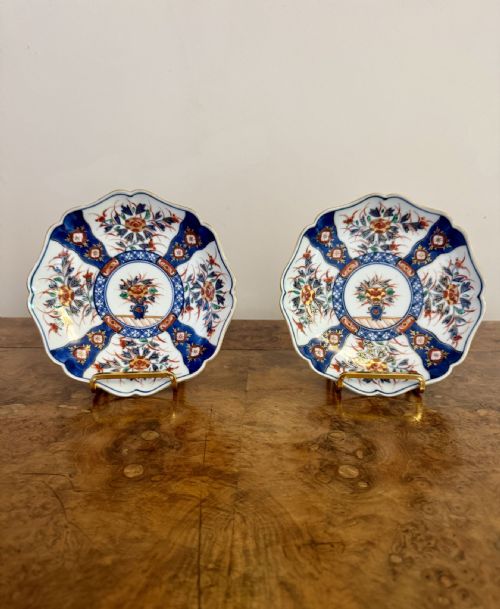
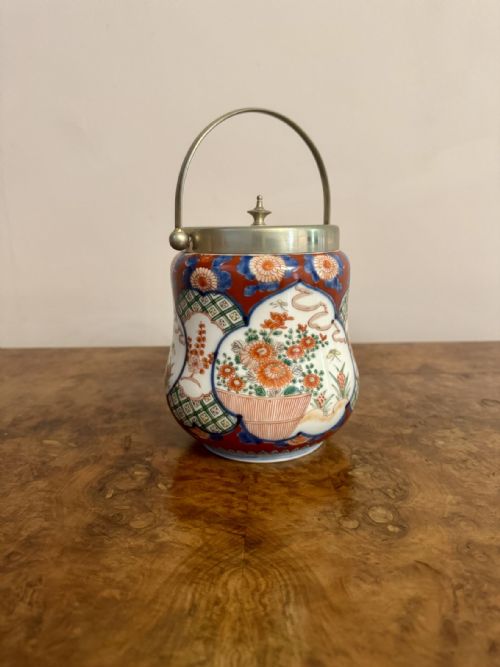
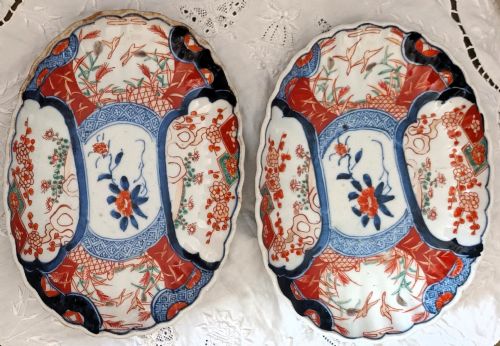
When searching for japanese floral porcelain plates, buyers encounter a rich assortment of antique chargers, decorative dishes, and serving plates spanning the Edo and Meiji periods. The nineteenth century and the decades around nineteen hundred dominate the selection, bringing hand-painted botanical motifs into modern interiors.
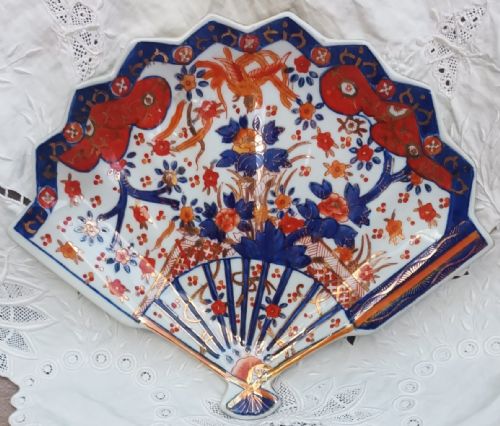
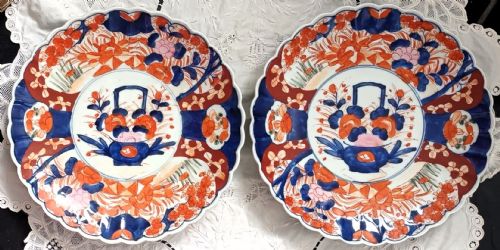
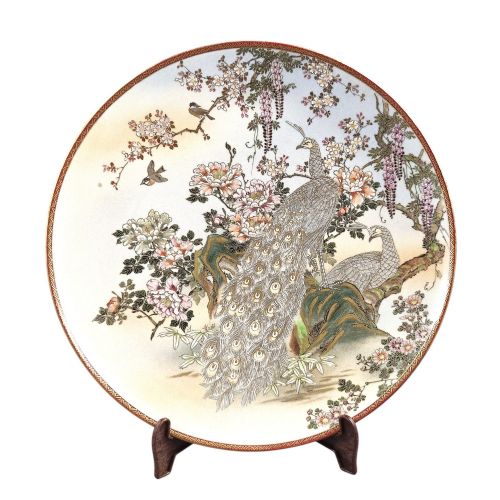
Imari and Arita pieces form the backbone of this selection, alongside Satsuma wares decorated with peonies and wisteria. Forms range from standard circular plates to scalloped edges, hexagonal shapes, and large wall-hanging chargers.
How they were made
Potters shaped fine porcelain and earthenware bodies by hand before applying cobalt underglaze pigments. Artisans then added overglaze enamels in iron red and other rich tones.
Gold leaf, gilt, and gilding highlights were frequently applied over the glaze to catch the light on floral designs and bird motifs.
What varies in quality
The precision of the hand-painted brushwork distinguishes standard items from superior examples. Crisp cobalt underglaze lines and carefully applied enamel details reveal the skill of the potter.
Form and balance also set pieces apart, particularly on scalloped, hexagonal, or square plates where symmetry and edge definition show the maker's discipline.
The Japanese Floral Porcelain Plates Glossary
- Imari
- A traditional Japanese export porcelain style characterised by cobalt blue underglaze and iron red overglaze, often accented with gold. These wares were produced in Arita and shipped through the port of Imari.
- Charger
- A large decorative plate intended primarily for display on a wall or sideboard rather than for dining use. These substantial pieces often showcase the most elaborate floral and bird designs.
- Meiji Period
- The era in Japanese history lasting from eighteen sixty-eight to nineteen twelve, marked by a surge in decorative arts created for Western export. Pieces from this time frequently feature complex hand-painted motifs.
- Cobalt Underglaze
- A blue pigment applied to the raw porcelain body before glazing and firing at high temperatures. This technique ensures the blue colour remains permanent and protected beneath the glassy surface.
- Scalloped Edge
- A decorative curving border shaped into the rim of a plate or dish. This contour adds visual movement to floral compositions.
Japanese Floral Porcelain Plates: Frequently Asked Questions
Can I hang these plates on the wall?
Many of these pieces, particularly the larger chargers, were made with display in mind and suit wall mounting using appropriate brass wire hangers.
Smaller plates look equally effective arranged on dressers or flat surfaces where their hand-painted details can be examined closely.
How do I care for antique porcelain?
Wash these items gently by hand in lukewarm water using mild soap, avoiding dishwashers and harsh abrasive sponges that might damage the overglaze enamels and gilding.
Take care when placing them on hard surfaces to protect the foot rims and edges from chipping.
What is the difference between Imari and Arita?
Arita is the historical Japanese town where the porcelain clay was mined and fired, while Imari was the port from which the finished wares were shipped to Europe.
Over time, the name Imari came to describe the specific red, blue, and gold colour palette associated with these Arita exports.
How do I identify a Meiji period piece?
Meiji period items date from between eighteen sixty-eight and nineteen twelve, a time when Japanese kilns produced highly detailed export wares for Western markets.
These pieces often combine intricate floral motifs with rich enamel work and gilding.