
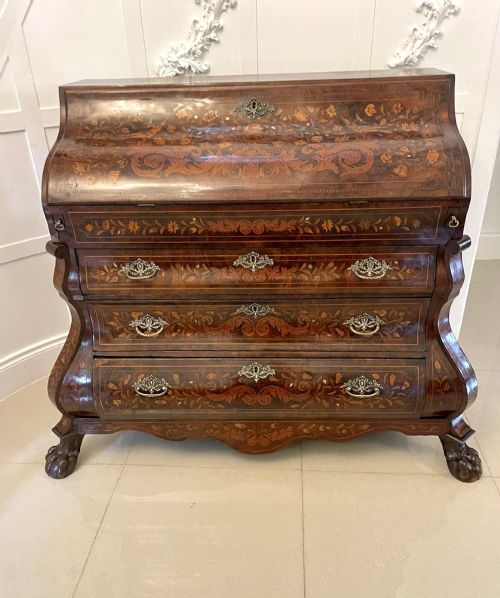
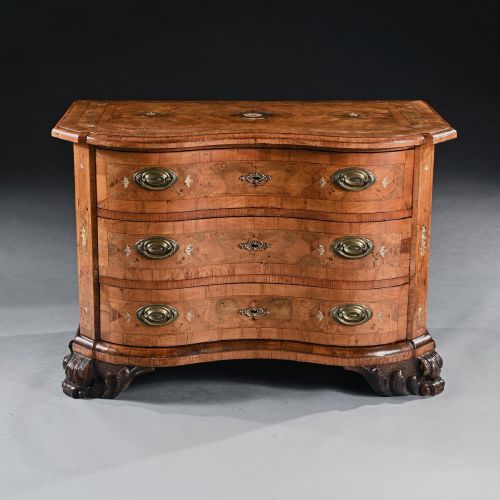
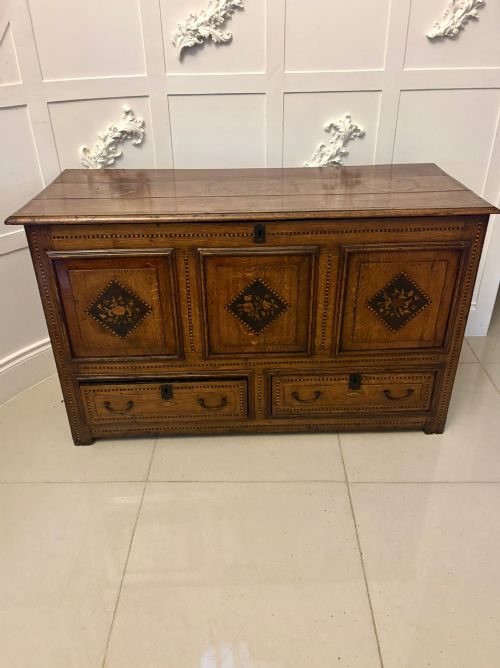
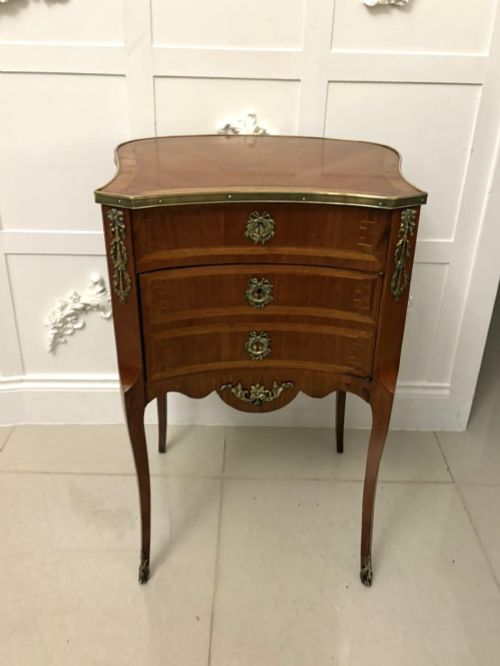
Marquetry Inlaid Chest Drawers
Marquetry inlaid chest drawers bring together elaborate pictorial wood veneers and functional storage, offering a striking centrepiece for a traditional interior.
Marquetry Inlaid Chest Drawers
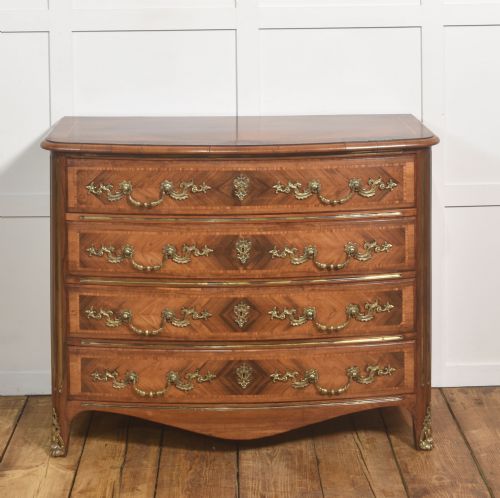
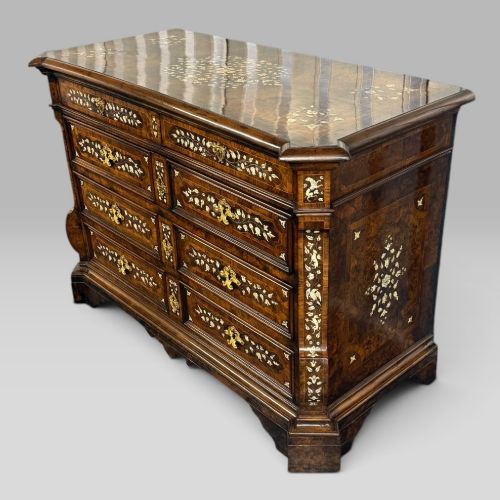
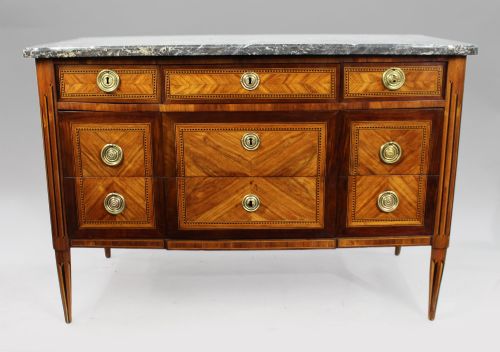
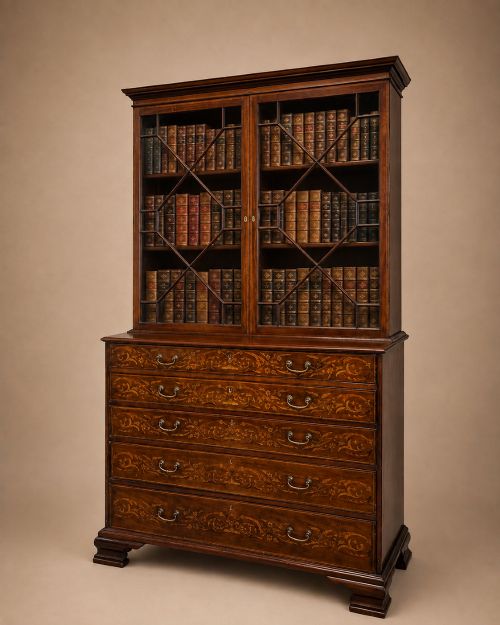
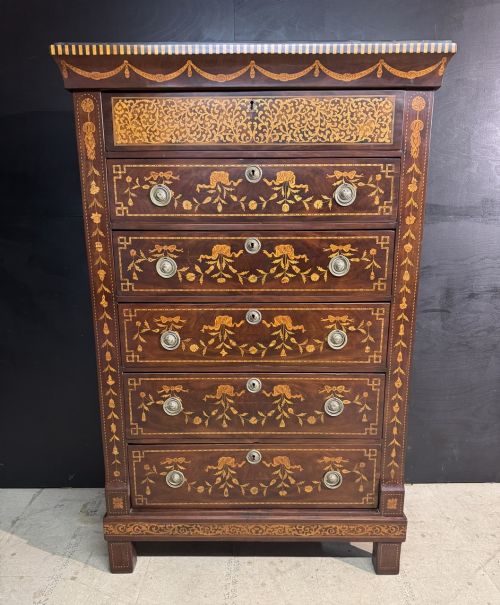
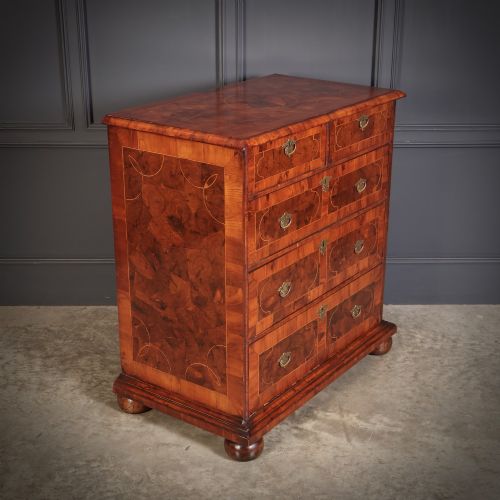
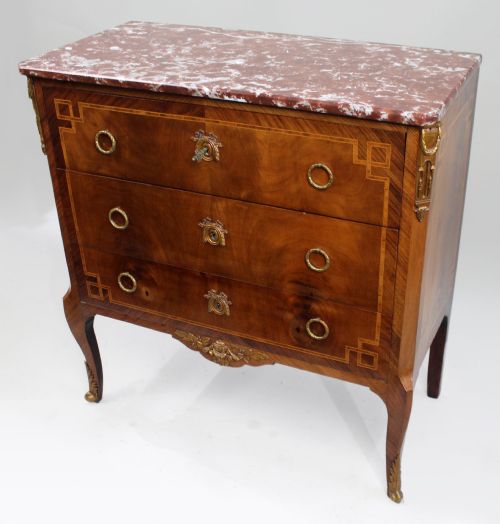
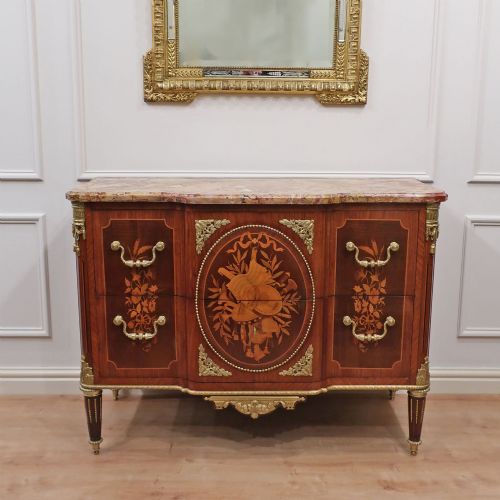
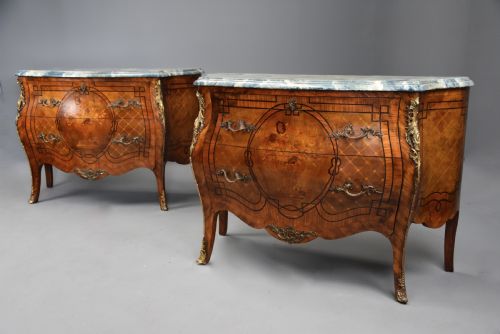
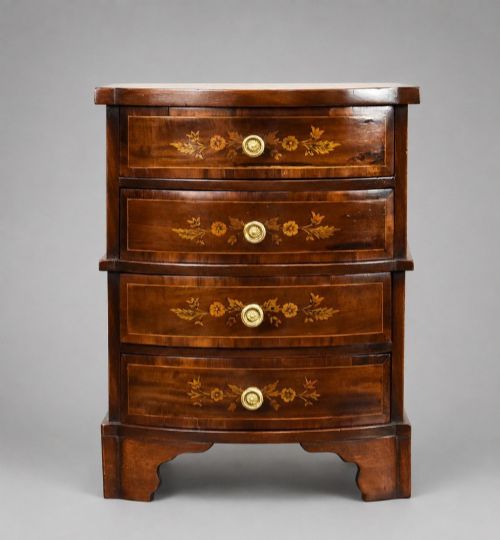
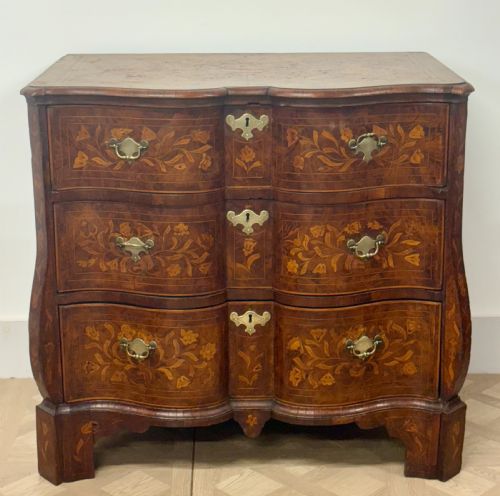
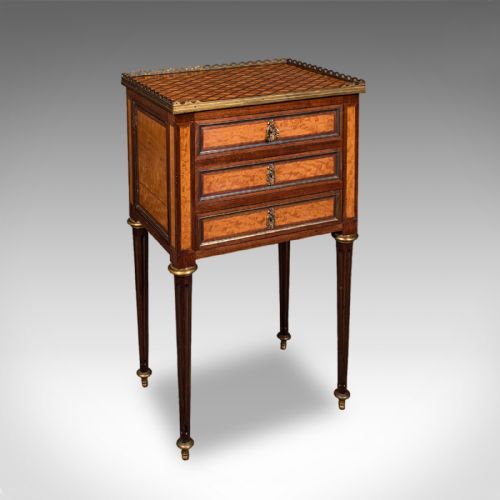
When you search for marquetry inlaid chest drawers, you encounter timber storage furniture decorated with fitted wood veneers that form floral, architectural or arabesque patterns. The pieces range from seventeenth-century walnut examples to nineteenth-century French commodes and twentieth-century bedside cabinets.
Tall chests, serpentine commodes, bombe forms and bedside tables dominate the selections seen here. Dutch and French stylistic influences appear frequently alongside English cabinet-making traditions from various periods.
How they were made
Cabinet-makers applied fine veneers of walnut, kingwood, mahogany, rosewood and fruitwood onto structural carcass timbers using animal glues. Specialised sawing and fitting created intricate pictorial designs across the drawer fronts and tops.
Many examples incorporate contrasting materials such as brass mounts, ormolu details, pewter, ivory and marble tops. These elements were combined by hand to accentuate the curved outlines of serpentine and bombe bodies.
Secret drawers hidden within secretaire compartments allowed owners to secure private letters away from prying eyes.
What varies in quality
The precision of the veneer work dictates the standing of an individual piece, specifically how tightly the different wood types fit together within the pictorial design. Crisp floral details and well-balanced proportions separate standard production from superior craftsmanship.
The choice of secondary timbers and the integrity of the underlying carcass structure also determine longevity. Original mounts, intact marble slabs and well-preserved surface polishes distinguish better examples.
Grand Ducal Workshops·Maison Krieger·J Shoolbred·Edwards & Roberts
The Marquetry Inlaid Chest Drawers Glossary
- Marquetry
- A decorative technique where small pieces of veneer are assembled into pictorial designs on a carcase. This craft requires meticulous hand-cutting of diverse woods.
- Bombe
- A swelling, outward-curving profile found on the sides and fronts of commodes and chests. This bulging contour demands advanced woodworking skill to veneer successfully.
- Serpentine
- A curved shape featuring a convex centre flanked by concave ends, creating a flowing movement along the front of a chest. It appears frequently on eighteenth-century commodes.
- Commode
- A low French chest of drawers, often fitted with a marble top and ornate ormolu mounts. These pieces served as decorative storage in formal rooms.
- Veneer
- A thin layer of figured timber applied to a stable underlying wood base. This method allows cabinet-makers to display expensive grain patterns economically.
Marquetry Inlaid Chest Drawers: Frequently Asked Questions
How do I date a marquetry chest?
Dating relies on combining stylistic clues with construction methods, such as drawer linings, handle types, and underlying carcass timbers. Seventeenth-century pieces often display thick oak framing and heavy arabesques, whereas eighteenth-century Dutch items favour distinct floral urns on walnut.
Later nineteenth-century and twentieth-century revivals frequently adopt French Louis XV or Louis XVI contours with machine-prepared veneers. Examining the underside and drawer interiors reveals the age of the materials used.
How should I clean my chest?
Dust surfaces regularly with a soft, dry cloth to prevent grit from scratching the delicate veneer work. Avoid modern silicone sprays or harsh chemical polishes that can degrade historical finishes.
Apply a traditional beeswax sparingly once or twice a year to nourish the timber and protect the inlay. Keep the piece away from direct sunlight and sudden temperature shifts to prevent the wood from warping.
Are marble tops original?
Many French commodes and bedside cabinets from the eighteenth and nineteenth centuries were manufactured specifically to carry marble slabs. These stone tops provided a durable, decorative surface for daily use.
When evaluating a piece, check that the marble sits flush within the wooden gallery and matches the period of the carcass. Replacement slabs occur, though well-matched antique marble remains typical for high-end commodes.