
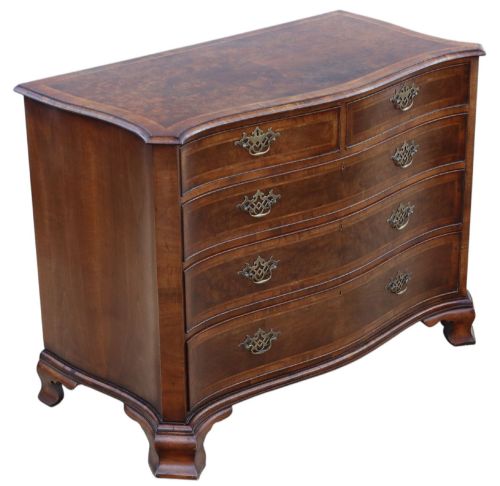
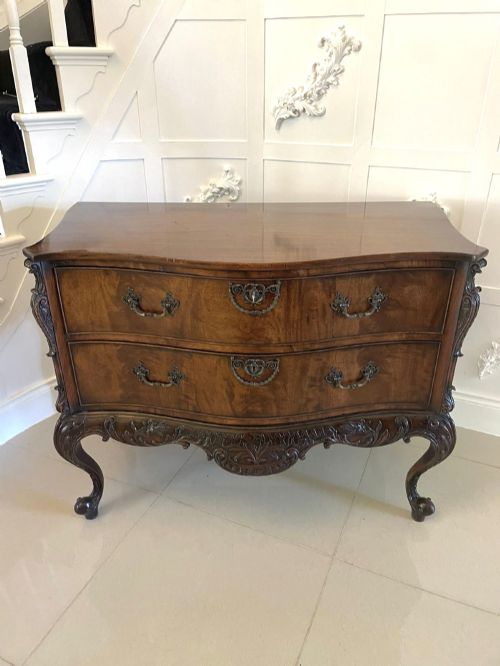
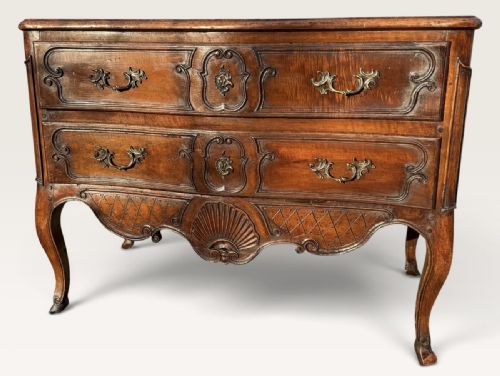
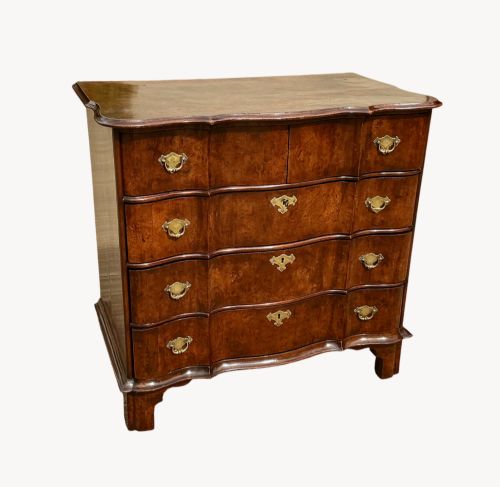
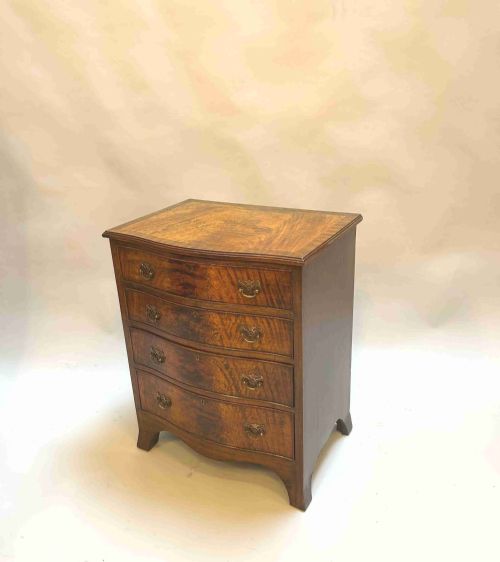
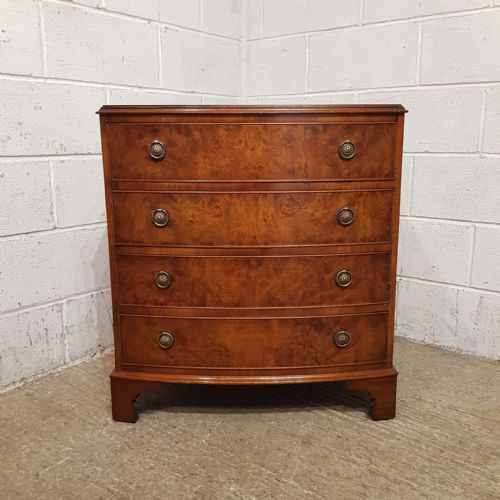
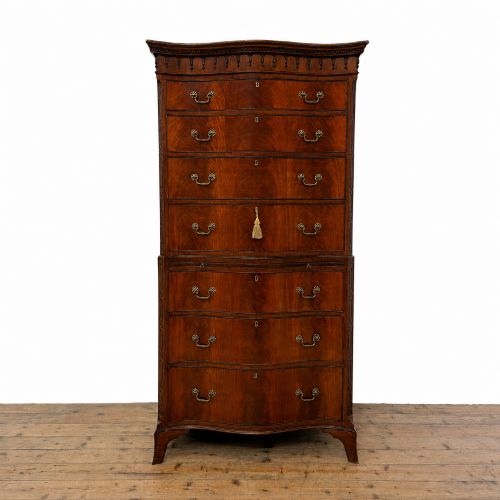
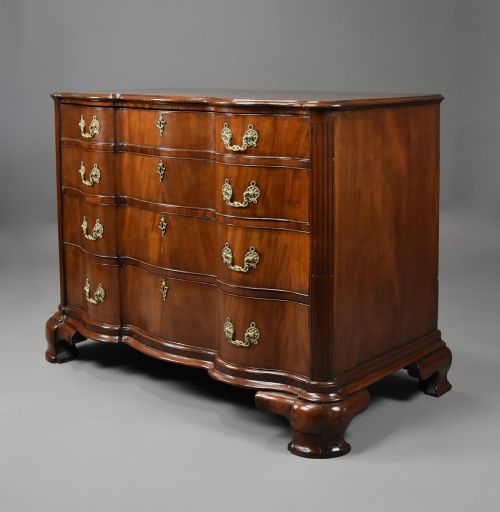
Antique Serpentine Storage Chest
An antique serpentine storage chest brings a flowing, undulating line to a room alongside deep drawers for practical storage.
Antique Serpentine Storage Chest
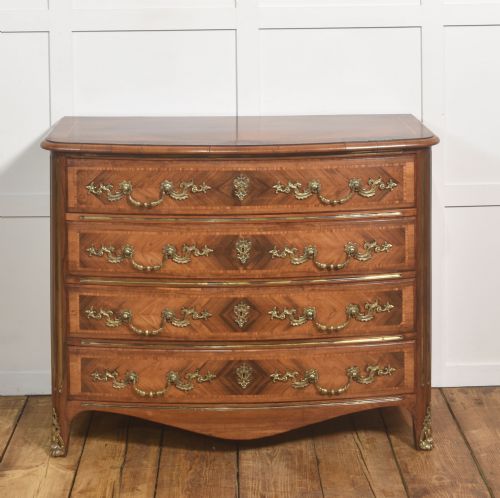
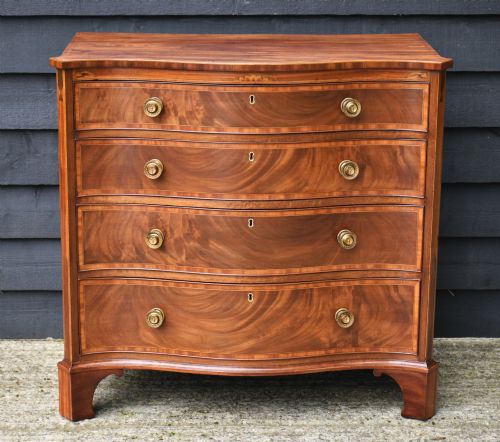
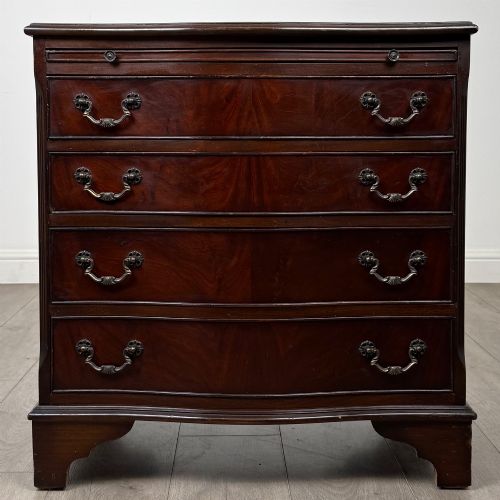
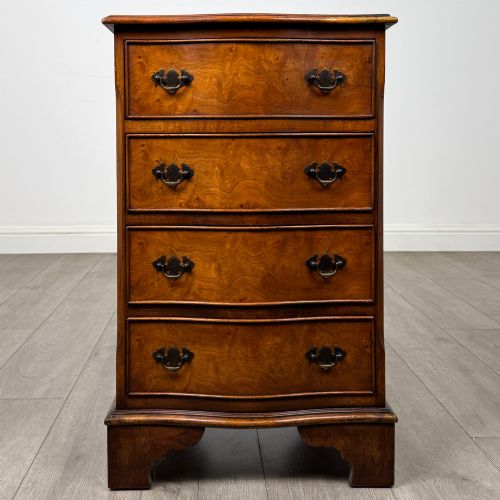
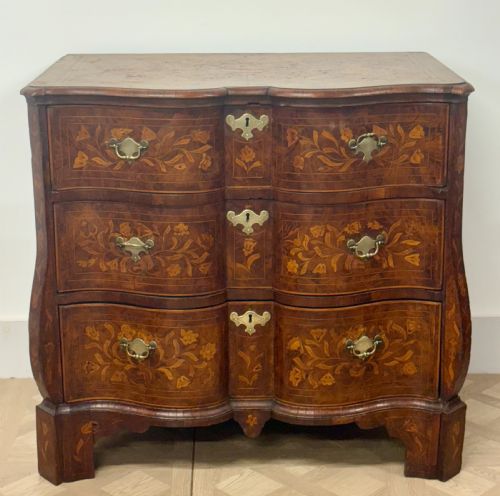
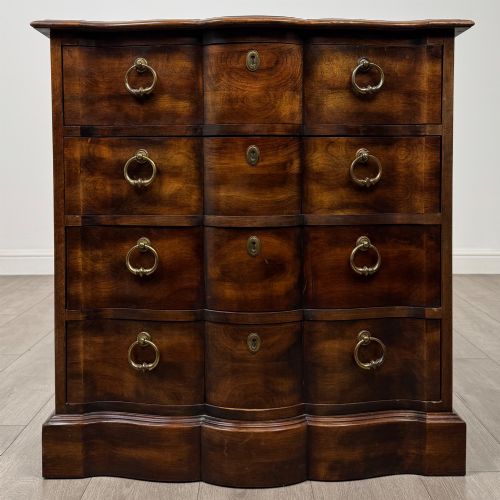
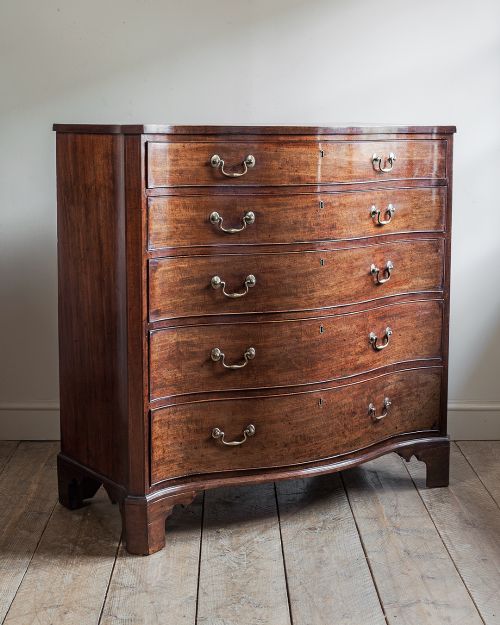
An antique serpentine storage chest defines a case furniture piece with a front that curves outward in the centre and inward at the sides, creating a rhythmic profile. These items arrive in various forms including commodes, tallboys, chests on stands, and larger chests of drawers designed to hold clothing and household items.
The pieces span several centuries, with examples originating in the eighteenth century, the Victorian era, and twentieth-century revivals. Buyers encounter Georgian pieces alongside Dutch Baroque and French Louis XV style commodes, reflecting diverse European cabinet-making traditions.
Mahogany and walnut dominate the selection, often accompanied by burr walnut, satinwood, and oak. Some continental examples feature painted finishes or marble tops, adding distinct regional character to the storage function.
Materials and construction
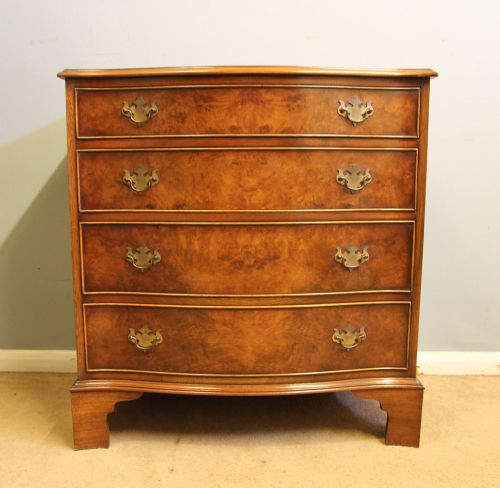
Cabinet-makers shaped dense hardwoods such as mahogany and walnut over solid carcases, frequently applying decorative veneers like burr walnut to create rich patterns across the curved drawer fronts. Crossbanding and marquetry inlay provide further surface ornamentation on select continental and English pieces.
Constructing a serpentine front requires precise woodworking technique, as the timber must be worked across convex and concave curves without losing structural integrity. Brass handles, escutcheons, and occasional ormolu mounts complete the hardware, fixed firmly to the drawer faces.
Listings feature items from the eighteenth, nineteenth, and twentieth centuries, incorporating materials such as mahogany, burr walnut, marble, and ormolu.
Distinctions in quality
Quality rests in the precision of the serpentine sweep and the choice of timber figure, where well-matched burr walnut veneers or finely grained mahogany elevate the visual impact of the curves. Superior examples display seamless joins and harmonious proportions between the top, sides, and base mouldings.
The sophistication of the secondary details, such as hand-cut dovetails in the drawer construction and original brass furniture, separates standard utility items from masterwork commodes. Finer pieces maintain crisp carving and uncompromised structural balance across every angle of the curved facade.
The Antique Serpentine Storage Chest Glossary
- Serpentine
- A front contour characterised by a convex centre flanked by concave curves. This shape requires advanced cabinet-making skill to execute correctly.
- Commode
- A low chest of drawers or cabinet originating in France. They often feature elaborate marquetry or marble tops.
- Burr walnut
- Timber taken from a growth on a walnut tree, yielding highly decorative swirling grain patterns. Cabinet-makers used it for high-status veneer work.
- Marquetry
- The art of applying pieces of veneer to a structure to form decorative patterns or pictures. Craftsmen utilise various coloured woods to achieve tonal contrast.
- Tallboy
- A tall chest of drawers consisting of one chest stacked upon another or upon a stand. They maximise vertical storage space in domestic interiors.
- Crossbanding
- A narrow strip of veneer laid around the border of a panel with the grain running at right angles to the centre. This technique frames the primary wood surface.
Antique Serpentine Storage Chest: Frequently Asked Questions
What is a serpentine chest?
A serpentine chest is a storage unit featuring a front edge that curves outward in the middle and curves inward toward the corners. This undulating shape creates movement and visual depth across the piece.
Craftsmen built these chests primarily from hardwoods like mahogany and walnut to house clothing and linens while serving as a decorative focal point in a room.
How do I date an old chest?
Dating relies on examining the timber species, construction methods, and hardware styles used by the cabinet-maker. Eighteenth-century pieces often display hand-cut dovetails and native timbers, while later revivals incorporate twentieth-century manufacturing markers.
Comparing the decorative motifs, such as marquetry or bracket feet, against documented period styles helps narrow down the decade of manufacture.
Where were serpentine commodes used?
These commodes typically stood in principal bedrooms, drawing rooms, or hallways of substantial residences. Their generous proportions and decorative surfaces suited formal reception spaces.
Beyond domestic utility, they functioned as display surfaces for decorative objects, mirrors, or lighting fixtures in period interiors.
How do I maintain wood finishes?
Maintaining the timber surface involves keeping the piece away from direct sunlight and sudden temperature changes that cause wood to split. Applying appropriate wax polish periodically nourishes the grain.
Avoid placing damp items directly onto the wood surface to protect the polish and underlying veneer from water marks.