



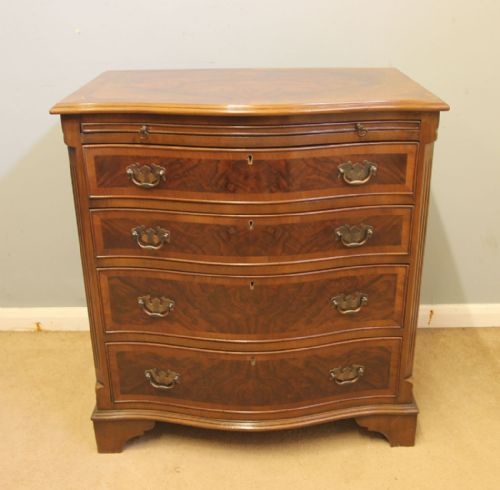
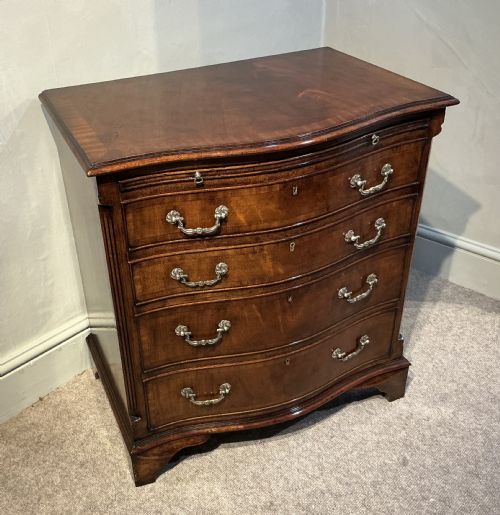


Georgian Style Serpentine Dresser
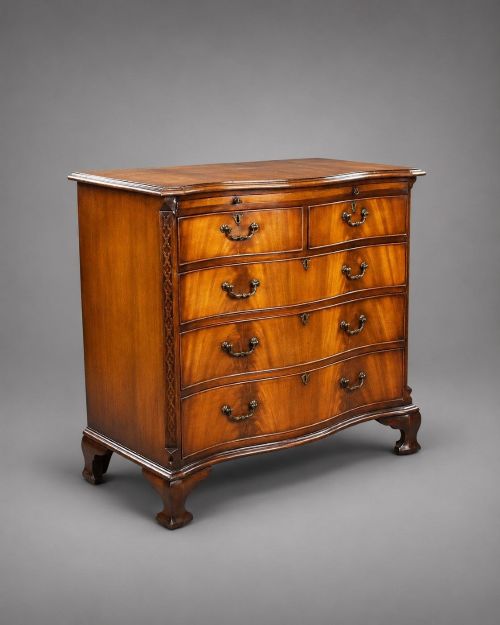
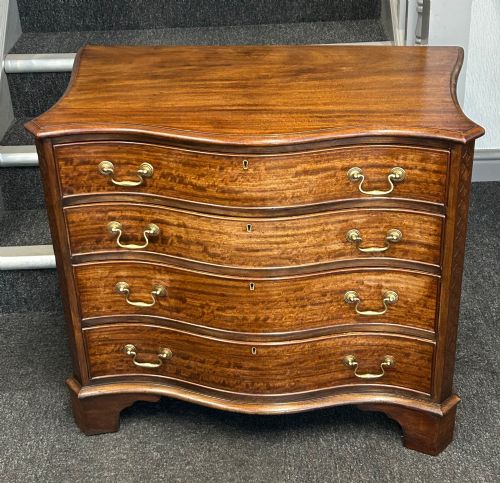
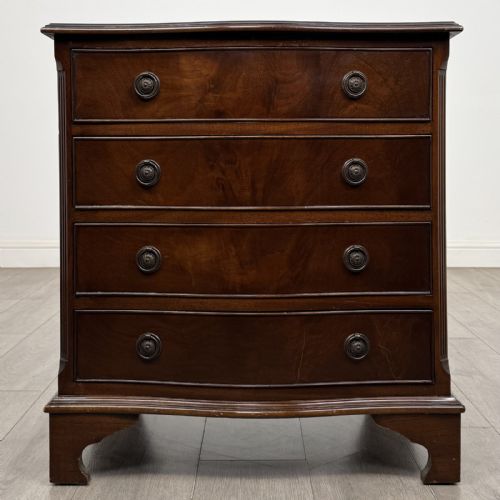
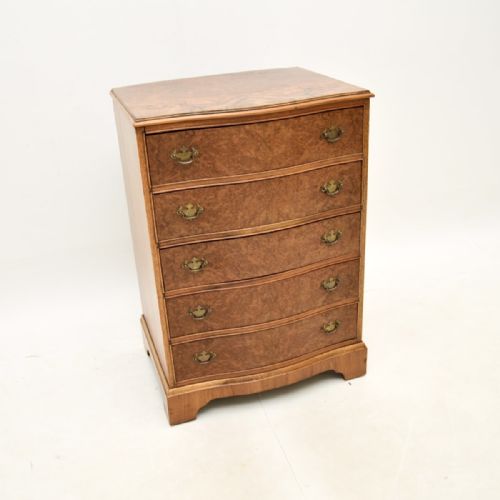
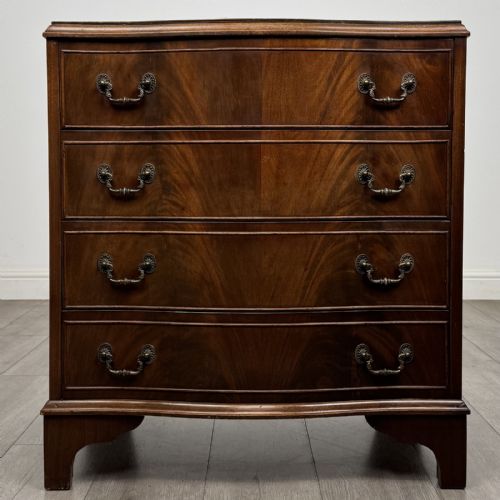
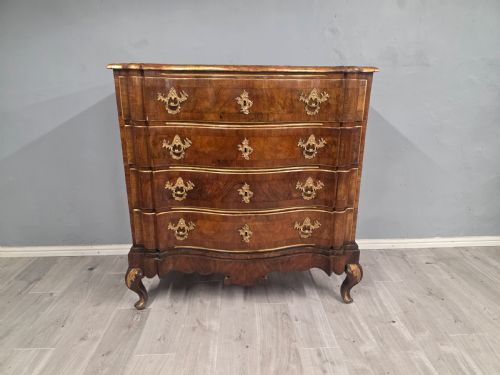
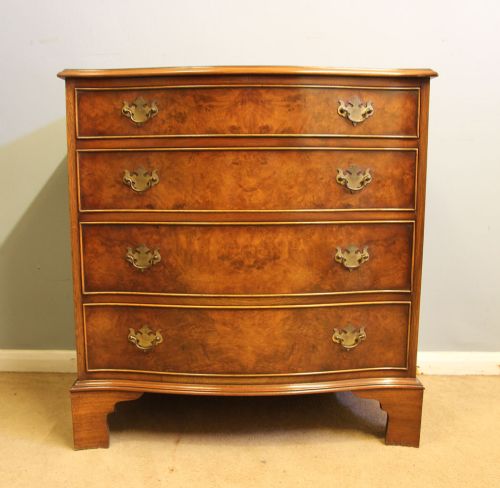
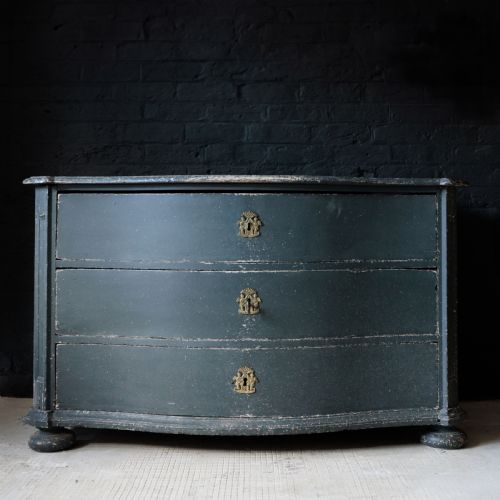
A georgian style serpentine dresser brings together curving drawer fronts and rich timber figure, offering both a statement profile and generous storage.
Georgian Style Serpentine Dresser
A georgian style serpentine dresser typically presents as a chest of drawers or commode featuring a gentle, undulating front profile. These pieces emerge across the eighteenth century and return through later revival periods including the Edwardian era and the nineteen-twenties.
The selections span authentic eighteenth-century examples alongside later nineteenth-century interpretations and twentieth-century reproductions. Makers across these periods utilise traditional forms, adapting the characteristic bowed centre and concave sides for domestic chambers and formal reception rooms.
Materials and Construction
Cabinetmakers build these pieces using dense hardwoods such as mahogany and walnut, frequently selecting burr veneers to create striking grain patterns across the curving drawers. Inlays of boxwood and satinwood provide linear contrast along drawer edges and top borders.
The undulating serpentine shape requires precise joinery to curve solid timber and lay veneer smoothly over shaped carcases. Brass handles and escutcheons punctuate the drawer fronts, secured with traditional fixings that complement the figured timber.
Georgian Style Serpentine Dresser Retail Price Guide 2026
Typical asking prices for georgian style serpentine dresser among the pieces listed under this phrase on Sellingantiques today, from the lower quarter to the upper quarter. They describe what is for sale here now, not the wider market.
The selection includes both compact chests and large sideboards displaying the signature curving front profile.
Evaluating the Pieces
Quality rests upon the selection of timber figure, where richly grained burr walnut or finely figured mahogany elevates the visual impact of the curving facade. The crispness of inlaid details and the harmony of the proportions across the serpentine sweep also distinguish finer examples.
Construction methods reveal the maker's hand through the snug fit of dovetailed drawer boxes and the retention of original brass hardware. Pieces from the eighteenth century demonstrate early joinery traditions, while revival pieces depend on the fidelity of their stylistic interpretation.
Maple And Co
The Georgian Style Serpentine Dresser Glossary
- Serpentine
- A front profile characterised by a convex centre flanked by concave curves, creating a gentle undulating wave. This shape demands exceptional skill from the cabinetmaker to execute cleanly.
- Commode
- A low decorative chest of drawers or cabinet, often of French origin, adapted by English makers during the eighteenth century. These pieces usually stand on elegant legs rather than resting directly on a plinth.
- Burr Walnut
- A specialised wood cut from walnut tree growths, yielding a swirling, highly figured grain pattern. Cabinetmakers prize this timber for veneering prominent surfaces like drawer fronts.
- Marquetry
- The art of forming decorative patterns by fitting together small pieces of contrasting veneer. This technique frequently decorates the top surfaces and drawer fronts of satinwood and mahogany pieces.
- Dovetail
- A traditional interlocking joint used to connect drawer sides to drawer fronts and backs. The neatness and tightness of these hand-cut pins indicate the standard of construction.
Georgian Style Serpentine Dresser: Frequently Asked Questions
Where should I place a serpentine chest?
These chests suit bedrooms, hallways or drawing rooms where their curving profile can be appreciated from multiple angles. Their distinctive silhouette works well against flat walls to soften the geometry of a room.
Ensure adequate clearance around the piece so the undulating front remains unobstructed by other furniture. They function primarily as storage for linens or clothing while serving as a focal display surface.
How do I distinguish eighteenth-century pieces?
Examine the interior construction, timber species and secondary woods used for drawer linings and backboards. Eighteenth-century examples display hand-cut joinery and signs of age specific to early tool usage.
Revival pieces from later centuries often employ standardised fixings or machine-sawn timbers that reveal a different manufacturing era. Comparing the hardware and internal timber helps clarify the period of origin.
What is the difference between a commode and a chest?
A commode generally refers to a more ornamental low chest of drawers, often associated with eighteenth-century French and English neoclassical designs. They frequently feature elaborate veneers or marquetry.
A standard chest of drawers focuses more directly on utilitarian storage capacity with simpler elevations. Both share the characteristic serpentine shaping found across this selection.
How do I care for burr walnut veneer?
Keep walnut furniture away from direct sunlight and heat sources to prevent the delicate veneers from drying or lifting. Dust gently with a dry cloth and avoid harsh chemical polishes.
Maintaining a stable room temperature protects the timber and the underlying glue from shifting. Occasional light waxing preserves the natural sheen of the figured wood.