
Marquetry Inlaid Commode
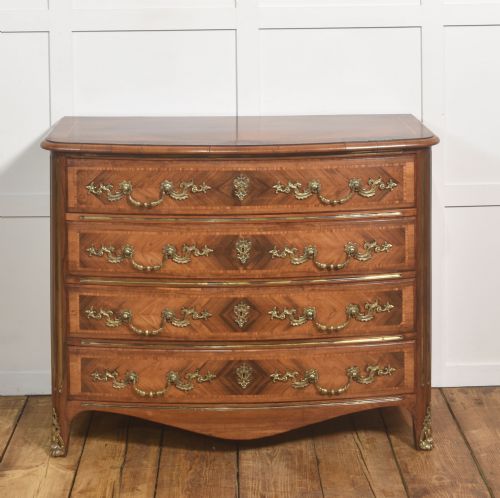
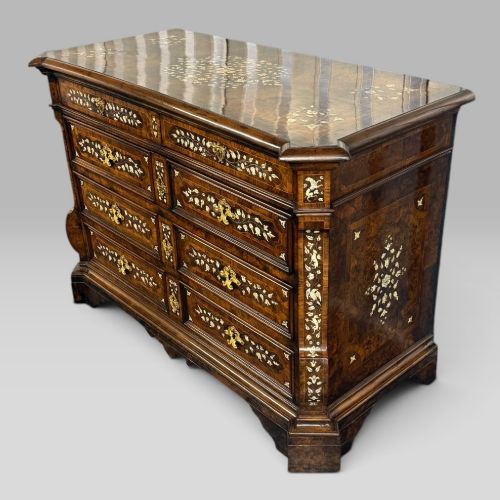
When you want a marquetry inlaid commode, you are looking at centuries of decorative cabinet-making built to display botanical, floral, and figurative wood patterns.
Marquetry Inlaid Commode
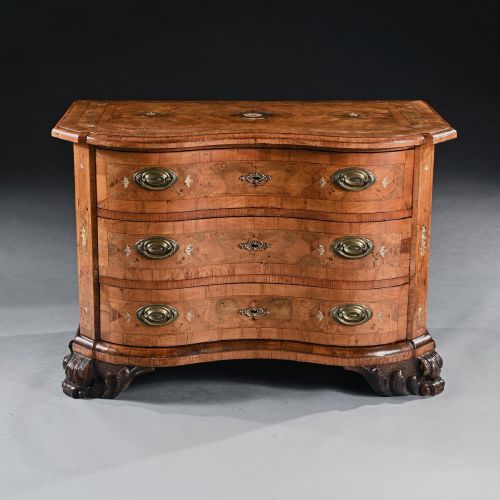
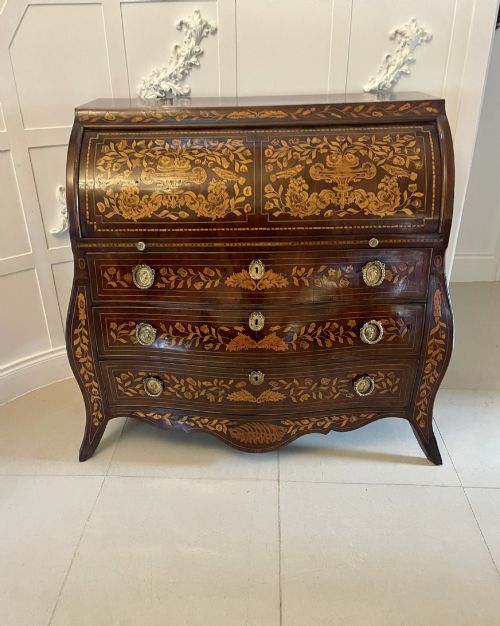
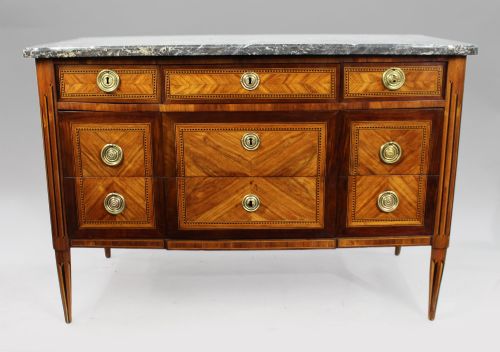
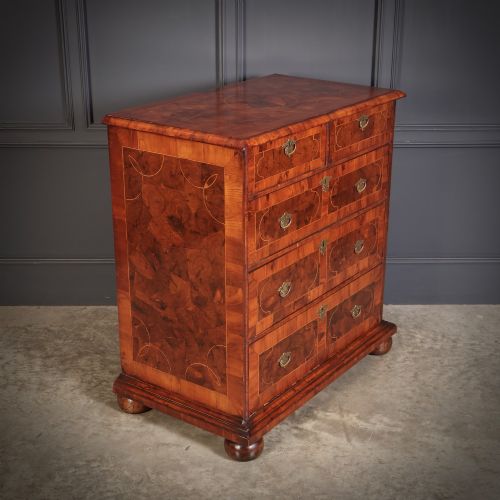
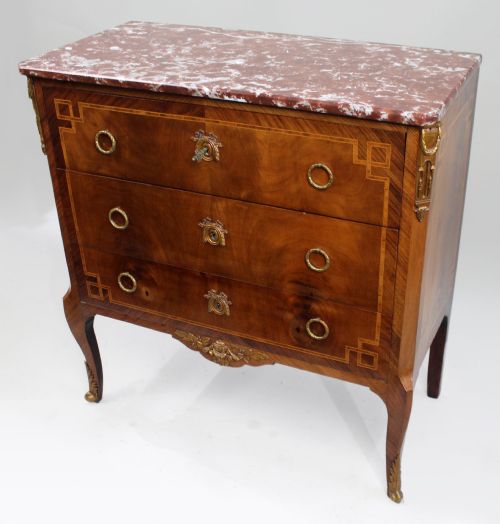
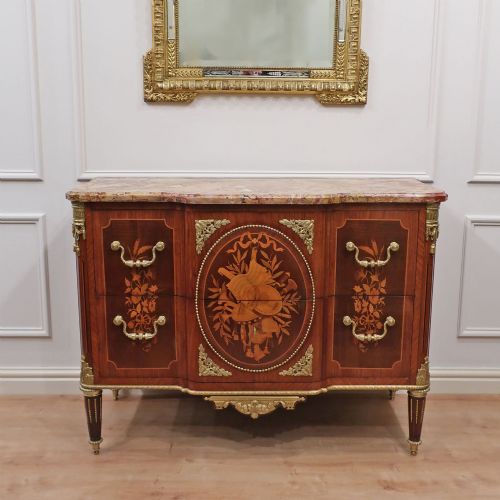
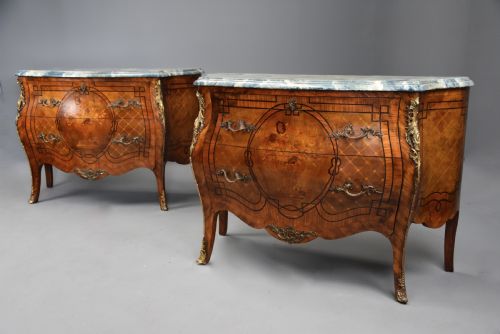
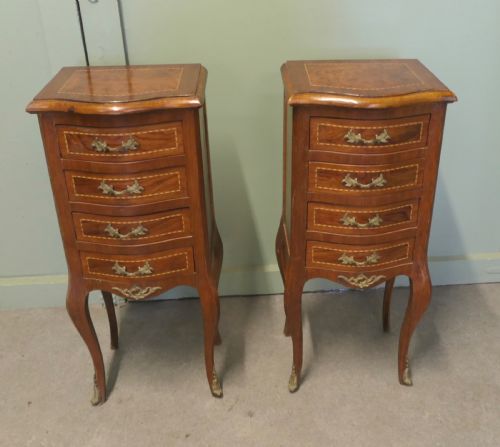
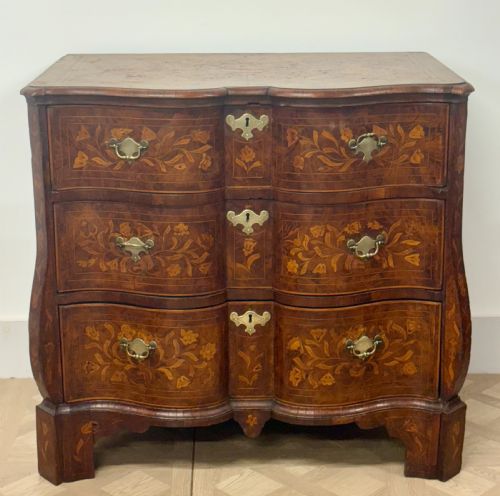
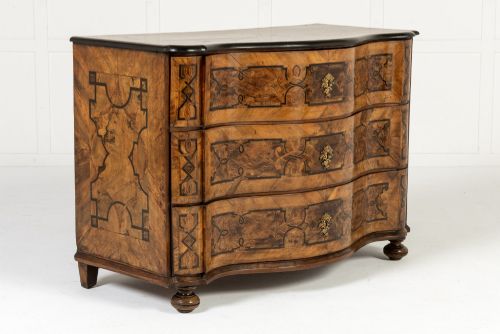
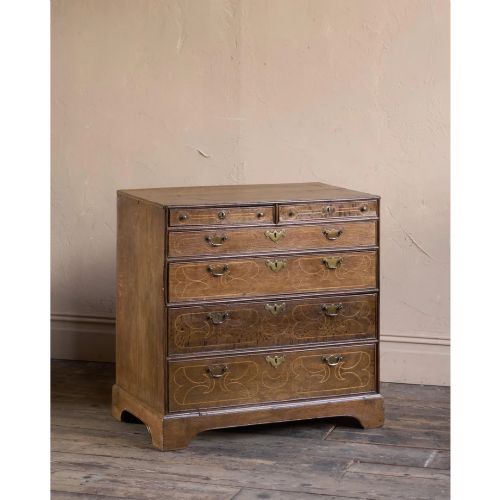
A marquetry inlaid commode functions primarily as a decorative storage chest of drawers or side cabinet, originating in formal European interiors and evolving through various revival styles. The pieces found here range from seventeenth-century walnut and floral designs to eighteenth-century Dutch bombe forms and later French Louis-inspired creations. Buyers encounter diverse silhouettes, from serpentine and demi-lune shapes to straightforward rectangular chests.
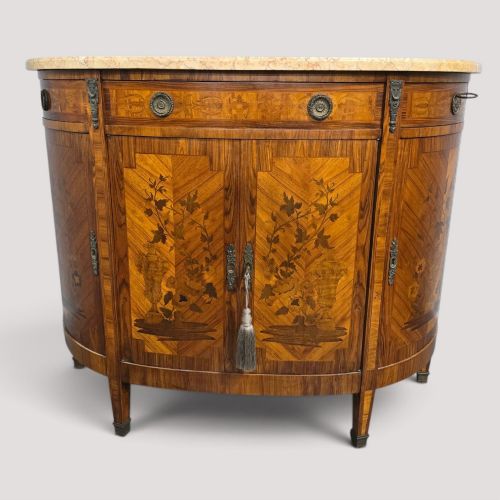
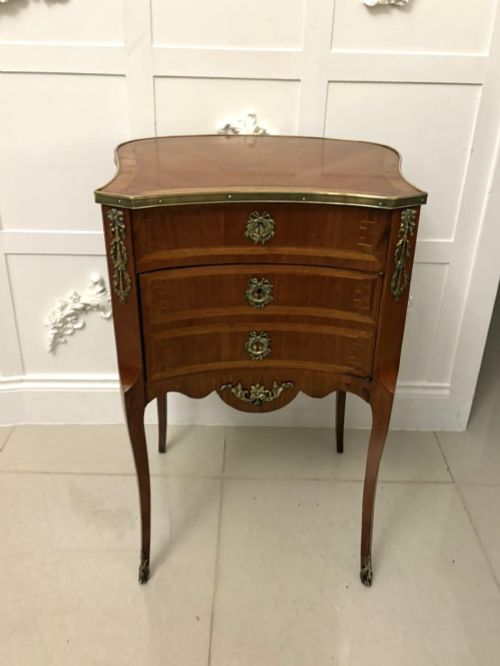
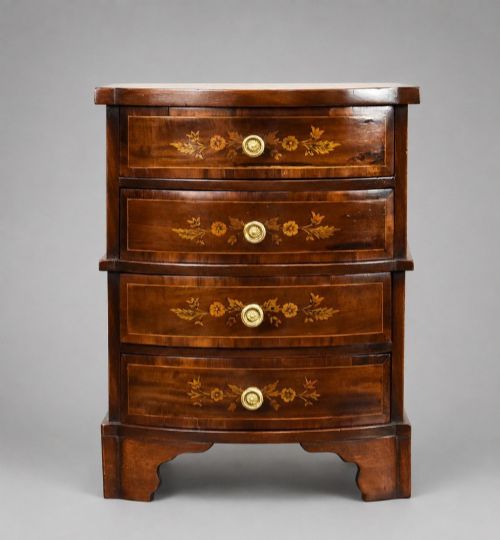
The selection includes regional variations such as Italian Baroque works, German walnut pieces, and English satinwood creations alongside standard French outputs. Cabinet makers utilised different scales, incorporating miniature bedside chests, tallboys, and standard two- or three-drawer commodes. Many examples integrate stone surfaces, pairing wooden marquetry bodies with fitted marble tops.
The tradition spans multiple centuries, with significant representation from the seventeenth, eighteenth, and nineteenth centuries, supplemented by early twentieth-century revivals. Each era brings distinct proportions and decorative vocabulary, linking the functional chest of drawers to the broader history of fine cabinet work.
Materials and construction methods
The body of a marquetry inlaid commode typically relies on a structural carcase of oak, pine, or mahogany, which receives fine veneers of walnut, kingwood, rosewood, fruitwood, and satinwood. Artisans cut thin sections of these contrasting timbers to assemble pictorial or geometric motifs across the drawer fronts and sides. Pewter, ivory, and brass often supplement the wooden elements to add highlights and definition to the floral and arabesque designs.
Many specimens incorporate heavy mounts of cast or gilt ormolu along the corners, handles, and aprons, providing structural protection and visual contrast to the timber. Fitted tops of rouge or white marble appear frequently, resting directly upon the wooden frames of French and Italian models. Surface finishing relies on traditional polishes that accentuate the natural grain variations and the distinct colours of the inlaid veneers.
Listings span seventeenth-century oak and walnut works, eighteenth-century Dutch and German bombe forms, and nineteenth-century French revival pieces.
Distinctions in execution and design
Quality in a marquetry inlaid commode rests primarily on the precision of the veneer work and the complexity of the botanical or geometric composition. Superior examples display tight, seamless joints within the multi-timber patterns and sophisticated shading achieved through hot sand scorching of individual veneer pieces. Lesser execution shows visible gaps, flat unshaded motifs, or mechanical uniformity that lacks hand-cut vitality.
The secondary materials and structural hardware further differentiate the tier of production. Finer items utilise robust carcases with well-fitted secret drawers, substantial marble slabs with clean edges, and finely chased ormolu mounts rather than simple stamped brass. The integration of the marquetry across complex curved surfaces, such as bombe sides or serpentine fronts, demands advanced carpentry that separates standard workshop output from exceptional commissions.
Grand Ducal Workshops·Sormani·James Hicks
The Marquetry Inlaid Commode Glossary
- Marquetry
- The art of applying decorative pieces of veneer to a structural carcase to form pictorial or geometric designs. This technique distinguishes flat surface decoration from carved wood ornamentation.
- Bombe
- A swelling, convex contour on the front and sides of a piece of furniture. This curved profile requires specialised shaping of both the wooden frame and the applied veneers.
- Ormolu
- Gilt bronze mounts used for decoration and edge protection on fine furniture. The alloy is cast and chased before being applied to the corners and feet of commodes.
- Serpentine
- A furniture line that curves inward centrally and outward at the ends. This undulating shape appears frequently on the drawer fronts of eighteenth-century storage pieces.
- Parquetry
- Geometric wood inlay arranged in repeating patterns such as cubes or chequers. Unlike pictorial marquetry, it relies on abstract shapes to cover the surface.
- Veneer
- A thin slice of figured wood applied over a secondary timber base. This method allows cabinet makers to display expensive grains while maintaining structural stability.
Marquetry Inlaid Commode: Frequently Asked Questions
What is a marquetry inlaid commode?
A marquetry inlaid commode is a decorative chest of drawers or low cabinet ornamented with patterned wood veneers. These pieces served as formal storage furniture in elite European residences.
Craftsmen used contrasting timbers to create floral, landscape, or geometric pictures across the exterior surfaces. They often combined the wooden bodies with marble tops and cast metal mounts.
Where were these commodes placed originally?
These commodes occupied formal reception rooms, bedchambers, and drawing rooms in grand houses. They functioned both as display surfaces for decorative objects and as practical storage.
Marble-topped variants were particularly useful in rooms where guests gathered, offering durable surfaces that resisted stains from water or flower arrangements.
How do I care for antique wood veneer?
Antique wood veneer requires stable indoor humidity and protection from direct sunlight to prevent drying and lifting. Gentle dusting with a soft cloth preserves the historic polish.
Avoid placing damp items directly onto the timber or marble surfaces to protect the underlying structure and the historical adhesives used in the marquetry.