






George III Style Chest
A george iii style chest brings timeless proportion and understated elegance to a room, offering practical storage through carefully arranged drawers.
George III Style Chest
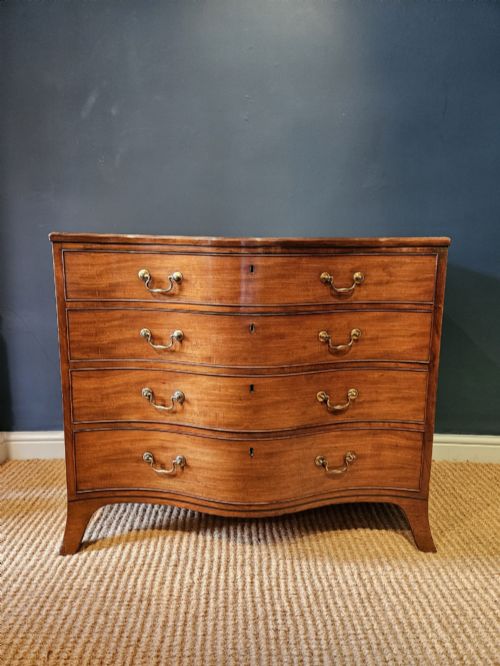
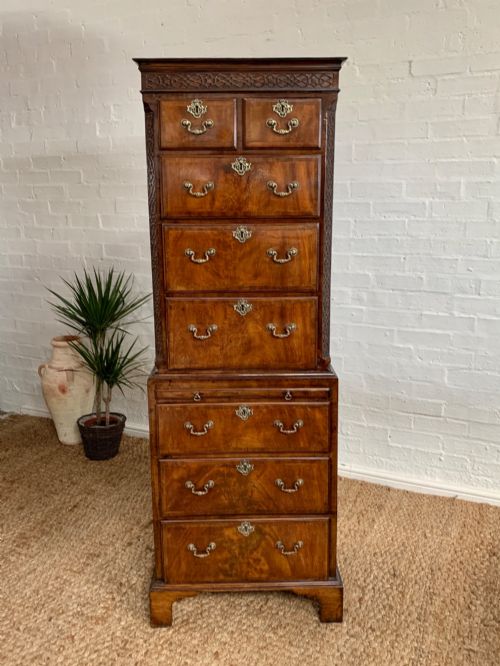
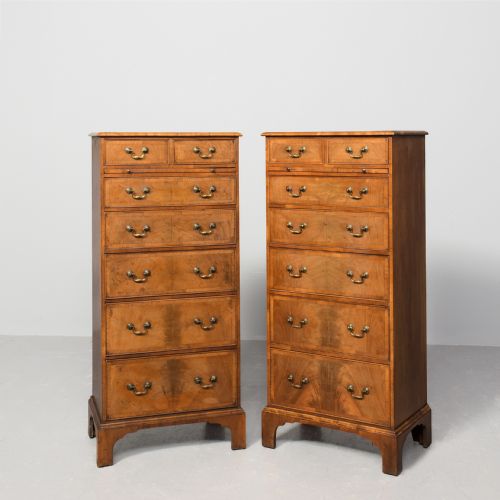
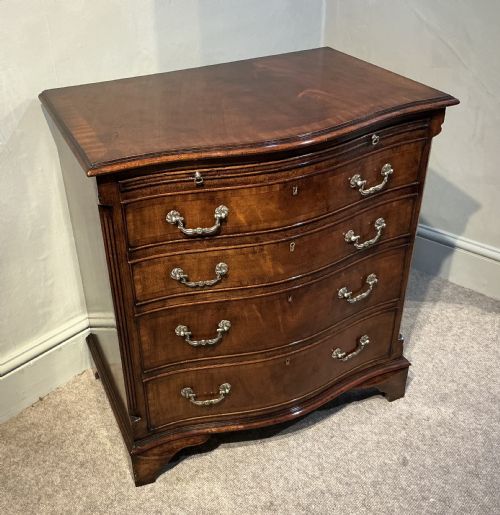
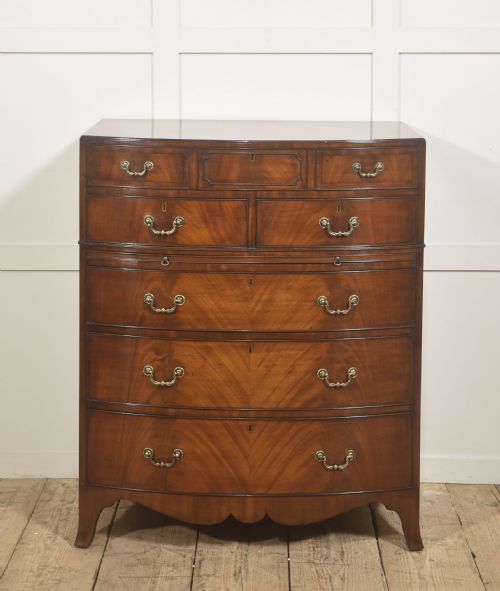
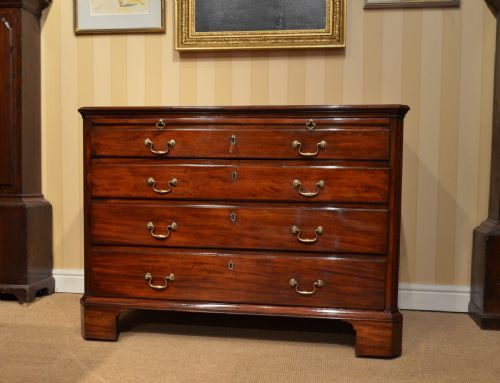
A george iii style chest encompasses various storage forms derived from eighteenth-century designs, including serpentine chests of drawers, tallboys, bachelors chests with brushing slides, and linen presses. Many pieces date from the Georgian period itself, while others emerge from later revivals during the nineteenth and twentieth centuries.
Materials and Construction
Solid mahogany and walnut form the structural core of most examples, frequently enhanced by decorative veneers such as burr walnut, flame mahogany, and satinwood. Cabinetmakers utilise traditional joinery methods alongside detailed boxwood inlay and marquetry to create complex serpentine and bow-front profiles.
Secondary timbers like oak provide internal framing for drawers, while brass hardware secures handles and escutcheons. Fine decorative work relies on precise cutting of crossbanding and stringing to articulate the drawer fronts.
George III Style Chest Retail Price Guide 2026
Typical asking prices for george iii style chest among the pieces listed under this phrase on Sellingantiques today, from the lower quarter to the upper quarter. They describe what is for sale here now, not the wider market.
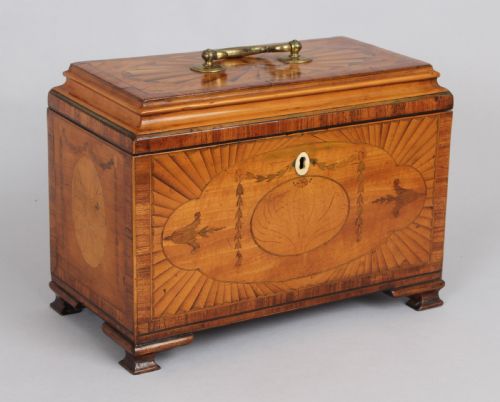
Some tea-caddies hidden among these furniture listings prove that even eighteenth-century tea lovers required secure storage for their valuable leaves.
Craftsmanship and Proportion
Quality rests in the harmony of proportions, the crispness of the inlay work, and the selection of figured veneers. Superior examples display seamless matching of grain across drawer fronts and precise alignment in serpentine or concave curves.
Internal construction reveals the maker's discipline, seen in the hand-dovetailed drawer boxes and the weight of the selected brasses. Lesser pieces may lack the deliberate balance and refined edge-detailing found in works by recognised cabinetmakers.
William Gomm·Waring and Gillow
The George III Style Chest Glossary
- Serpentine front
- A furniture front curving outward in the centre and inward at the sides. This shape demands high skill from the cabinetmaker.
- Tallboy
- A tall chest of drawers, often built in two sections with a smaller chest sitting atop a larger base. It maximises vertical storage space.
- Brushing slide
- A pull-out shelf fitted above the top drawer, traditionally used for writing or brushing clothes. It slides flush into the cabinet frame when not in use.
- Crossbanding
- A narrow strip of veneer applied to the border of a panel or drawer front with the grain running perpendicular to the centre. It creates a defined visual frame.
- Marquetry
- Decorative patterns formed by inserting pieces of contrasting wood and other materials into a veneered surface. It is typical of refined eighteenth-century cabinet work.
George III Style Chest: Frequently Asked Questions
How do I spot a later revival piece?
Revival chests from the nineteenth or twentieth centuries often utilise machine-cut elements or different secondary woods inside the drawers compared to eighteenth-century originals.
Examining the construction methods and the wear patterns on the drawer runners helps determine the actual age of the timber.
What is a bachelors chest used for?
A bachelors chest functions as a compact storage unit featuring a pull-out brushing slide designed for temporary writing or folding tasks.
These versatile pieces suit smaller bedrooms or studies where floor space is limited.
How do I maintain wood veneer?
Wood veneer requires protection from direct sunlight and sudden temperature shifts to prevent warping or splitting of the fine surface layers.
Applying a traditional beeswax polish helps preserve the moisture and natural sheen of mahogany and walnut surfaces.
What defines a serpentine front?
A serpentine front curves outward in the middle and gently curves inward toward each corner, creating a fluid wave shape across the drawers.
This complex contour requires precise woodworking so the drawers operate smoothly within the curved frame.