
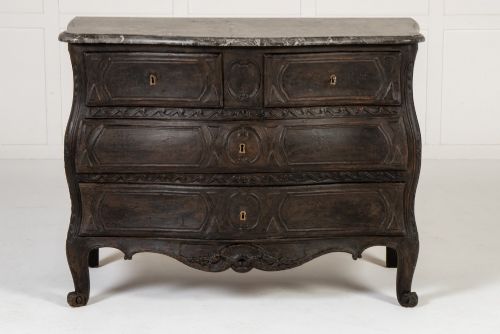
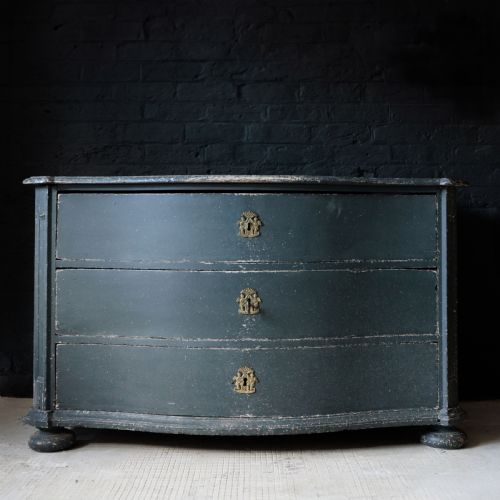

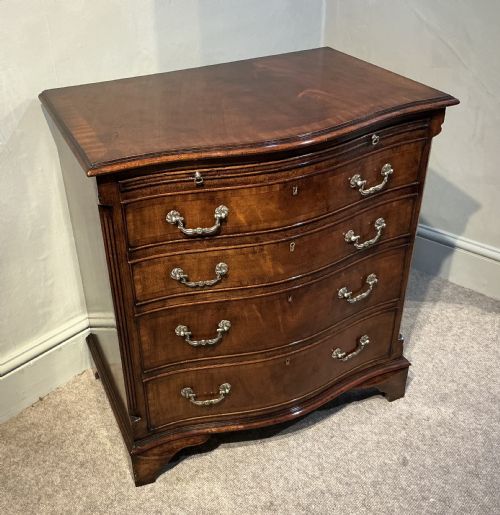


Dark Wood Serpentine Commode
A dark wood serpentine commode brings sweeping curves and rich timber grain to a room, offering generous storage with undeniable presence.
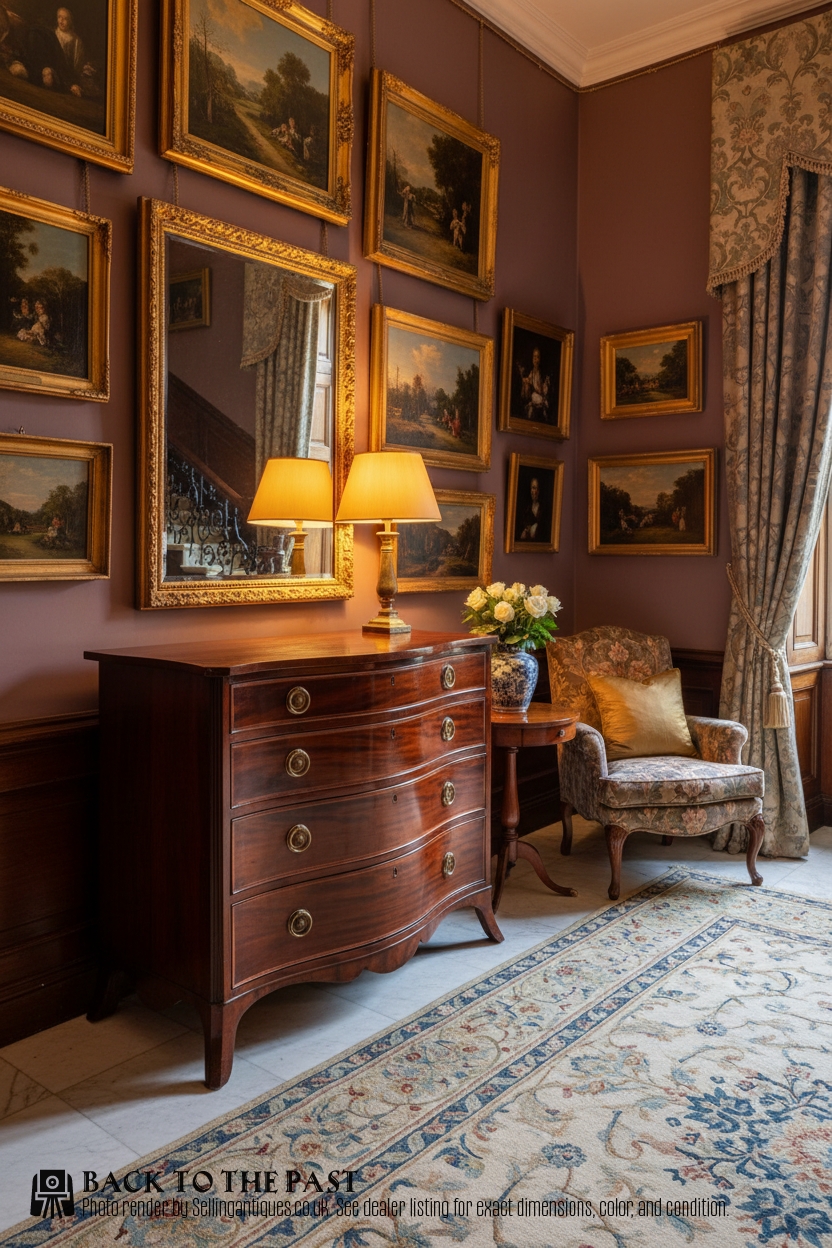
Dark Wood Serpentine Commode
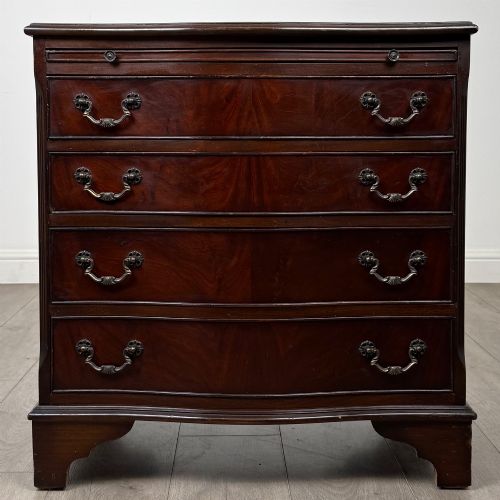
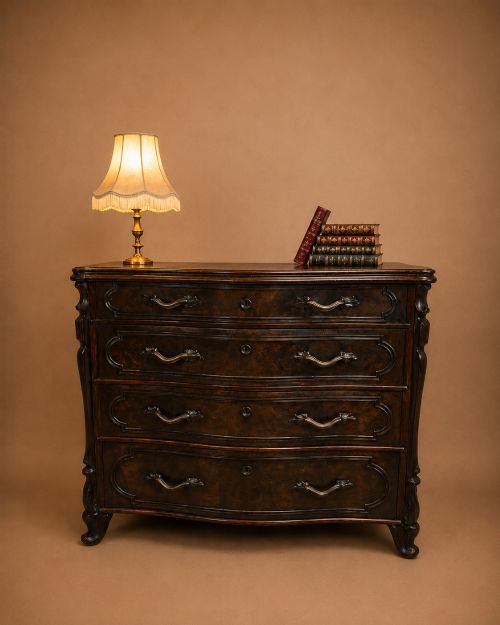
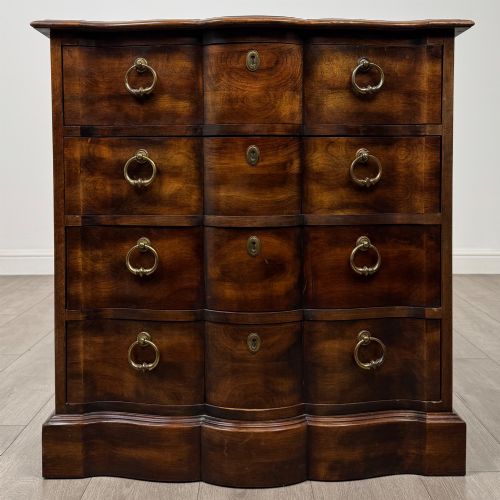
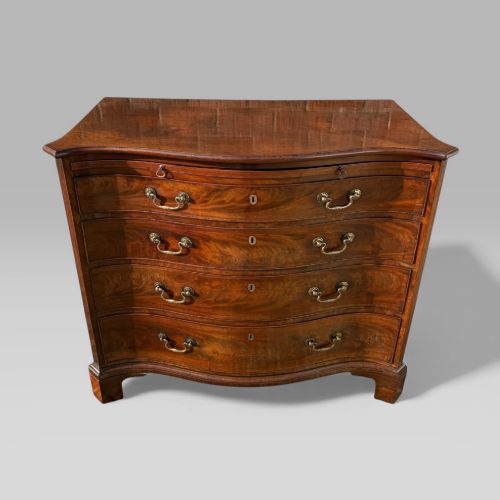
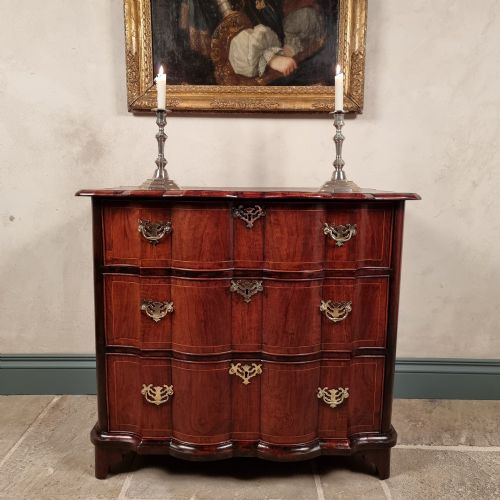
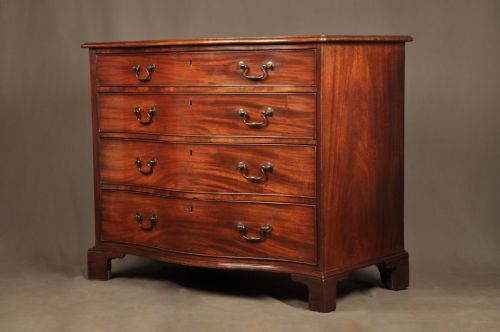
A dark wood serpentine commode is a chest of drawers or commode defined by its undulating, wave-like front contour. These pieces appear most frequently in mahogany, walnut, and oak across the Georgian and eighteenth-century periods, alongside later Edwardian and Victorian revivals.
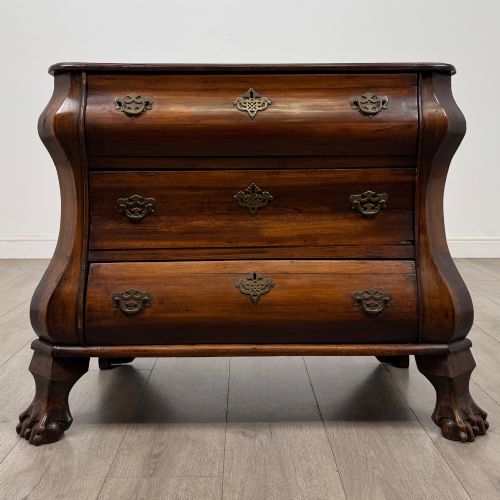
The form spans various proportions, from compact bedside cabinets and dressing chests to large gentleman's chests and grand commodes. Buyers encounter both English Georgian interpretations and continental French or Dutch variations, including bombe shapes.
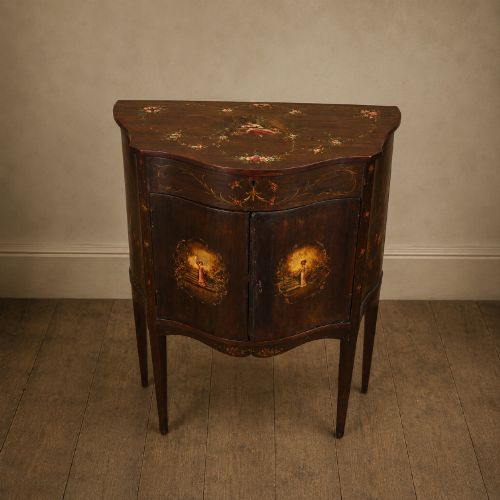
Makers utilised rich hardwoods, occasionally adding paint or brass hardware to accentuate the characteristic curved facade. The selection ranges from authentic eighteenth-century examples to later revival pieces mirroring Chippendale and Sheraton styles.
Materials and construction
Cabinetmakers constructed these commodes primarily from solid and veneered hardwoods such as mahogany and walnut, supported by secondary timbers like oak. The curved serpentine fronts required expert timber selection and precise shaping to follow the undulating line without warping.
Brass handles, escutcheons, and occasional mounts provided functional and decorative accents against the dark wood surfaces. Skilled joinery ensured that drawers operated smoothly within the complex curved housing, frequently incorporating internal writing slides or compartments.
Some gentleman's chests hide internal writing brushes and sliding compartments behind their sweeping serpentine drawers.
Assessing quality
The standard of a dark wood serpentine commode rests in the fluidity of the front curve and the choice of timber figure. Superior examples display carefully matched grain across the drawer fronts and crisp, unforced proportions.
Construction details distinguish the work, such as the precision of the dovetail joints and the integrity of the secondary woods used inside. Original brassware and well-preserved surface patination separate master craftsmanship from later copies.
Waring and Gillow
The Dark Wood Serpentine Commode Glossary
- Serpentine
- A front contour that curves outward in the centre and inward at the sides, creating a wave-like shape. This design demands advanced cabinetmaking skill to execute correctly.
- Commode
- A low chest of drawers or cabinet, often originating from French furniture forms. In English pieces, the term frequently describes decorative chests of drawers.
- Bombe
- A swelling, convex furniture shape with outward-curving sides and fronts. This profile appears characteristically on continental Dutch and French pieces.
- Dressing chest
- A chest of drawers equipped for grooming or writing, sometimes featuring a fitted top drawer with a slide or mirror. These items combine storage with practical surface utility.
Dark Wood Serpentine Commode: Frequently Asked Questions
How do I style a serpentine commode?
Place the commode against a clear wall in a hallway, bedroom, or living room where its curved front can catch the light. Keep surface objects minimal to let the timber grain and silhouette remain the focal point.
Pair the piece with simple, understated surroundings to balance the ornate movement of the undulating woodwork.
What is the difference between Georgian and revival pieces?
Georgian pieces date from the eighteenth century and display period construction methods, timber maturity, and authentic wear. Revival pieces, such as those from the Edwardian era or Victorian Sheraton revivals, imitate these earlier styles using later manufacturing techniques.
Examining internal timbers, drawer construction, and surface patination helps differentiate the original period items from later interpretations.
Are these commodes practical for daily use?
These chests offer deep drawer capacity suitable for clothing, linens, or general storage. The curved fronts do not significantly reduce internal space compared to straight-fronted chests.
Care should be taken with placement away from direct heat sources to protect the polished hardwood surfaces and historical veneers.
How do I identify French styles?
French commodes often incorporate bombe profiles, ebonised finishes, or painted woodwork alongside lift tops. They tend to feature distinct continental proportions compared to English Georgian designs.
Examining the structural framing and decorative mounts reveals the regional workshop traditions behind the piece.