




Chippendale Style Mahogany Chest
A chippendale style mahogany chest combines robust timber and graceful serpentine lines, offering both practical storage and period elegance for a room.
Chippendale Style Mahogany Chest
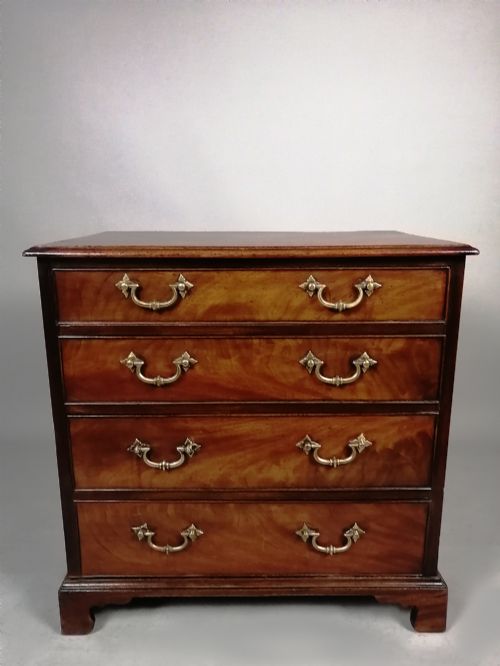
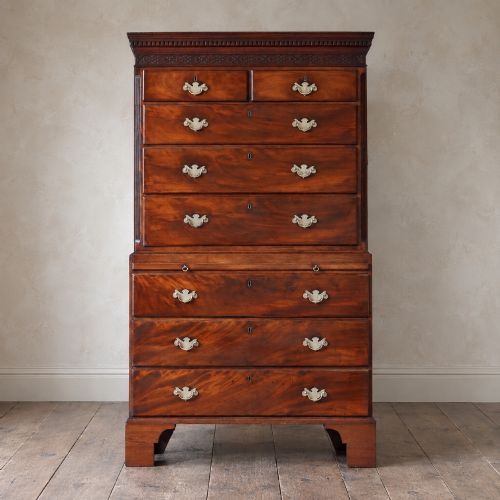
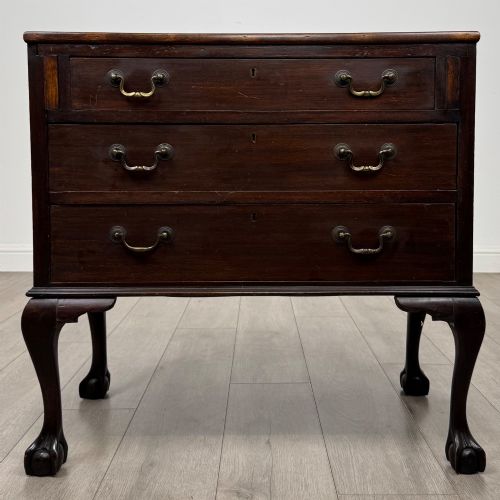
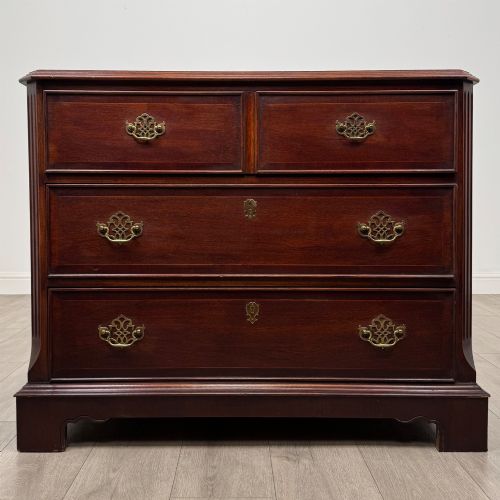
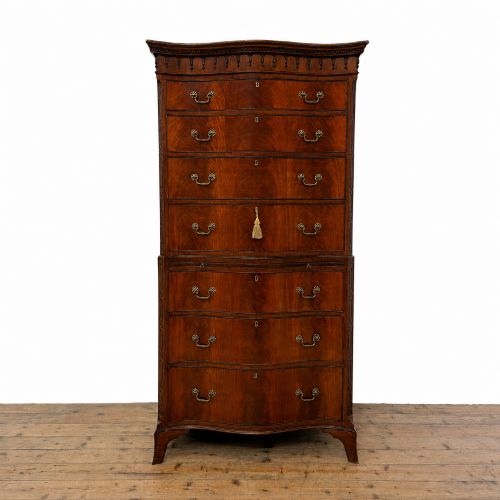
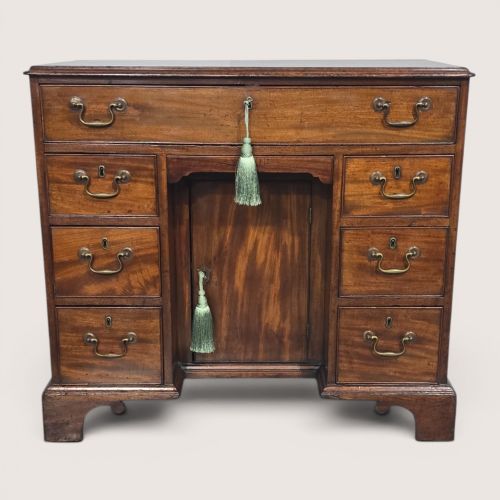
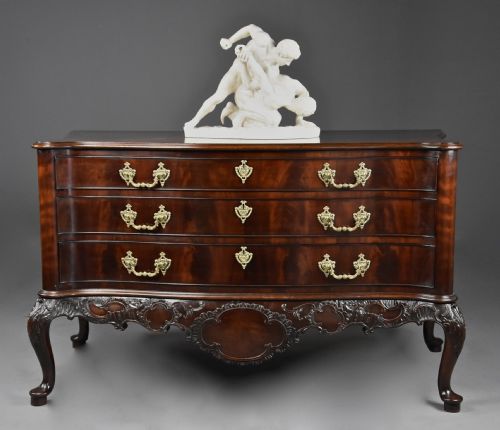
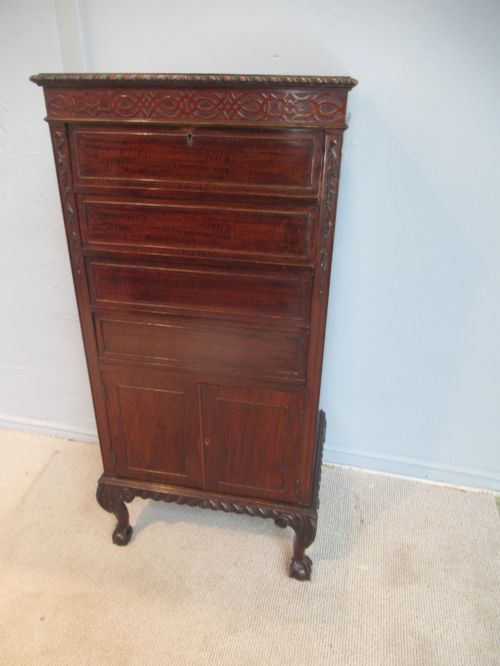
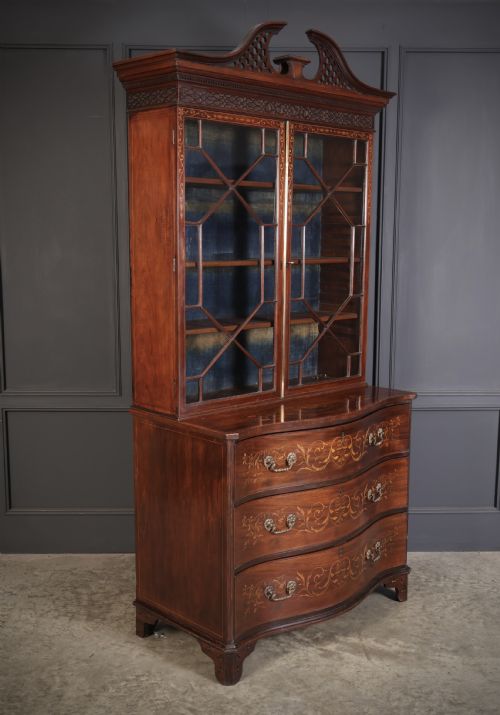
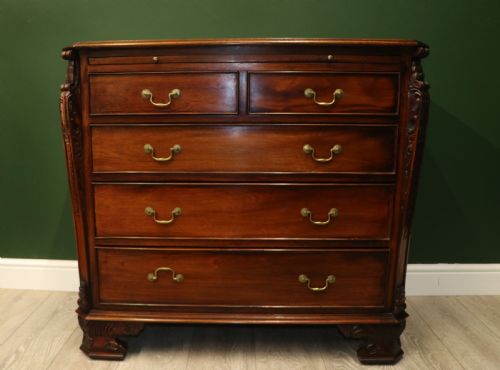
A chippendale style mahogany chest primarily takes the form of a traditional chest of drawers, though variants include tallboys, linen presses, and bachelors' chests with sliding writing surfaces. These pieces emerge from both original Georgian periods and later revival eras spanning the nineteenth and twentieth centuries.
How they were made
Cabinetmakers utilised solid timber alongside flame mahogany veneer and Cuban mahogany, often incorporating oak for secondary drawer linings. Marquetry inlay and carved details frequently enhance the exterior surfaces of these case pieces.
Brass hardware secures the drawers and doors, complementing the dark grain of the timber. Construction techniques combine structural soundness with decorative serpentine shaping of the drawer fronts and commode bodies.
Listings feature mahogany, oak, and satinwood constructions spanning from the mid-18th century to the 1920s.
What varies in quality
The standard of timber selection largely dictates the worth of a piece, with figured and flame mahogany veneers commanding particular attention for their visual depth. The crispness of carved wooden details and the preservation of original patination set superior examples apart from standard productions.
Construction integrity is visible in the smooth operation of brushing slides, secretaire drawers, and the precise alignment of serpentine fronts. Pieces bearing documented maker attributions or retaining their untouched surface character represent the pinnacle of the range.
Waring & Gillows·Walker & Hall·Muirhead Moffat & Co
The Chippendale Style Mahogany Chest Glossary
- Serpentine front
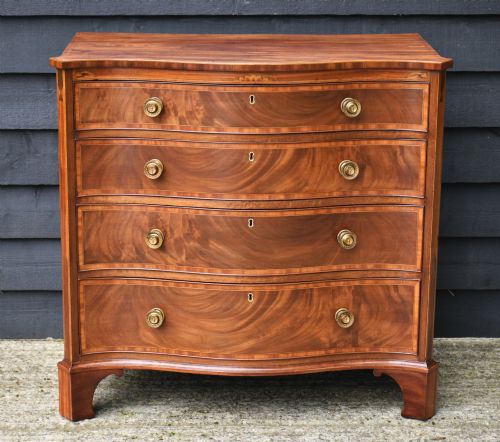
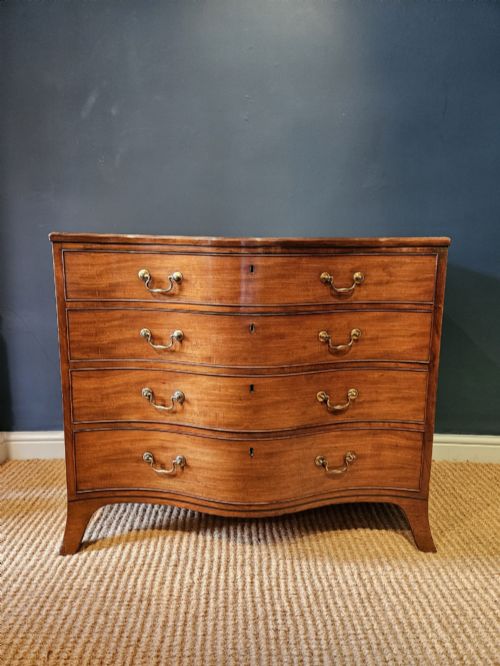
- A convex centre section flanked by concave curves, creating a fluid, undulating facade on a chest of drawers. This shaping demands considerable cabinetmaking skill to execute correctly.
- Brushing slide
- A pull-out shelf located above the top drawers, historically utilised for dusting clothes or as a temporary writing surface. It adds versatility to bachelors' chests and tallboys.
- Chest on chest
- A tall storage unit comprising a smaller upper chest stacked atop a deeper lower section, often referred to as a tallboy. This form maximises vertical storage capacity.
- Commode
- A decorative low chest of drawers or cabinet, frequently featuring serpentine or bombé shaping. In English furniture, the term often denotes a grander chest of drawers.
- Cuban mahogany
- A dense, heavy timber harvested in the Caribbean, prized for its rich colour and stability. Eighteenth-century cabinetmakers favoured it for its superior grain patterns.
Chippendale Style Mahogany Chest: Frequently Asked Questions
What is a bachelors chest?
A bachelors chest is a compact drawer unit featuring a pull-out brushing slide used for writing or grooming. These versatile items combined surface workspace with enclosed storage in smaller domestic quarters.
They appear across Georgian and revival periods, often constructed in figured mahogany with serpentine or straight drawer configurations.
How do I spot a revival piece?
Revival pieces display construction methods, secondary woods, and hardware consistent with nineteenth or twentieth-century manufacturing rather than the eighteenth century. Examining the drawer linings and interior timber helps determine the exact period.
Many high-quality items were produced during the Edwardian era and later decades in faithful imitation of earlier Georgian designs.
What is a tallboy?
A tallboy is a chest on chest configuration where a narrower upper chest sits securely on a broader lower base. This design provides extensive vertical storage without occupying excessive floor space.
Examples listed range from plain mahogany structures to elaborate models featuring linen cupboards and carved decorative details.
Where does serpentine shaping appear?
Serpentine shaping defines the curved, undulating front profile seen on finer chests of drawers and commodes. This flowing contour requires precise woodworking to ensure the drawers close flush.
Cabinetmakers utilised this technique during the Georgian period and subsequent revival eras to create visual movement across heavy mahogany surfaces.