





Brass Handle Inlaid Chest
When you search for a brass handle inlaid chest, you enter a world of practical storage shaped by centuries of fine cabinet-making.
Brass Handle Inlaid Chest
A brass handle inlaid chest combines sturdy timber construction with meticulous surface decoration and metalwork. These pieces span multiple centuries, originating in periods from the seventeenth to the early twentieth century.
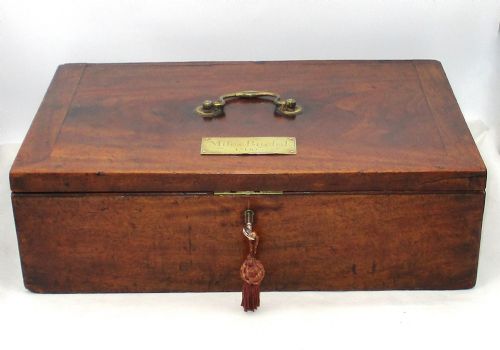
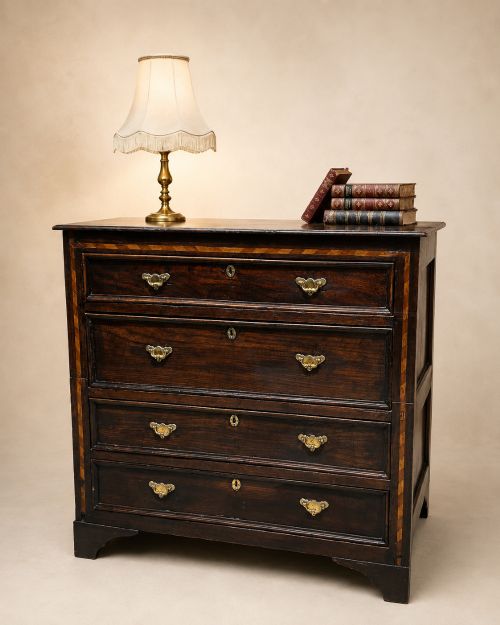
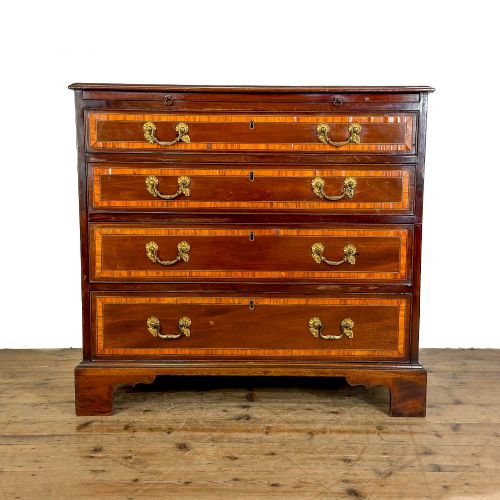
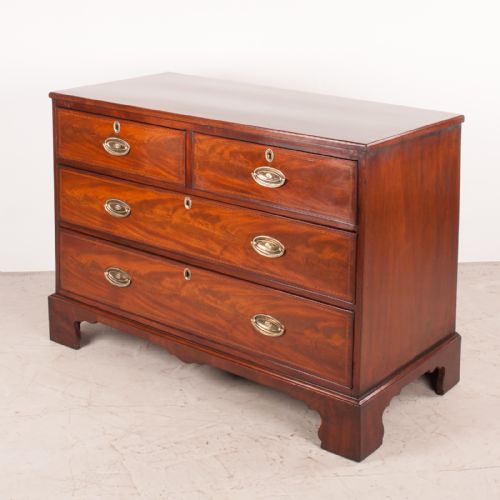
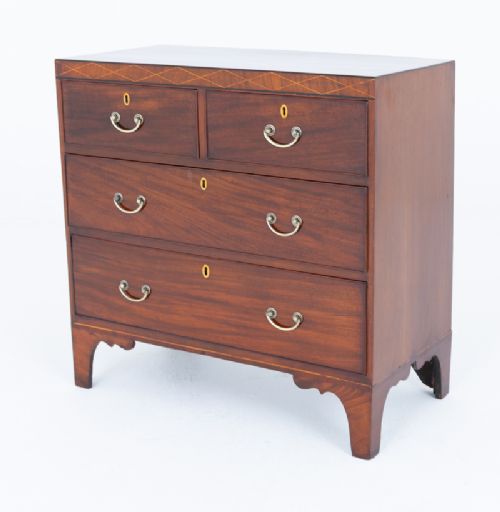
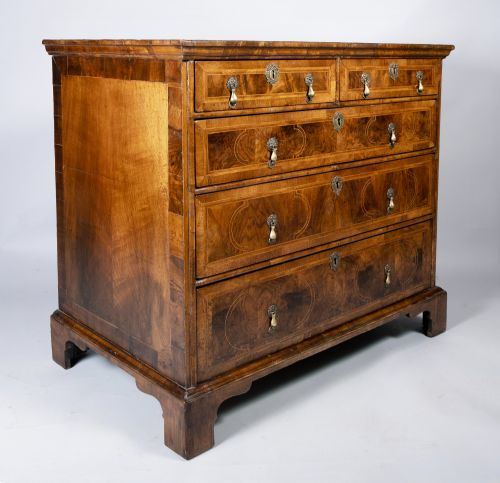
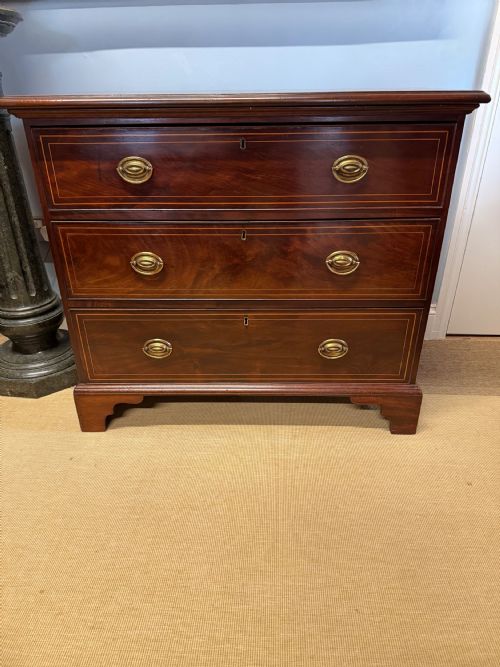
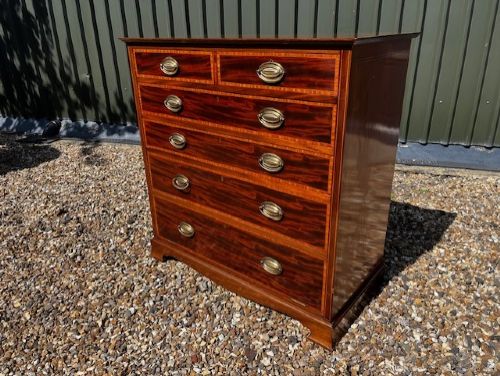
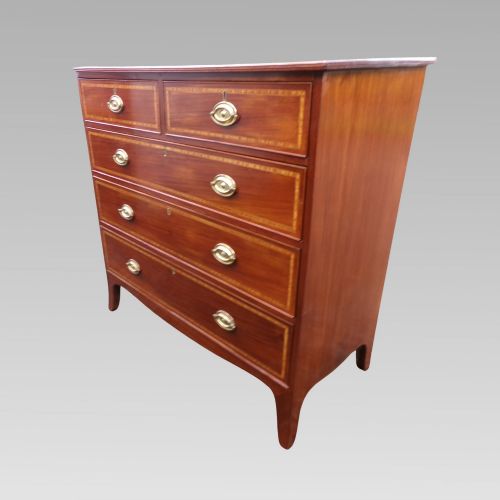
The version you meet most often on this page is the mahogany or walnut chest of drawers, frequently featuring satinwood or boxwood inlay and brass drop or ring handles. Alongside full-scale chests, you encounter compact document boxes, tea caddies, and specialised campaign chests.
Origins vary widely across these listings, taking in English workshops, Welsh country houses, Italian provincial centres, and Chinese export trade yards. This geographical spread gives the category an immense variety of timber tones and decorative motifs.
Materials and construction techniques
Cabinet-makers relied on dense, figured hardwoods like mahogany, walnut, and oak to build the primary carcass and drawer frames. Satinwood, boxwood, and maple provided contrasting light tones for intricate stringing and geometric banding.
Surface decoration depended on precise wood inlay, marquetry, and crossbanding, where veneer grain direction creates subtle patterns. Solid brass handles, escutcheons, and lion masks were secured to the drawer fronts to complete the design.
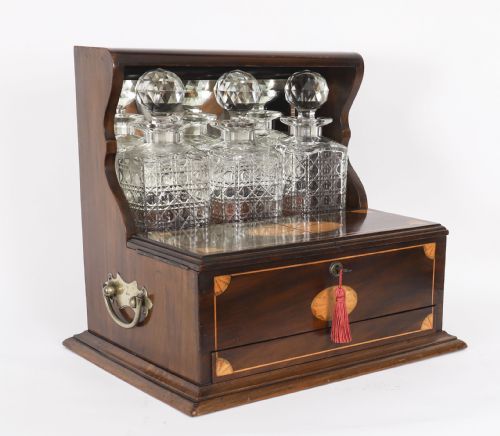
Some tea caddies come complete with three cut crystal decanters hiding inside alongside the brass handles.
Distinguishing quality across the range
The integrity of the hardware matters significantly, distinguishing original cast brass handles and backplates from later replacements. Drawer construction details, such as hand-cut dovetails and secondary softwood linings, mark the distinction between provincial workshop output and top-tier cabinet-making.
Mawer & Stephenson
The Brass Handle Inlaid Chest Glossary
- Inlay
- A technique where pieces of contrasting timber, bone, or metal are fitted into recesses flush with the surrounding wood surface. This method creates decorative borders and pictorial motifs across drawer fronts and tops.
- Crossbanding
- A strip of veneer applied across the grain of the primary panel to form a contrasting border. It frames the perimeter of drawer fronts and table tops on Georgian and Regency pieces.
- Serpentine front
- A furniture front curving outward in the centre and inward at the sides in a continuous undulating line. It demands exceptional skill from the cabinet-maker to shape both the timber and the corresponding drawers.
- Campaign chest
- A modular chest of drawers built in two or more sections with recessed brass carrying handles for military transport. These pieces dismantle easily for travel.
- Escutcheon
- A protective metal plate surrounding a keyhole. On these pieces, brass escutcheons often match the drop handles and drawer pulls.
Brass Handle Inlaid Chest: Frequently Asked Questions
How do I date a walnut chest?
Walnut was heavily utilised during the late seventeenth and eighteenth centuries, particularly in William and Mary and Queen Anne periods. Look for rich grain patterns and period-specific construction methods like plank sides.
Later pieces from the nineteenth century often adopted earlier walnut styles or used richer crossbanding. Examining the interior timber linings helps confirm the true manufacturing era.
Are brass handles usually original?
Many pieces retain their period brass drop handles, swan necks, or ring pulls, while others have received replacement hardware over centuries of use. Original fixings leave consistent ghost marks and indentation patterns on the timber.
Replacements are common because heavy daily use strained the original fixings. Matching brass patination and correct backing plates help determine whether the hardware belongs to the period of the chest.
What is a campaign chest?
A campaign chest is a portable storage unit designed for military officers on the move. They are built in separate stacked sections with flush brass handles to prevent snagging during transport.
These pieces use durable timbers like camphor-wood or mahogany to withstand harsh climates. Their modular design makes them exceptionally practical for modern apartment living.
Where were serpentine chests made?
Serpentine chests appear across various European traditions, including English Georgian workshops and continental centres like southern Germany and Italy. Each region utilised local timbers, such as walnut or mahogany, combined with regional inlay motifs.
The undulating drawer fronts required master carpenters to shape every timber layer by hand. This complex craftsmanship identifies them as high-status commissions from their respective periods.