




Japanese Decorative Ceramics
These Japanese decorative ceramics bring hand-painted porcelain, earthenware and cloisonné into rooms through plates, chargers, vases and lamps.
Japanese Decorative Ceramics
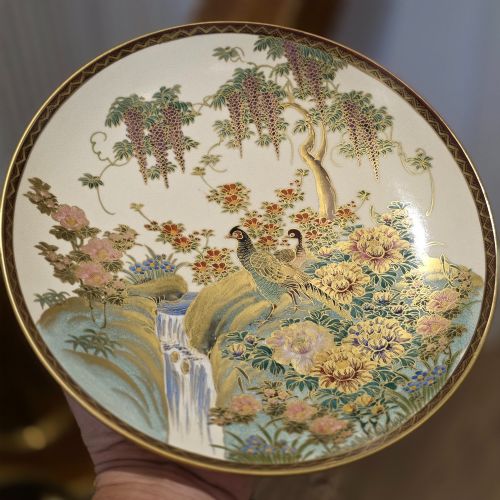
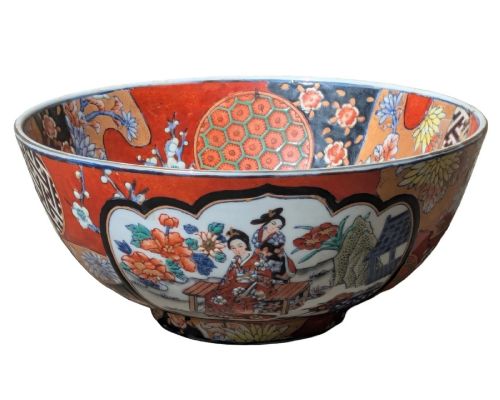
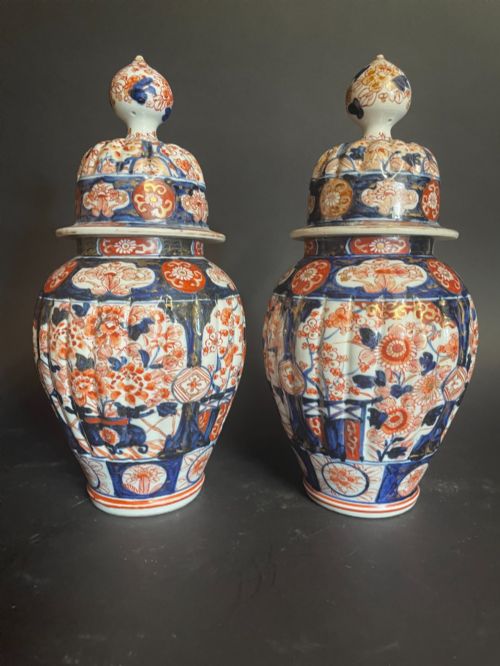
Japanese decorative ceramics span plates, chargers, bowls, vases, lidded jars and table lamps produced across the nineteenth and twentieth centuries. These pieces encompass traditional Imari wares, Satsuma earthenware, Kutani items and blue and white porcelain.
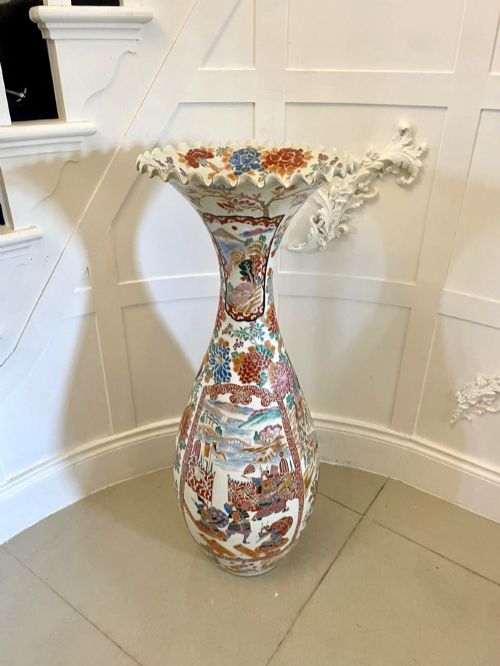
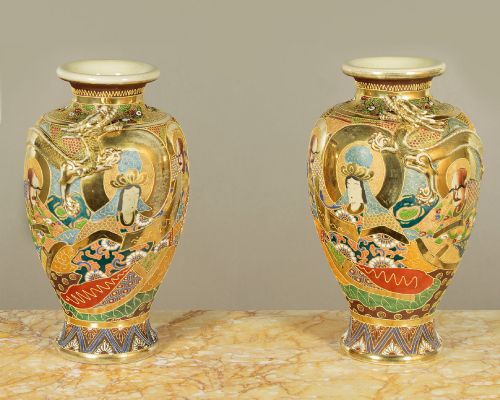
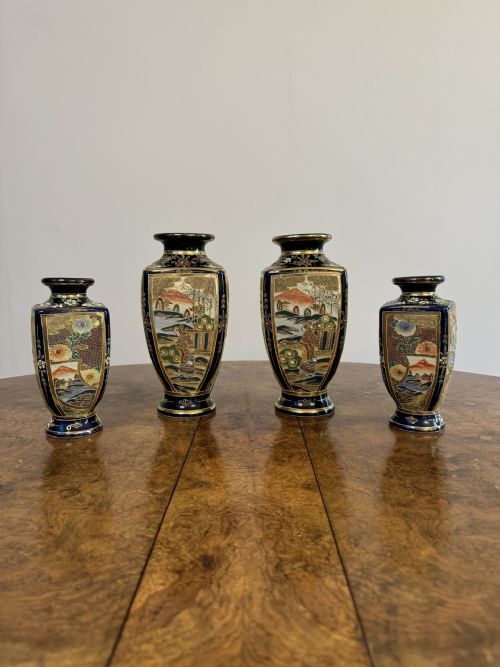
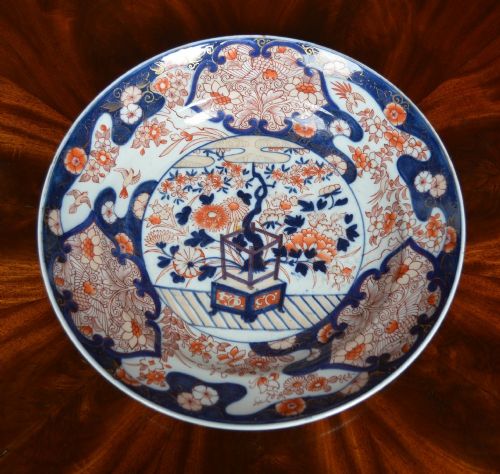
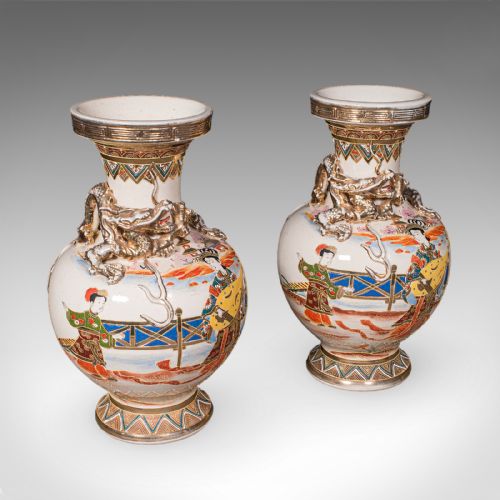
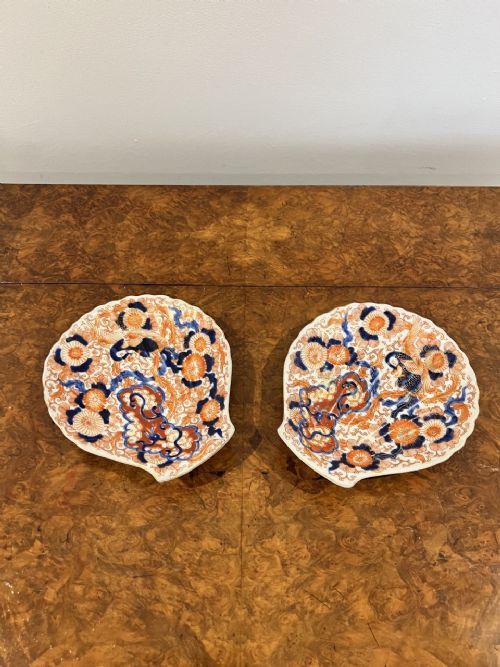
Buyers encountering this selection most frequently meet Imari chargers, scalloped plates and Satsuma vases originating from the Meiji period through to the Showa period. Forms range from small dishes and bowls to large floor-standing vases and matched pairs.
Origins include named Meiji artists alongside pieces bearing period styles such as Japanese Edo, Meiji, Taisho and Showa. Many objects combine ceramic bodies with enamel, gold leaf, gilt and painted floral or bird motifs.
Materials and Techniques
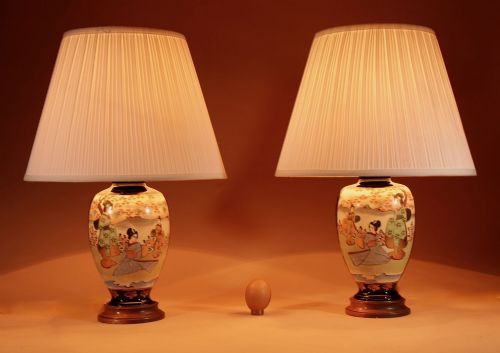
Potters shaped porcelain and earthenware into vessels, plates and lamps, sometimes incorporating wood and brass fittings on functional items like table lamps. Surfaces received mineral glazes, detailed enamel colours and generous applications of gold leaf and gilt.
Decoration relied on hand-painted botanical, avian and figural motifs, executed in rich palettes associated with Imari, Satsuma and Kutani traditions. Certain items employed cloisonne wirework on metal or ceramic bases to create segmented enamel designs.
Listings incorporate materials ranging from delicate porcelain and earthenware to applied enamel, gold leaf, gilt, wood and brass.
Judging Quality and Execution
The degree of refinement in the hand-painted brushwork distinguishes standard production pieces from finer studio or workshop output. Crisp execution of intricate patterns, particularly in Satsuma moriage and Imari floral designs, separates superior examples.
The preservation of original gilding, enamel colours and surface glaze without heavy wear indicates better preservation and manufacturing standard. Form complexity, such as scalloped edges, shell shapes and large balanced garnitures, also marks higher grade specimens.
Koshida·Manpei, Kobe·Gyokkō·Kozan
The Japanese Decorative Ceramics Glossary
- Imari
- A style of Japanese porcelain featuring a distinctive palette of underglaze blue, iron red, and gilt, named after the port from which it was exported. These pieces often display dense floral and geometric panels.
- Satsuma
- A type of Japanese earthenware characterised by an ivory-coloured, crackle-glazed surface decorated with enamels and raised gilding. Many Satsuma items depict figurative scenes, birds and peonies.
- Charger
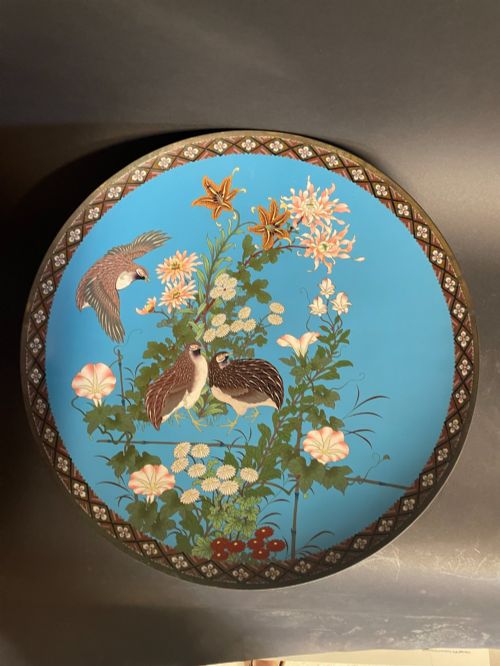
- A large decorative plate intended primarily for display on a wall, cabinet or stand rather than for serving food. Chargers in this selection frequently measure of substantial diameter with scalloped or rounded rims.
- Moriage
- A decorative technique in Japanese ceramics where slip or enamel is piped onto the surface in raised dots or lines to create a tactile, three-dimensional effect. This method appears frequently on Meiji Satsuma wares.
- Garniture
- A set of matched vases or jars designed to be displayed together as a decorative unit on a mantelpiece, sideboard or console table. Such sets typically comprise four or more coordinating pieces.
Japanese Decorative Ceramics: Frequently Asked Questions
What is the difference between Imari and Satsuma?
Imari wares are hard-paste porcelains decorated in deep cobalt blue, iron red and gold, created for both domestic use and export. They present a resonant, glossy finish with geometric and floral panel layouts.
Satsuma pieces consist of earthenware with a characteristic creamy, crackled glaze that serves as a canvas for polychrome enamels and raised gold work. These items lean heavily toward pictorial and narrative decoration rather than repeating geometric patterns.
How were large chargers displayed historically?
Large chargers were produced primarily for visual display rather than table service, often mounted on walls or set upon specialist wooden stands in prominent reception rooms. Their broad circular surfaces allowed artisans to execute expansive landscape, floral and avian compositions.
In Western homes, owners frequently placed them on sideboards or hung them securely to showcase the rich gilding and intricate hand-painted borders characteristic of late nineteenth-century export wares.
How do I identify Meiji period pieces?
Meiji period ceramics generally date between 1868 and 1912, a time when Japanese export production expanded significantly to satisfy international demand for decorative arts. Pieces from this era often display exceptional technical precision in enamel work and gilding.
Signatures or artist marks painted on the base can occasionally pinpoint individual makers or specific workshops operating during this prolific era of Japanese ceramic art.
Can antique Japanese table lamps be rewired safely?
Many antique Japanese ceramic vessels, including vases and jars, were converted into table lamps during the twentieth century to suit modern domestic lighting needs. These conversions usually retain the original ceramic body while incorporating contemporary electrical wiring, brass fittings and lamp holders.
Buyers should have any vintage lamp inspected and tested by a qualified electrician to ensure current safety standards are met before regular use in the home.