






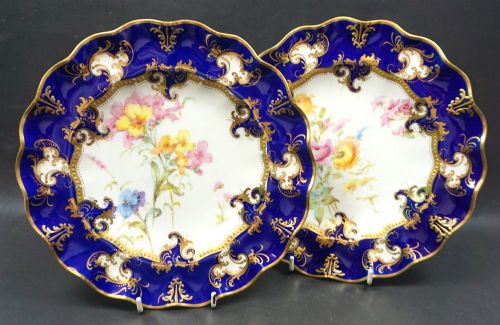

Hand Painted Charger
A hand painted charger brings substantial colour and bold ornamentation to a wall or table, originating from traditions spanning Japanese export wares to European earthenware.

Hand Painted Charger
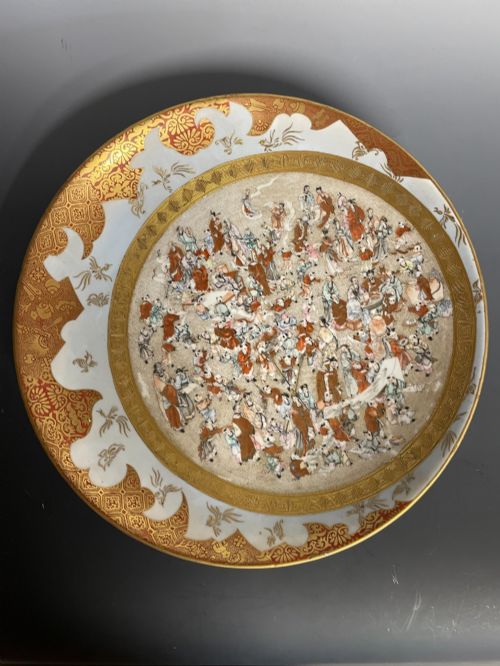
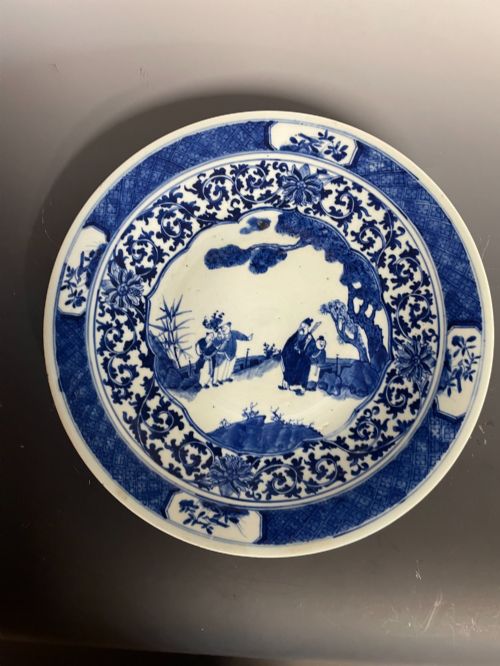
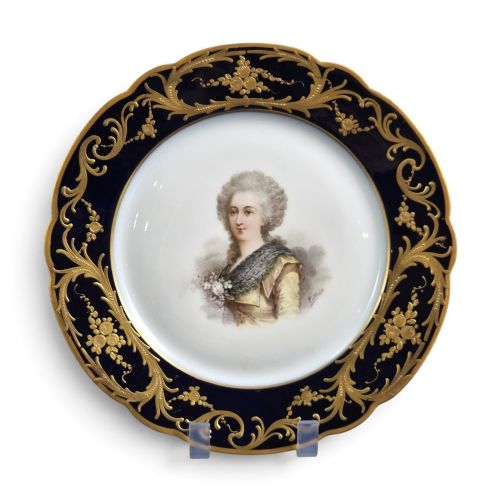
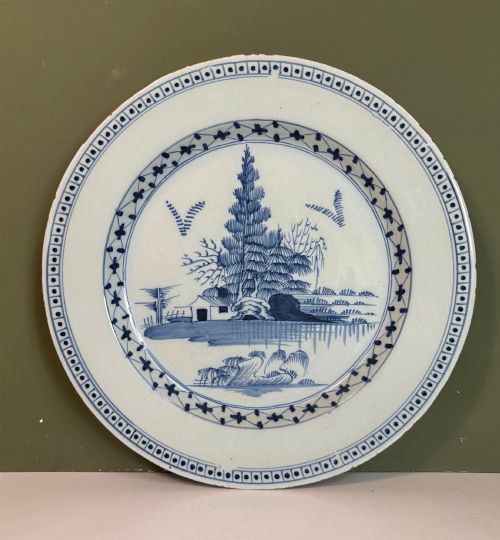
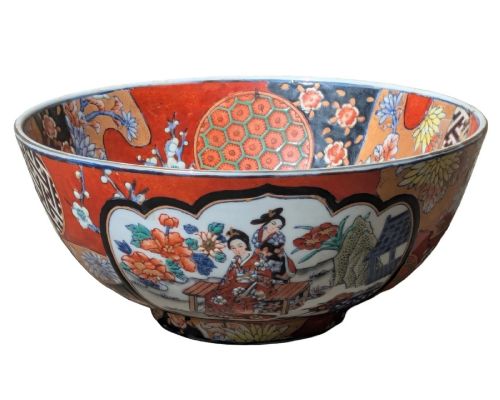
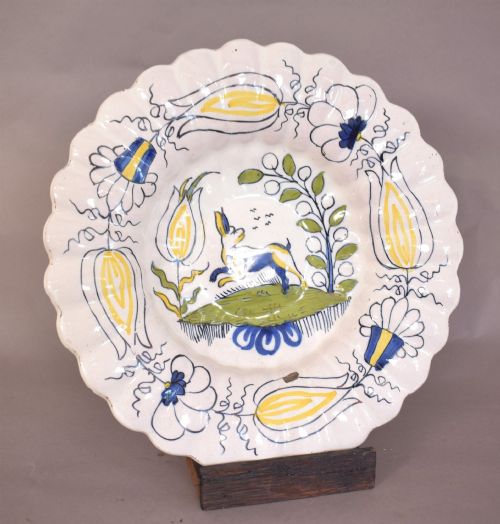
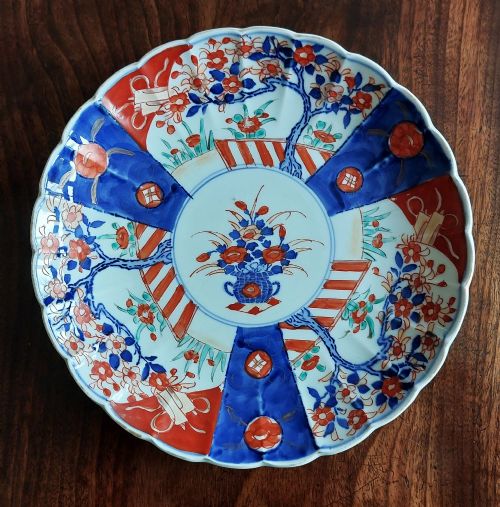
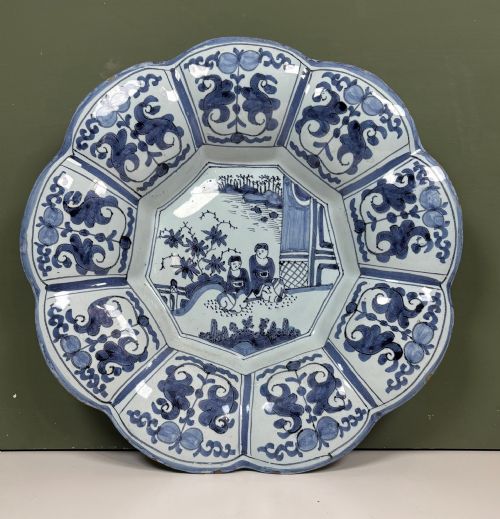
A hand painted charger is a large decorative plate or dish, created to display painted scenes, flora, or geometric motifs rather than to serve food at the table. These pieces emerge from diverse origins, including Japanese Imari, Dutch Delft, English ironstone, and French porcelain workshops.
The pieces on this page span several centuries, reaching from the seventeenth century through the eighteenth and nineteenth centuries into the twentieth. Forms vary from deep circular chargers to scalloped bowls and lobed dishes.
How they were made
Potters shaped these chargers from ceramic, porcelain, earthenware, or soft-paste bodies, often applying tin glaze or white enamel to form a smooth working surface for the artist. Cobalt blue, polychrome enamels, and gold leaf were then hand-applied before firing.
Many items underwent high-temperature kiln firings to fuse the colourful mineral pigments and glazes to the clay body, resulting in durable decorative surfaces.
Some chargers depict fierce painted dragons alongside quiet British rivers, proving that potters painted whatever caught their fancy.
What varies in quality
Quality rests in the precision of the hand-painted brushwork, where finely rendered portraits or intricate floral motifs display superior artistic control compared to repetitive commercial output. The crispness of the glaze and the complexity of the palette also distinguish finer examples.
The weight, throwing of the clay body, and preservation of delicate enamel or gold leaf details shape the overall standard of the finished object.
Royal Worcester·Royal Crown Derby·Théodore Deck·John Davenport·Crown Ducal
The Hand Painted Charger Glossary
- Charger
- A large decorative plate or dish, traditionally exceeding the diameter of standard dinnerware. These items often hang on walls or sit centrally on furniture.
- Delftware
- Tin-glazed earthenware produced in England or the Netherlands, typically featuring blue and white painting or polychrome floral decoration.
- Imari
- A style of Japanese export porcelain characterised by cobalt blue and iron red ornamentation, frequently enriched with gold leaf.
- Faience
- European tin-glazed earthenware or pottery, widely produced across France and the continent during the eighteenth and nineteenth centuries.
- Cabinet Plate
- A smaller decorative plate intended for display in a cabinet or on a stand rather than for everyday dining use.
Hand Painted Charger: Frequently Asked Questions
How were chargers used historically?
Chargers served primarily as grand display pieces on sideboards or walls rather than for eating. Wealthy households utilised them to showcase fine craftsmanship and artistic painting.
Over time, these large dishes transitioned into dedicated decorative objects collected for their aesthetic value.
How do I hang a heavy charger safely?
Hanging a large ceramic or porcelain dish requires a specialised spring-loaded plate hanger that distributes weight evenly across the rim. Ensure the fixing secures firmly into a wall stud.
Avoid wire adhesives that rely on old glazes, as ceramic surfaces can degrade over decades.
How do I distinguish Delftware from porcelain?
Delftware employs a porous earthenware body covered in an opaque white tin glaze, which feels slightly softer than glass. Porcelain is a vitrified, dense ceramic that rings when tapped and remains non-porous.
Examining the unglazed foot rim reveals the distinct clay body beneath.
Can I clean antique hand-painted chargers?
Dusting gently with a dry, soft cloth is best for preserving fragile overglaze enamels and gold leaf. Moisture can seep into hairline cracks in old earthenware bodies.
Harsh cleaning products will strip delicate hand-painted pigments from the glaze surface entirely.