





Austrian Porcelain Plate
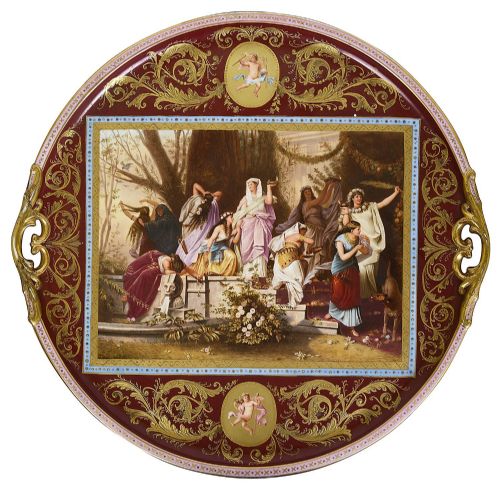
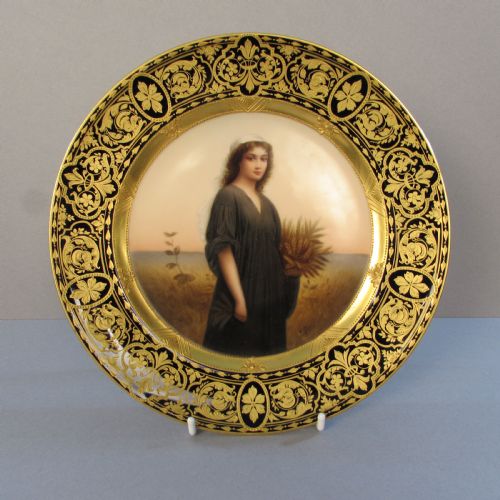
These pieces of austrian porcelain plate are hand-painted cabinet plates and large chargers designed for display.
Austrian Porcelain Plate
When you search for an austrian porcelain plate, you encounter decorative chargers, cabinet plates, and trays originating from the nineteenth century and the early twentieth century. These objects frequently adopt the Royal Vienna style or Vienna Historicism, drawing heavily upon Neoclassical design motifs.
The pieces listed on this page range from modest cabinet plates to large decorative chargers measuring up to fifty centimetres in diameter. Most examples feature mythological or historical pictorial scenes painted centrally within ornate borders.
How they were made
The makers utilised hard-paste porcelain as the base material, shaping it into deep chargers, flat cabinet plates, and trays. Artisans then applied detailed enamel painting by hand to depict elaborate figurative scenes.
Finishing touches involved cobalt glaze alongside gold leaf, gold gilt, and traditional gilding to highlight the decorative borders and structural rims of the porcelain.
What varies in quality
Quality rests primarily upon the skill of the hand-painted artwork and the complexity of the narrative scene depicted on the porcelain. Signed works by specific artists command greater attention due to the finer brushwork and detailed portraiture.
The application of gold gilt and cobalt glaze also dictates distinction, with intricate raised gilding and deep, unblemished cobalt grounds separating standard production wares from superior cabinet pieces.
Royal Vienna
The Austrian Porcelain Plate Glossary
- Cabinet plate
- A decorative porcelain plate intended for display in a cabinet or on a wall rather than for dining use. These pieces often feature elaborate painted scenes and gilded borders.
- Charger
- A large ornamental plate or tray used historically for formal presentation or purely as a decorative wall hanging. They provide a broad surface area for detailed mythological or historical paintings.
- Cobalt glaze
- A rich blue ceramic colouring applied beneath or over the glaze to create deep, vibrant background tones. It frequently forms a contrasting border against central painted portraits and gold gilding.
- Gilding
- The application of gold leaf or gold gilt onto the surface of the porcelain to accentuate borders, handles, and decorative motifs. High quality examples often include raised and burnished gold work.
- Neoclassical Revival
- A nineteenth-century artistic movement that revived classical Greek and Roman aesthetic principles, visible in the subject matter and symmetrical borders of these plates.
Austrian Porcelain Plate: Frequently Asked Questions
What is an austrian porcelain plate?
An austrian porcelain plate is a decorative ceramic object produced primarily during the nineteenth century, often reflecting the Royal Vienna style.
These items were created for visual display rather than everyday use, featuring intricate hand-painted mythological or historical scenes framed by cobalt glaze and gold gilding.
How were cabinet plates displayed?
Cabinet plates and chargers were historically housed in glass-fronted display cabinets or mounted directly onto walls to showcase their artistic merit.
Their large scale and detailed figurative paintings made them central decorative elements in nineteenth-century formal interiors.
How do I identify a Vienna style plate?
Vienna style plates are typically recognised by their heavily gilded borders, cobalt blue grounds, and meticulous hand-painted narrative scenes.
Many examples also incorporate classical motifs derived from Neoclassical and historicist design traditions.
Are these plates signed by artists?
Certain cabinet plates and chargers feature signature markings from the painters who executed the central portraiture or narrative scenes.
Signatures such as Wagner or Sibl indicate individual artistic attribution on nineteenth-century pieces.