
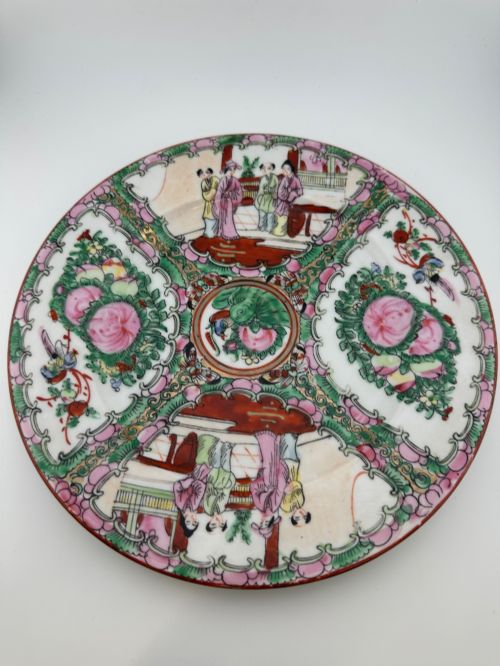


Gilt Edge Decorative Plate
A gilt edge decorative plate brings rich ceramic artistry and gilded highlights to a wall or cabinet.

Gilt Edge Decorative Plate
A gilt edge decorative plate is a ceramic or porcelain display piece finished with metallic leaf or gilding along the rim. When you search for this phrase, you encounter cabinet plates, chargers, and ribbon dishes spanning the nineteenth and twentieth centuries.
The selections on this page draw from diverse origins and styles, ranging from English bone china and ironstone to Japanese porcelain and Meiji chargers. Japanese Imari examples and English factories like Royal Worcester and Royal Doulton appear frequently.
Most items date from the Victorian and Edwardian eras, alongside pieces from the nineteen-tens and nineteen-twenties. These objects were intended primarily for visual display rather than daily dining use.
Materials and production methods
These pieces utilise fine porcelain, bone china, ceramic, and ironstone as bodies for hand-painted and gilded decoration. Makers applied gold leaf and gilding to accentuate rims and borders, framing central motifs of birds, florals, and classical scenes.
Techniques range from hand-painted enamel and pâte-sur-pâte work to transfer printing and Japanese Imari glazing traditions. Kiln firing fixed these intricate pigments and metallic layers onto the ceramic surface.
Decorative forms on this page include large chargers, cabinet dishes, and ribbon-handled porcelain plates.
Measures of quality in gilded ceramics
Quality rests upon the precision of the hand painting and the depth of the gilding applied to the rim. Fine brushwork on pictorial scenes or exotic birds distinguishes superior cabinet pieces from standard decorative wares.
The reputation of the maker and the complexity of the porcelain body also dictate the standing of a plate. Pieces bearing the marks of established potteries or named artists command greater attention from collectors.
Mason·Royal Worcester·Ridgway·Coalport·Vienna·Crescent China·Mintons·Royal Doulton
The Gilt Edge Decorative Plate Glossary
- Charger
- A large decorative plate or dish, typically exceeding standard dinner plate dimensions. These substantial pieces were often displayed on walls or sideboard backs.
- Cabinet plate
- A fine porcelain or ceramic dish created specifically for display in a cabinet rather than for table service. They frequently feature intricate hand-painted subjects.
- Gilding
- The application of gold leaf or gold paint to the rim and surface of ceramics. This finish adds a luminous metallic border to the design.
- Imari
- A traditional Japanese style of porcelain decoration characterised by a palette of blue, iron red, and gilt. It heavily influenced European ceramics during the nineteenth century.
- Ironstone
- A durable type of heavy earthenware patented in England. It provided a sturdy body for colourful enamelled and gilded patterns.
Gilt Edge Decorative Plate: Frequently Asked Questions
How were decorative plates displayed?
These plates were typically shown in glass-fronted cabinets, on sideboards, or hung directly on walls using wire hangers. Their primary purpose was interior ornamentation.
Because they were made for display, many retain their original gilding and painted surfaces in well-preserved condition.
What is the difference between a charger and a plate?
A charger is significantly larger than a standard plate, often measuring well over twenty-five centimetres across. They serve as dramatic focal points in a display.
Standard plates and cabinet dishes are smaller and designed to fit neatly into shelving or cabinetry.
Can these plates be used for food?
Most pieces listed as cabinet plates or decorative chargers are intended solely for display. Age, delicate enamels, and fragile gilding mean they are unsuited for practical dining.
Hand-painted surfaces and historical glazes require gentle care and are best kept away from regular culinary use.