
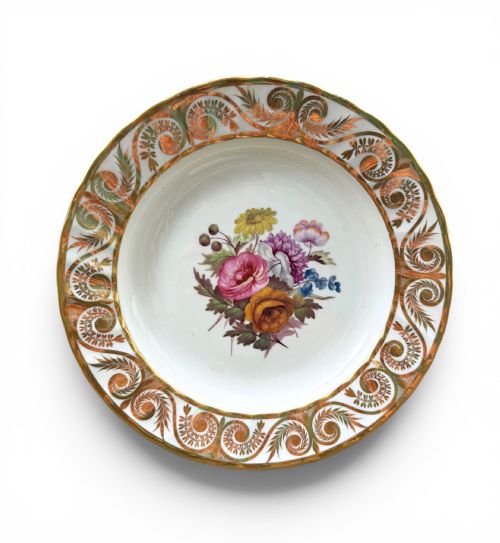
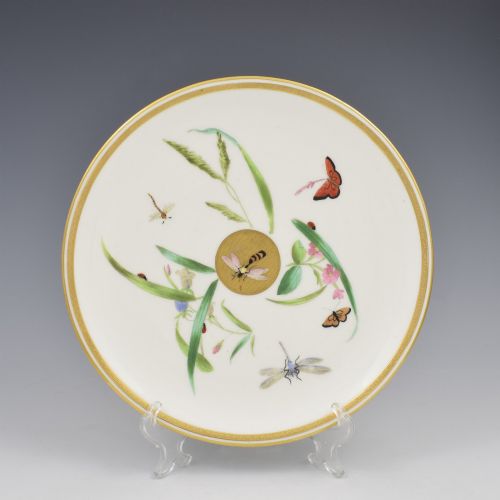
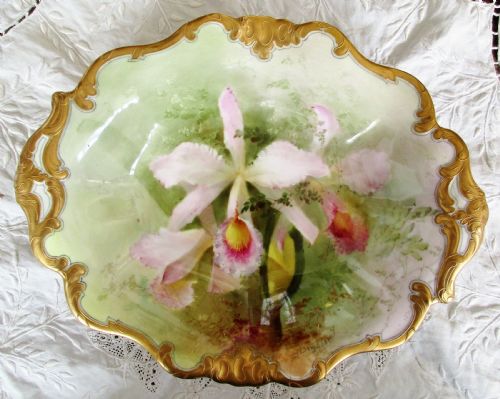
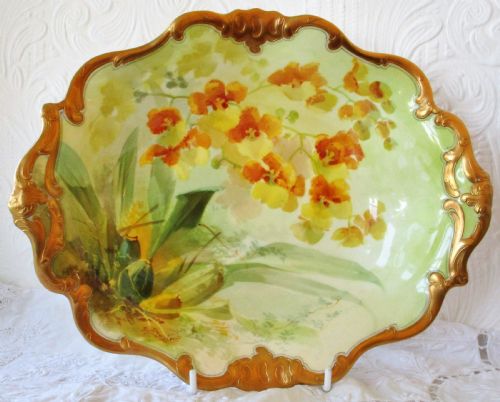
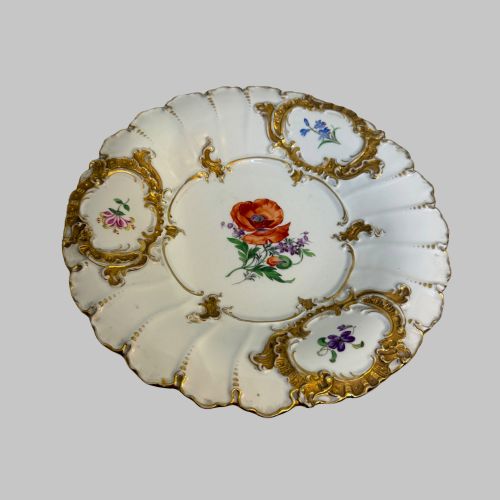
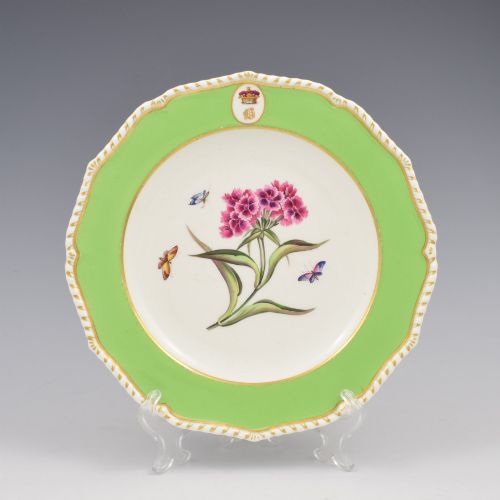


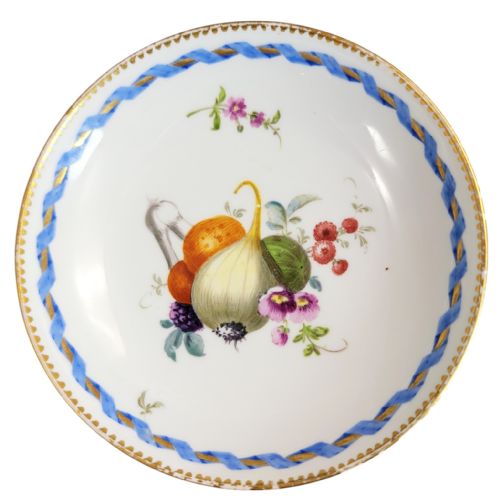


Hand Painted Botanical Plate
When you search for a hand painted botanical plate, you encounter finely glazed porcelain shaped for display and dessert services from Georgian, Regency and Victorian makers.
Hand Painted Botanical Plate
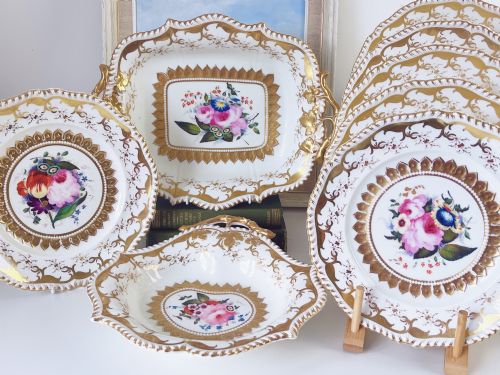
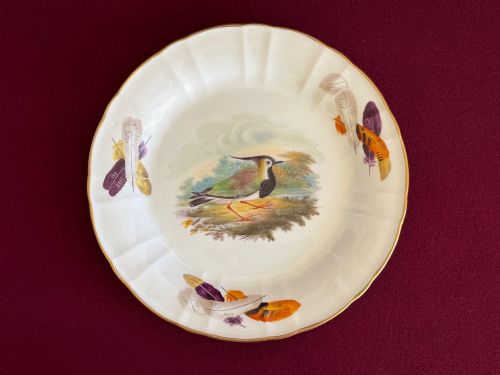
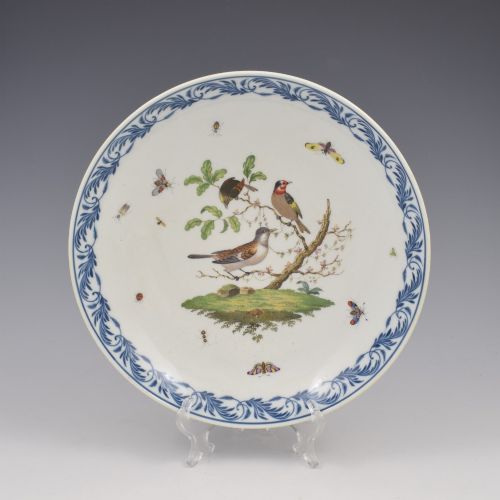
A hand painted botanical plate is typically a porcelain dish decorated with individual floral, bird, or orchid subjects, designed for display in cabinets or for serving dessert.
The versions you are most likely to meet on this page originate from English and continental factories spanning the eighteenth, nineteenth, and early twentieth centuries.
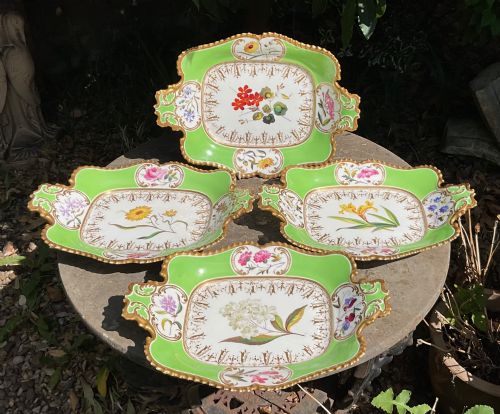
Forms range from single cabinet plates and tazzas to matched dessert services and serving dishes bearing named botanical specimens or armorial crests.
How they were made
These items rely on hard-paste or bone china porcelain bodies finished with smooth glazes that provide a clean white ground for detailed miniature painting.
Artists applied enamel colours by hand to render botanical subjects, often incorporating gold leaf, gilding, or blue ribbon borders along the rims.
Hand Painted Botanical Plate Retail Price Guide 2026
Typical asking prices for hand painted botanical plate among the pieces listed under this phrase on Sellingantiques today, from the lower quarter to the upper quarter. They describe what is for sale here now, not the wider market.
The listings span porcelain, bone china, and hard-paste bodies decorated with enamel paints and gilding across Georgian, Regency, and Victorian periods.
What varies in quality
Quality rests in the precision and naturalism of the hand painting, distinguishing standard floral patterns from meticulously rendered botanical or ornithological studies by known painters.
The fineness of the porcelain body, the crispness of moulded relief work, and the preservation of applied gilding and enamel colours set the finer cabinet pieces apart.
Grainger Lee And Co·Wedgwood·Meissen·Chamberlains Worcester·Derby·Minton·Royal Doulton·Bloor Derby·Barr Flight And Barr·Furstenberg·Copeland·Sevres·Coalport·Royal Worcester·Kornilov Brothers·Chelsea Derby·James Giles·Ridgway·Thomas Moorcroft·Nantgarw·Thomas Dickson·Fukagawa·New Hall·Rockingham
The Hand Painted Botanical Plate Glossary
- Cabinet plate
- A decorative porcelain plate intended primarily for display in a cabinet rather than for daily dining use.
- Bone china
- A type of porcelain incorporating bone ash, developed in England to create a strong, brilliantly white ceramic body suited to detailed painting.
- Gilding
- The application of gold leaf or gold powder to the rims and borders of porcelain items to accentuate their decorative forms.
- Hard-paste porcelain
- A durable ceramic composition fired at high temperatures, widely used by European factories for crisp moulding and fine enamel retention.
- Comport
- A raised dish or tazza used historically for serving fruit or sweetmeats as part of a formal dessert service.
Hand Painted Botanical Plate: Frequently Asked Questions
What is a hand painted botanical plate used for?
These pieces served two distinct purposes in period dining and interior display. Many formed part of larger dessert services used to present fruit and sweetmeats at the conclusion of a formal meal.
Others were produced specifically as cabinet plates to be showcased on walls or within glass-fronted furniture, highlighting the skill of the porcelain painter.
How do I care for antique porcelain plates?
Antique porcelain requires gentle handling to protect fragile enamel painting and delicate raised gilding from abrasion. Hand washing in lukewarm water with mild soap is necessary, avoiding harsh detergents and dishwashers.
When displaying them, ensure sturdy plate stands support the weight evenly without straining the rim or foot ring.
How can I tell the period of a piece?
Dating relies heavily on factory marks stamped, painted, or impressed on the underside of the ceramic body, alongside stylistic clues in the border design and painting technique.
Georgian and Regency pieces often feature specific factory scripts and hand-written botanical titles, while later Victorian and Edwardian examples show different paste consistencies and maker ciphers.
Were these plates made individually or in sets?
Makers produced both single cabinet pieces for individual display and large matched services comprising multiple plates, dessert dishes, and comports. Services often featured varying floral or botanical specimens across each plate, painted by hand.
Individual pieces frequently survive today as standalone cabinet items separated from their original service.