






Polychrome Delft Plate
When you handle a polychrome delft plate, you hold centuries of tin-glazed earthenware shaped by English and Dutch potters.
Polychrome Delft Plate
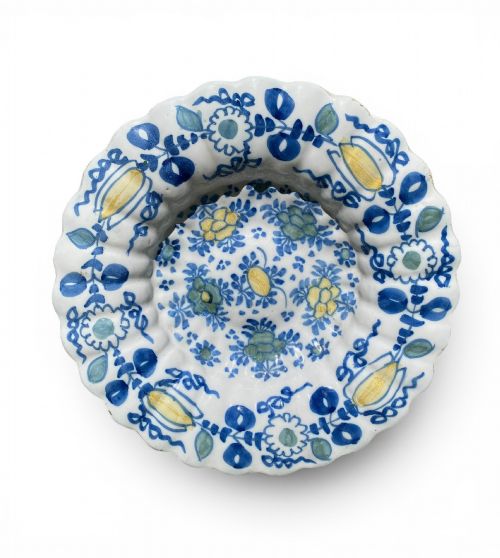
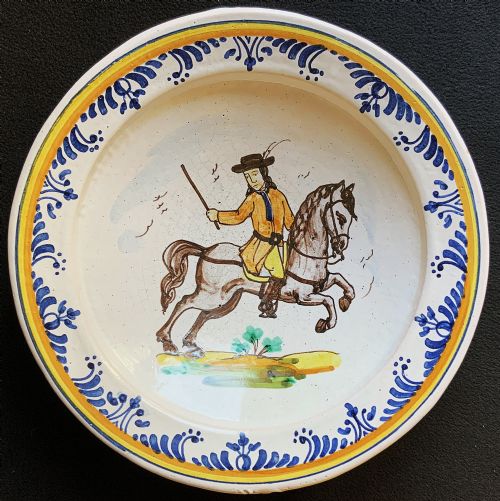
A polychrome delft plate is an earthenware dish finished with an opaque tin glaze and hand-painted decoration in multiple colours. The examples available span from the seventeenth century through to the eighteenth century, originating predominantly from English and Dutch kilns, alongside occasional Spanish pieces. These items appear as standard plates, pancake plates, and larger chargers.
The decorative schemes draw heavily on floral motifs, geometric patterns, and Chinoiserie or oriental figures carrying flowers. Buyers frequently encounter Dutch plates alongside English productions from centres such as Bristol and Lambeth. Forms range from simple circular dishes to lobed and shaped edges.
How they were made
Potters shaped clay bodies into earthenware plates and fired them before applying a liquid tin glaze that dried to a white, opaque surface. Pigments containing metallic oxides were then painted directly onto the raw, absorbent glaze before a final firing fused the colours into the surface.
This grand feu technique allowed cobalt blue, manganese purple, and other mineral pigments to merge slightly with the wet glaze. The resulting palette relies on hand-painted brushwork executed by skilled decorators working within established kilns.
Polychrome Delft Plate Retail Price Guide 2026
Typical asking prices for polychrome delft plate among the pieces listed under this phrase on Sellingantiques today, from the lower quarter to the upper quarter. They describe what is for sale here now, not the wider market.
Some eighteenth-century plates preserve the painted names of past owners, turning everyday tableware into personal historical records.
What varies in quality
Quality rests upon the crispness of the hand-painted decoration and the fluidity of the brushwork across the tin glaze. Pieces with tightly controlled floral motifs or detailed oriental figures display a higher standard of workshop execution than repetitive or hurried designs.
The purity and smoothness of the tin glaze itself dictate the visual impact of the surface. Strong colour retention and balanced composition separate standard utilitarian wares from superior examples intended for display.
The Polychrome Delft Plate Glossary
- Tin-Glazed Earthenware
- Earthenware pottery covered with a lead glaze made opaque by the addition of tin oxide. This white surface served as the canvas for painted pigments.
- Charger
- A large decorative plate intended for wall display or sideboard presentation rather than dining use. These items frequently feature wide rims and ambitious painted scenes.
- Grand Feu
- A ceramic firing technique where the glaze and raw pigments are subjected to high kiln temperatures together. This process causes the colours to soften and bond deeply into the tin glaze.
- Chinoiserie
- European artistic interpretations of Chinese and East Asian design motifs. Artisans applied these whimsical oriental figures and landscapes to domestic pottery.
- Manganese
- A dark metallic oxide pigment used by potters to produce purple, brown, or near-black tones. It appears frequently alongside other polychrome colours on eighteenth-century dishes.
Polychrome Delft Plate: Frequently Asked Questions
Were these plates used for dining?
While standard plates saw service at the table, larger chargers served primarily as decorative items on sideboards and walls. Their soft earthenware bodies and tin glazes made them prone to chipping during heavy daily use.
Over time, many of the surviving examples transitioned into display pieces. Their pictorial painted surfaces suited interior decoration in prosperous homes.
How do I tell English and Dutch plates apart?
English factories in places like Bristol and Lambeth often utilised slightly different clay bodies and glaze compositions compared to their Dutch counterparts. Stylistic nuances in the floral painting and border patterns also offer clues to regional origin.
Examining the foot ring and the characteristics of the tin glaze helps experienced collectors separate London productions from Delft workshops.
What does polychrome mean on these?
Polychrome indicates that the decoration utilises multiple colours rather than a single hue like blue and white. Artisans painted flowers and figures using a palette of manganese, yellow, green, and iron red.
This multicoloured approach required careful management of mineral pigments during the firing process. Each added colour increased the complexity of the workshop production.