




Vintage Moorcroft Pottery
Vintage moorcroft pottery brings rich, tube-lined ceramic colour and distinct botanical forms straight into your home.
Vintage Moorcroft Pottery
Vintage moorcroft pottery comprises decorative vases, bowls, lamps, and plates produced across the twentieth century. These pieces display distinct botanical patterns created through traditional British ceramic techniques.
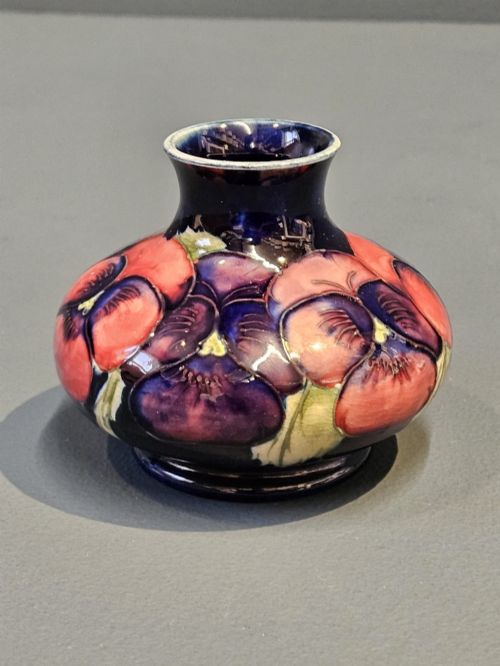
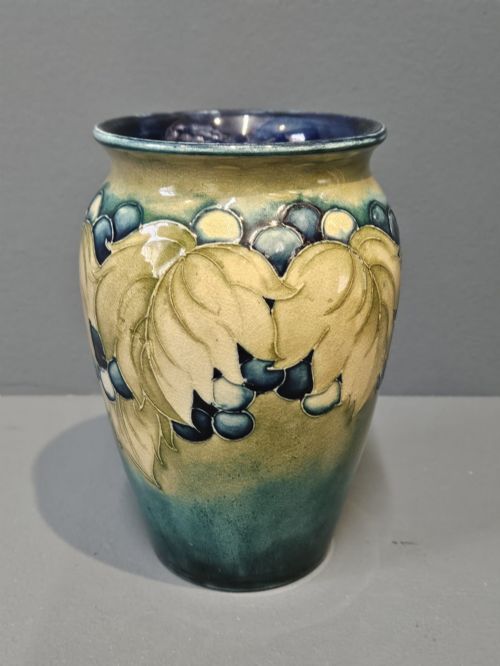
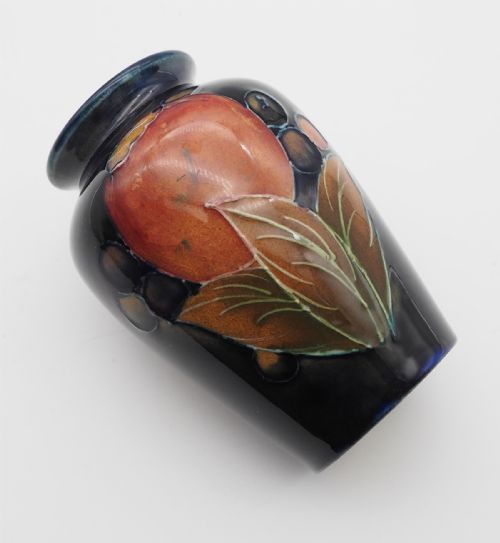
The pieces on this page span several decades, starting from the late nineteenth century and moving through the nineteen-tens, twenties, and thirties. You will encounter familiar patterns such as Pomegranate, Leaf and Berries, and Pansy on earthenware bodies.
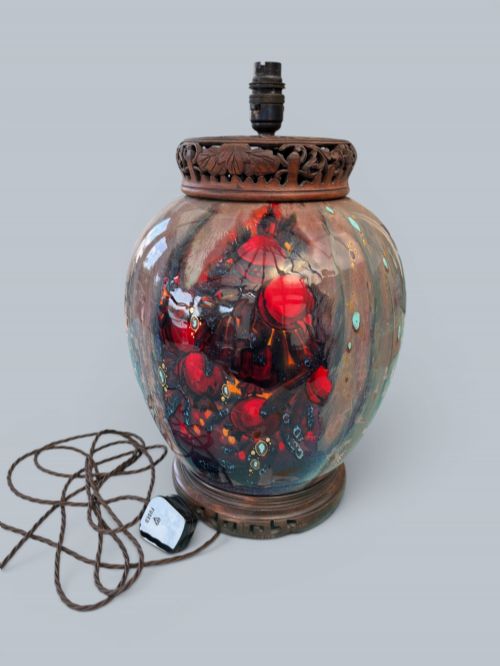
Forms vary from miniature flower vases and inverted rim bowls to large decorative vessels and table lamps. Many items carry signatures or stamps that connect them directly to William Moorcroft and his early workshop output.
How they were made
Makers shaped these items from earthenware and ceramic bodies, applying glazes that run from deep blue backgrounds to celadon tones. Artisans utilised gold leaf accents and salt glazing on specific vessels to alter surface texture and catch the light.
The defining method involves applying raised clay outlines by hand before filling the partitioned sections with coloured glazes. Subsequent firings fuse the pigments into a smooth, glossy finish across vases, jars, and bowls.
Listings feature four distinct decorative styles: Art Nouveau, Arts and Crafts, and Art Deco.
What varies in quality
Quality rests upon the crispness of the raised line work and the depth of the glaze application. Stronger examples display balanced colour palettes and clear execution of intricate botanical motifs without blurring.
Scale and form also dictate distinction, where larger pieces or unusual shapes like pot pourri jars with lids require greater technical skill from the potter. Early Macintyre productions and signed William Moorcroft pieces sit at a different level of interest compared to later stamped wares.
William Moorcroft·Moorcroft Macintyre and Co
The Vintage Moorcroft Pottery Glossary
- Tube-lining
- A ceramic decoration technique where liquid clay is squeezed through a nozzle onto a pot to form raised outlines before glazing. This method creates the characteristic tactile grid that holds the coloured pigments.
- Earthenware
- A porous type of ceramic fired at relatively low temperatures and rendered impermeable by a glass-like glaze. It forms the standard body for nearly all the decorative vessels shown here.
- Celadon
- A pale grey-green glaze finish that mimics the appearance of jade. It provides a subdued background for botanical patterns on specific twentieth-century pieces.
- Charger
- A large decorative plate intended for display rather than dining. These items often feature broad surfaces that showcase complex floral designs.
- Pot pourri
- A perforated vessel designed to hold dried scented plant material and release fragrance into a room. The lidded pots from the early twentieth century represent an elaborate form of this practice.
Vintage Moorcroft Pottery: Frequently Asked Questions
How do I identify early pieces?
Early pieces often bear Macintyre factory marks alongside early signatures from William Moorcroft dating from the late nineteenth century through to the nineteen-tens.
Later items transition to standard Moorcroft England stamps as production methods and workshop locations evolved over subsequent decades.
What patterns are most common?
Botanical motifs dominate the selection, with Pomegranate, Leaf and Berries, Pansy, and Orchid appearing frequently across vases and bowls.
These designs utilise the signature raised line technique to separate rich autumnal and floral hues.
How should I display lamps?
Table lamps require placement on stable surfaces where their ceramic bases and wiring remain secure and visible. Keep them away from direct edges to protect the glazed earthenware bodies from accidental knocks.
Pair them with simple shades that do not distract from the detailed patterns painted on the ceramic column.
Are these items waterproof?
Most glazed earthenware vessels can hold water for short periods, but vintage pieces benefit from cautious handling due to their age. Using a discreet internal liner protects the interior glaze and the underlying ceramic body from moisture damage.
Avoid leaving water sitting inside antique vases for extended periods.