


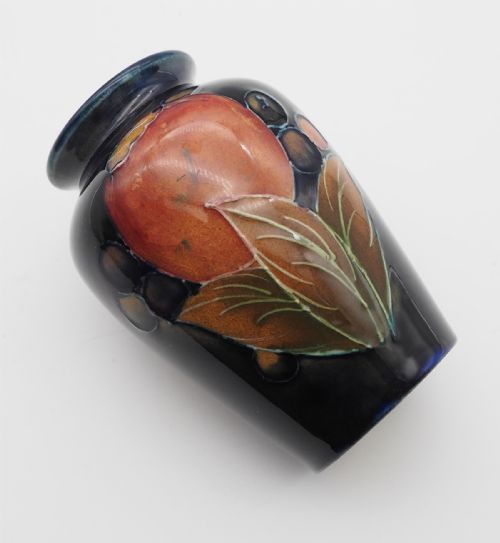
William Moorcroft Vase
A william moorcroft vase brings rich tube-lined botanical patterns into a room, offering deep glazes and distinctive early twentieth-century earthenware.
What they are
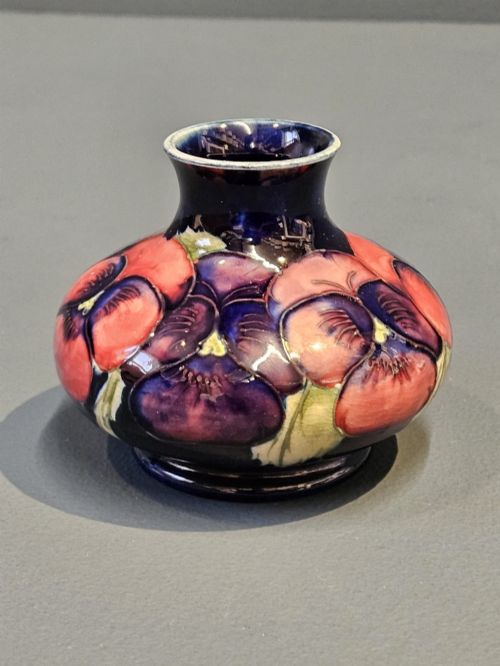
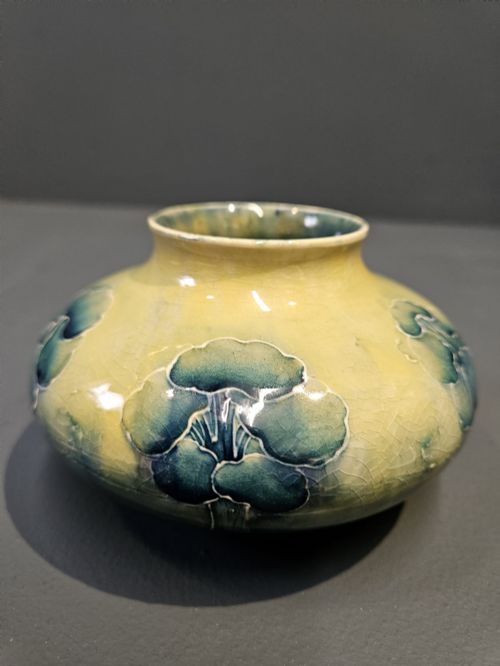
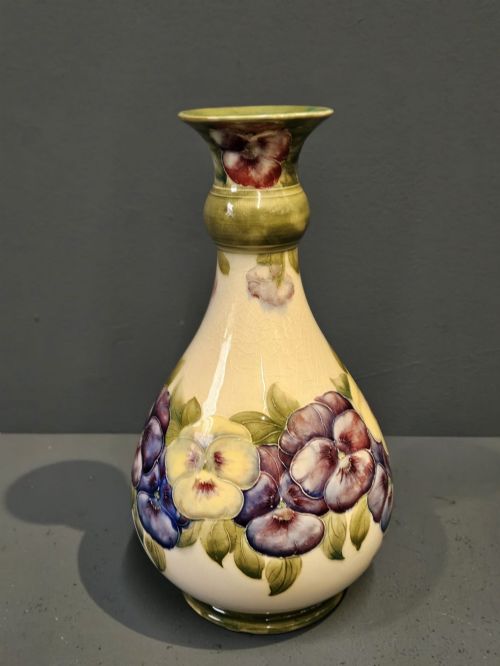
When you search for a william moorcroft vase, you encounter decorative earthenware shaped during the Arts and Crafts and Art Deco periods. These pieces span classic floral motifs such as pomegranate, pansy, and orchid, alongside earlier Florian designs associated with Macintyre.
How they were made
Potters shaped these vessels from earthenware and glazed ceramic bodies using traditional turning and moulding methods. The distinct raised outlines characteristic of the workshop were achieved through slip-trailing, applying liquid clay to map out the floral patterns before firing.
Painters then filled the resulting cells by hand with coloured glazes before the final kiln firing. This technique created the signature tubed decoration that defines each piece.
Site listings and past archives feature earthenware pieces spanning the Arts and Crafts and Art Deco styles, specifically from nineteen-ten and nineteen-twenty.
What varies in quality
The distinction between standard production and exceptional work lies in the complexity of the design and the depth of the glaze firing. Pieces carrying full signatures and early registry marks demonstrate greater artistic ambition than later or unmarked studio output.
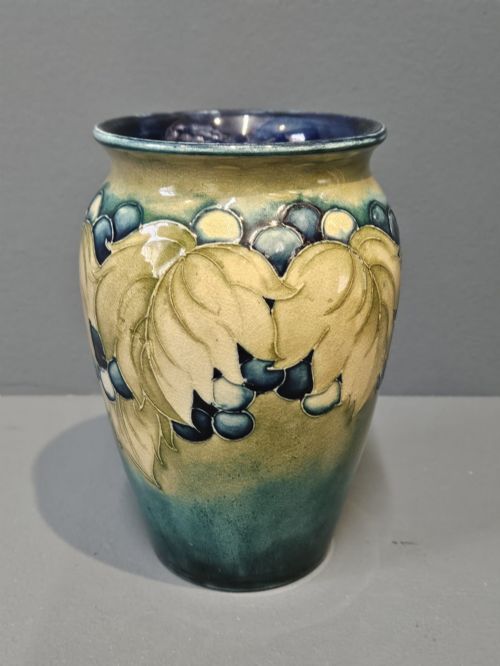
Scale and proportion also dictate standing, with large baluster forms and complex multi-flower patterns requiring greater technical control than miniature vessels. The crispness of the tubed line and the vibrancy of the cobalt and celadon colourways separate the finest examples from simpler commercial runs.
William Moorcroft·Macintyre And Co·Liberty And Co
The William Moorcroft Vase Glossary
- Baluster
- A vase form with a rounded body and a narrow neck. This shape provides a broad canvas for wrap-around floral decoration.
- Tubing
- The application of liquid clay through a fine nozzle to create raised outlines. This process forms the grid that holds the coloured glazes in place.
- Florian ware
- Early ceramic production featuring stylized floral designs in soft tones. These items were often produced during the association with Macintyre.
- Celadon
- A pale grey-green glaze. This finish appears on specific period pieces to highlight the underlying ceramic form.
- Earthenware
- Porous pottery fired at lower temperatures and subsequently glazed. This material serves as the standard body for these decorative works.
Frequently Asked Questions
How do I identify early pieces?
Early examples often feature Macintyre factory marks alongside signature details from the designer. Look for registration numbers and early tubed floral patterns on the ceramic body.
Such pieces usually date from the opening decades of the twentieth century. The presence of specific floral names or registry ciphers helps confirm the production era.
What patterns are most common?
Botanical motifs dominate the output, with pomegranate, pansy, and orchid designs appearing frequently across the archive. These patterns reflect the prevailing Arts and Crafts interest in natural forms.
Florian and leaf variations also occur regularly on baluster and miniature shapes. Each design utilises distinct colour palettes ranging from deep cobalt blues to soft celadon greens.
How should I display my vase?
Place the vessel in a spot with stable indirect light to protect the glazed earthenware surface. Avoid positioning pieces near direct heat sources or in damp environments.
Allow enough surrounding space to appreciate the wrap-around tubed patterns. Keeping the piece on a secure, level surface ensures the stability of the ceramic body.
Are all pieces signed?
Many examples carry handwritten signatures or impressed factory stamps on the underside. Signatures often appear in blue or green script alongside numerical codes.
Some production pieces rely solely on printed factory marks rather than individual signatures. The absence of a signature does not preclude period authenticity if the glaze and body match known standards.