

English Blue White Ceramic
English blue white ceramic encompasses centuries of glazed earthenware, soft-paste porcelain, and tin-glazed vessels that define domestic collecting.
English Blue White Ceramic
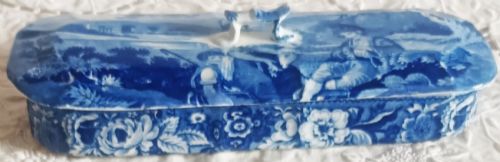
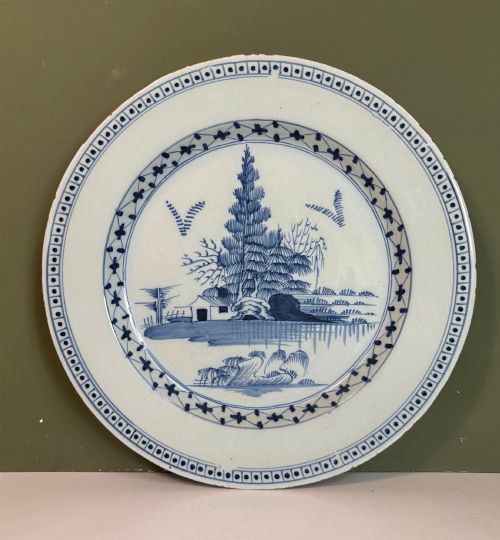
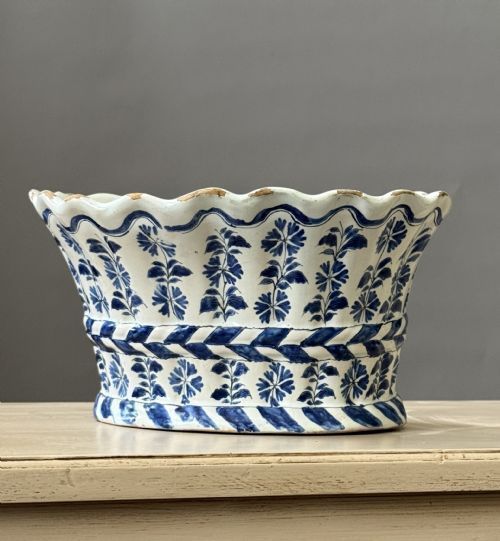
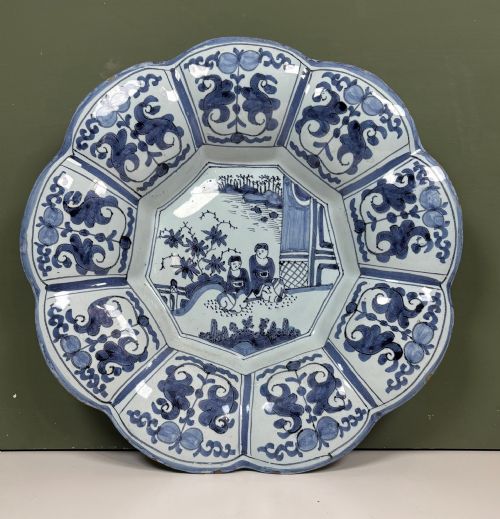
English blue white ceramic covers utilitarian and decorative objects spanning the seventeenth through to the twentieth centuries, with eighteenth-century pieces particularly prominent. Buyers encounter items ranging from early delftware chargers and bough pots to Georgian transfer-printed platters and Victorian vegetable tureens.
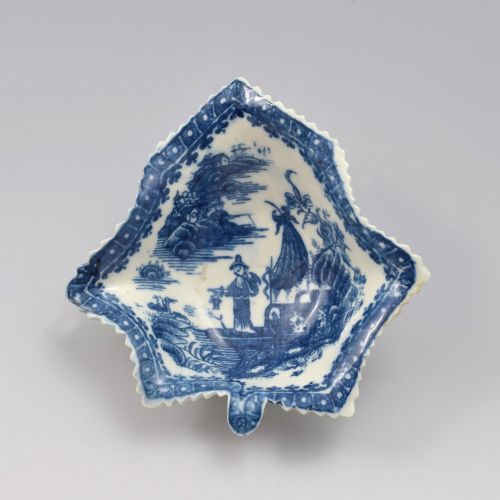
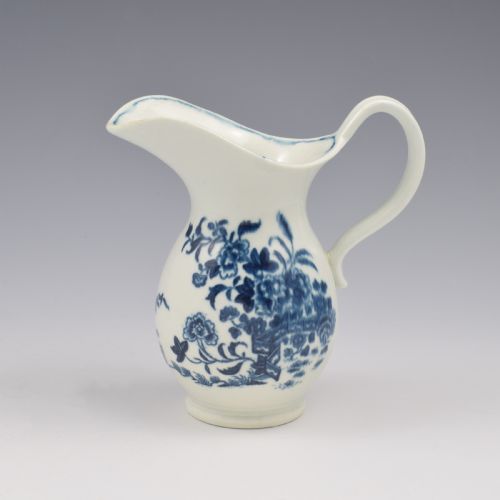
The material forms vary widely across serving dishes, teapots, pickle dishes, and decorative bowls. Most examples originate from historic pottery centres such as Worcester, Staffordshire, and Liverpool, reflecting the evolution of domestic table use.
How They Were Made
Makers utilised earthenware, soft-paste porcelain, and ironstone, applying mineral cobalt oxides beneath transparent lead or tin glazes to achieve the characteristic cobalt pigmentation. High-temperature firing set the pigment into the glaze, producing durable surfaces across both hand-painted delftware and later transfer-printed wares.
Moulding and throwing formed the base ceramic bodies, while copper plate transfer printing emerged in the eighteenth century to apply intricate scenic patterns onto pottery surfaces efficiently.
English Blue White Ceramic Retail Price Guide 2026
Typical asking prices for english blue white ceramic among the pieces listed under this phrase on Sellingantiques today, from the lower quarter to the upper quarter. They describe what is for sale here now, not the wider market.
Materials range from early tin-glazed earthenware and soft-paste porcelain to ironstone and Victorian jasper ware.
What Varies in Quality
Quality depends upon the crispness of the cobalt transfer and the precision of the hand-painting beneath the glaze. Early delftware pieces show variation in tin-glaze opacity, while porcelain items differ in paste translucency and potting weight.
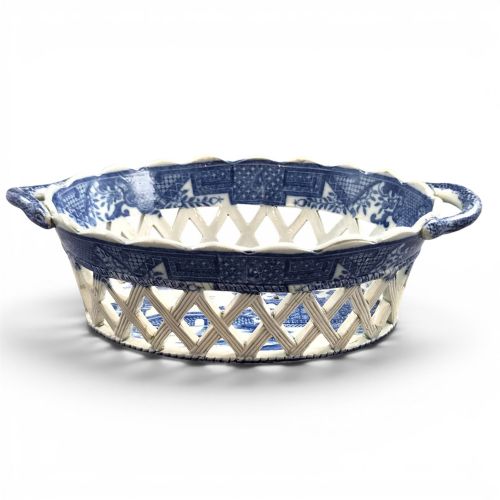
The clarity of the blue pigment against the white ground distinguishes superior outputs from muted or blurred examples. Intricate moulding, such as reticulated basketwork or shaped rims, also indicates higher manufacturing ambition.
Caughley Porcelain·Bow Porcelain·Spode·John Rogers and Son·J and R Clews·Mintons
The English Blue White Ceramic Glossary
- Delftware
- Tin-glazed earthenware produced in England from the seventeenth century onwards, characterised by an opaque white surface painted in blue. This tin glaze often displays slight surface pitting.
- Transfer Ware
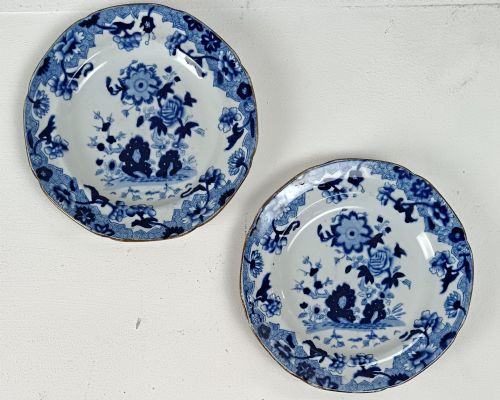
- Pottery decorated by pressing a design from an engraved copper plate onto tissue paper, then transferring the ink onto the unglazed or bisque ceramic body before firing. This technique allowed intricate topographical and pictorial scenes.
- Soft-paste Porcelain
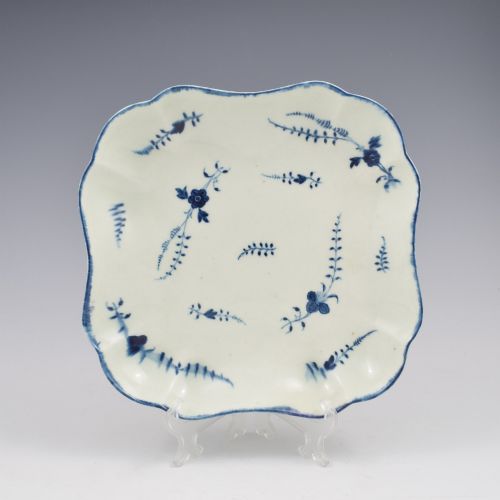
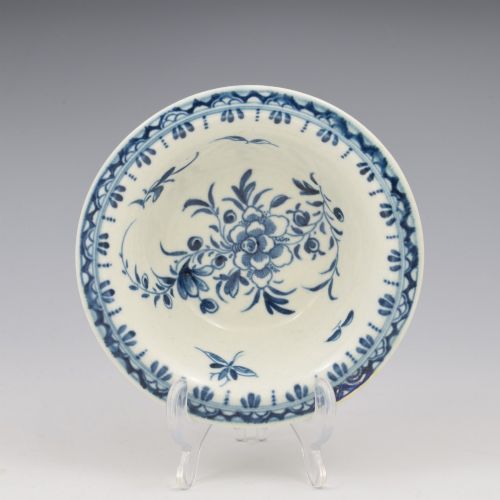
- An artificial porcelain composition fired at lower temperatures than hard-paste porcelain, widely used by eighteenth-century English factories such as Bow and Worcester. It possesses a warm, slightly creamy body and vitreous glaze.
- Tin-Glaze
- A ceramic glaze made opaque by the addition of tin oxide, providing a white background for cobalt blue painting. It forms the defining characteristic of early earthenware dishes and chargers.
- Ironstone
- A dense, durable type of earthenware patented in the nineteenth century to imitate porcelain. It resists chipping and serves as a heavy-duty body for large platters and vases.
English Blue White Ceramic: Frequently Asked Questions
How do I date an old blue and white dish?
Dating relies on body composition, glaze characteristics, and potting styles rather than marks alone, since many early pieces remain unmarked. Examining the footring and blue tones helps separate seventeenth-century delftware from eighteenth-century soft-paste porcelain and nineteenth-century transfer ware.
Factory marks, where present, provide tighter brackets, but stylistic evolution in border patterns and pictorial subjects offers the most reliable chronological guide.
Can I use antique transfer ware for serving food?
Most collectors treat antique earthenware and soft-paste porcelain as display or decorative objects rather than for daily dining. Historic glazes can contain lead, and old bodies are vulnerable to thermal shock and staining from modern dishwashers.
Gentle hand washing in lukewarm water preserves the integrity of the glaze and prevents further crazing of the ceramic body.
What is the difference between delftware and transfer ware?
Delftware is tin-glazed earthenware typically painted by hand with cobalt blue pigments directly onto the unfired glaze. This method creates a softer, slightly blurred outline with a thick, opaque white surface.
Transfer ware uses a printed paper template to apply precise, repeating copper-plate engravings onto the pottery, dominating nineteenth-century production with sharp topographical scenes.
Why do some porcelain pieces have crescent marks?
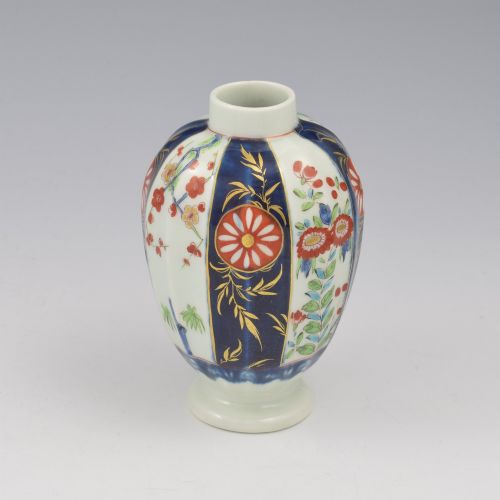
Underglaze blue crescent marks identify eighteenth-century pieces produced at the Worcester factory during the Dr Wall period. These factory marks assist in attributing specific tea canisters, baskets, and dishes to the appropriate decade of manufacture.
Not all pieces bear marks, requiring stylistic comparison of the paste and floral or landscape painting styles to confirm origin.