

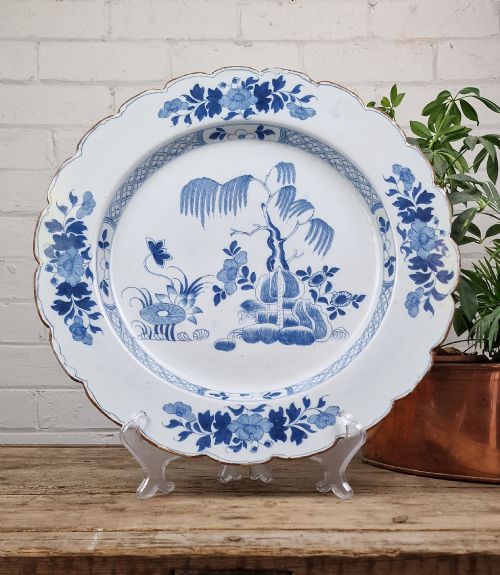


Georgian Delftware Dish
A georgian delftware dish brings tin-glazed earthenware and hand-painted cobalt pigment to a table, offering eighteenth-century ceramic history.
Georgian Delftware Dish
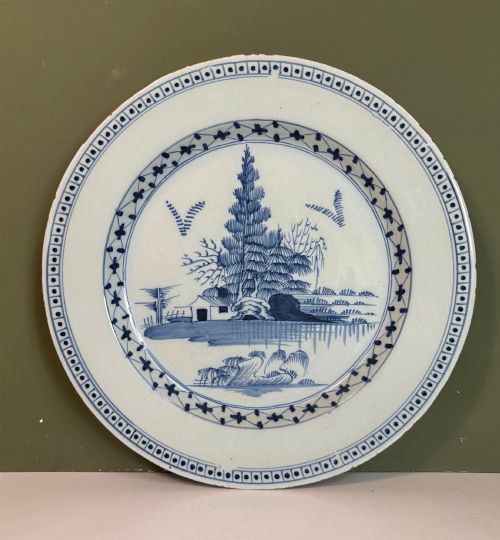
A georgian delftware dish encompasses eighteenth-century earthenware plates, chargers, platters, and small salt cellars shaped by English and Dutch potters. The pieces documented here span the eighteenth century, including specific dates around 1740, 1750, 1760, and 1770.
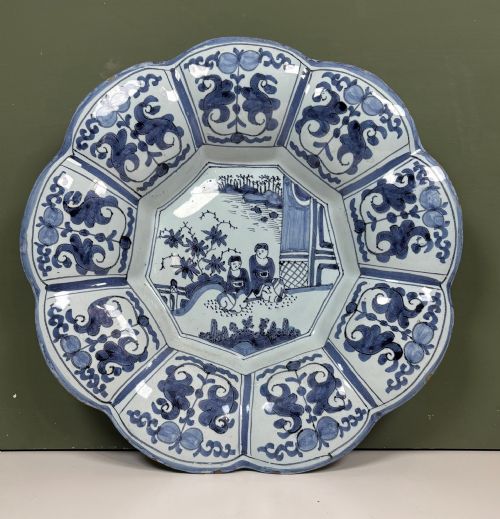
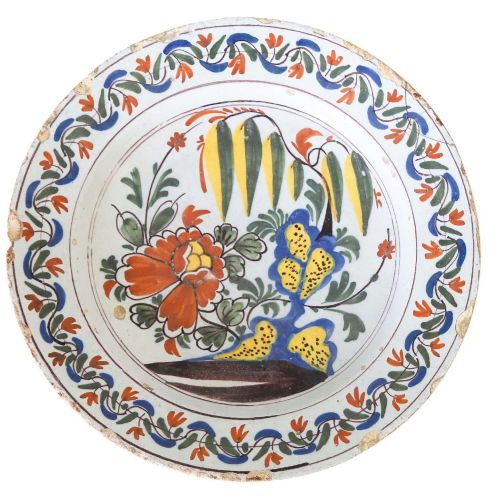
The version most commonly encountered in these listings is the large charger or plate decorated with blue and white pigment or polychrome colours. Makers worked within styles such as Dutch Baroque, Georgian Chinoiserie, and Queen Anne eras to produce these decorative dishes.
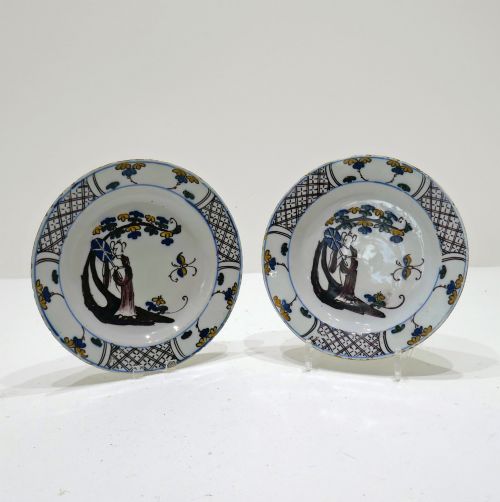
Forms range from octagonal salt cellars and small pairs of plates to large decorative chargers intended for display. English workshops in centres like Bristol and Lambeth produced a significant portion of the items recorded in the evidence.
Materials and construction
Potters built each georgian delftware dish using earthenware ceramic bodies coated in an opaque white tin glaze. This tin-glazed earthenware surface provided a smooth ground for subsequent brushwork.
Decoration relied on hand-painted cobalt pigment, cobalt oxide, or cobalt glaze applied directly to the unfired or biscuit-fired glaze. Polychrome examples incorporated additional mineral colours alongside the blue pigment to achieve floral and Chinoiserie motifs.
Earthenware plates occasionally reveal tiny kiln scars on the underside where pottery spacers once touched the wet glaze during firing.
Distinctions in quality
Quality rests in the execution of the hand-painted decoration and the crispness of the cobalt pigment against the white tin glaze. Skilled painting on chargers and plates displays confident brushstrokes in floral or Chinoiserie scenes.
The regularity of the earthenware body and the evenness of the tin-glazed surface separate standard domestic pottery from superior decorative dishes. Preserved pairs and larger chargers demonstrate greater ambition in both scale and ornamental detail.
Lambeth Delft·Bristol Delft
The Georgian Delftware Dish Glossary
- Tin glaze
- An opaque white glaze made by adding tin oxide to a lead glaze, creating the characteristic surface of a georgian delftware dish. It provided an absorbent ground for painting.
- Charger
- A large decorative plate or dish, typically measuring over twelve inches across, designed to be hung on walls or displayed on sideboards during the eighteenth century.
- Polychrome
- Decoration employing multiple colours rather than a single hue. In these ceramics, it describes wares painted with greens, reds, and yellows alongside blue pigment.
- Chinoiserie
- European interpretations of Chinese artistic motifs and styles, popular in eighteenth-century design. These patterns frequently appear on English and Dutch delftware plates.
- Earthenware
- Porous pottery fired at relatively low temperatures, forming the structural ceramic body beneath the tin glaze of these pieces.
Georgian Delftware Dish: Frequently Asked Questions
What is a georgian delftware dish?
A georgian delftware dish is an eighteenth-century ceramic piece made from earthenware and coated in a white tin glaze. These objects take the form of plates, platters, and large wall chargers.
Potters decorated them by hand using cobalt pigment and polychrome colours, often drawing on floral designs or Georgian Chinoiserie styles. English and Dutch workshops produced these items for domestic use and display.
How do I identify English versus Dutch pieces?
English and Dutch delftware share tin-glazed earthenware bodies and blue and white or polychrome decoration from the eighteenth century. Distinctions often rely on recorded workshop origins such as Bristol or Lambeth.
Stylistic cues like Dutch Baroque or early Georgian Chinoiserie further help categorise regional preferences in brushwork and palette.
Were these dishes meant for dining?
Larger chargers and decorative plates were primarily intended for visual display on walls or sideboards in eighteenth-century interiors. Smaller plates and salt cellars saw more direct functional use at the table.
The fragile nature of earthenware and tin glaze meant that many survived as decorative items rather than heavy-use kitchenware.
What colours appear on these ceramics?
The most common colour scheme utilises blue and white cobalt pigment painted over an opaque white tin glaze. Many examples also feature polychrome decoration incorporating various mineral pigments.
These added hues create floral motifs and complex Chinoiserie scenes across the surface of the plates and chargers.
How should I care for a delftware dish?
Delftware consists of porous earthenware covered in a tin glaze that can chip or flake if handled roughly. Gentle dusting with a dry cloth preserves the hand-painted cobalt and polychrome surfaces.
Displaying them securely on plate stands or wall mounts prevents accidental impact damage to the ceramic body.