

Antique German Ceramics
Antique german ceramics encompass diverse hard-paste porcelain figures, salt-glazed stoneware jugs, and ornamental dishes originating from historic factories.
Antique German Ceramics
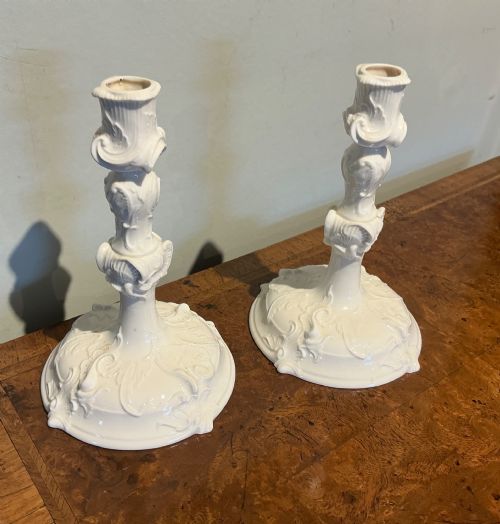
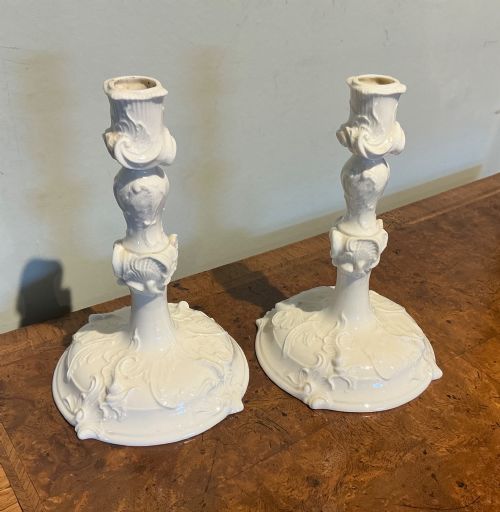
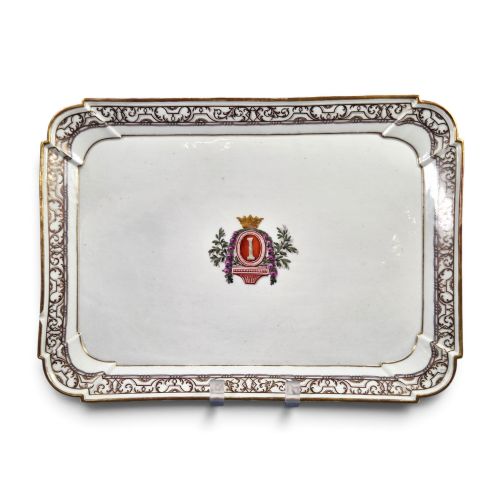
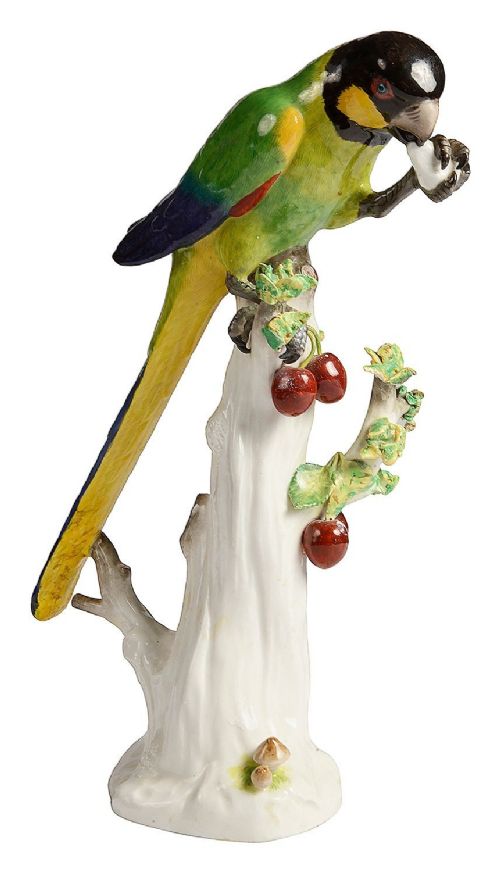
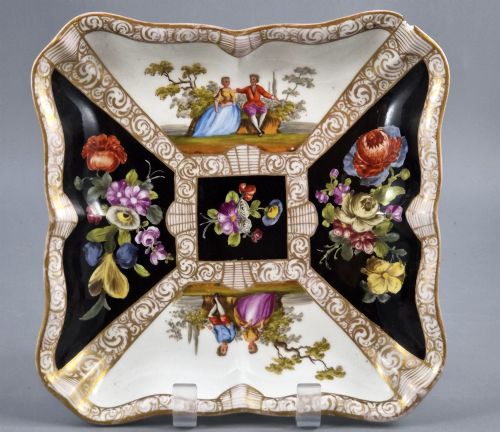
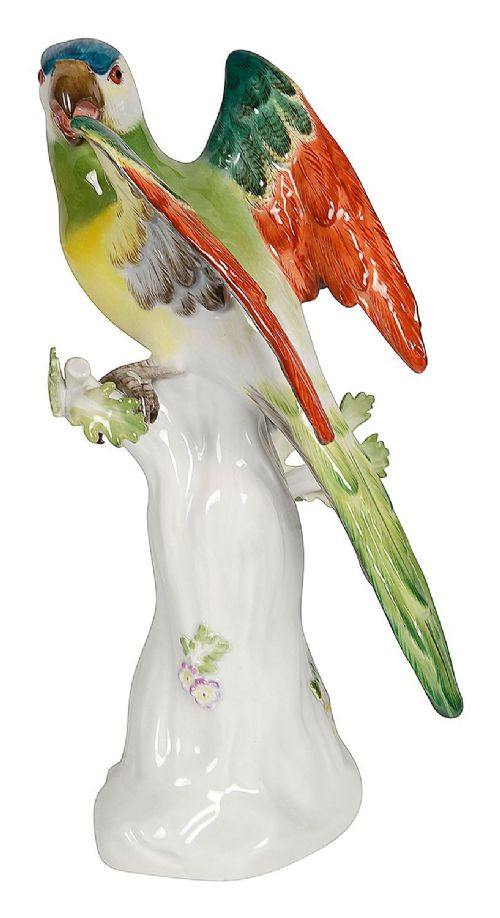
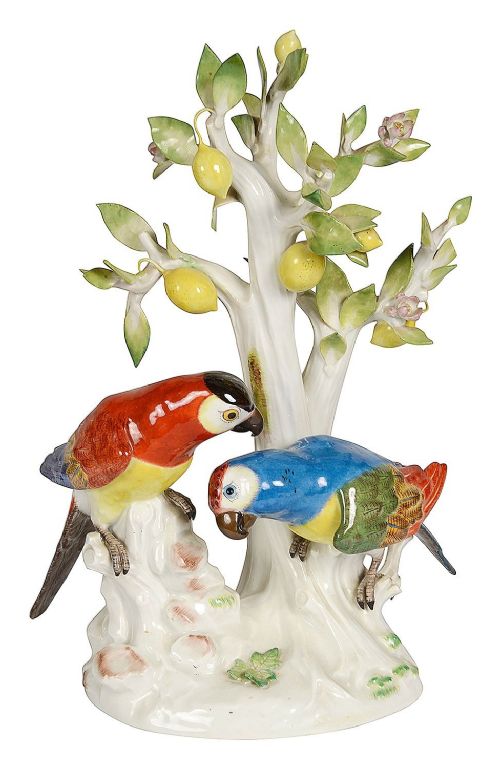
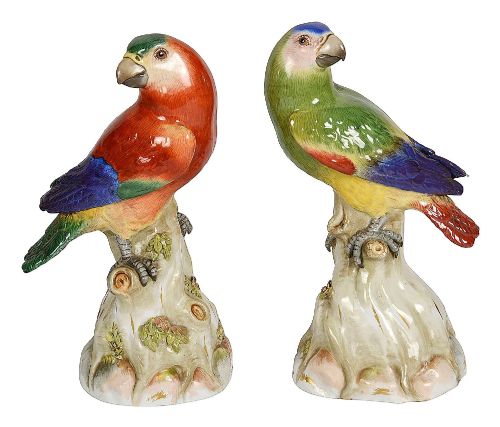
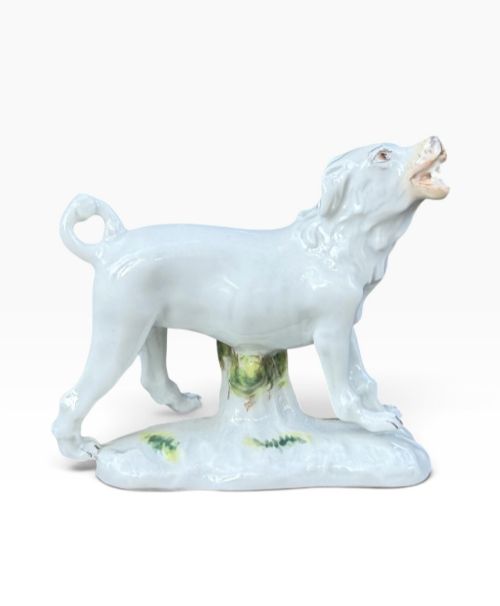
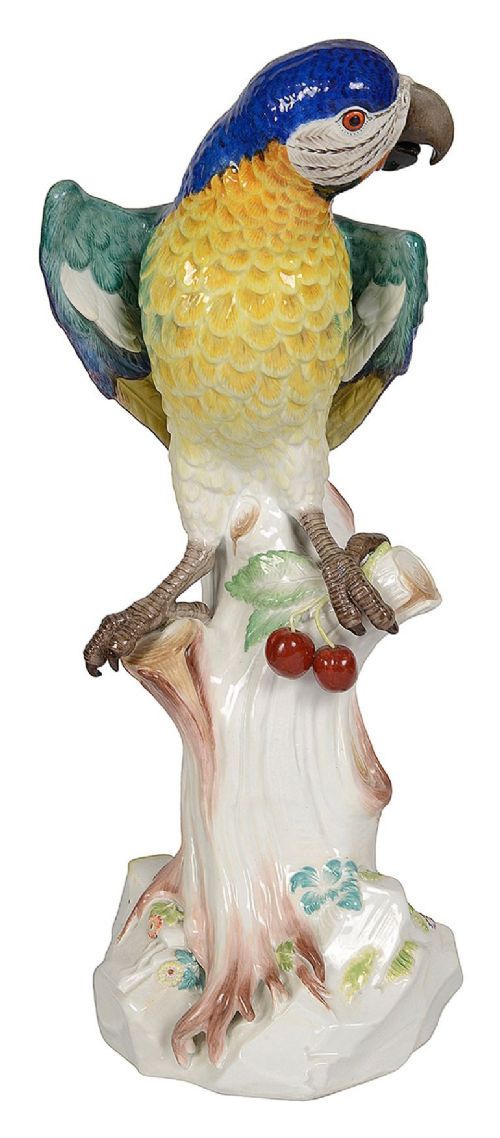
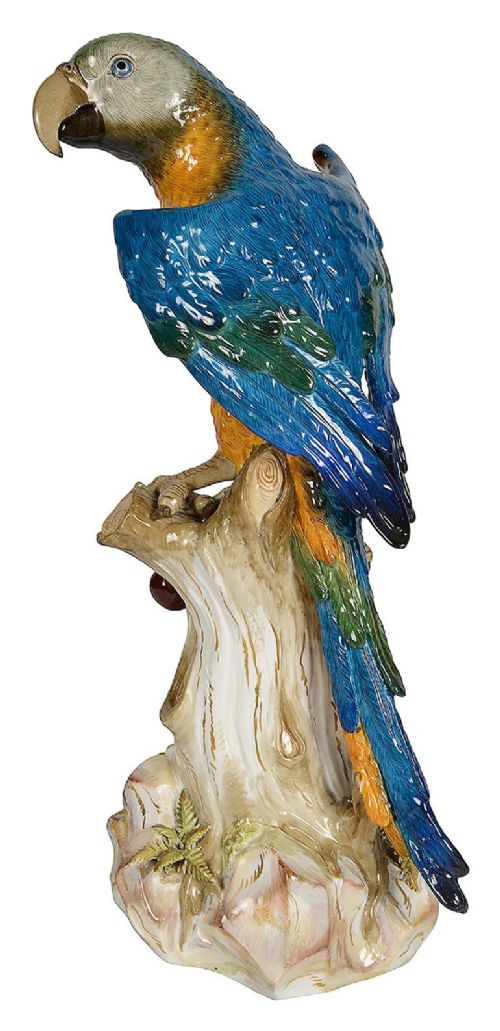
Collectors seeking antique german ceramics encounter a wide spectrum of functional vessels and ornamental figures, ranging from delicate eighteenth-century rococo tableware to robust nineteenth-century salt-glazed stoneware jugs. The material manifests predominantly as hard-paste porcelain shaped into elaborate figurines, parrots, candlesticks, and topographical cabinet cups.
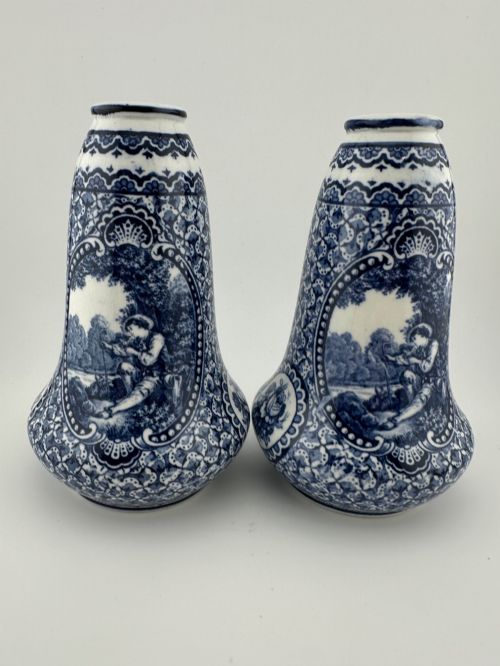
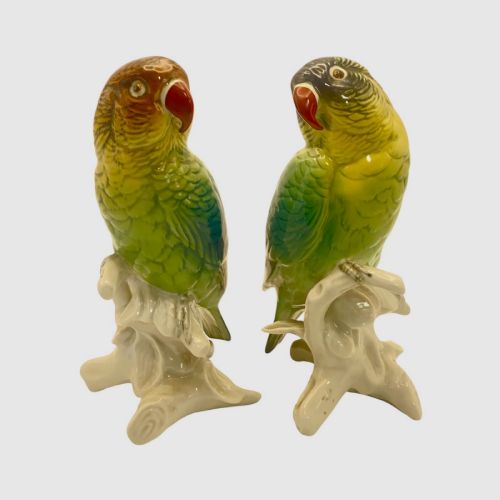
The selection on this page relies heavily on nineteenth-century production from established houses like Meissen and Sitzendorf, alongside earlier eighteenth-century examples. Forms stretch from simple domestic wine bottles and pitchers with cobalt blue decoration to monumental pairs of parrots and allegorical seasonal groups.
Materials and production methods
The core material across these items is hard-paste porcelain, fired at high temperatures to achieve a dense, vitrified body that accepted painted enamel and glaze effectively. Artisans applied hand-painted polychrome pigments, delicate gold leaf, and gilt highlights over smooth white grounds or coloured backgrounds.
Stoneware pieces utilised local clays finished with salt glazing, creating characteristic orange-peel textures suited to durable pitcher jugs decorated with cobalt blue incisions. Moulding and manual modelling shaped the complex figurines, oil lamps, and wall plaques before secondary firing and glazing.
Certain fairings depict Victorian sleeping habits with characters declaring they are the last in bed to put out the light.
Judging the standard of the pieces
Quality in these ceramics rests on the crispness of the moulding and the precision of the hand-painted decoration, particularly in detailed bird feathers, facial expressions, and floral sprays. Earlier or premier factory output displays finer brushwork and more subtle colour blending than mass-produced decorative wares.
The integrity of the form and the preservation of applied elements like leaves, branches, and delicate garments differentiate superior examples. Pieces retaining original gilding and unblemished glaze surfaces hold greater visual clarity.
Meissen·Nymphenburg·Ludwigsburg·Karl Ens·Sitzendorf·KPM Berlin·Volkstedt Rudolstadt·Mettlach·Helena Wolfsohn·Simon Peter Gerz
The Antique German Ceramics Glossary
- Hard-paste porcelain
- A ceramic composition of kaolin and petuntse fired at high temperatures, creating a durable, non-porous body standard in central European factories.
- Salt glaze
- A vitreous coating formed by throwing common salt into the kiln during high-temperature firing, resulting in a textured, pebble-like surface on stoneware jugs.
- Blanc de Chine
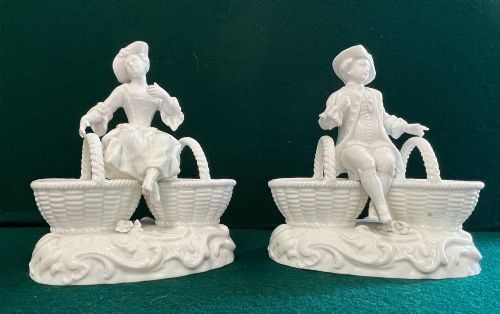
- A French term for white porcelain left unpainted, highlighting the pure sculptural contours of the moulded figure.
- Cobalt blue
- A stable metallic oxide pigment used under the glaze to produce deep blue decorative scenes and borders on stoneware and porcelain.
Antique German Ceramics: Frequently Asked Questions
How do I clean antique porcelain?
Wash pieces gently by hand using lukewarm water and a mild detergent, avoiding abrasive cloths or soaking.
Dry them immediately with a soft, lint-free towel to protect fragile painted enamels and gilt highlights.
Are salt glazed jugs watertight?
Most antique salt-glazed stoneware jugs remain completely watertight due to the vitrified nature of the clay and salt glaze.
However, hairline fractures from age or use mean you should test them on a stable surface before filling.
How can I spot factory marks?
Turn the piece over to examine the base for underglaze blue crossed swords, impressed ciphers, or painted monograms.
Consult standard reference guides to match these factory symbols with specific production decades.
Can I use antique candlesticks?
Using antique porcelain candlesticks requires caution to prevent wax drips from staining porous surfaces or heat from cracking old glaze.
Insert standard taper candles securely and extinguish them well before the flame reaches the porcelain body.