


A 2026 Guide by Sellingantiques
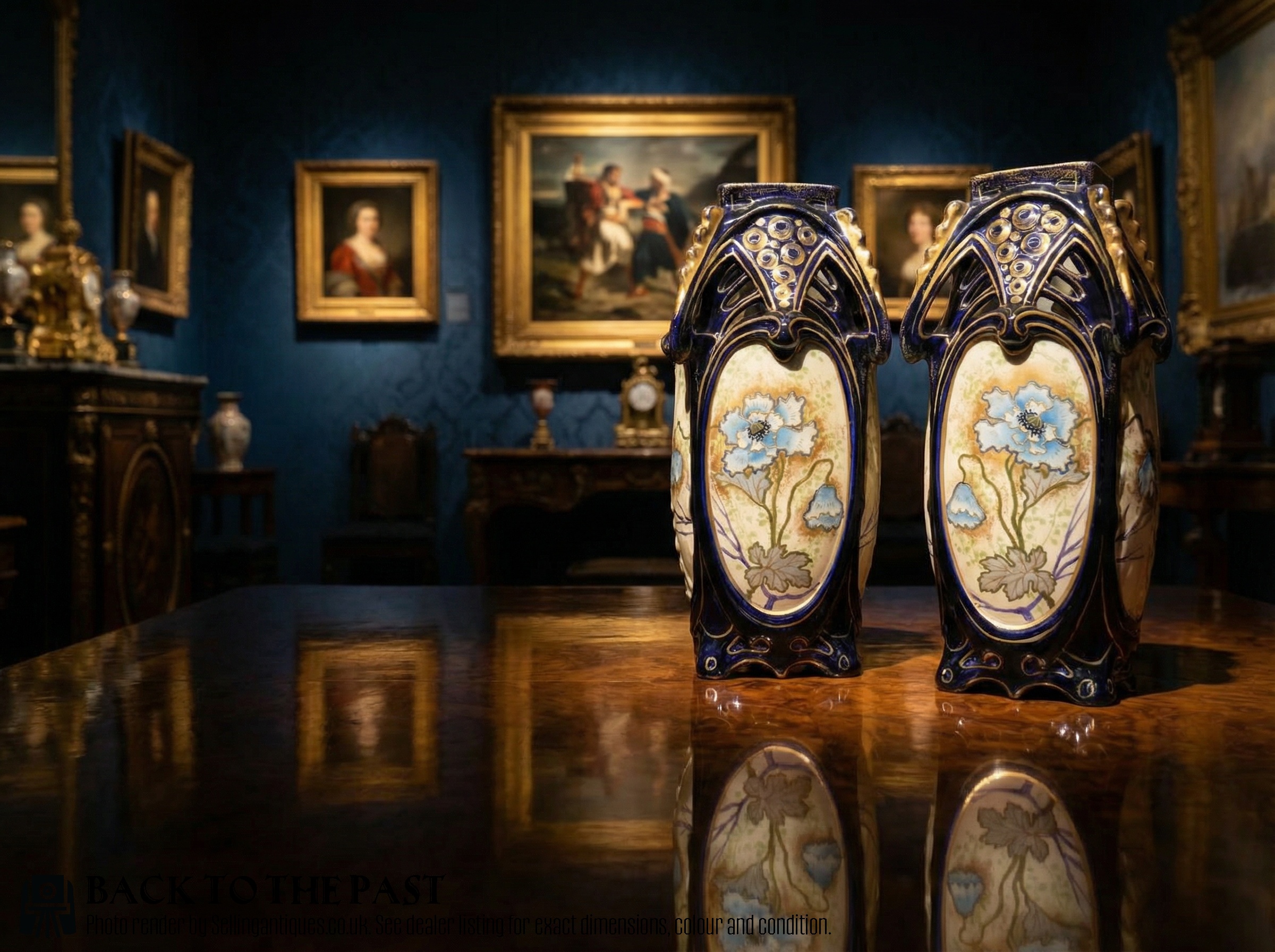
Pair of Art Nouveau Vienna Vases - Ernst Wahliss, 1900
Priced at £695 from Athey Antiques
The original Imperial and Royal Porcelain Manufactory operated from 1718 under Claudius Innocentius du Paquier.
Control passed to the Austrian state in 1744. This shift introduced the famous underglaze blue shield mark to antique Vienna vases.
Look for the Sorgenthal period starting in 1784. It brought a shift towards neoclassical styles and technical improvements in gilding.
State production finally closed in 1864 following financial difficulties and changing domestic tastes.
Many independent bohemian and German factories later adopted the style. They produced what the trade calls 'Vienna style' vases well into the twentieth century.
Conrad von Sorgenthal directed the state factory during its most successful period. He championed the raised gilding techniques.
Anton Kothgasser worked as a leading painter. His detailed topographical and floral panels remain highly regarded by collectors.
Outside the official factory, Ackermann and Fritze in Thuringia made many late nineteenth-century versions. They copied the classic shield mark on their wares.
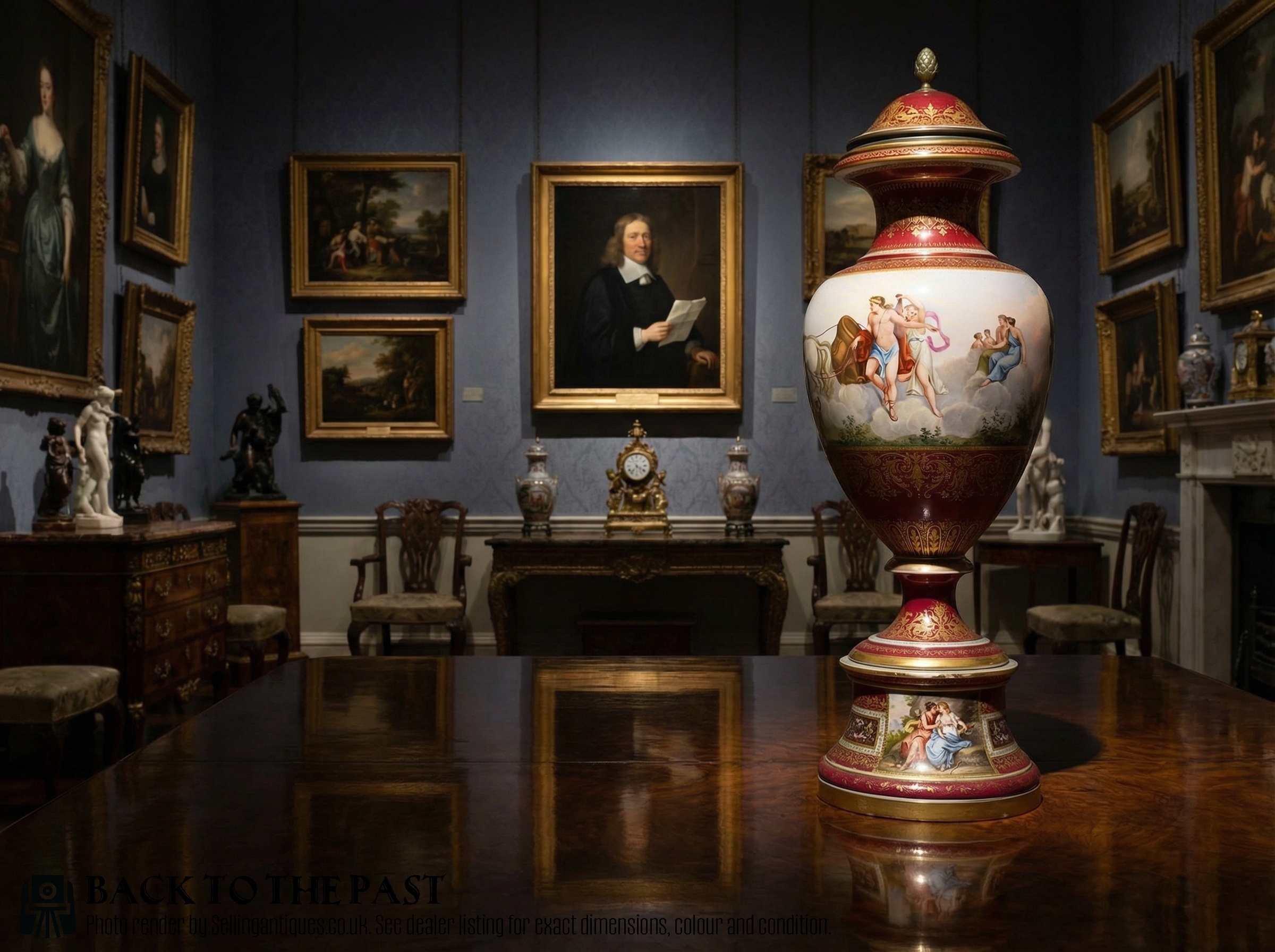
Large Classical Vienna Lidded Vase, Circa 1890, 19th Century
Priced at £14,000 from Patrick Moorhead Antiques
The 2026 retail price guide for Antique Vienna Vases is drawn from a proprietary archive of over 1.1 million retail prices indexed by Sellingantiques since 2003. This guide relies exclusively on their own internal data; no external sources or auction records are used.
Analysing nearly 25 years of UK antique market history alongside current retail values, the data indicates that typical UK retail prices for Antique Vienna Vases range between £500 and £2,500. Entry-level prices generally fall under £500 and premium examples upwards of £2,500.
Central painted reserves often depict mythological or historical scenes. These miniature paintings usually sit within a bordered cartouche.
Turn the piece to check the base. You frequently find handwritten titles describing the painted subject in black or red script.
Elaborate tooled gilding borders the painted panels. It frames the artwork and transitions into the solid ground colour.
Early throwing and moulding relied on local clays. Firing true hard-paste porcelain requires high kiln temperatures that were difficult to maintain.
Artists painted the main scenes in stages. The complex enamel colours needed multiple firings at progressively lower temperatures to set properly.
Polishing the gold finish took time. Workers rubbed the fired gilding with agate stones to achieve a bright gleam.
"Many factory painters signed their work with specific numbers. You can match these numerals to factory archives to identify the exact artist."
"Some blanks were sold undecorated. Independent Hausmaler studios bought these plain vessels and added their own highly detailed artwork at home."
"The famous beehive mark actually represents the coat of arms of the Babenberg family. It is a historical nod to Austrian royalty."
Based on almost 25 years of Sellingantiques UK antique market data, Antique Vienna Vases appeared 116 times (out of 1,100,000 antiques) which gives it a rarity score of 98/100.
This score measures scarcity within the Sellingantiques archive only and is not a survey of the entire antiques market, so these statistics may not be indicative of the general availability of Antique Vienna Vases elsewhere.
Those impressed or painted numerals help identify the craftsmen. The factory used a strict numbering system for its workforce.
Potters pressed their specific number into the wet clay. Painters added their own digits in enamel near the shield mark. You can look these up in factory records.
The shield mark was painted upside down early on. British collectors thought the rounded bottom and horizontal lines looked like a traditional woven skep beehive.
The name stuck in the trade. Dealers still call it a beehive mark, even though it started out as a royal shield.
Those script titles are a good sign. The factory and later decorators routinely wrote the subject of the painted panel on the base.
They used German or French text for mythological and historical scenes. Sometimes you find the title in gold, but black or red script is far more standard across the category.
That textured gold is intentional. Raised paste gilding was a major specialty for antique Vienna vases during the late eighteenth century.
Decorators applied a thick slip of clay and resin before gilding over it. This allowed them to tool intricate patterns that stand proud of the porcelain surface.
Please note: This Antique Vienna Vases guide and its associated pricing data are provided for general informational purposes only. It does not constitute formal financial, investment, or appraisal advice and should not be relied upon as the sole basis for any commercial activity, purchasing, or sales decisions. Sellingantiques.co.uk accepts no liability for any actions taken in reliance on this information. Always consult with a qualified professional or independent appraiser.
