

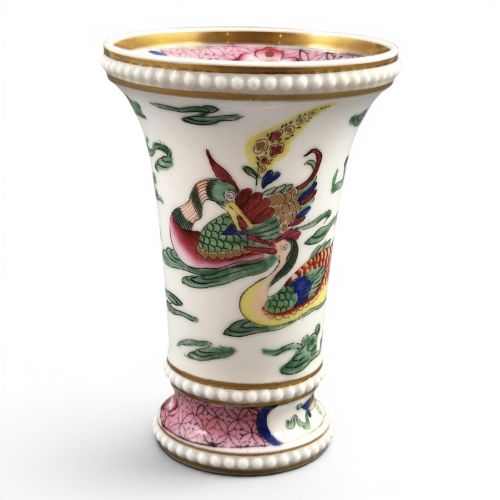
A 2026 Guide by Sellingantiques
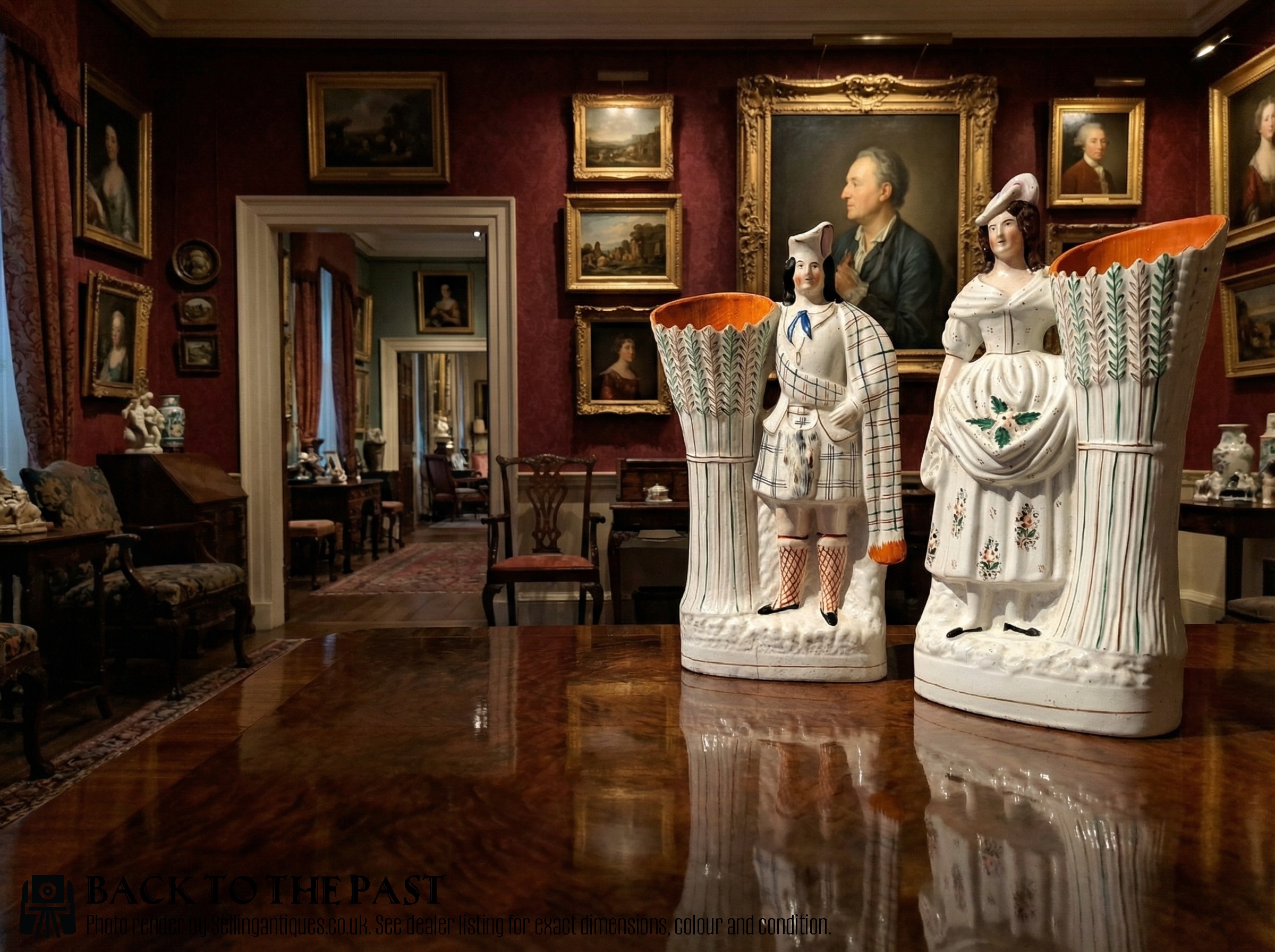
Pair of Antique English Victorian Staffordshire Pottery "Scots Harvesters" Spill Vases, 19th Century
Priced at £395 from Applecross Antiques
Friction matches largely replaced them by the late nineteenth century.
Homes needed a reliable way to light candles without striking a fresh flint every time.
Antique spill vases sat squarely on the mantelpiece right next to the active fire.
Before the 1850s, scrap paper was tightly rolled to save money.
The arrival of gas lighting reduced the daily need for household tapers.
Josiah Spode produced high-quality bone china versions during the early nineteenth century.
Worcester factory pattern books show flat-backed designs intended to sit flush against the wall.
Unmarked regional potteries made the vast majority of surviving clay figures with attached spill holders.
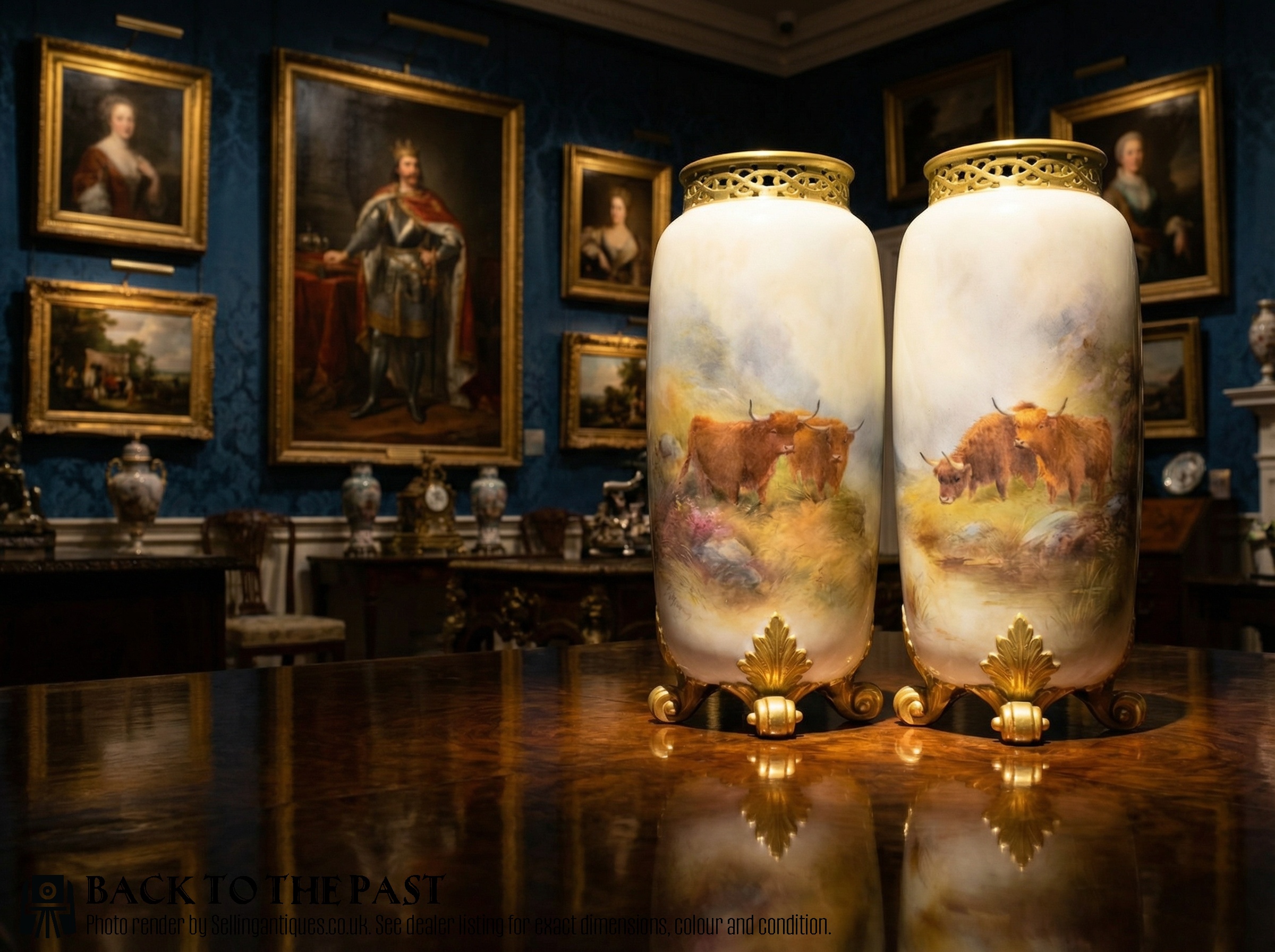
Royal Worcester Pair of Spill Vases Decorated Cattle by Stinton, 1920
Priced at £3,950 from Valerie Main Ltd
The 2026 retail price guide for Antique Spill Vases is drawn from a proprietary archive of over 1.1 million retail prices indexed by Sellingantiques since 2003. This guide relies exclusively on their own internal data; no external sources or auction records are used.
Analysing nearly 25 years of UK antique market history alongside current retail values, the data indicates that typical UK retail prices for Antique Spill Vases range between £200 and £800. Entry-level prices generally fall under £200 and premium examples upwards of £800.
Cylindrical shapes dominate because they held the straight wooden splints upright.
Bases tend to be flat and weighted to prevent tipping over on narrow shelves.
Many porcelain examples feature a flared rim. This caught the bundled paper tapers neatly.
Early treen types were shaped quickly on a pole lathe from a single block of timber.
Press-moulding allowed potteries to create complex figural groups around the central hollow core.
Glass blowers formed simple pontil-marked cylinders before cutting decorative facets into the thick sides.
"Some brass designs incorporate a small integrated strike plate for early friction matches."
"Pairing them on either end of the mantelpiece created pleasing symmetry in formal parlours."
"Wooden variants often show rich patination from the natural oils of countless passing hands."
Based on almost 25 years of Sellingantiques UK antique market data, Antique Spill Vases appeared 447 times (out of 1,100,000 antiques) which gives it a rarity score of 91/100.
This score measures scarcity within the Sellingantiques archive only and is not a survey of the entire antiques market, so these statistics may not be indicative of the general availability of Antique Spill Vases elsewhere.
Most sit between four and eight inches high. Anything taller gets unstable.
Heavy brass examples exist but are less common.
The term covers many factories across the Midlands. Potteries throughout Yorkshire and Scotland also produced similar flat-backed figures with spill holders attached.
Most lack maker marks. Dealers typically group them by region rather than trying to pin them to a specific factory.
A flat back suggests they were made for the mantelpiece. The lack of a water-tight glaze inside often points to dry storage rather than fresh flowers.
Antique spill vases were built to hold dry paper or wood. If the hollow is quite narrow and cylindrical, they likely held spills.
People used whatever scrap wood was cheap and to hand. Cedar and pine were common because they split easily into straight slivers.
Poorer households simply rolled up torn newspaper or letters. The vase just needed to keep whatever material they used tidy and ready near the fire.
Please note: This Antique Spill Vases guide and its associated pricing data are provided for general informational purposes only. It does not constitute formal financial, investment, or appraisal advice and should not be relied upon as the sole basis for any commercial activity, purchasing, or sales decisions. Sellingantiques.co.uk accepts no liability for any actions taken in reliance on this information. Always consult with a qualified professional or independent appraiser.
