



A 2026 Guide by Sellingantiques
Grand country house libraries created the initial demand. Walls lined with books meant readers needed safe access to the upper shelves.
Late Victorian examples especially. Metamorphic chairs turning into steps as middle-class homes gained smaller reading rooms.
Kitchen steps developed slightly later. Servants required robust platforms to reach high ceiling dressers in large households.
Demand fell steadily during the twentieth century. Modern domestic architecture favoured lower ceiling heights and built-in storage.
Antique step stools reflect domestic changes. They bridge the gap between intellectual pursuits and everyday household chores.
Francois Hervé produced notable library steps during the late eighteenth century. His designs often featured intricate folding mechanisms.
The firm of Gillows made many quality examples. They supplied solid mahogany step stools to wealthy provincial clients across Britain.
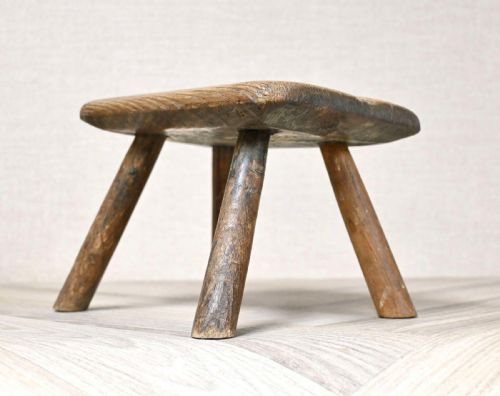
They're mostly unmarked. Local joiners knocked these together using whatever sturdy timbers sat in their workshops.
The 2026 retail price guide for Antique Step Stools is drawn from a proprietary archive of over 1.1 million retail prices indexed by Sellingantiques since 2003. This guide relies exclusively on their own internal data; no external sources or auction records are used.
Analysing nearly 25 years of UK antique market history alongside current retail values, the data indicates that typical UK retail prices for Antique Step Stools range between £300 and £3,300. Entry-level prices generally fall under £300 and premium examples upwards of £3,300.
Tooled leather inserts frequently cover library treads. These provided grip for leather-soled shoes while adding a decorative finish.
Turned poles sometimes attach to the top tier. Grasping this tall upright handle helps the user keep their balance.
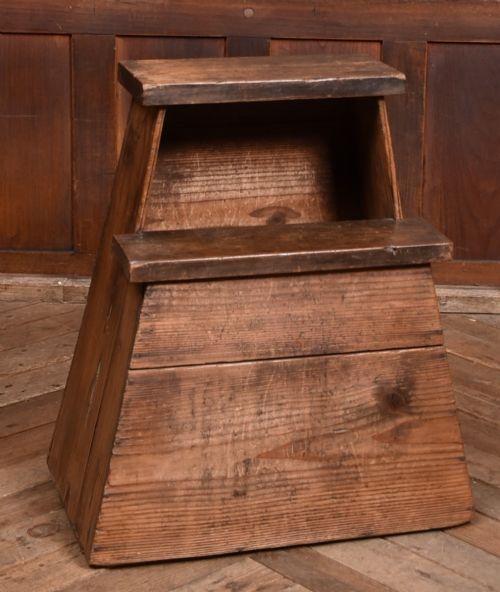
Pay attention to the tread depth. Good antique step stools offer a generous platform that supports the whole foot.
Early Georgian examples rely on heavy mortise and tenon joints. Makers prioritised mass and stability over ease of movement.
Turn the piece upside down. Later Victorian makers used steel screws to secure the treads, hiding the heads beneath wooden plugs.
Folding mechanisms grew increasingly complex. Precision brass hinges allowed three-tier steps to collapse into the footprint of a standard stool.
"Some designs hide a commode beneath the top step. This dual purpose saved space in crowded eighteenth-century bedchambers."
"Carpet often covered the treads of early library steps. It matched the room scheme and muffled the sound of footsteps."
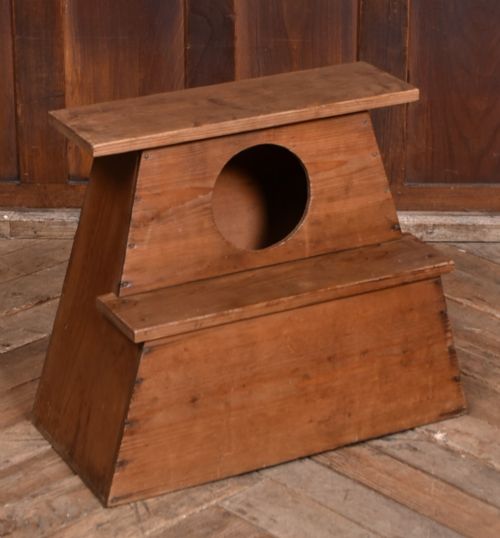
"Portable models occasionally feature carrying slots. A neat hand-hold cut into the top tread makes moving the unit simple."
Based on almost 25 years of Sellingantiques UK antique market data, Antique Step Stools appeared 121 times (out of 1,100,000 antiques) which gives it a rarity score of 98/100.
This score measures scarcity within the Sellingantiques archive only and is not a survey of the entire antiques market, so these statistics may not be indicative of the general availability of Antique Step Stools elsewhere.
Dust them with a dry cloth first. Dirt trapped in the tooling scratches the surface if you rub too hard.
Apply a plain microcrystalline wax once a year. It feeds the old leather and stops the edges from drying out and lifting.
They're safe if the joints remain tight. You'll need to check the side framing for any sideways movement before putting your weight on them.
Make sure the hinges are original. Modern replacement screws often pull out of old timber under pressure. If the locking stay clicks securely into place, the frame should hold steady.
It's a standard seat that transforms. The backrest folds forward on a floor-level hinge.
This action flips the seat over to reveal a short flight of steps. They're practical novelties for tight spaces.
That pole's a handrail for balance. Reaching for a high book shifts your centre of gravity, and the pole gives you something firm to grip.
Some poles do have a small flat finial on top. People occasionally rested a candlestick there, but its primary job was to keep the reader steady on the top tread.
Please note: This Antique Step Stools guide and its associated pricing data are provided for general informational purposes only. It does not constitute formal financial, investment, or appraisal advice and should not be relied upon as the sole basis for any commercial activity, purchasing, or sales decisions. Sellingantiques.co.uk accepts no liability for any actions taken in reliance on this information. Always consult with a qualified professional or independent appraiser.
