


A 2026 Guide by Sellingantiques
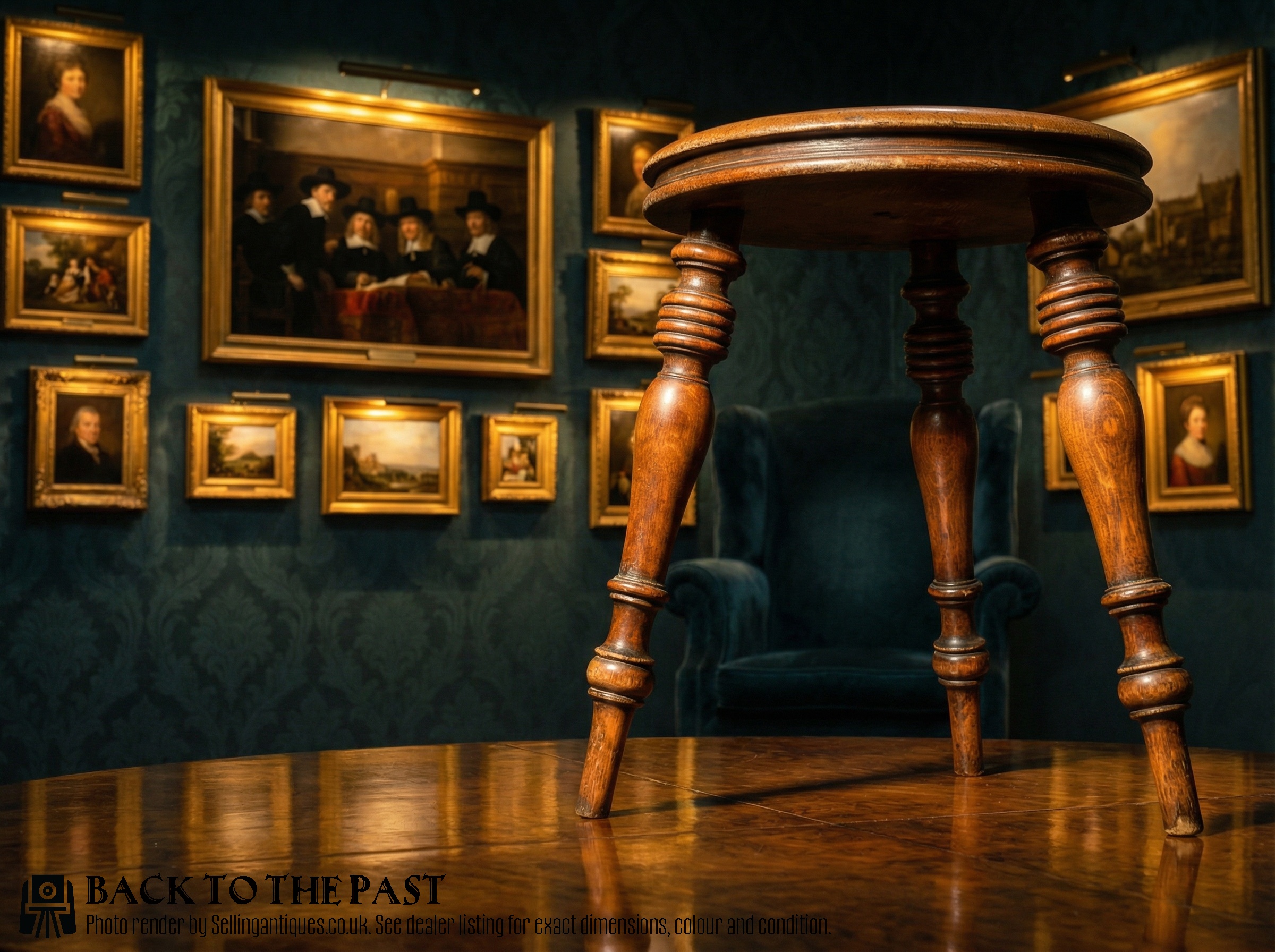
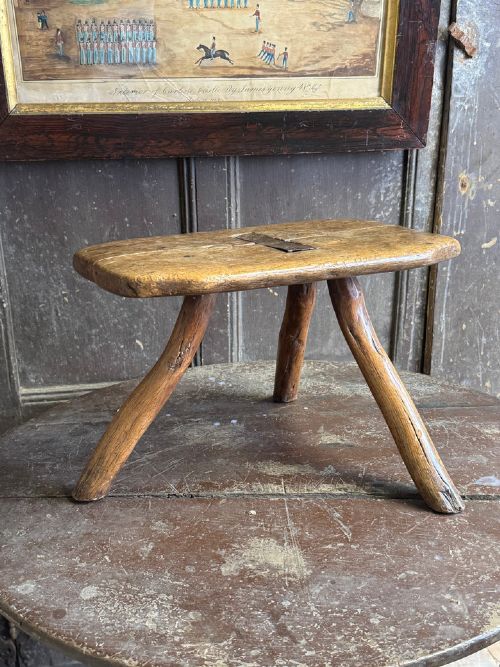
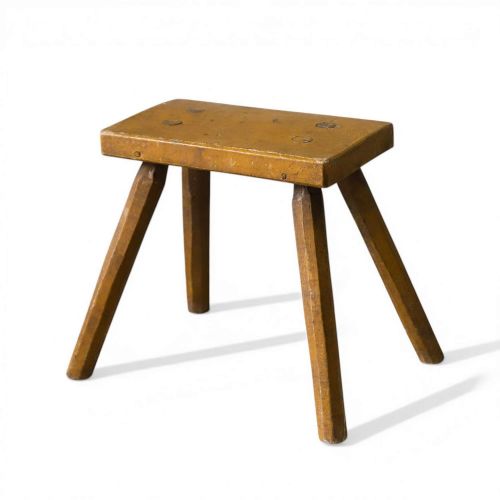
Georgian Milking Stool, Georgian
Priced at £195 from Courtyard Antiques
Most antique milking stools originated in rural dairies across Europe and Britain.
Workers kept them close to the barn floor to make accessing the udder easier.
Turn them over and look at the feet. Decades on stone or dirt floors leave heavy wear.
Forms vary from region to region, adapting to local dairy practices.
You will rarely find signed or stamped antique milking stools anywhere.
Village carpenters and estate workers built these rather than famous London workshops.
Construction relied on local trade knowledge handed down through farming communities.
The 2026 retail price guide for Antique Milking Stools is drawn from a proprietary archive of over 1.1 million retail prices indexed by Sellingantiques since 2003. This guide relies exclusively on their own internal data; no external sources or auction records are used.
Analysing nearly 25 years of UK antique market history alongside current retail values, the data indicates that typical UK retail prices for Antique Milking Stools range between £100 and £400. Entry-level prices generally fall under £100 and premium examples upwards of £400.
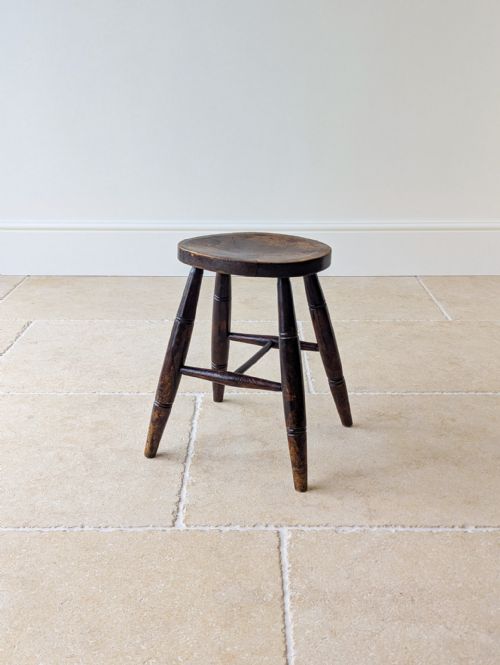
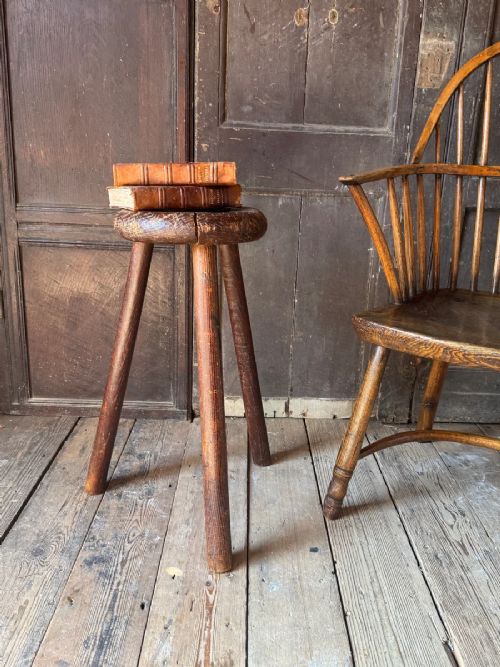
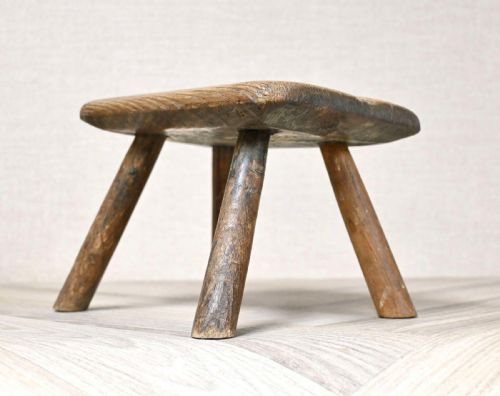
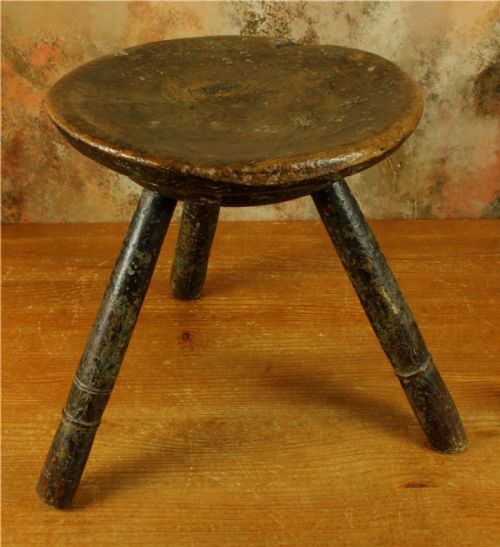
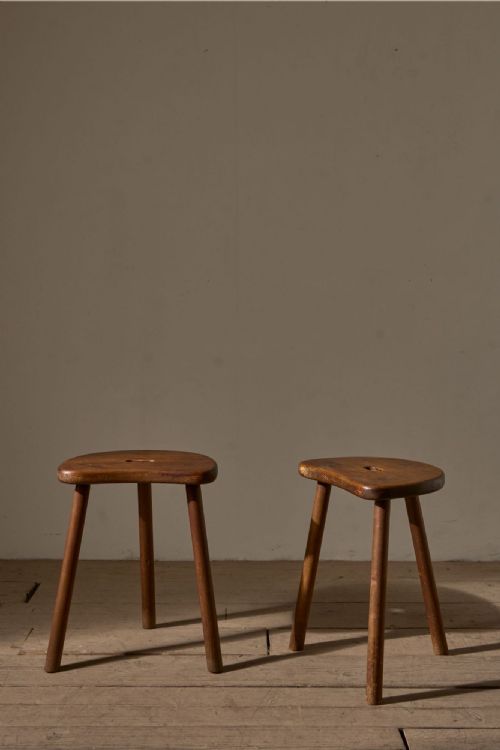
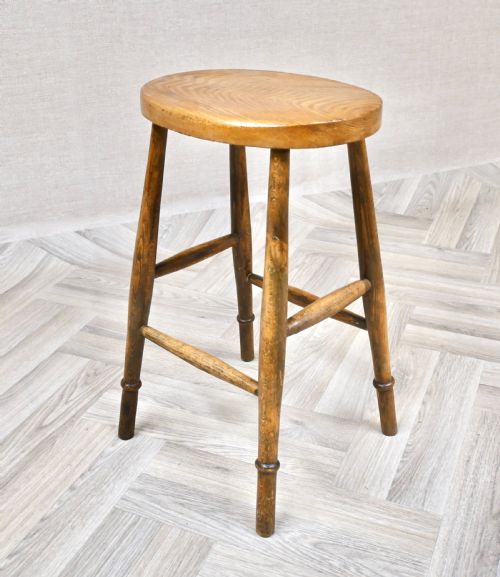
Three legs are standard in many areas to provide stability on uneven barn floors.
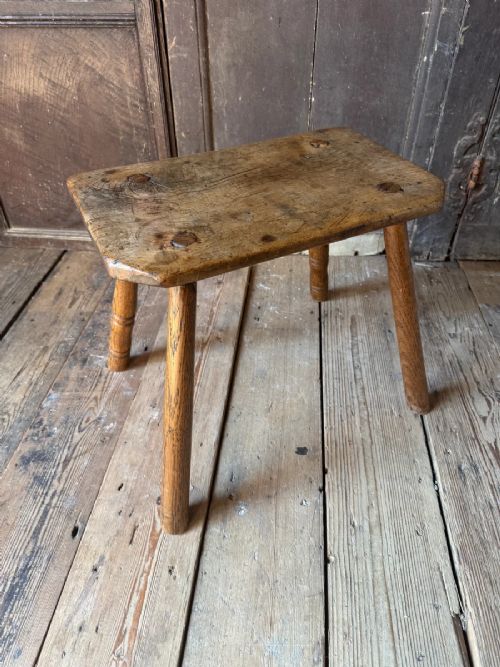
A thick, solid timber seat board takes the daily weight of the worker.
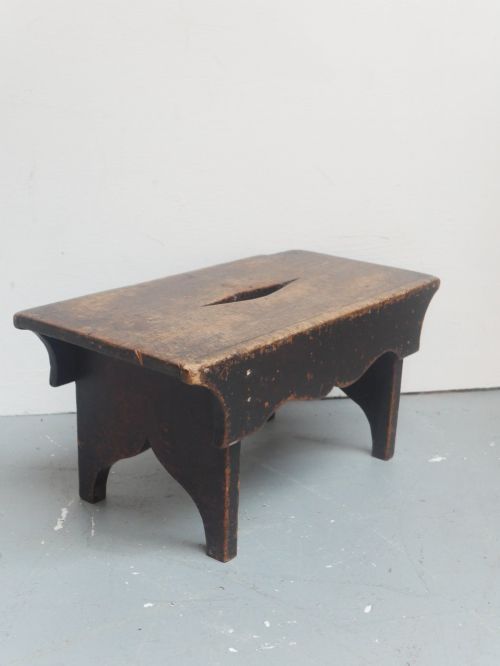
Handle holes carved right into the wood help you carry the block from stall to stall.
Legs usually join the main seating board using simple through-tenons.
Watch for shrinkage across the grain. This locks the joints tighter as the timber dries over time.
Seat edges often feature a crude chamfer to remove sharp corners and add comfort for the user.
"The three-legged design guarantees a wobble-free seat on cobbled floors."
"Many have a distinct slope built in, pitching the user forward towards the work."
"Distinct regional shapes mean you can sometimes guess the county of origin just by the outline."
Based on almost 25 years of Sellingantiques UK antique market data, Antique Milking Stools appeared 278 times (out of 1,100,000 antiques) which gives it a rarity score of 95/100.
This score measures scarcity within the Sellingantiques archive only and is not a survey of the entire antiques market, so these statistics may not be indicative of the general availability of Antique Milking Stools elsewhere.
Three legs naturally find balance on uneven ground. Barns and milking parlours historically had rough stone or dirt floors where a four-legged chair rocks and tips.
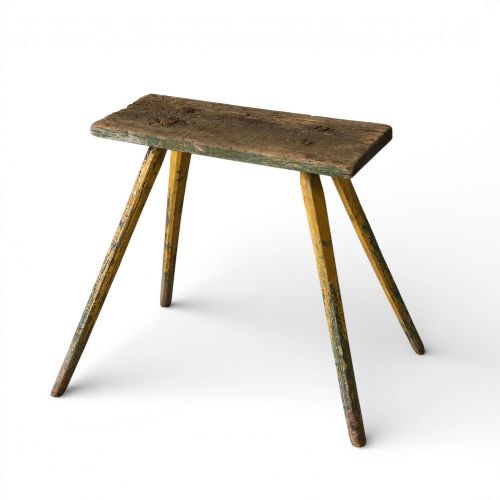
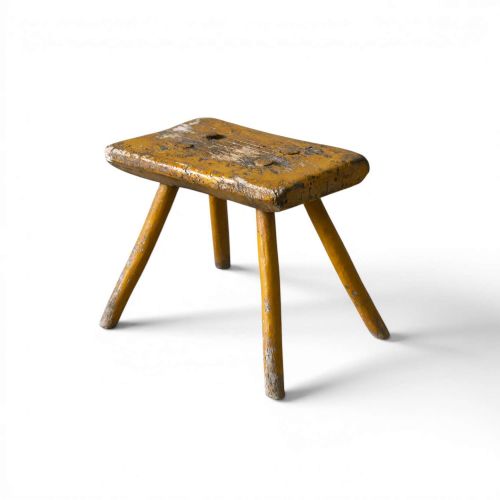
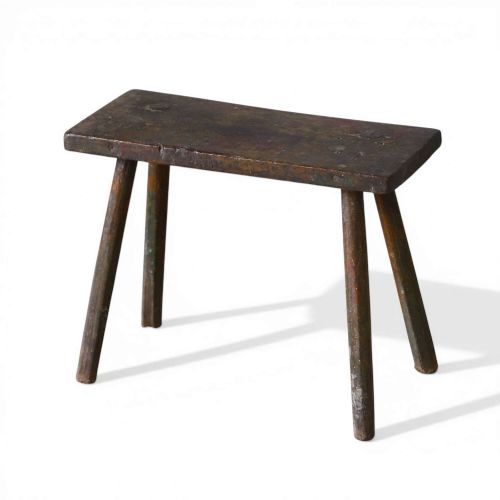
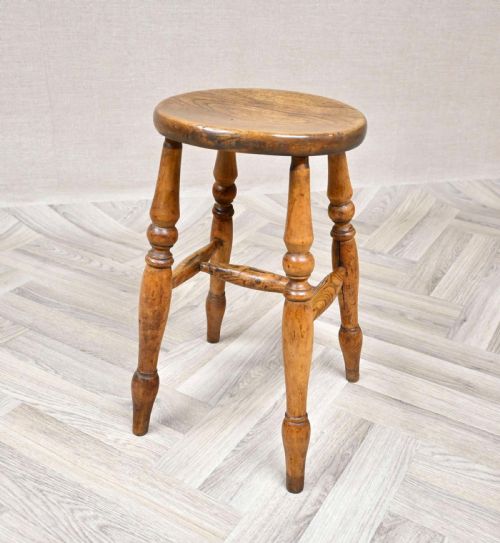
Four legs do appear on some antique milking stools. You mostly find them in regions where dairies updated to flat brick or concrete floors earlier on.
Most started life out in the dairy or barn. They provided a low seat for working rather than domestic comfort.
People often brought them indoors once they retired from farm work. A low, stable seat works well by a hearth for resting feet or tending a fire. This transition explains why so many survive today in domestic settings.
That hole acts as a carrying handle. Farm workers needed to pick the seat up with one hand while carrying buckets or managing animals with the other.
It also lets you hang the piece on a peg. Keeping it off the damp floor extends the life of the timber considerably.
Wood shrinks across the grain over time. As the thick plank seat dries out, it puts pressure around the circular leg joints and creates minor splits.
The makers anticipated this movement. Wedging the tenons from the top forces the joint outwards. Even when the seat board splits slightly around it, the leg usually remains secure.
Please note: This Antique Milking Stools guide and its associated pricing data are provided for general informational purposes only. It does not constitute formal financial, investment, or appraisal advice and should not be relied upon as the sole basis for any commercial activity, purchasing, or sales decisions. Sellingantiques.co.uk accepts no liability for any actions taken in reliance on this information. Always consult with a qualified professional or independent appraiser.
