


A 2026 Guide by Sellingantiques
Easing joint pain required elevation, making these specialised rests common in prosperous Georgian and Victorian households.
Doctors regularly advised keeping the foot above the heart to reduce swelling.
By the early nineteenth century, mechanics allowed users to change the angle without shifting their seating position.
Look at the general profile to date them, as early versions sit much closer to the ground than later examples.
Gillows of Lancaster and London supplied many high-quality mahogany examples during the early nineteenth century.
Provincial cabinetmakers produced simpler fixed-angle versions across Britain, copying patterns from London catalogues.
Stamped brass mechanisms sometimes carry the mark of Birmingham foundries, though the wooden carcase rarely identifies the workshop.
The 2026 retail price guide for Antique Gout Stools is drawn from a proprietary archive of over 1.1 million retail prices indexed by Sellingantiques since 2003. This guide relies exclusively on their own internal data; no external sources or auction records are used.
Analysing nearly 25 years of UK antique market history alongside current retail values, the data indicates that typical UK retail prices for Antique Gout Stools range between £300 and £800. Entry-level prices generally fall under £300 and premium examples upwards of £800.
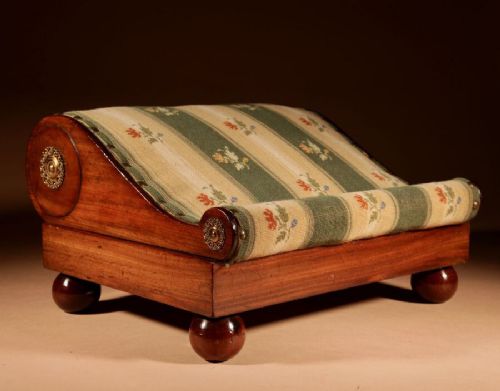
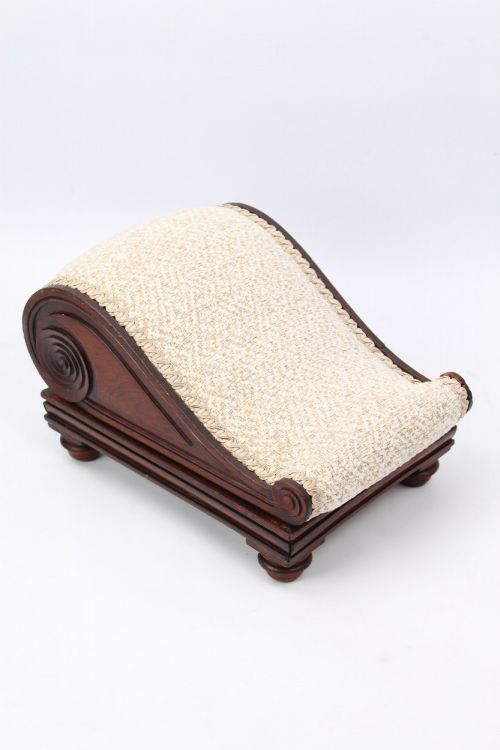
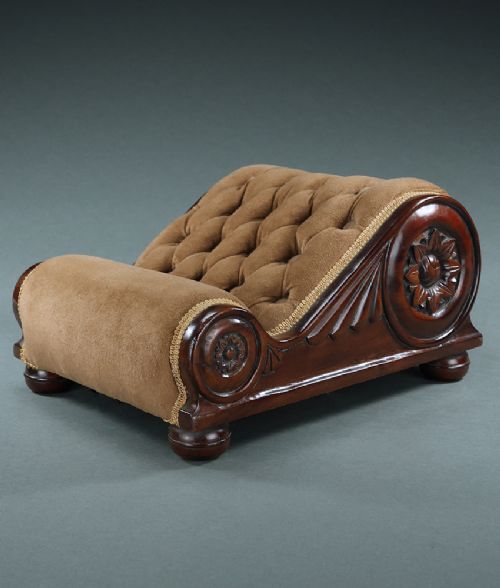
Sloping padded tops define the form, preventing the calf from resting flat and applying pressure to the heel.
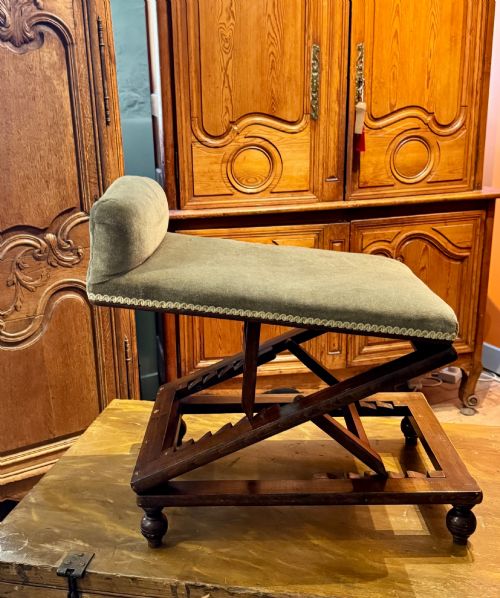
Later models almost always feature a wooden ratchet or peg system to raise and lower the padded section.
Check the base for castors. Small brass wheels let a servant push the stool under the foot without making the sitter move.
Mortise and tenon joints secure the outer frames, handling the downward pressure of heavy legs.
Early Georgian examples often feature stationary turned legs, relying fully on the fixed angle of the upholstery.
Victorian makers introduced complex internal iron mongery, allowing smoother angle adjustments with minimal physical effort.
"Some examples feature a hidden compartment under the main cushion, designed to hold a heated brick or hot water bottle."
"Curved shapes in the padding actively encourage healthy blood flow through the calf muscle."
"People often used these padded rests as ordinary library stools when the owner was in good health."
Based on almost 25 years of Sellingantiques UK antique market data, Antique Gout Stools appeared 81 times (out of 1,100,000 antiques) which gives it a rarity score of 98/100.
This score measures scarcity within the Sellingantiques archive only and is not a survey of the entire antiques market, so these statistics may not be indicative of the general availability of Antique Gout Stools elsewhere.
They aren't built to hold a person's full body weight. The joints only support a single leg.
Sitting on the raised end usually snaps the wooden teeth. Use them strictly as footrests.
Dust the wooden frame regularly with a soft, dry cloth. If the mahogany looks dry, apply a light coat of good beeswax polish once or twice a year.
Leave the wax to sit for ten minutes before buffing it off. Avoid aerosol sprays, as they build up a cloudy residue on old finishes.
For the upholstery, gentle vacuuming with a brush attachment lifts most surface dirt. You can treat minor marks with a damp sponge, but don't soak the old padding.
Lift the padded section gently from the front. You'll see a hinged wooden or metal prop drop down into the notched rack on the base.
Make sure the prop sits squarely within the groove before resting any weight on the top. If the teeth are worn, the prop might slip backward under pressure.
Check the hinges if the frame feels loose. Loose screws often cause the lifting mechanism to jam against the carcase.
Scooped cushions cradle the calf to stop the leg rolling off the side while the user sleeps. This shape keeps the foot securely elevated above the heart.
Flat cushions belong to simpler designs or general-purpose footstools. While they still provide elevation, they offer less lateral support for someone confined to a chair for weeks at a time.
Please note: This Antique Gout Stools guide and its associated pricing data are provided for general informational purposes only. It does not constitute formal financial, investment, or appraisal advice and should not be relied upon as the sole basis for any commercial activity, purchasing, or sales decisions. Sellingantiques.co.uk accepts no liability for any actions taken in reliance on this information. Always consult with a qualified professional or independent appraiser.
