
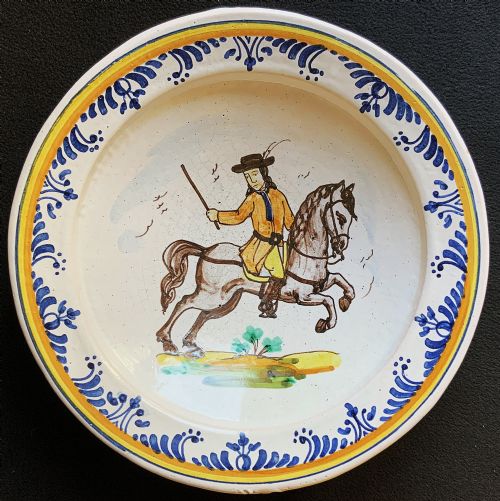


A 2026 Guide by Sellingantiques
Minton first launched this pottery style at the 1851 Great Exhibition in London.
Victorian households bought antique majolica plates for serving fruit and desserts during formal dinners.
Look for designs reflecting nineteenth-century obsessions with botany and the natural world.
Production eventually spread across Britain, Europe, and America as middle-class demand grew.
Minton dominated the early British trade, producing highly detailed plates from the 1850s onwards.
George Jones is another well-documented Staffordshire maker who produced distinctive wares during the late nineteenth century.
Wedgwood manufactured a huge volume of these, often marking their output with clear date ciphers.
The 2026 retail price guide for Antique Majolica Plates is drawn from a proprietary archive of over 1.1 million retail prices indexed by Sellingantiques since 2003. This guide relies exclusively on their own internal data; no external sources or auction records are used.
Analysing nearly 25 years of UK antique market history alongside current retail values, the data indicates that typical UK retail prices for Antique Majolica Plates range between £100 and £600. Entry-level prices generally fall under £100 and premium examples upwards of £600.
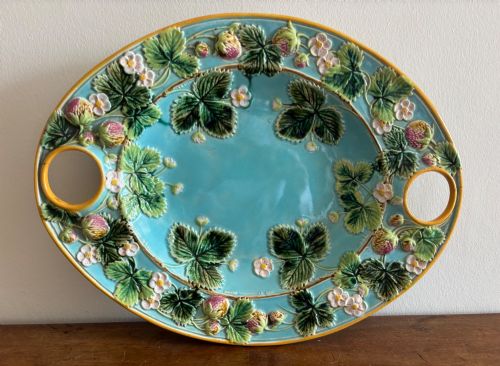
Deep relief moulding stands out as the defining characteristic of antique majolica plates.
Vivid greens, yellows, and browns pool in the recesses of the pattern.
Natural subjects dominate. Think ferns, strawberries, basketwork, and marine life pressed right into the clay.
Factory workers pressed wet clay into plaster moulds to create the heavy three-dimensional shapes.
Painting the metallic glazes required steady hands to keep the different colours from bleeding too far into one another.
Later mass production sometimes meant thinner potting and less defined moulding as the original master blocks wore down.
"The thick pooling glazes actually highlight the sharp details of the plaster mould underneath."
"You can sometimes spot the painter's individual tally mark painted neatly on the reverse of the plate."
"Many factories created matching sets that linked together to form entirely realistic table scenes."
Based on almost 25 years of Sellingantiques UK antique market data, Antique Majolica Plates appeared 137 times (out of 1,100,000 antiques) which gives it a rarity score of 97/100.
This score measures scarcity within the Sellingantiques archive only and is not a survey of the entire antiques market, so these statistics may not be indicative of the general availability of Antique Majolica Plates elsewhere.
Crazing is almost standard on lead-glazed earthenware. The glaze and the clay body shrink at different rates as they cool.
It rarely affects how you display the plate. Just avoid soaking it in water, as moisture can seep through those microscopic cracks and stain the clay underneath.
Wash them by hand in lukewarm water. Avoid sudden temperature changes.
Never put them in a dishwasher. Harsh chemicals strip the glaze.
Many Staffordshire potteries turned out unmarked wares to meet middle-class demand in the late nineteenth century. Small factories simply copied successful shapes from the big firms.
Sometimes European makers exported unmarked blanks or finished goods. Without a registration mark or factory stamp, attribution relies entirely on identifying specific mould patterns.
The metallic oxides melt and turn to glass during the firing process. As they heat up, they become fluid and naturally travel downwards.
This bleeding is normal for the medium. Potters used the high relief outlines as physical barriers to keep the colours somewhat separate.
Please note: This Antique Majolica Plates guide and its associated pricing data are provided for general informational purposes only. It does not constitute formal financial, investment, or appraisal advice and should not be relied upon as the sole basis for any commercial activity, purchasing, or sales decisions. Sellingantiques.co.uk accepts no liability for any actions taken in reliance on this information. Always consult with a qualified professional or independent appraiser.
