


A 2026 Guide by Sellingantiques
Established in 1710 by Augustus the Strong in Dresden, before moving to the Albrechtsburg castle.
The factory was Europe's first to successfully produce true hard-paste porcelain, ending reliance on Asian imports.
Look for shifts in style reflecting different factory management periods.
Antique Meissen plates often formed part of massive armorial services ordered by European royalty, sometimes taking years to complete.
Johann Gregorius Höroldt directed the painting workshop from 1720 to 1765, establishing the vivid enamel colour palette still associated with the factory.
Chief modeller Johann Joachim Kändler worked from 1731 until 1775, designing the famous Swan Service plates with their raised relief decoration.
Look for the distinct painting styles of lesser-known workshop decorators who specialised in specific motifs like harbour scenes.
The 2026 retail price guide for Antique Meissen Plates is drawn from a proprietary archive of over 1.1 million retail prices indexed by Sellingantiques since 2003. This guide relies exclusively on their own internal data; no external sources or auction records are used.
Analysing nearly 25 years of UK antique market history alongside current retail values, the data indicates that typical UK retail prices for Antique Meissen Plates range between £200 and £1,100. Entry-level prices generally fall under £200 and premium examples upwards of £1,100.
Crossed swords marks applied in underglaze blue are the standard factory indicator, though the shape of the swords changed over the decades.
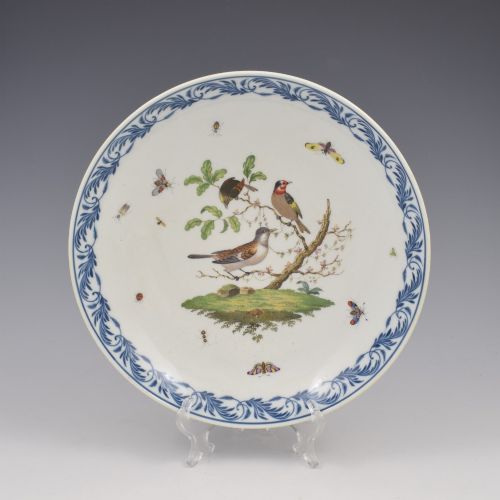
Intricate hand-painted decoration, frequently featuring botanical specimens or elaborate courtly scenes in the centre well.
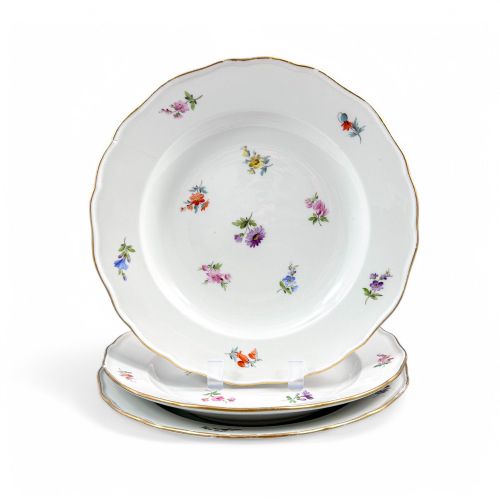
Notice the border profiles, which often incorporate pierced lattice-work or gilded scalloped edges on antique Meissen plates.
Early examples relied on wheel-throwing. Later production shifted to pressing clay into plaster moulds for uniform shapes.
Observe the relief patterns like the Alt-Ozier basket weave. These required carvers to cut the intricate design directly into the master moulds.
Multiple firings handled different colours. Gold details required a final firing before craftsmen polished the metal with agate tools.
"The factory developed its own specific shades of colour, including a vibrant purple lustre that remains highly sought after by collectors."
"Secret recipes for the porcelain paste were kept strictly guarded by a few trusted workers."
"Notice how some painted flowers cover small firing flaws, a clever technique the painters used to turn natural imperfections into decorative assets."
Based on almost 25 years of Sellingantiques UK antique market data, Antique Meissen Plates appeared 81 times (out of 1,100,000 antiques) which gives it a rarity score of 98/100.
This score measures scarcity within the Sellingantiques archive only and is not a survey of the entire antiques market, so these statistics may not be indicative of the general availability of Antique Meissen Plates elsewhere.
Wash them by hand in warm water with a mild dish soap. Line your plastic basin with a folded towel first. This stops the foot rim from chipping against the sink if it slips.
Don't use the dishwasher. Harsh detergents and high heat will strip the overglaze enamels and dull the gold borders.
You can use them for serving, provided they don't have hairlines or chips. Hard-paste porcelain handles heat well, but sudden temperature changes risk thermal shock.
Warm the plates gradually before serving hot meals. A gentle wipe with warm water gets them ready. Never put them in a microwave.
First quality indicates the factory inspectors found no structural flaws after the final firing.
Plates with noticeable warping had a line cut through the blue mark and were sold as seconds.
The painters worked by hand rather than using transfer prints. Factory directors provided pattern books and master samples, but individual decorators had the freedom to arrange the scattered flower motifs as they saw fit.
This variety stopped a large dining service from looking rigid. It also allowed painters to cover small black specks in the glaze with a strategically placed leaf or petal.
Collectors often prefer this natural variation. It shows the human element involved in eighteenth-century production lines.
Please note: This Antique Meissen Plates guide and its associated pricing data are provided for general informational purposes only. It does not constitute formal financial, investment, or appraisal advice and should not be relied upon as the sole basis for any commercial activity, purchasing, or sales decisions. Sellingantiques.co.uk accepts no liability for any actions taken in reliance on this information. Always consult with a qualified professional or independent appraiser.
