


A 2026 Guide by Sellingantiques
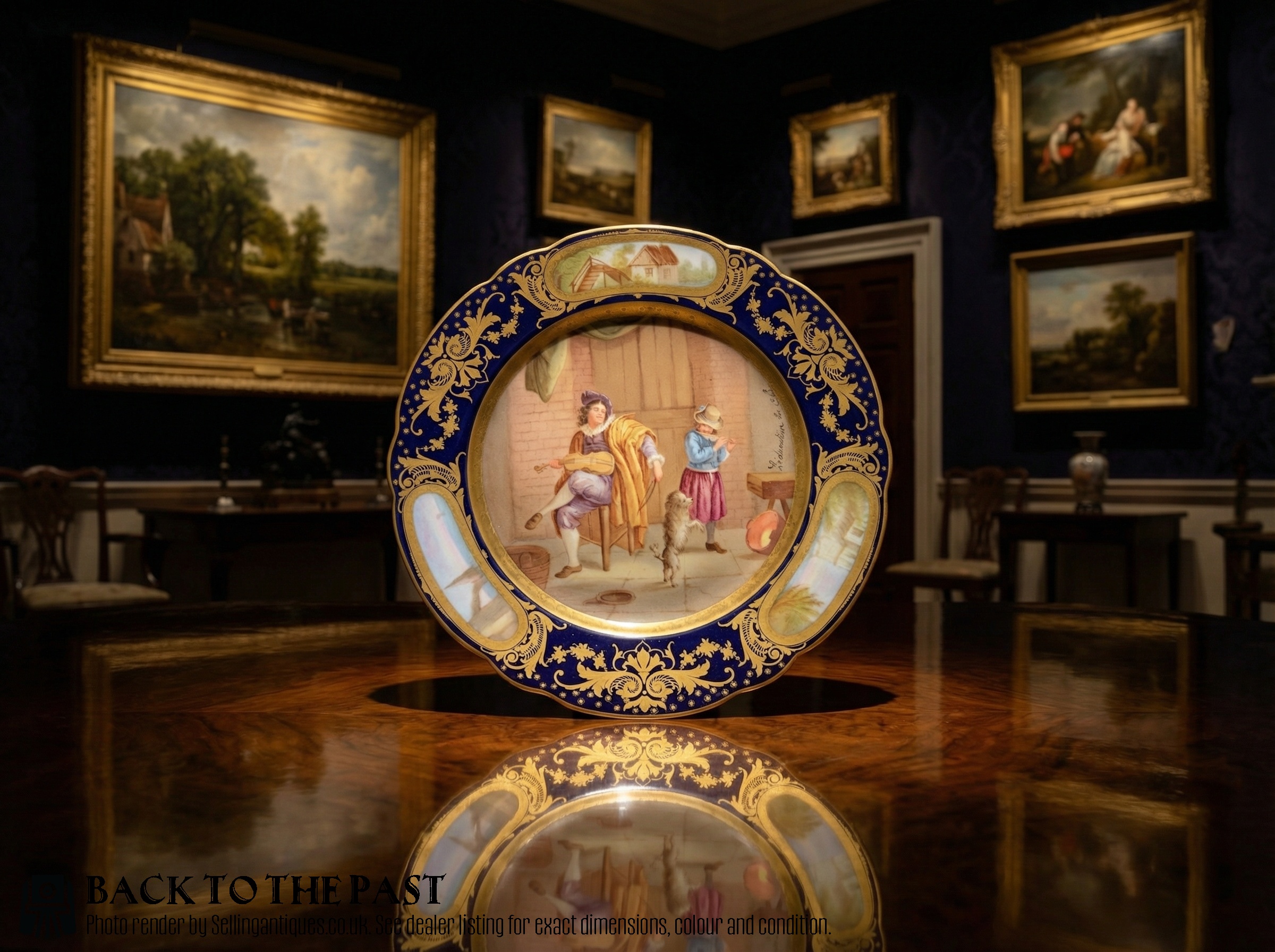
Impressive Set of 12 Sevres Style Porcelain Plates, Circa 1890, 19th Century
Priced at £4,800 from Patrick Moorhead Antiques
Production of these wares began at Vincennes. The factory later moved to Sevres under the patronage of Louis XV.
The royal connection drove high demand for these plates across many European courts.
Early services often took years to complete. Complex firing schedules dictated the pace of work.
Turn over an Antique Sevres plate to check the date letters. A letter inside the crossed Ls mark indicates the year.
Political upheaval brought changes. Revolutionary symbols replaced royal ciphers on the later pieces.
The factory employed specialists for different tasks. Charles-Nicolas Dodin painted figure scenes and domestic subjects on these wares over a long career.
Jean-Louis Morin worked alongside him. He specialised in military and marine subjects for major services.
Artists like Henry-Francois Vincent added the gold borders framing the painted panels. Gilding was handled separately.
The 2026 retail price guide for Antique Sevres Plates is drawn from a proprietary archive of over 1.1 million retail prices indexed by Sellingantiques since 2003. This guide relies exclusively on their own internal data; no external sources or auction records are used.
Analysing nearly 25 years of UK antique market history alongside current retail values, the data indicates that typical UK retail prices for Antique Sevres Plates range between £300 and £1,700. Entry-level prices generally fall under £300 and premium examples upwards of £1,700.
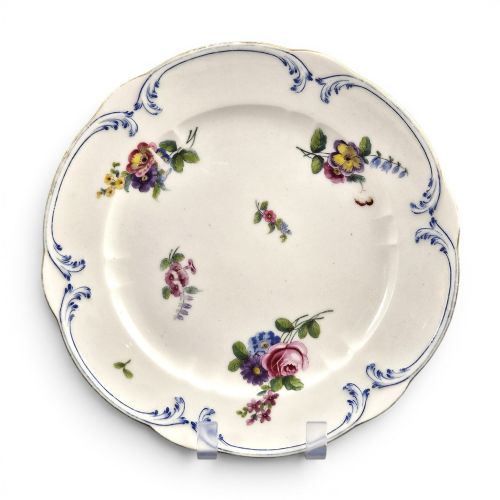
Solid ground colours define many Antique Sevres plates. Shades like bleu celeste and rose pompadour frequently appear on early pieces.
Framing panels usually contain painted flowers, birds or classical scenes. These white central reserves sit against the coloured borders.
They're normally marked on the base with crossed Ls, accompanied by painter and gilder symbols.
Rococo curves define the early Vincennes and Sevres production. Plates often feature lobed edges and asymmetrical floral cartouches.
You'll find stricter geometric borders by the late eighteenth century. Straight lines and classical medallions replaced the scrolling foliage.
Darker ground colours like solid black or deep green dominate the Empire period plates.
"Painters had their own unique symbols. A tiny crescent, anchor or flower on the back identifies the specific artist."
"Enamel colours fuse directly with the glaze on soft-paste porcelain. This creates a softer, blended appearance distinct from later hard-paste pieces."
"Diplomatic gifts. Many dinner services were shipped across Europe in their entirety to cement political alliances."
Based on almost 25 years of Sellingantiques UK antique market data, Antique Sevres Plates appeared 74 times (out of 1,100,000 antiques) which gives it a rarity score of 99/100.
This score measures scarcity within the Sellingantiques archive only and is not a survey of the entire antiques market, so these statistics may not be indicative of the general availability of Antique Sevres Plates elsewhere.
Dust them lightly with a soft brush. Never use chemical sprays or submerge them in hot water. The enamel colours on soft-paste porcelain sit on the surface and can be vulnerable to harsh detergents.
If you need to remove old grime, use a slightly damp cloth. Wipe gently and dry the plate immediately. Avoid rubbing the gilded edges.
Those are suspension holes. Factory workers pierced the foot rim before the first firing to hang plates in the kiln.
This prevented the glaze from sticking to the kiln shelves. It is a common feature on early French wares.
It's best to avoid using them for dining. Cutlery will scratch the enamel painting in the centre. Food acids can also damage the softer glazes over time.
Most collectors display them on stands or in cabinets. If you must use them, stick to dry foods like biscuits and handle them carefully.
Don't attempt to polish it. That darkness is the natural patina of old gold. Commercial metal polishes contain abrasives that will strip the remaining gold layer straight off the porcelain.
Antique Sevres plates were gilded using thin layers of gold. Once that layer wears away, you can't bring it back. The dullness is part of its history. Leave it exactly as it is.
Please note: This Antique Sevres Plates guide and its associated pricing data are provided for general informational purposes only. It does not constitute formal financial, investment, or appraisal advice and should not be relied upon as the sole basis for any commercial activity, purchasing, or sales decisions. Sellingantiques.co.uk accepts no liability for any actions taken in reliance on this information. Always consult with a qualified professional or independent appraiser.
