



A 2026 Guide by Sellingantiques
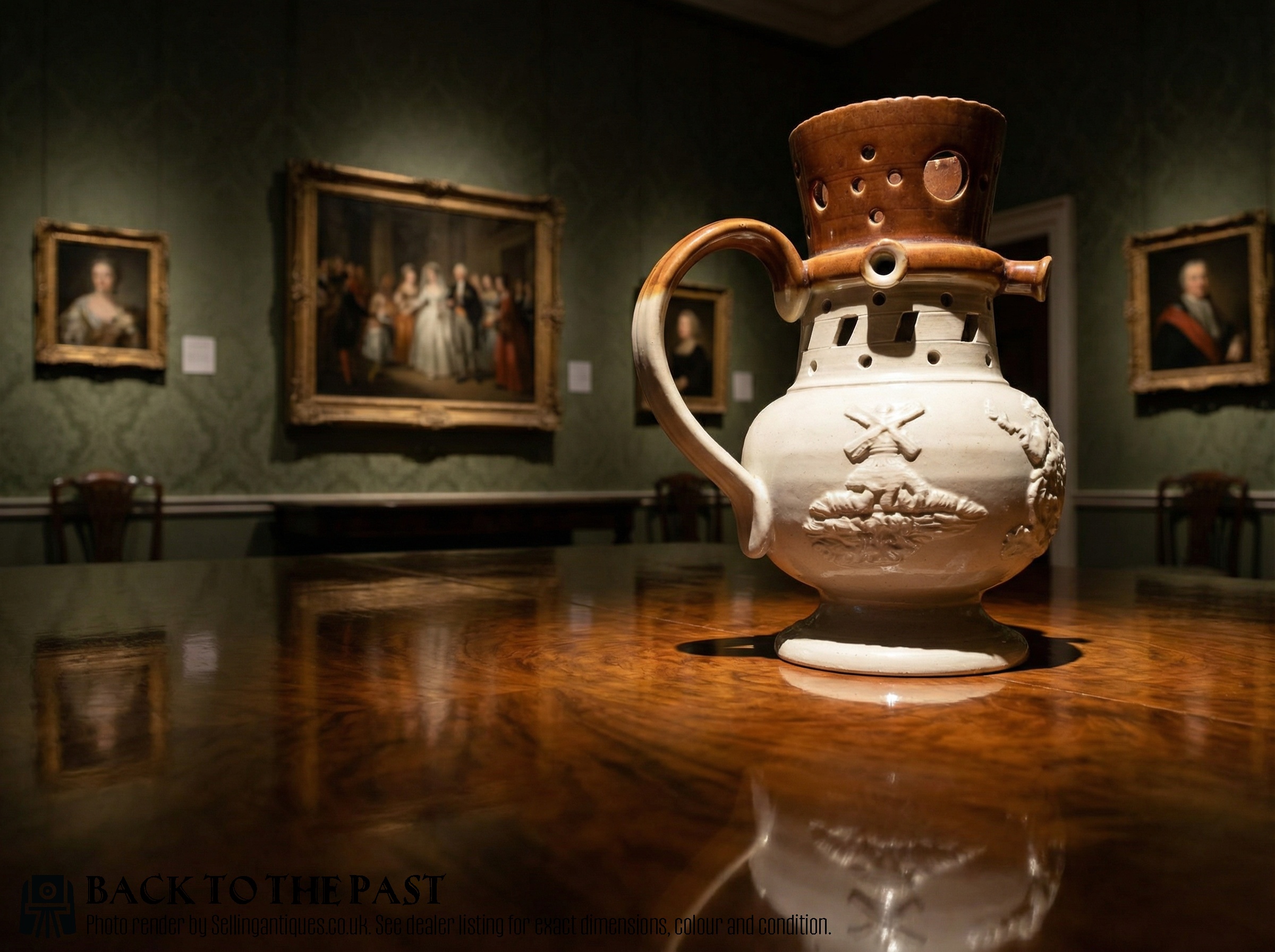
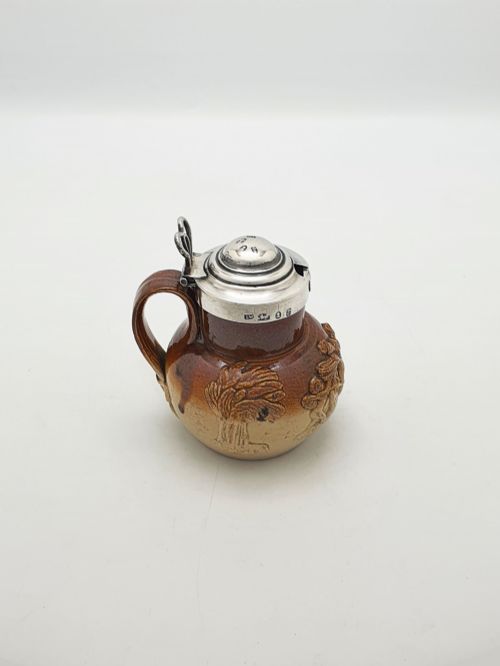
Good 19thc Stoneware Puzzle Jug, 19th Century
Priced at £145 from Mike Melody Antiques
Potters turned to this denser material when households demanded vessels that would not seep.
Antique stoneware jugs mostly started life in busy taverns or rural dairies.
Think about the journey. Transporting ale across rough roads required tough, thick-walled containers.
Form changed over time. Bell-bellied profiles often gave way to straighter sides for better stacking.
John Dwight secured his working period at Fulham Pottery during the late seventeenth century making early salt-glazed wares.
Doulton of Lambeth turned out vast quantities of these vessels throughout the nineteenth century.
Expect unsigned pieces. Regional potteries often left their heavy utilitarian wares without maker marks.

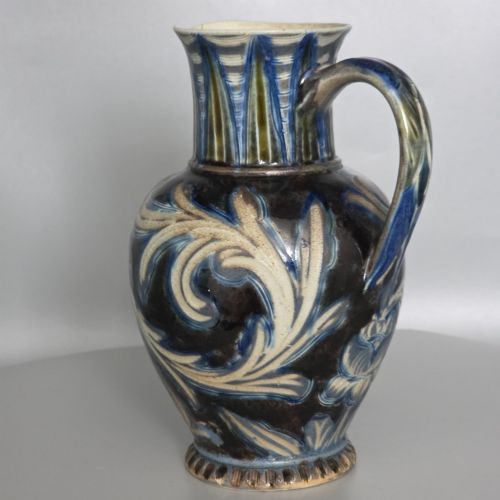
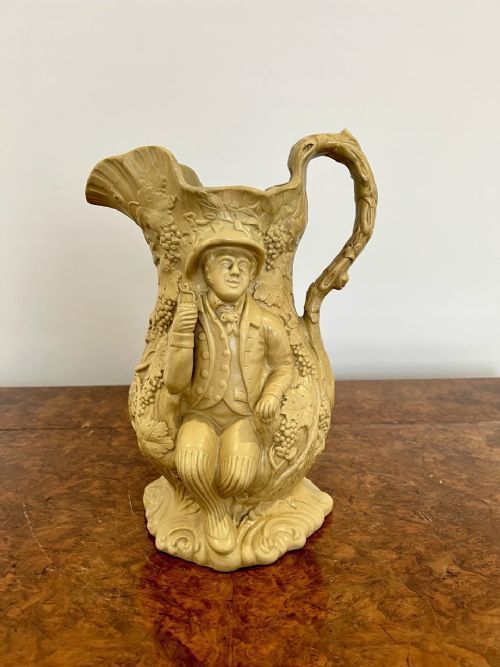
Fantastic Quality Antique Victorian Doulton Lambeth Jug, 1870
Priced at £395 from Unique Antiques by Emma Jade
The 2026 retail price guide for Antique Stoneware Jugs is drawn from a proprietary archive of over 1.1 million retail prices indexed by Sellingantiques since 2003. This guide relies exclusively on their own internal data; no external sources or auction records are used.
Analysing nearly 25 years of UK antique market history alongside current retail values, the data indicates that typical UK retail prices for Antique Stoneware Jugs range between £100 and £600. Entry-level prices generally fall under £100 and premium examples upwards of £600.
Heavy applied handles formed from pulled clay are thumbed firmly onto the neck.
Cobalt blue decoration gets brushed onto the raw surface before firing.
Look for stamped capacity marks near the rim showing what the vessel holds.
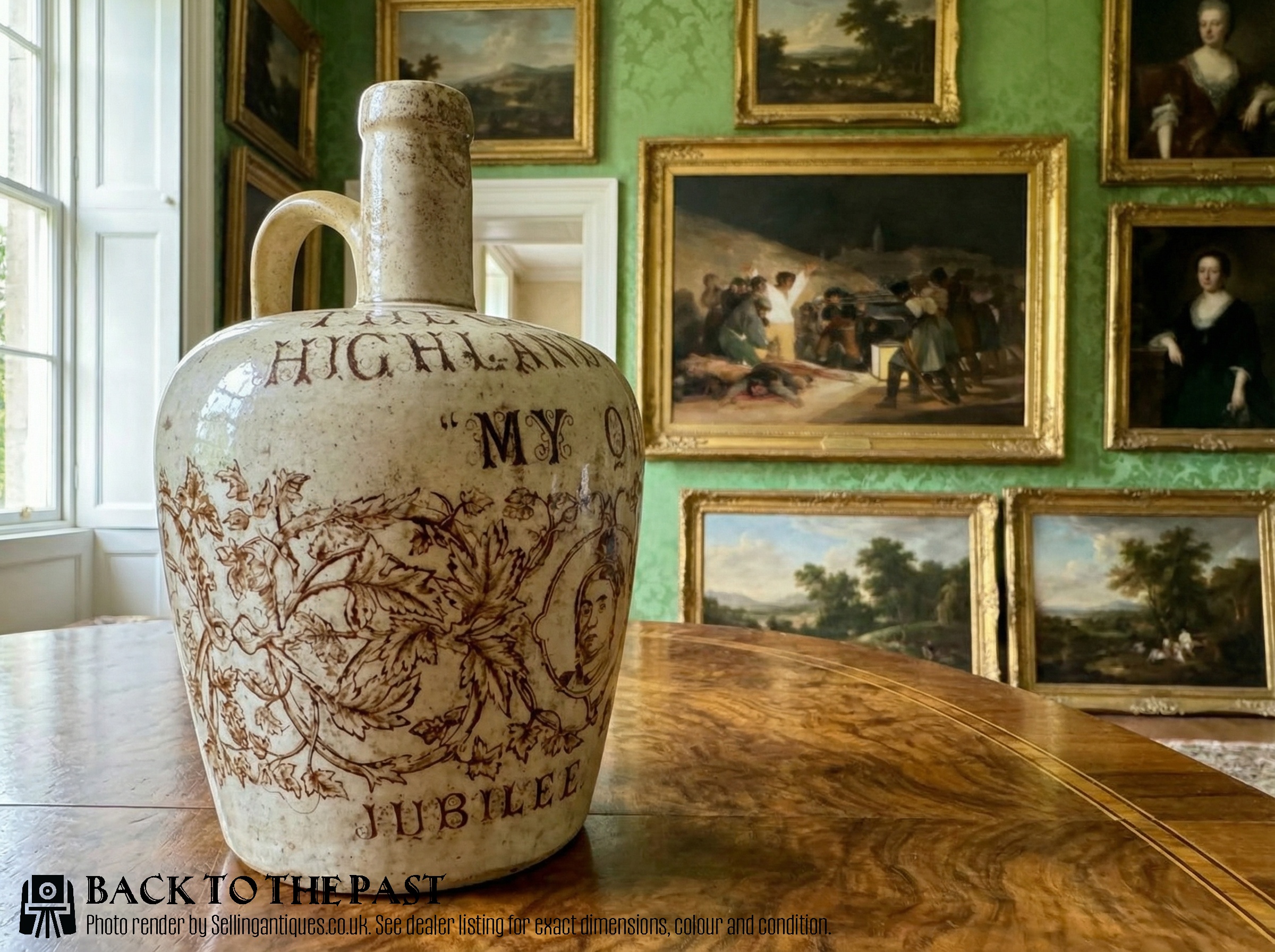
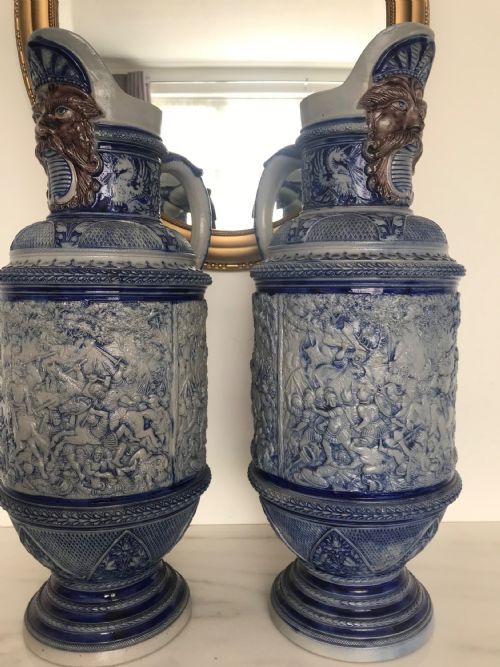
19th Century Port Dundass Stoneware Whisky Jug, Victorian
Priced at £265 from Colin Brand Antiques
Potters threw the main body on a wheel before pulling the handle from a separate lump.
Throwing salt into the hot kiln vaporised it to form a glassy coating over the exterior.
Notice the early, bulbous forms. These required careful firing control to prevent slumping.
"Some pieces retain faint fingerprints left by the person dipping them in the glaze centuries ago."
"Surviving examples often hold water just as well today as when new."
"Expect unique finishes. Kiln variations mean matching pairs are almost impossible to find."
Based on almost 25 years of Sellingantiques UK antique market data, Antique Stoneware Jugs appeared 258 times (out of 1,100,000 antiques) which gives it a rarity score of 95/100.
This score measures scarcity within the Sellingantiques archive only and is not a survey of the entire antiques market, so these statistics may not be indicative of the general availability of Antique Stoneware Jugs elsewhere.
Warm water and mild soap work well. Avoid chemical cleaners that might sit in unglazed crevices.
A soft bristle brush lifts dirt from the pitted surface.
Most decorated grey wares served as general storage vessels in the pantry. They kept cider, ale, or water cool and safe from pests.
The size often dictates the specific use. Smaller ones sat on the dinner table, while larger examples remained on the cellar floor.
These marks indicate the volume capacity. Potters stamped them near the rim or shoulder to satisfy local trading regulations.
A number '2' might mean two gallons or two quarts depending on the regional system. The stamp proved the vessel held a fair measure for selling liquids.
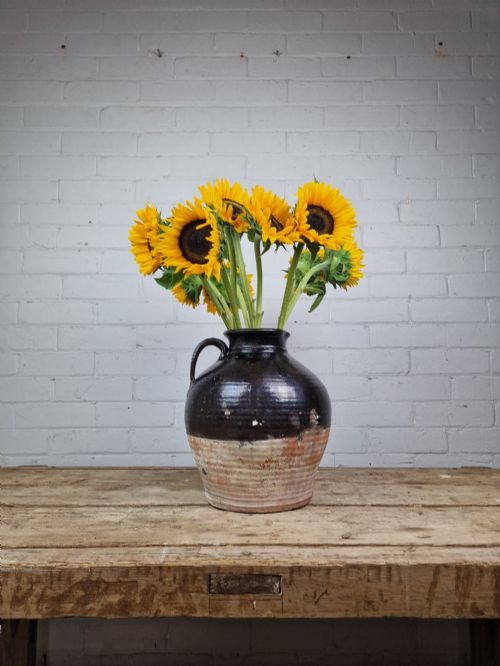
Dipping the top half into an iron-rich wash before firing was a common decorative choice. It is often called a two-tone finish.
Potters held the vessel by the base and dipped it head-first into a vat of liquid slip. Leaving the bottom bare conserved materials and prevented the piece sticking to the kiln shelf.
Please note: This Antique Stoneware Jugs guide and its associated pricing data are provided for general informational purposes only. It does not constitute formal financial, investment, or appraisal advice and should not be relied upon as the sole basis for any commercial activity, purchasing, or sales decisions. Sellingantiques.co.uk accepts no liability for any actions taken in reliance on this information. Always consult with a qualified professional or independent appraiser.
