
A 2026 Guide by Sellingantiques
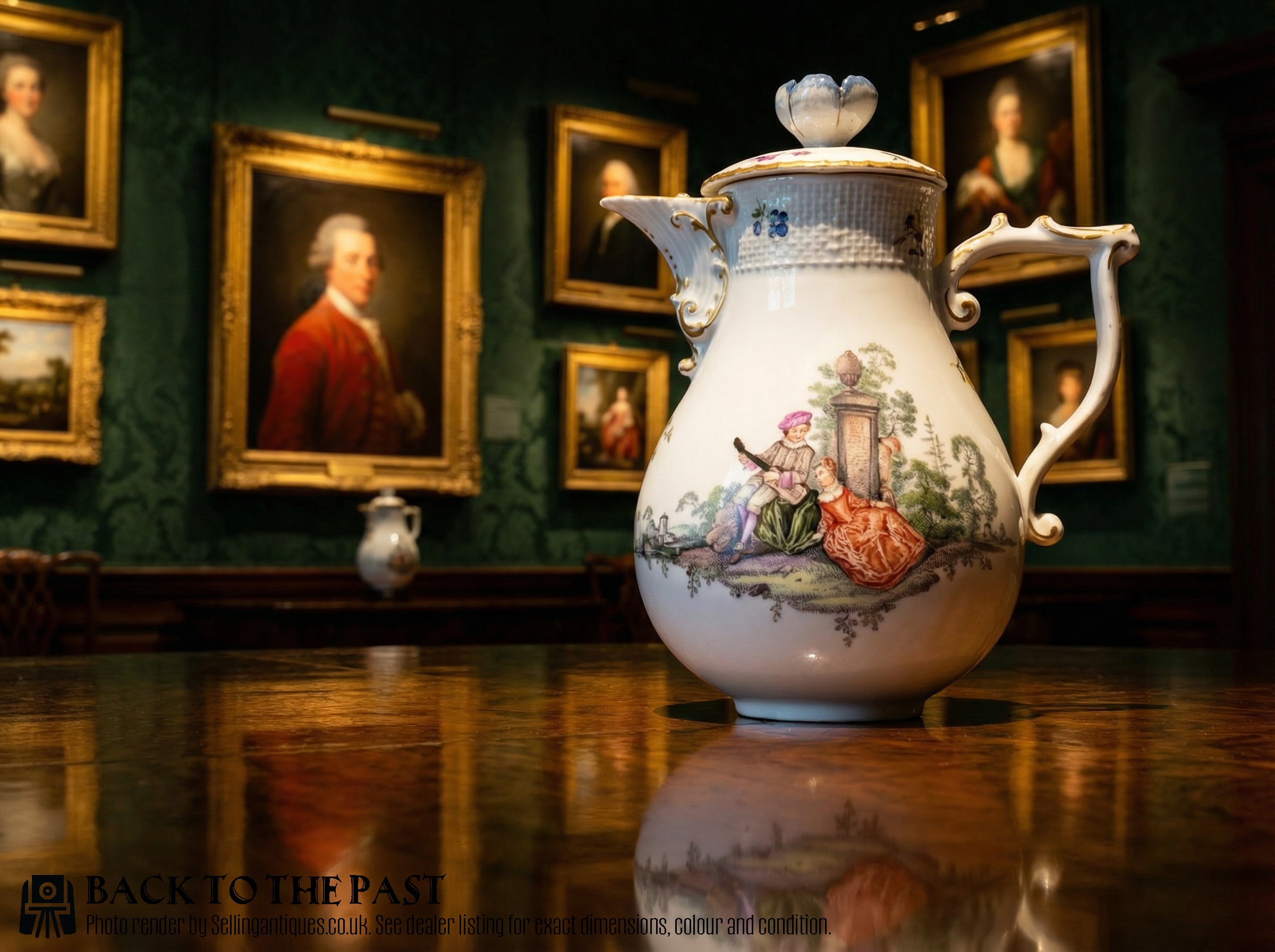
Meissen Milk Jug and Cover, Circa 1760, 1750
Priced at £2,500 from Treaders Collectables
Silver examples appear alongside early tea services in the eighteenth century.
Widespread tea drinking drove demand across all classes. Potteries responded with earthenware versions for the wider market, producing thousands of simple forms for daily use.
By the Victorian period, most dinner services included a matching antique milk jug.
Look at the size. Earlier ones are much smaller than those made in the nineteenth century.
The shape of the vessel changed as domestic afternoon tea customs evolved.
Hester Bateman produced silver forms in late eighteenth-century London. Her workshop focused on plain, functional lines.
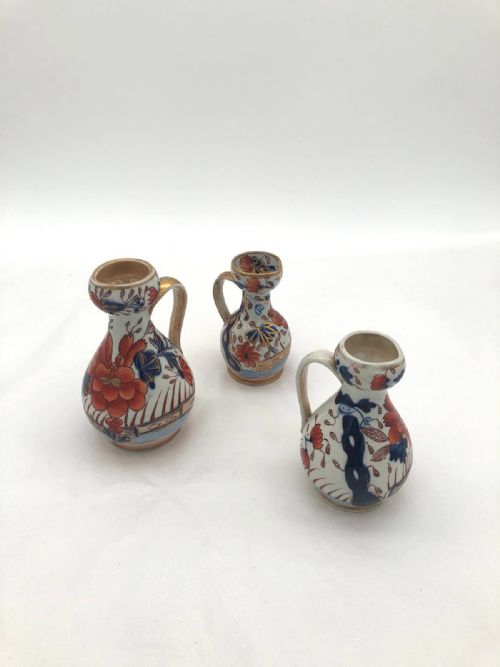
Fine bone china jugs emerged from Minton during the nineteenth century. They often feature enamel decoration over the glaze.
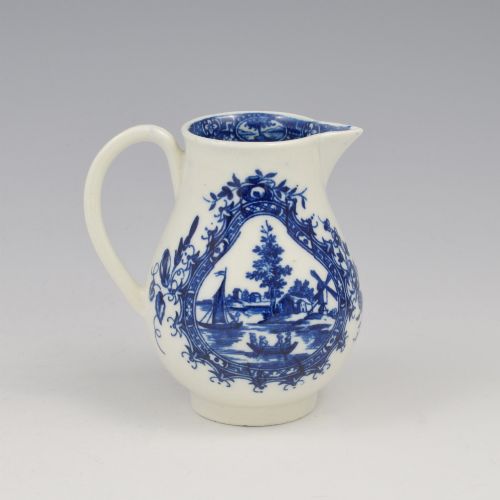
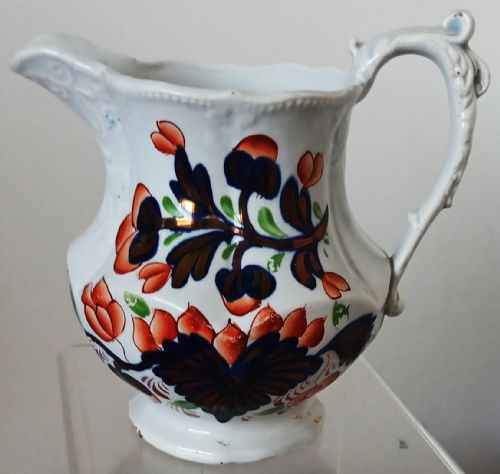
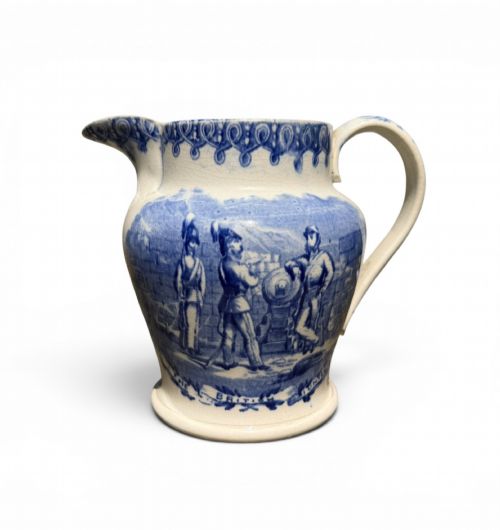
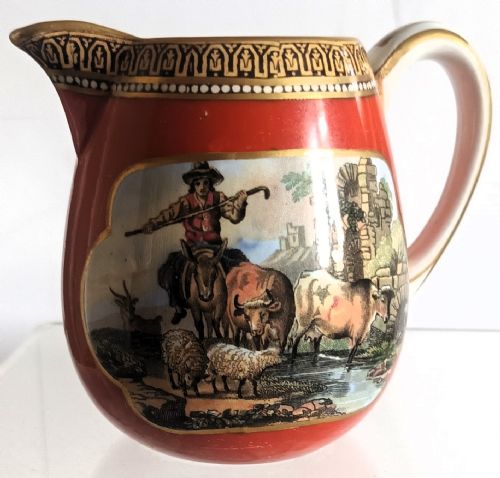
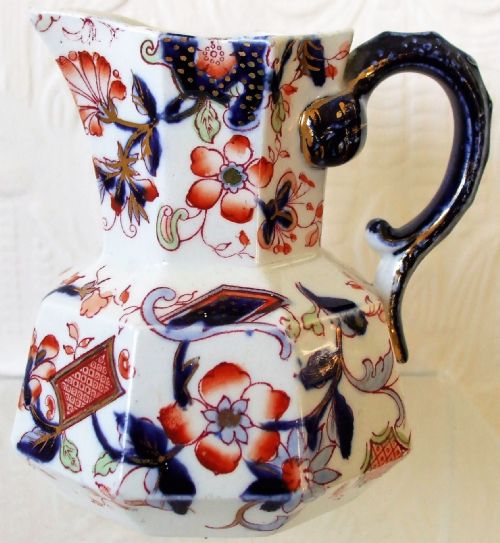
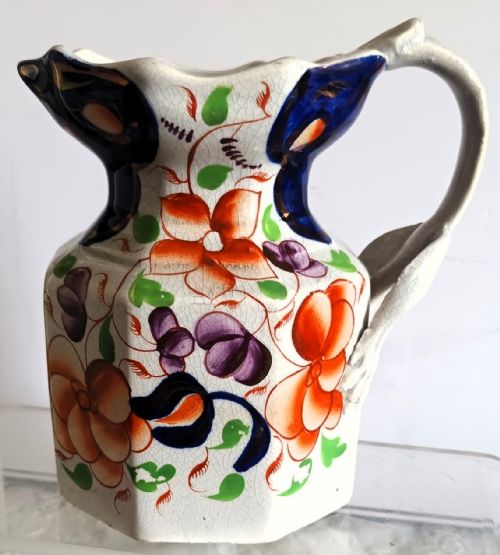
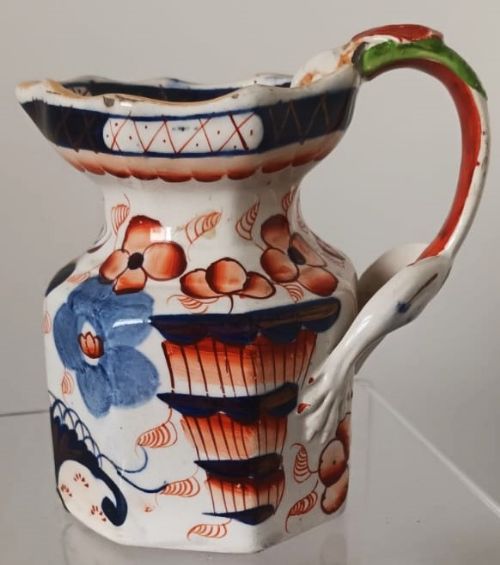
Local potteries across Staffordshire turned out thousands of transfer-printed earthenware pieces for the domestic market. Many lack a maker's mark.
The 2026 retail price guide for Antique Milk Jugs is drawn from a proprietary archive of over 1.1 million retail prices indexed by Sellingantiques since 2003. This guide relies exclusively on their own internal data; no external sources or auction records are used.
Analysing nearly 25 years of UK antique market history alongside current retail values, the data indicates that typical UK retail prices for Antique Milk Jugs range between £100 and £700. Entry-level prices generally fall under £100 and premium examples upwards of £700.
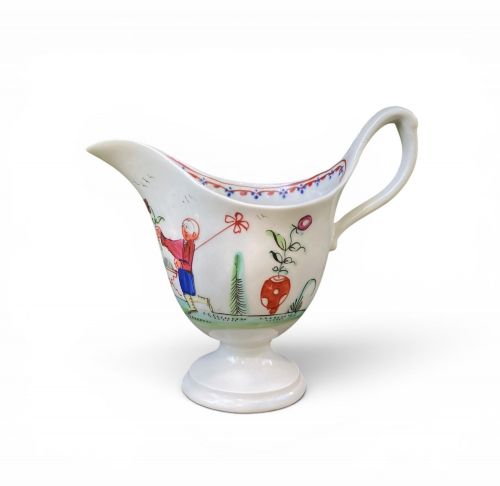
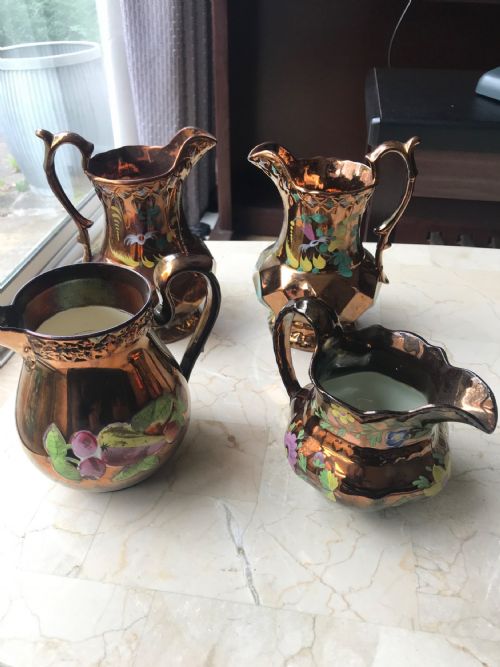
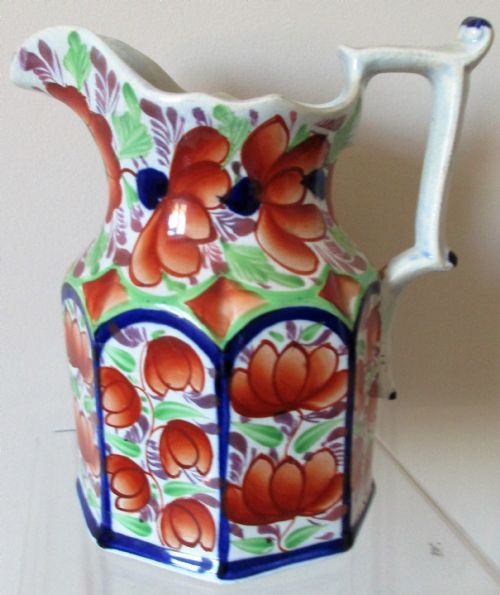
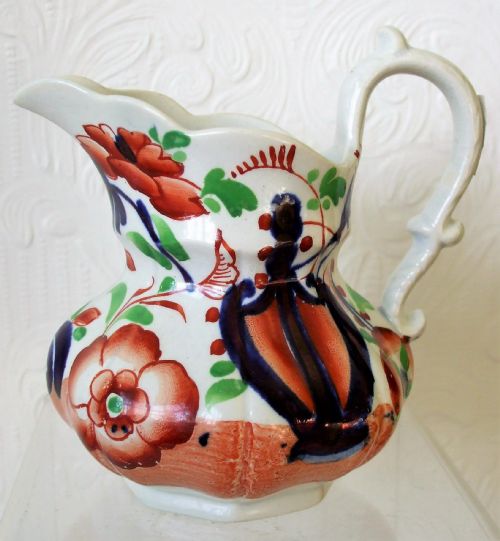
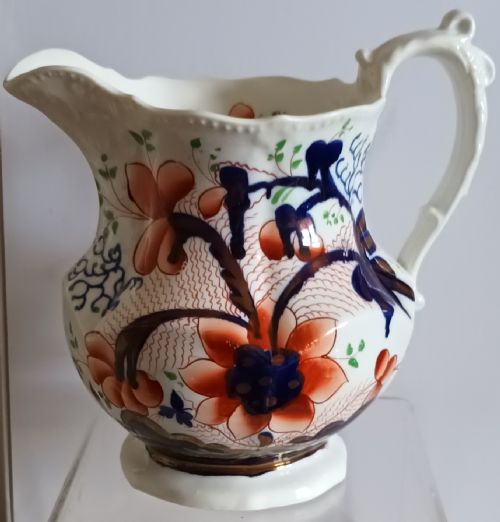
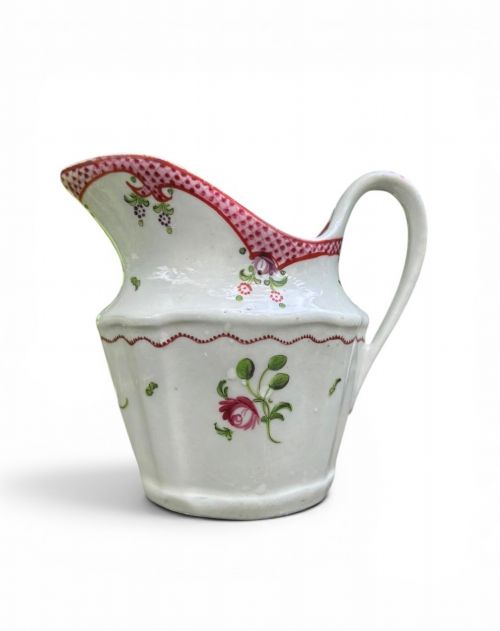
A pronounced pouring lip sits directly opposite a looped handle on most forms.
Raised pedestal feet. Base profiles vary wildly from these to simple flat bottoms.
Check the handle placement. It needs to balance the weight of the liquid so you won't spill when tipping the piece forward.
Early silver pieces were raised by hand from a single flat sheet of metal.
Plaster moulds allowed ceramic factories to slip-cast uniform shapes. This enabled rapid, high-volume production across the potteries.
Secure the handle. The potter scores and slips the joints before firing to ensure a solid bond with the main body.
"Cooling properties. Silver bodies cool the milk rapidly, which helps keep the contents fresh during a long afternoon tea."
"The shape of the pouring lip directs the flow precisely. A well-made jug pours without dripping onto the saucer."
Based on almost 25 years of Sellingantiques UK antique market data, Antique Milk Jugs appeared 702 times (out of 1,100,000 antiques) which gives it a rarity score of 87/100.
This score measures scarcity within the Sellingantiques archive only and is not a survey of the entire antiques market, so these statistics may not be indicative of the general availability of Antique Milk Jugs elsewhere.
Warm water and a mild detergent work best for most ceramics. Avoid harsh scrubbing brushes that scratch the glaze.
For silver pieces with heavy tarnish inside, a silver dip is sometimes necessary. Rinse it thoroughly afterwards to remove chemical residue.
That sounds like Sheffield plate or an early electroplated piece. The silver layer is relatively thin and rubs away with use over the decades.
The copper base metal showing through is called bleeding. Many buyers look for this as it shows the piece has a genuine history of use.
Antique silver and thick ironstone cope with heat well.
Delicate bone china needs care. Sudden changes in temperature cause the glaze to craze.
Those fine lines are called crazing. It happens when the ceramic body and the clear glaze shrink at different rates during cooling in the kiln.
It is common on nineteenth-century earthenware. Moisture sometimes gets under the glaze and causes minor staining, but the piece remains structurally sound.
Please note: This Antique Milk Jugs guide and its associated pricing data are provided for general informational purposes only. It does not constitute formal financial, investment, or appraisal advice and should not be relied upon as the sole basis for any commercial activity, purchasing, or sales decisions. Sellingantiques.co.uk accepts no liability for any actions taken in reliance on this information. Always consult with a qualified professional or independent appraiser.
