




A 2026 Guide by Sellingantiques
Developed in the 1930s as a modern spin on the traditional full-body Toby jug.
Potters realised that focusing solely on the head and shoulders allowed for sharper modelling, giving each piece a more distinct personality.
Look for the early literary figures that first launched this specific collecting trend.
Production expanded rapidly after the Second World War to meet massive export demand, bringing hundreds of new historical faces into the catalogues of major factories.
Royal Doulton dominated this trade, with designer Charles Noke launching their range in the thirties.
Beswick produced a rival selection of heads from 1936 until late in the twentieth century, bringing their own roster of characters to market.
Shorter and Son manufactured these using slightly softer modelling styles.
The 2026 retail price guide for Antique Character Jugs is drawn from a proprietary archive of over 1.1 million retail prices indexed by Sellingantiques since 2003. This guide relies exclusively on their own internal data; no external sources or auction records are used.
Analysing nearly 25 years of UK antique market history alongside current retail values, the data indicates that typical UK retail prices for Antique Character Jugs range between £100 and £500. Entry-level prices generally fall under £100 and premium examples upwards of £500.
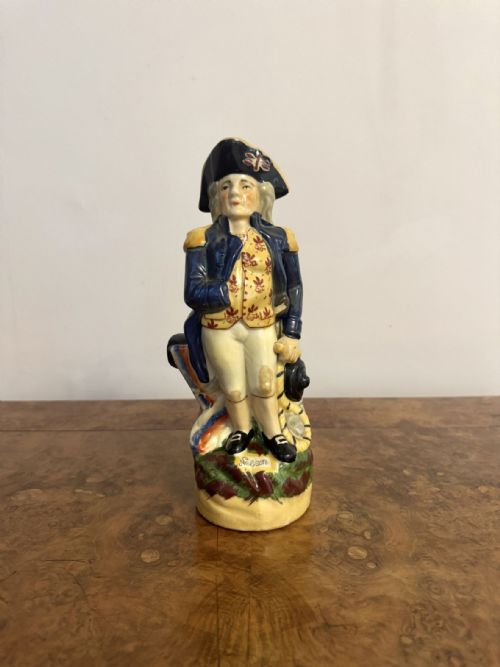
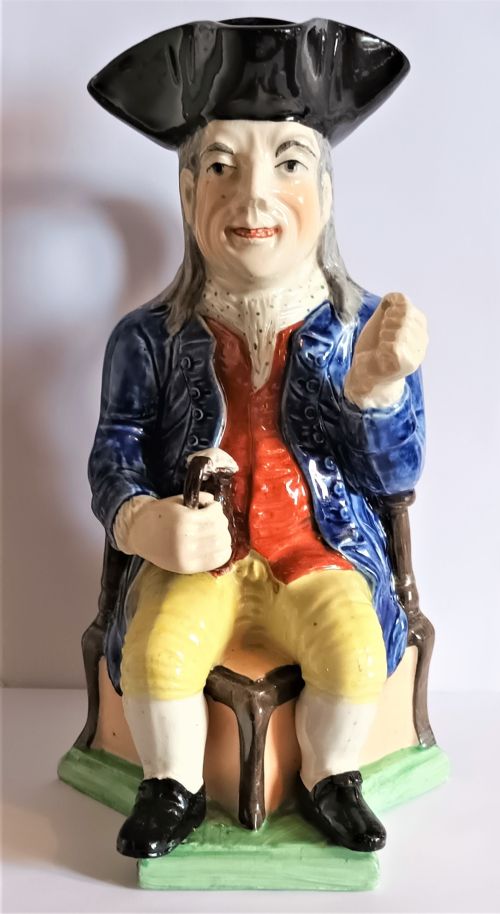
The vessel body forms a distinct head and shoulders rather than a full seated figure.
Handles often incorporate a secondary motif linked to the main subject, such as a musket for a soldier or a quill pen for a famous writer.
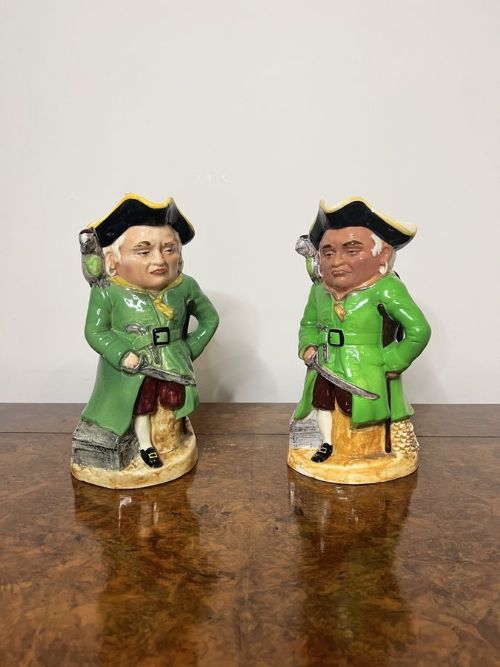
Spouts sit at the front rim, sometimes disguised within a tricorn hat.
Slip casting allowed factories to reproduce complex facial expressions quickly and consistently across large production runs.
Decorators applied the colours by hand, meaning no two identical antique character jugs look exactly alike when you place them side by side.
Early versions often feature much more subdued colour palettes compared to the brighter post-war output.
"Factory painters often left their personal monogram on the base near the backstamp."
"Certain models were commissioned specifically for distinct retail stores and never sold in the general factory catalogues, making them harder to find today."
"The hollow interior of the handle is a direct result of the slip-casting process draining excess liquid clay."
Based on almost 25 years of Sellingantiques UK antique market data, Antique Character Jugs appeared 93 times (out of 1,100,000 antiques) which gives it a rarity score of 98/100.
This score measures scarcity within the Sellingantiques archive only and is not a survey of the entire antiques market, so these statistics may not be indicative of the general availability of Antique Character Jugs elsewhere.
Dust them with a soft brush first. Wash with warm water and a mild soap if needed.
Avoid harsh scrubbing pads. Never submerge pieces with severe crazing, as water seeps under the glaze and stains.
Factories didn't always stick to one colourway over a long production run. A character might start with a brown hat in the 1930s and switch to a green one decades later to refresh the appeal.
Changes in paint availability also forced these shifts. Different decorators mixing their own palettes meant natural variation occurred even on the same firing day.
Specific letters beside the backstamp relate to factory production periods or sizing codes. Some makers used a letter to denote a particular decade of manufacture.
Other factories used letters to meet retail compliance or export rules. You'll need to read the letter alongside the main factory stamp to decode its true meaning.
A dull sound usually indicates a hairline crack somewhere in the body. Earthenware should give a clean note when tapped gently with a fingernail.
However, the complex shape of an antique character jug can sometimes muffle the resonance. Heavy crazing in the clear glaze will also deaden the ring, even if the main body remains structurally intact.
Please note: This Antique Character Jugs guide and its associated pricing data are provided for general informational purposes only. It does not constitute formal financial, investment, or appraisal advice and should not be relied upon as the sole basis for any commercial activity, purchasing, or sales decisions. Sellingantiques.co.uk accepts no liability for any actions taken in reliance on this information. Always consult with a qualified professional or independent appraiser.
