


A 2026 Guide by Sellingantiques

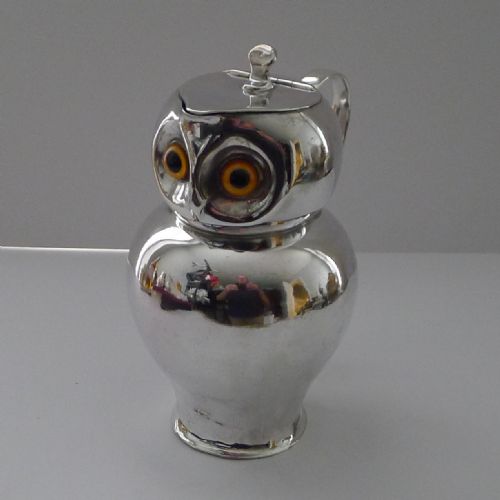
Rare Design Edwardian Hukin & Heath Claret Jug, Edwardian
Priced at £475 from William Rand Antiques
Serving wine directly from the bottle was considered uncouth in Victorian dining rooms.
Decanting became essential when glassmakers started producing darker, heavier bottles that hid the wine.
The arrival of these antique claret jugs changed table etiquette, moving the serving vessel from the sideboard to the centre of the table.
Look for changes in capacity. Earlier examples hold less, reflecting the smaller bottle sizes of the early nineteenth century.
Hukin & Heath mounted Christopher Dresser's geometric glass bodies during the late nineteenth century.
Elkington & Co popularised silver-plated mounts, bringing the form to middle-class dining tables across Britain.
Charles Edwards regularly hallmarked novelty silver mounts cast as cockatoos or walruses in the 1880s.
The 2026 retail price guide for Antique Claret Jugs is drawn from a proprietary archive of over 1.1 million retail prices indexed by Sellingantiques since 2003. This guide relies exclusively on their own internal data; no external sources or auction records are used.
Analysing nearly 25 years of UK antique market history alongside current retail values, the data indicates that typical UK retail prices for Antique Claret Jugs range between £300 and £2,000. Entry-level prices generally fall under £300 and premium examples upwards of £2,000.
A hinged lid keeps flies out and stops the wine from oxidising too quickly on the table.
Spouts require a sharp internal lip to cut the flow of liquid and prevent drips on a white tablecloth.
Star-cut bases appear on most good quality antique claret jugs, hiding the pontil mark left from the glassblowing process.
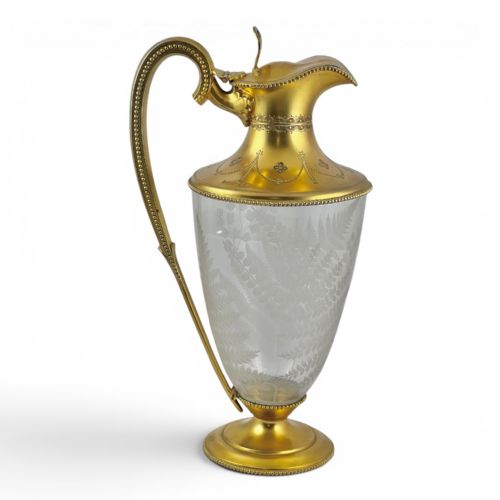
Wheel engraving took hours of bench work to carve frosted vines and grapes into the clear glass body.
Silversmiths cast the handle separately before soldering it to the collar and filing the join smooth.
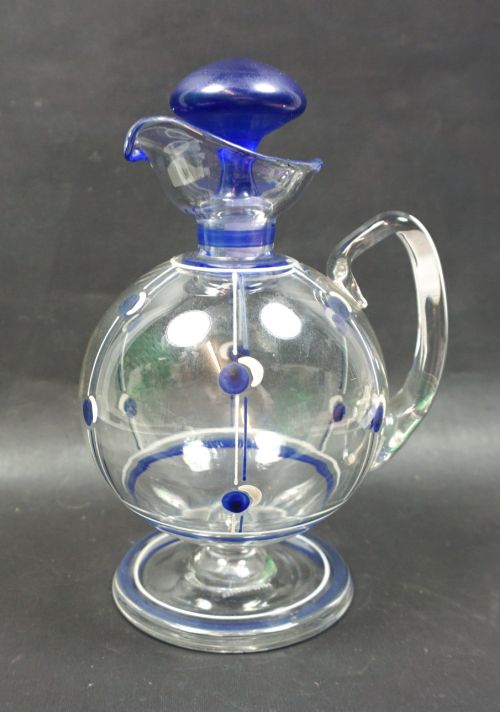
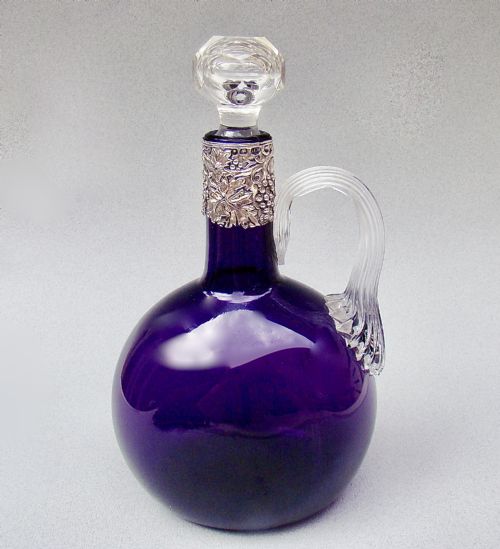
Notice the glass shapes. Blowers moved from simple bulbous bodies to complex faceted forms requiring careful hand cutting.
"Mounts often feature cast bacchic faces hidden among the grapevines under the spout."
"You can sometimes find internal glass reservoirs designed to hold ice, keeping the wine chilled without diluting it."
"Many antique claret jugs work well as modern water pitchers for summer dining."
Based on almost 25 years of Sellingantiques UK antique market data, Antique Claret Jugs appeared 1567 times (out of 1,100,000 antiques) which gives it a rarity score of 73/100.
This score measures scarcity within the Sellingantiques archive only and is not a survey of the entire antiques market, so these statistics may not be indicative of the general availability of Antique Claret Jugs elsewhere.
Soaking the inside with a mix of warm water and denture cleaning tablets shifts most organic residue. Give it a few hours before rinsing it out thoroughly.
For stubborn limescale rings at the bottom, a handful of raw rice swirled around with white vinegar acts as a gentle abrasive. You just have to be patient and keep swirling.
Silversmiths originally fixed these mounts using a mixture containing plaster of Paris. The old plaster dries out and crumbles away over the decades.
Take it to a professional restorer. They will scrape out the old residue and reset the collar squarely using fresh plaster or a modern equivalent. Don't try using household superglue.
They still do what they were made for.
Just rinse it out after dinner. Leaving wine sitting in the glass for days makes cleaning much harder.
Antique crystal does contain lead oxide, which gives the glass its weight and helps it catch the light. Studies show that liquid left in contact with lead crystal for long periods can absorb trace amounts.
Serving wine during a meal poses no real risk. You pour it in, drink it over an hour or two, and wash the jug. Problems only occur if you store spirits or wine in lead glass for weeks or months.
Please note: This Antique Claret Jugs guide and its associated pricing data are provided for general informational purposes only. It does not constitute formal financial, investment, or appraisal advice and should not be relied upon as the sole basis for any commercial activity, purchasing, or sales decisions. Sellingantiques.co.uk accepts no liability for any actions taken in reliance on this information. Always consult with a qualified professional or independent appraiser.
