



A 2026 Guide by Sellingantiques
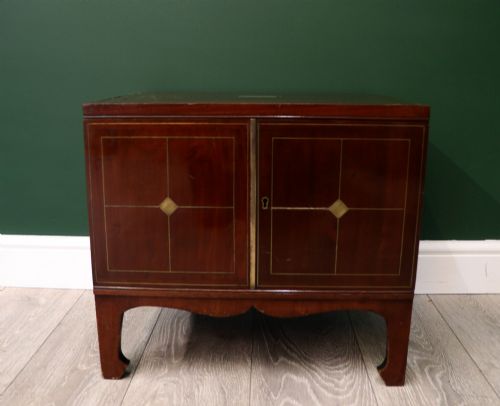
Regency Period Flame-mahogany Cylindrical Bedside Cupboard, Regency
Priced at £495 from Quiet Street Antiques of Bath
Urban expansion created a need for formal storage in middle-class dining rooms. These units fitted that requirement.
Classical architecture influenced the overall shape. Look for brass grilles and reeded columns mimicking Greek temples.
Regency cupboards were designed to sit flush against the wall of a new townhouse without blocking the flow of traffic.
Serving rituals changed during this period. The resulting shift meant hosts required immediate access to linens and silver right in the room.
Designers borrowed elements from Roman domestic interiors. A deliberate choice to bring antiquity into British homes.
Gillows of Lancaster and London supplied numerous examples during the early nineteenth century. You sometimes find their stamp on a drawer edge.
Thomas Hope published influential designs in 1807. These dictated the heavier archaeological style many cabinetmakers adopted.
Regional joiners made unlabelled versions based on pattern books. Making attribution difficult for most plain cupboards you encounter.
Early C19th Regency Period Mahogany Pedestal Bedside Cupboard of Architectural Column Design., Regency
Priced at £1,100 from M Lees and Sons
The 2026 retail price guide for Regency Cupboards is drawn from a proprietary archive of over 1.1 million retail prices indexed by Sellingantiques since 2003. This guide relies exclusively on their own internal data; no external sources or auction records are used.
Analysing nearly 25 years of UK antique market history alongside current retail values, the data indicates that typical UK retail prices for Regency Cupboards range between £800 and £4,000. Entry-level prices generally fall under £800 and premium examples upwards of £4,000.
Shallow proportions define a typical Regency cupboard. They lack the deep footprint found in earlier Georgian storage furniture.
Turn a critical eye to the doors. You will often find pleated silk behind a brass trellis instead of solid timber panels.
Flat surfaces. A blank canvas for decorative stringing and crossbanding around the edges.
Cabinetmakers moved away from carving solid wood to focus on applying figured veneers over flat secondary carcases.
Hand-cut dovetails secure the drawer frames. Backboards are usually rough-sawn and nailed straight into the rebate.
Look closely at the brass inlay. Craftsmen cut channels directly into the solid wood to tap the metal strips flush.
"The shallow depth meant they doubled as serving tables for informal breakfasts."
"Some upper tiers were designed specifically to hold bound volumes of romantic poetry. A genre gaining popularity in fashionable homes."
"Fabric panels fitted behind the wirework softened the acoustics in echoey reception rooms."
Based on almost 25 years of Sellingantiques UK antique market data, Regency Cupboards appeared 1310 times (out of 1,100,000 antiques) which gives it a rarity score of 77/100.
This score measures scarcity within the Sellingantiques archive only and is not a survey of the entire antiques market, so these statistics may not be indicative of the general availability of Regency Cupboards elsewhere.
The fabric served a practical purpose in the dining room. It hid the cluttered contents of the shelves from guests while allowing air to flow through the wire mesh.
Ventilation helped when storing damp linens or leftover food. Owners could also match the pleated silk to their window curtains to unify the interior decor.
A unit with glazed upper doors for books is usually called a cabinet bookcase rather than a standard cupboard. The lower section shares the same construction methods, but the overall form served a different function.
Cabinetmakers designed these larger pieces for the library rather than the dining room. They feature deeper bottom sections to support the weight of the glazed upper carcase and heavy volumes.
You'll often find the base section separated from the top and sold as a standalone cupboard. The proportions can look slightly blocky when a base has lost its upper half.
Most dealers prefer to leave the brasswork alone. A dull surface shows age and sits better against the old timber.
Aggressive cleaning removes the historic patination. A light dusting is all the metalwork requires.
Always remove a marble top before lifting the main carcase. Marble is heavy but brittle, and it'll snap if the wooden base flexes while being carried up a staircase or over a threshold.
Wrap the marble vertically in thick blankets and strap it upright in the van. Don't lay a slab flat during transit because the road vibrations can cause it to crack down the middle.
The main cupboard requires two people lifting from the solid chassis. Never drag the piece across a floor, as the slender turned feet or plinth joints can snap under lateral pressure.
Please note: This Regency Cupboards guide and its associated pricing data are provided for general informational purposes only. It does not constitute formal financial, investment, or appraisal advice and should not be relied upon as the sole basis for any commercial activity, purchasing, or sales decisions. Sellingantiques.co.uk accepts no liability for any actions taken in reliance on this information. Always consult with a qualified professional or independent appraiser.
