





A 2026 Guide by Sellingantiques
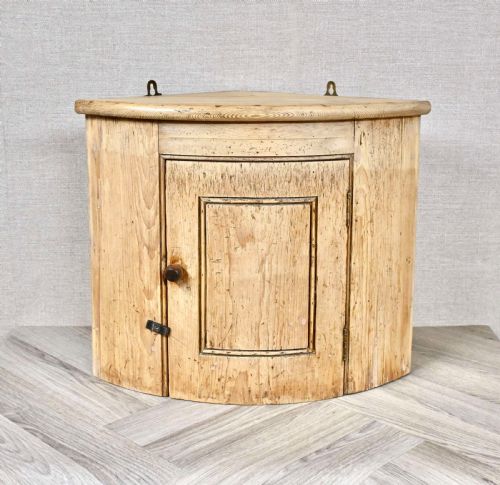
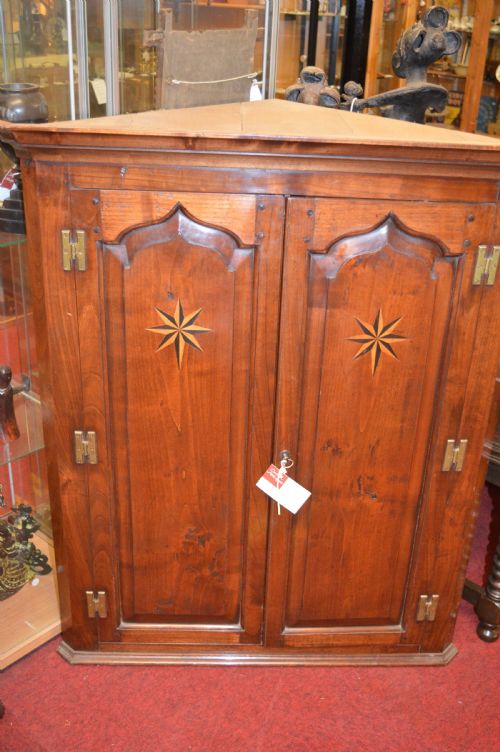
George III Chinoiserie Lacquered and Gilt Decorated Bowfront Double Door Hanging Corner Cupboard, 1750
Priced at £895 from Buckingham Interiors
They emerge early as practical storage for modest homes. Hanging cupboards kept bread and cheese away from mice and damp.
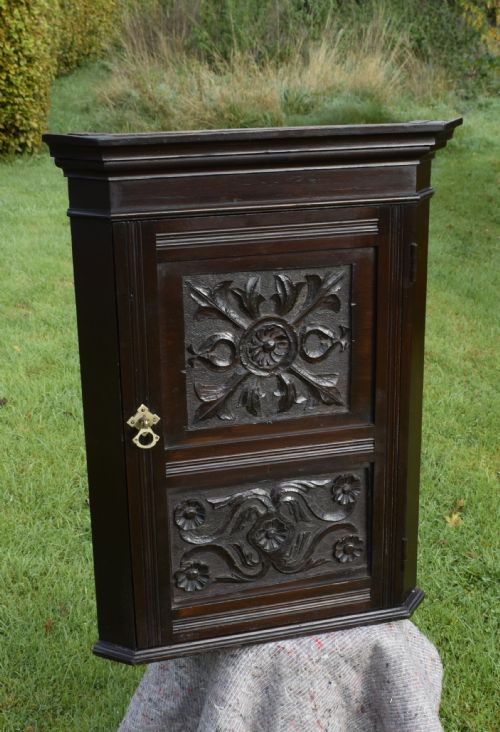
Look at the seventeenth-century examples. Thick carved oak panels built into the walls of wealthy households before freestanding furniture became common.
Later centuries saw them shift towards kitchens and servants' quarters. Pine painted to match the surrounding panelling was standard practice.
Regional variations tell a story. Welsh and provincial English pieces held onto earlier construction styles long after city tastes moved on.
Documented makers rarely appear on these everyday items. Rural carpenters built hanging cupboards to order for local farmhouses.
The trade relied on village joiners rather than fashionable London cabinetmakers. Construction reflects regional habits rather than a specific workshop.
Occasionally a nineteenth-century piece bears a retailer's stamp. Gillows supplied simple mahogany hanging cupboards for grand house servant quarters.
The 2026 retail price guide for Antique Hanging Cupboards is drawn from a proprietary archive of over 1.1 million retail prices indexed by Sellingantiques since 2003. This guide relies exclusively on their own internal data; no external sources or auction records are used.
Analysing nearly 25 years of UK antique market history alongside current retail values, the data indicates that typical UK retail prices for Antique Hanging Cupboards range between £300 and £2,200. Entry-level prices generally fall under £300 and premium examples upwards of £2,200.
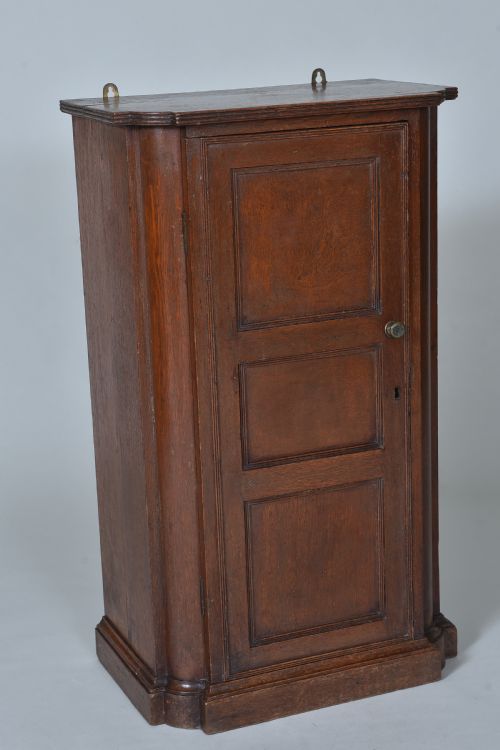
Panelled doors are standard. Some feature pierced ventilation holes in geometric patterns for airflow around stored food.
Inspect the cornice. A prominent projecting top moulding hides the heavy iron hanging loops fixed to the backboard.
Internal arrangements vary widely. Fixed wooden shelves are common, sometimes painted in a pale wash to reflect light inside.
Early seventeenth-century construction relies on thick frame-and-panel joinery. Heavy timbers accommodate the seasonal movement of wood in damp houses.
Nailed board construction appears more often by the eighteenth century. Thinner planks of pine simply butt-jointed and secured with forged nails.
Notice the door profiles. Flat chamfered edges gradually give way to applied decorative mouldings as tools became more refined.
"They often fitted into deliberate alcoves. Builders would leave unplastered recesses in kitchen walls specifically for these cupboards to slot into."
"Check for secret compartments. False bottoms or sliding backboards occasionally provided a hidden space for household cash."
"Spice cupboards often retain faint odours. Even after centuries, the porous interior timbers can smell slightly of cloves or nutmeg."
Based on almost 25 years of Sellingantiques UK antique market data, Antique Hanging Cupboards appeared 7020 times (out of 1,100,000 antiques) which gives it a rarity score of 25/100.
This score measures scarcity within the Sellingantiques archive only and is not a survey of the entire antiques market, so these statistics may not be indicative of the general availability of Antique Hanging Cupboards elsewhere.
Most original pieces retain wrought iron hanging loops fixed to the backboard. You need to secure these directly into the masonry using modern heavy-duty fixings.
Plasterboard walls cannot take the weight of a solid oak frame. If you lack solid walls, rest the base on a stable surface and use brackets just to stop it tipping forward.
The hinges have likely worn down on one side or the wall itself leans forward. Check the alignment of the carcase with a spirit level first.
Packing a small sliver of wood behind the bottom hinge plate tilts the door slightly backwards. This usually shifts the centre of gravity enough to keep it closed.
If the wood has warped over time, fitting a simple brass turn-button to the stile offers a practical historical solution.
Removing old interior paint is a messy job that often reveals rough timber. Joiners rarely wasted good wood or time finishing surfaces meant to be hidden.
Leaving the historical layers intact preserves the character. If it looks untidy, lightly wash the surface with sugar soap instead.
Many regional cupboards were built to be versatile. The stiles often extend a few inches below the bottom rail to form small feet, allowing the piece to stand on a dresser base.
Sometimes people altered floor-standing cabinets by cutting them down later. Look at the backboards to see if iron hanging loops were ever fitted.
If the proportions look right, it was likely designed to work both on a wall and a flat surface.
Please note: This Antique Hanging Cupboards guide and its associated pricing data are provided for general informational purposes only. It does not constitute formal financial, investment, or appraisal advice and should not be relied upon as the sole basis for any commercial activity, purchasing, or sales decisions. Sellingantiques.co.uk accepts no liability for any actions taken in reliance on this information. Always consult with a qualified professional or independent appraiser.
