


A 2026 Guide by Sellingantiques
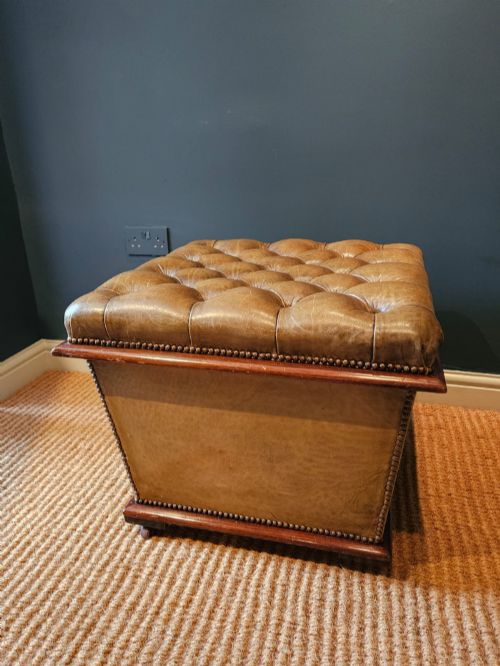
Large Victorian Mahogany Leather Ottoman, Victorian
Priced at £1,950 from Hingstons of Wilton
Brought to Europe from the Middle East during the eighteenth century. These early examples were essentially long, padded benches wrapping around three walls of a room.
By the Victorian period, the antique ottoman had shrunk into a standalone centrepiece. They were often circular or octagonal.
Used as communal seating in fashionable salons. Guests sat back-to-back on larger pieces with a central cone.
Club fenders are a related development. These wrap around a fireplace to offer warm seating.
Howard & Sons produced highly regarded examples in London. Their pieces often retain stamped castors or paper labels on the underside.
Provincial workshops made most of the antique ottomans on the market. These rarely carry a maker's mark.
Gillows of Lancaster supplied variations with fine turned legs. They occasionally stamped the timber on the seat rail.
Regency Rosewood & Leather Box Ottoman, Regency
Priced at £1,450 from LTANTIQUES.CO.UK
The 2026 retail price guide for Antique Ottoman is drawn from a proprietary archive of over 1.1 million retail prices indexed by Sellingantiques since 2003. This guide relies exclusively on their own internal data; no external sources or auction records are used.
Analysing nearly 25 years of UK antique market history alongside current retail values, the data indicates that typical UK retail prices for Antique Ottoman range between £400 and £2,700. Entry-level prices generally fall under £400 and premium examples upwards of £2,700.
Deep buttoning keeps the stuffing from shifting. This technique creates the classic tufted surface associated with nineteenth-century seating.
Many feature hinged lids. Lift the seat to reveal a shallow storage void inside the frame.
Short turned legs sit close to the floor. They usually terminate in small brass or ceramic wheels.
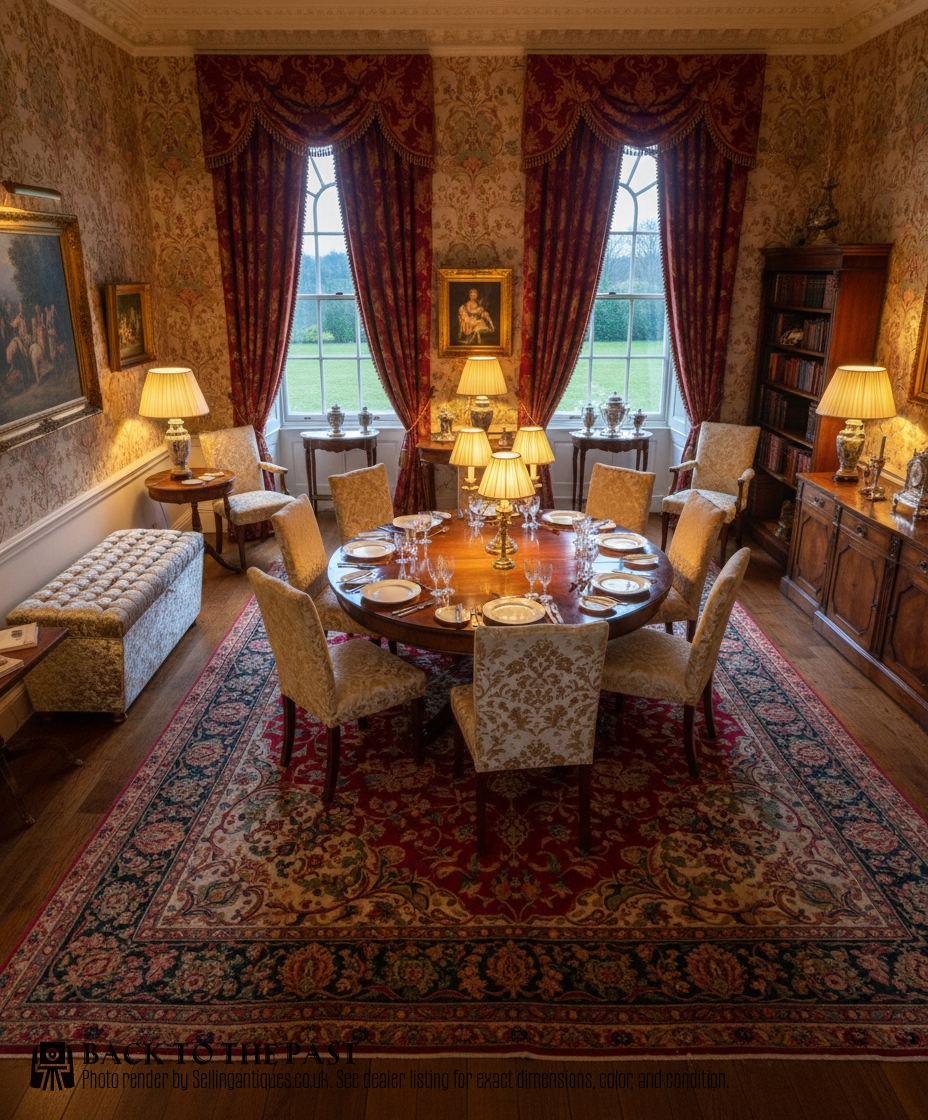
Deep Buttoned Upholstered Ottoman, 1930
Priced at £495 from Brookside Antiques
Coil springs are lashed together with heavy cord. Eight-way tying stops them leaning sideways under uneven weight.
Frames are constructed using robust mortise and tenon joints. The stresses of multiple people sitting required heavy corner blocks screwed inside.
Edges are often finished with decorative braid or brass tacks. This hides the raw edges of the upholstery fabric.
"Some examples were built to slot directly into bay windows. The shape mirrors the architectural angles exactly."
"A well-stuffed antique ottoman can serve as a firm coffee table. Put a tray on top and it holds drinks easily."
"The internal void was occasionally fitted with cedar linings. This kept woollens safe from moth damage over the summer."
Based on almost 25 years of Sellingantiques UK antique market data, Antique Ottoman appeared 1670 times (out of 1,100,000 antiques) which gives it a rarity score of 72/100.
This score measures scarcity within the Sellingantiques archive only and is not a survey of the entire antiques market, so these statistics may not be indicative of the general availability of Antique Ottoman elsewhere.
Reupholstering an antique ottoman is standard practice. The fabric is meant to be replaced when it wears out.
A good upholsterer will strip it back to the frame and check the springs. They can fit a fresh cover while keeping the original horsehair and shape intact.
Most Victorian frames are built with substantial timbers to take the weight of several adults sitting down. Using one as a central table places far less stress on the joints than its original purpose did.
You just need a solid tray to provide a flat surface for glasses. The deep buttoning makes loose items unstable.
A soft cloth removes everyday dust. If the timber looks dull, apply a thin coat of good beeswax polish and leave it for ten minutes.
Buff it off briskly with a clean duster. Avoid modern aerosol sprays because they build up a sticky residue on the finish over time.
Castors were designed to help servants slide heavy seating around a single room. Drawing room layouts changed depending on the time of day and who was visiting.
Pushing them over thresholds or stone floors often damages the brass fittings. They roll best on the thick carpets they were originally made for.
Please note: This Antique Ottoman guide and its associated pricing data are provided for general informational purposes only. It does not constitute formal financial, investment, or appraisal advice and should not be relied upon as the sole basis for any commercial activity, purchasing, or sales decisions. Sellingantiques.co.uk accepts no liability for any actions taken in reliance on this information. Always consult with a qualified professional or independent appraiser.
