

A 2026 Guide by Sellingantiques
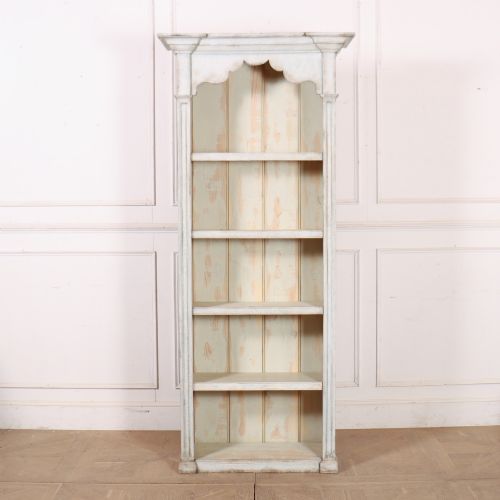
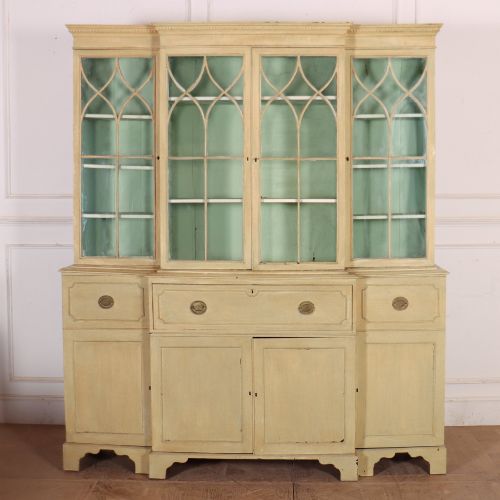
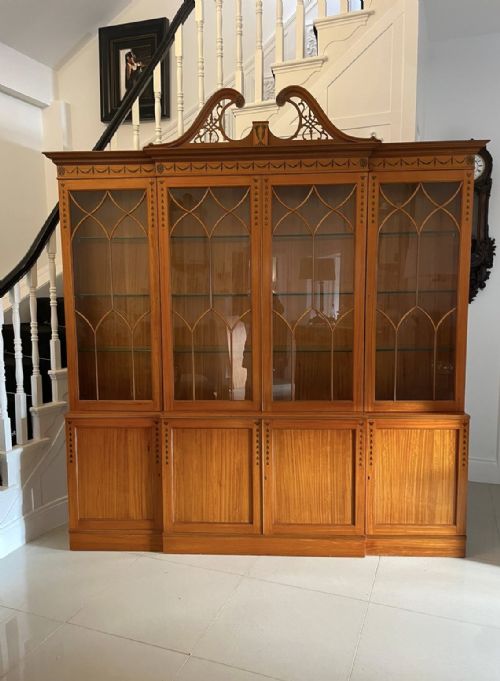
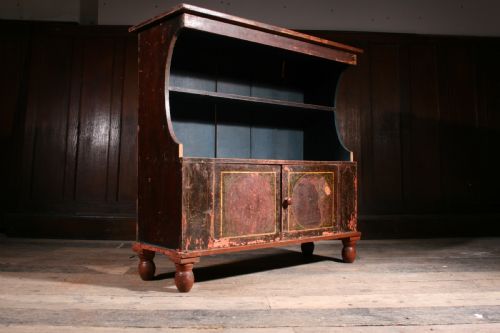
Scottish Painted Breakfront Bookcase, 19th Century
Priced at £11,950 from Arcadia Antiques
Country house libraries often needed large storage units made from cheaper local timbers. Paint disguised these plain boards perfectly.
Look at eighteenth-century architectural trends. Tall built-in shelving often transitioned into freestanding antique painted bookcases that matched the room's panelling.
Georgian examples sometimes imitated more expensive materials. Artisans applied graining techniques to mimic mahogany or satinwood across the entire carcase.
Victorian households demanded storage for growing reading collections. Workshops produced these pieces in large numbers for middle-class sitting rooms.
Documented individual makers are scarce for painted furniture. Provincial joiners constructed the vast majority of these cases in local market towns.
House painters usually applied the finishes rather than the cabinetmakers. They matched the furniture to the architectural skirting and dados.
Some large London firms like Gillows occasionally produced japanned or painted library pieces, though their stamped painted examples rarely surface.

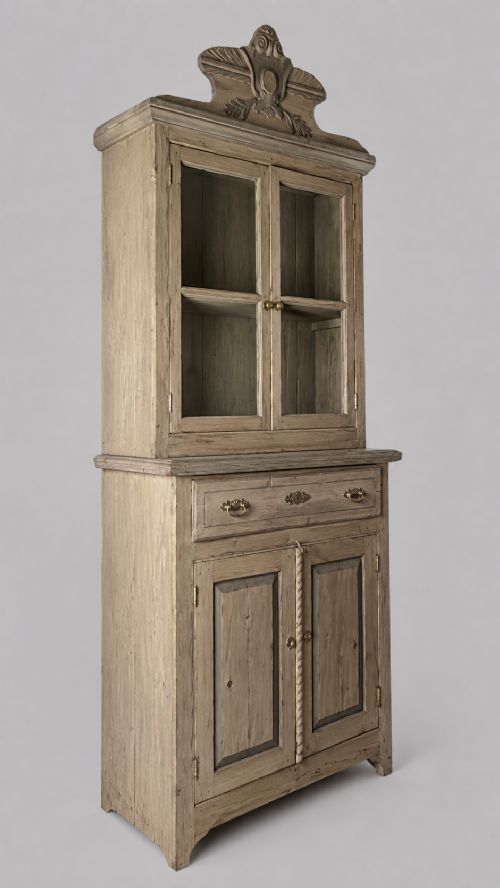
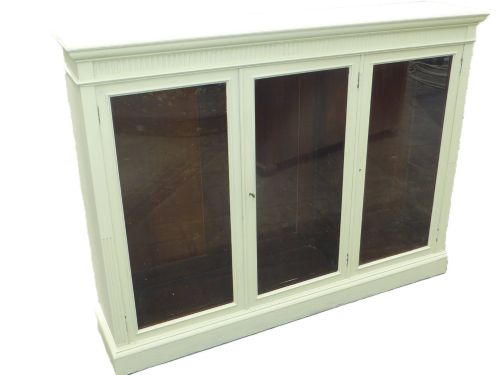
French Painted Concave Glass Adjustable Bookcase, 1900
Priced at £695 from Tom Scott Antiques
The 2026 retail price guide for Antique Painted Bookcases is drawn from a proprietary archive of over 1.1 million retail prices indexed by Sellingantiques since 2003. This guide relies exclusively on their own internal data; no external sources or auction records are used.
Analysing nearly 25 years of UK antique market history alongside current retail values, the data indicates that typical UK retail prices for Antique Painted Bookcases range between £800 and £6,000. Entry-level prices generally fall under £800 and premium examples upwards of £6,000.
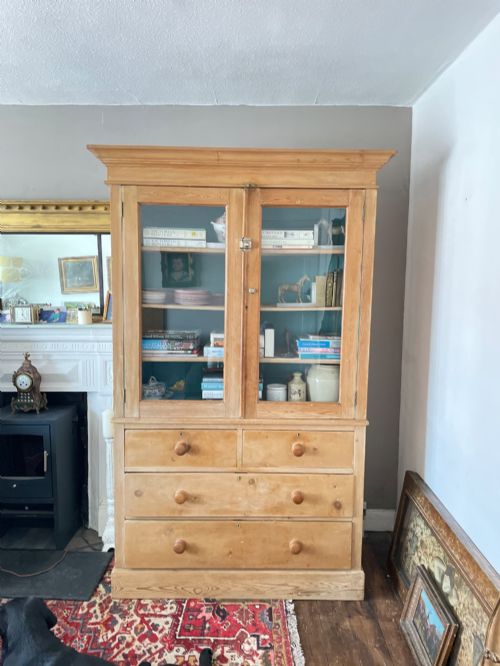
Glazed upper doors generally sit over a deeper lower cupboard section. This step forms a narrow waist.
Check the shelf supports. Saw-tooth uprights or simple wooden cleats fixed to the sides allow for adjusting the height of the boards.
Plinths sit flat to the floor rather than standing on feet. This distributes the heavy weight of paper evenly.
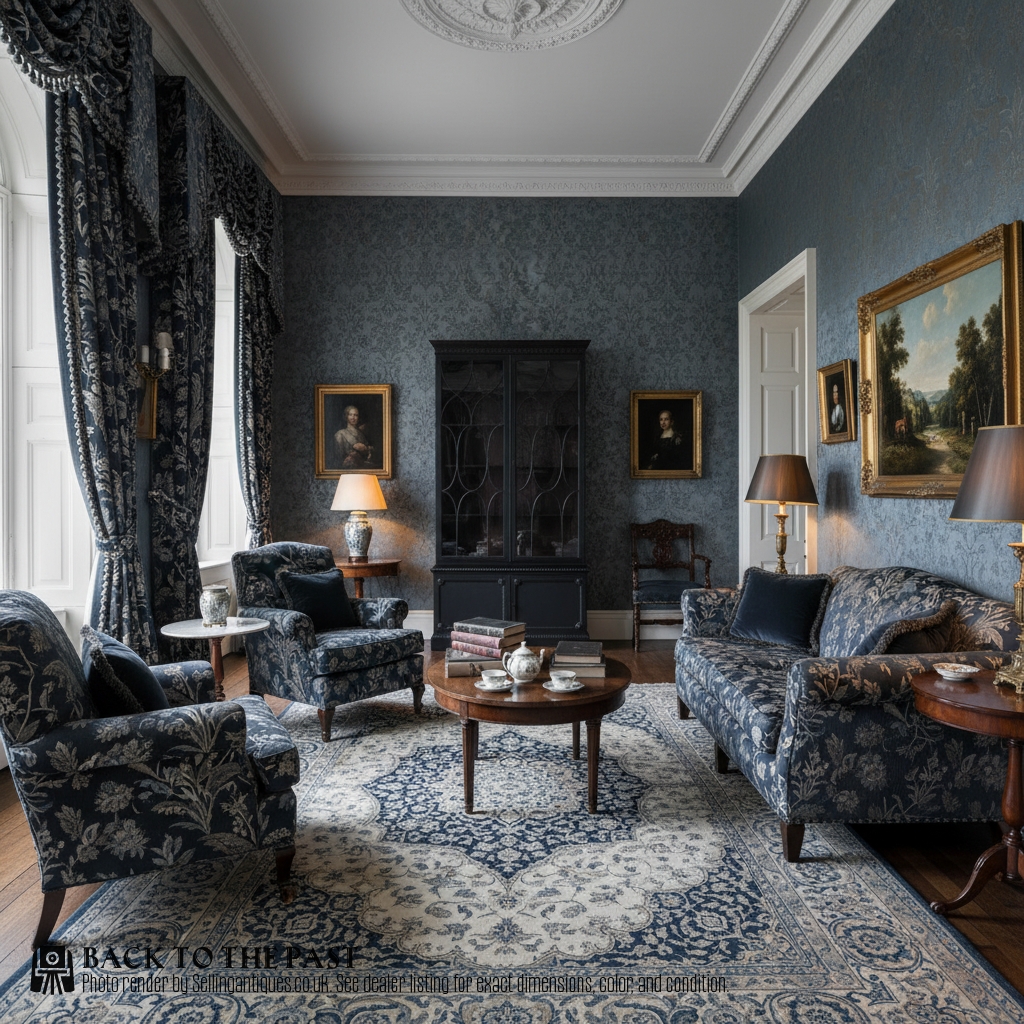
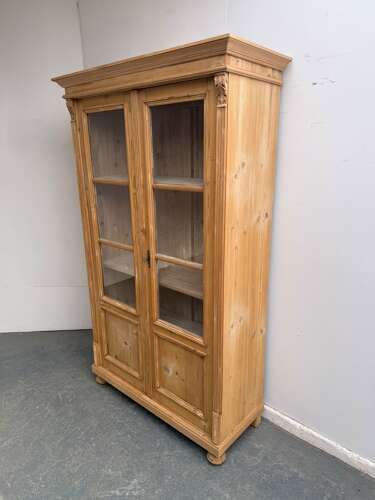
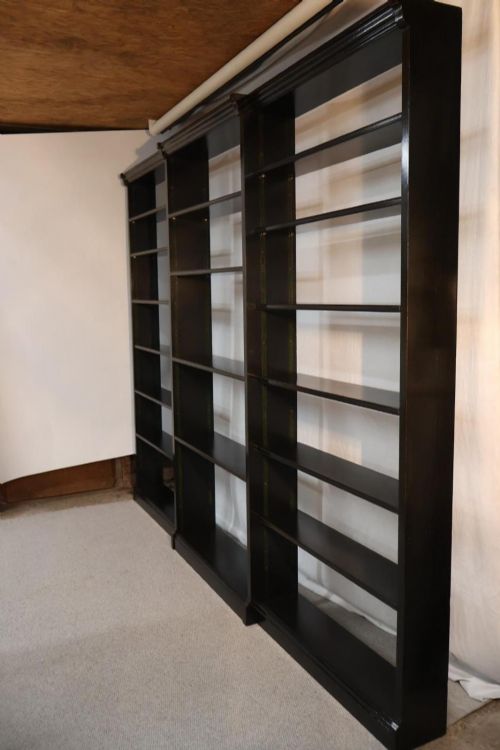
English Circa 1900 English Country House Bookcase in Black Paint, 1900
Priced at £2,695 from Whites Antiques
Joiners favoured mortise and tenon joints for the door frames. Pegs driven through the wood hold the corners tightly together.
Examine the backboards. Earlier cases have thick vertically aligned planks, while later nineteenth-century workshops often switched to thinner overlapping boards.
Traditional paint application required sealing the knots first. Craftsmen rubbed size into the pine before adding layers of ground colour.
"Many originally fit straight into room alcoves. Surviving examples often feature flat unfinished sides where they once touched the plaster."
"Pigment layers act as a historical record. Conservators can scrape back a tiny cross-section to reveal centuries of changing interior design tastes."
"Georgian decorators used bright original blues or greens. You can sometimes find traces of these vivid tones hidden behind hinges."
Based on almost 25 years of Sellingantiques UK antique market data, Antique Painted Bookcases appeared 855 times (out of 1,100,000 antiques) which gives it a rarity score of 84/100.
This score measures scarcity within the Sellingantiques archive only and is not a survey of the entire antiques market, so these statistics may not be indicative of the general availability of Antique Painted Bookcases elsewhere.
Most antique painted bookcases have some form of adjustment in the upper section. Joiners typically fitted wooden saw-tooth racks inside the side panels.
You lift the horizontal supports out of their slots to move the boards. Sometimes the lower cupboards only have fixed shelves, built directly into the carcase for structural stability.
Tall furniture on uneven floors will lean. Antique cases settle into the shape of the rooms they occupied for decades.
You should use small wooden wedges under the front of the plinth. Tilting the carcase slightly backward keeps the whole structure stable.
This takes the pressure off the hinges. It also stops heavy glazed doors swinging open while you browse the shelves.
Dry dusting is the safest approach. A soft cotton cloth removes surface dirt without disturbing the fragile paint layers.
Avoid liquid cleaners or modern polish. They can dissolve older pigments or leave a sticky residue that attracts more grime.
Almost all tall antique painted bookcases were built in two halves. Moving a single solid piece up narrow Georgian staircases was impossible.
The top section simply rests on the base, sometimes located by small wooden blocks or metal brackets at the back. Gravity and the weight of the books hold it firmly in place.
Please note: This Antique Painted Bookcases guide and its associated pricing data are provided for general informational purposes only. It does not constitute formal financial, investment, or appraisal advice and should not be relied upon as the sole basis for any commercial activity, purchasing, or sales decisions. Sellingantiques.co.uk accepts no liability for any actions taken in reliance on this information. Always consult with a qualified professional or independent appraiser.
