
A 2026 Guide by Sellingantiques
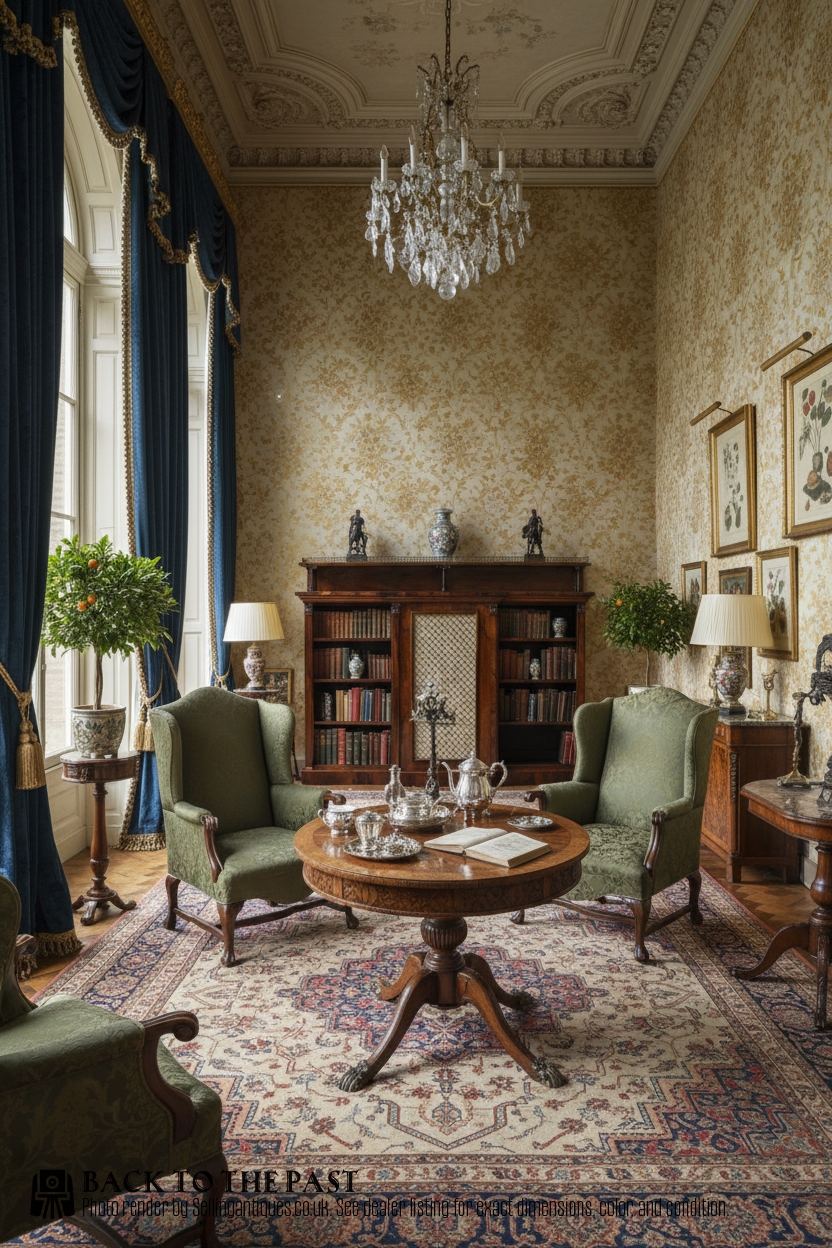
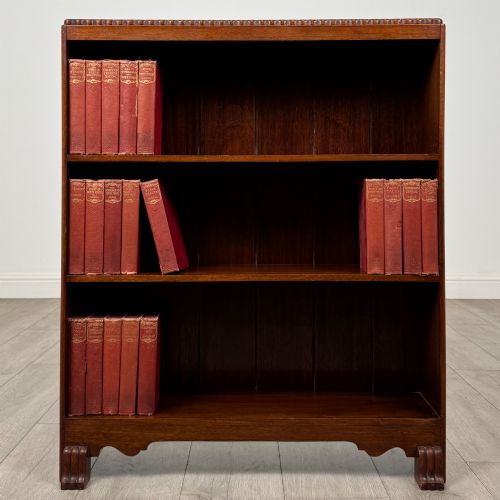
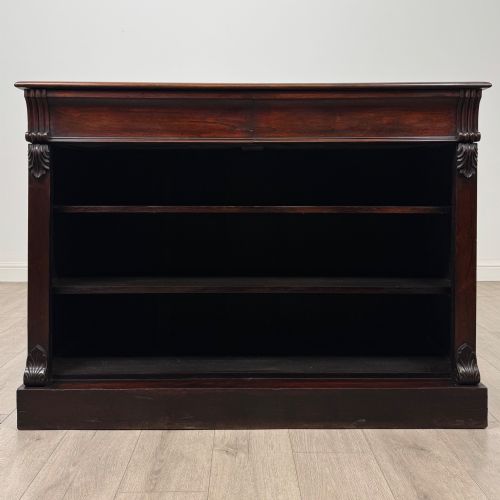
Rosewood Breakfront Bookcase / Sideboard, 19th Century
Priced at £1,850 from Sinclairs Antiques and Interiors
Reading became a daily habit for the expanding middle classes during the late eighteenth century.
Massive library presses dominated grand country houses, but urban living required something shorter that could slip under a sash window.
Check the back boards. You often find these low bookcases were built specifically to fill alcoves either side of a fireplace in Georgian townhouses.
Revolving designs appeared later in the nineteenth century. They offered huge storage capacity without taking up much floor space in crowded Victorian drawing rooms.
Gillows of Lancaster supplied numerous low open bookcases between 1770 and 1830. Their workshop stamp occasionally appears on the top edge of a drawer.
London cabinet makers handled most high-end commissions. Firms like Holland & Sons produced well-documented fitted library furniture during the mid-nineteenth century.
Regional tradesmen built the vast majority of surviving examples. These provincial craftsmen worked from standard pattern books rather than inventing their own designs.
The 2026 retail price guide for Antique Low Bookcases is drawn from a proprietary archive of over 1.1 million retail prices indexed by Sellingantiques since 2003. This guide relies exclusively on their own internal data; no external sources or auction records are used.
Analysing nearly 25 years of UK antique market history alongside current retail values, the data indicates that typical UK retail prices for Antique Low Bookcases range between £700 and £4,000. Entry-level prices generally fall under £700 and premium examples upwards of £4,000.
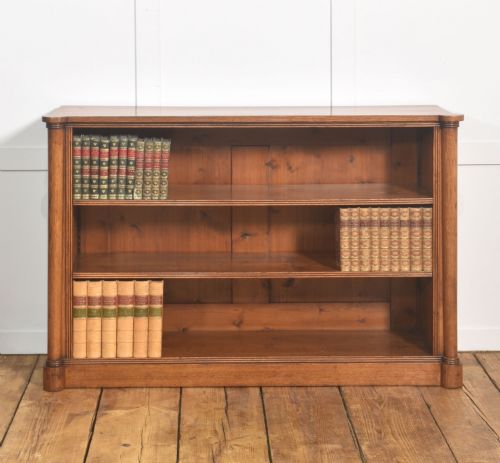
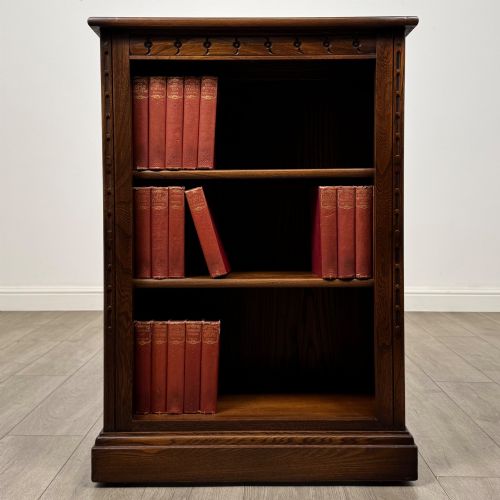
Adjustable shelves sit on wooden pegs or shark-tooth racking. This let owners alter the spacing when their library expanded to include taller folios.
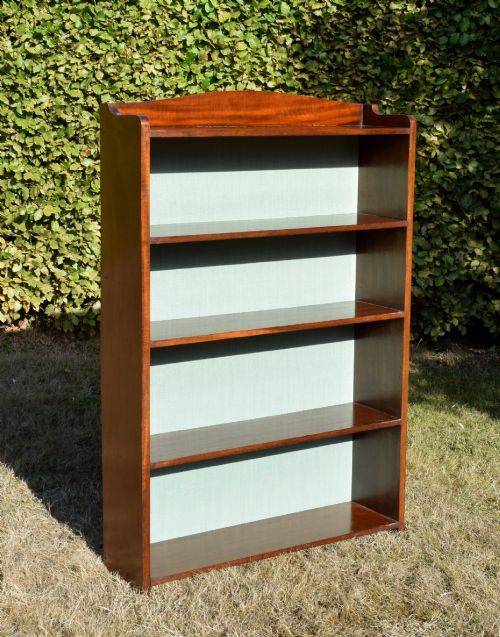
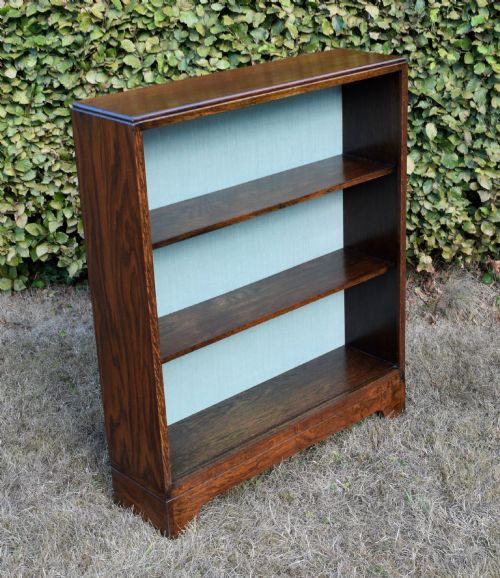
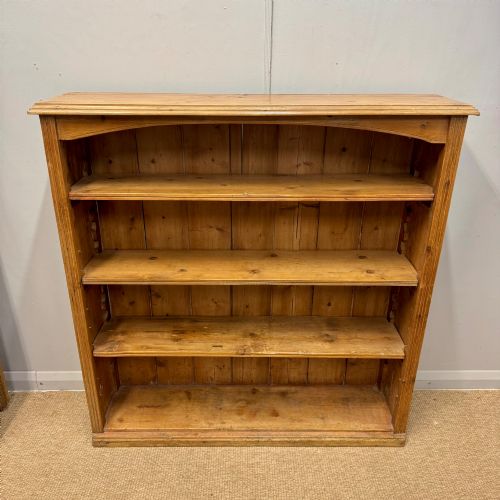
Plinth bases are standard on antique low bookcases. Some feature turned bun feet or bracket supports, keeping the bottom tier away from damp floors.
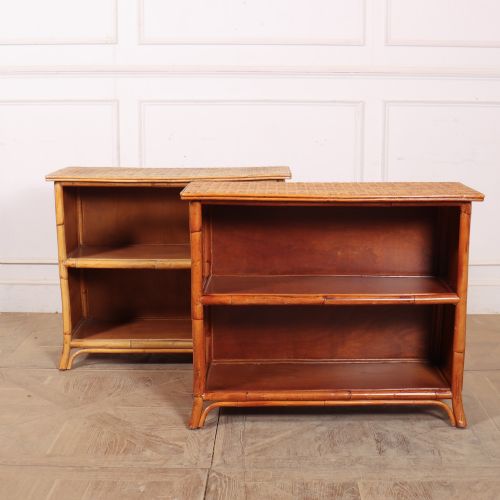
Open fronts remain the most common format. Some Georgian pieces feature brass grilles backed with pleated silk to keep dust off the bindings.
Hand-cut dovetails secure the top surface to the uprights. Cabinet makers hid these structural joints beneath an overhanging top board or applied cornice.
Veneer application changed as cutting technology evolved. Late Victorian examples feature much thinner surface layers than the thick saw-cut sheets found on Georgian pieces.
Notice the backboards on early models. Craftsmen planed them by hand and secured them with forged iron nails to keep the frame square.
"The flat top surface served as a display area. Families arranged their bronze figures and porcelain collections across these convenient waist-height platforms."
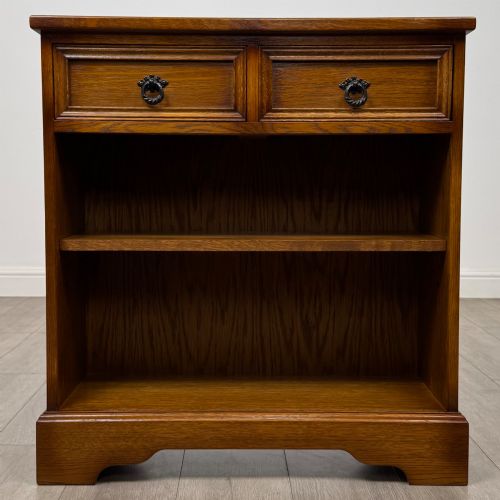
"Many open designs feature shallow top drawers hidden within the frieze moulding. These slim compartments held writing slopes and reading glasses safely."
"Small brass carrying handles appear on the sides of some provincial pieces. This clever addition meant servants could easily shift the whole unit between rooms."
Based on almost 25 years of Sellingantiques UK antique market data, Antique Low Bookcases appeared 1062 times (out of 1,100,000 antiques) which gives it a rarity score of 81/100.
This score measures scarcity within the Sellingantiques archive only and is not a survey of the entire antiques market, so these statistics may not be indicative of the general availability of Antique Low Bookcases elsewhere.
Most antique open bookcases feature adjustable shelving that lifts straight off the supporting pegs.
Occasionally you find fixed shelves glued into routed grooves on very basic provincial pieces.
You can modify the back edge, but removing original timber alters the piece permanently. Many Georgian townhouses had deep skirting boards, so you might find an antique low bookcase that already has a rebated back corner.
A better approach involves packing out the space behind the upper section. This allows the unit to sit flush against the skirting board without cutting into the original plinth base.
A solid mahogany low bookcase carries significant weight even before you add any volumes. You should expect a standard three-foot wide example to require two people to lift it safely.
Pieces with solid timber backs and thick shelves weigh considerably more than later versions with plywood backings.
Leather dust-falls were a common contemporary addition. They protected the top edges of the books below from settling dust and harsh sunlight.
Many have been replaced over the decades as the original leather dries out and snaps off. Finding an intact set of original nineteenth-century dust-falls is quite rare.
Please note: This Antique Low Bookcases guide and its associated pricing data are provided for general informational purposes only. It does not constitute formal financial, investment, or appraisal advice and should not be relied upon as the sole basis for any commercial activity, purchasing, or sales decisions. Sellingantiques.co.uk accepts no liability for any actions taken in reliance on this information. Always consult with a qualified professional or independent appraiser.
