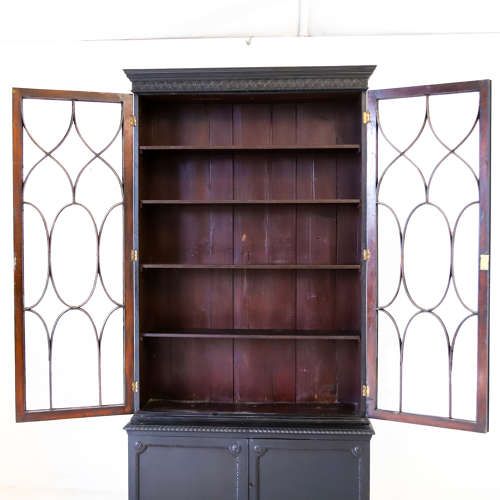
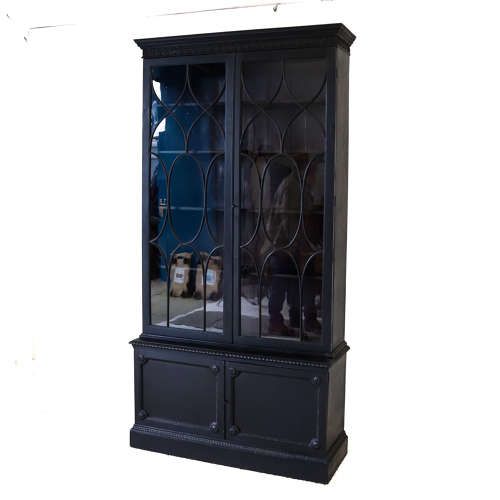
Whites Antiques has dated this Black Painted Glazed Bookcase to the 1900s.
English circa 1900
Presented in refreshed black paint with wax finish
Original locks and keys
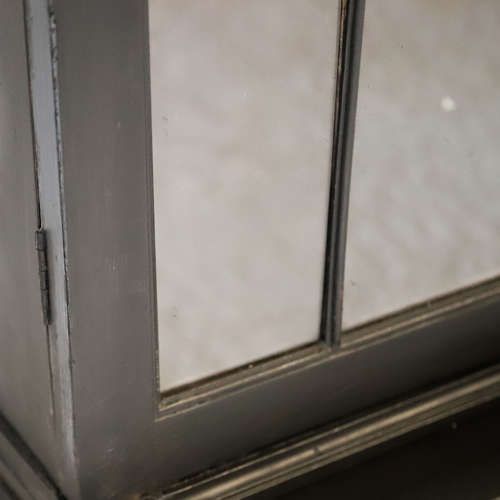
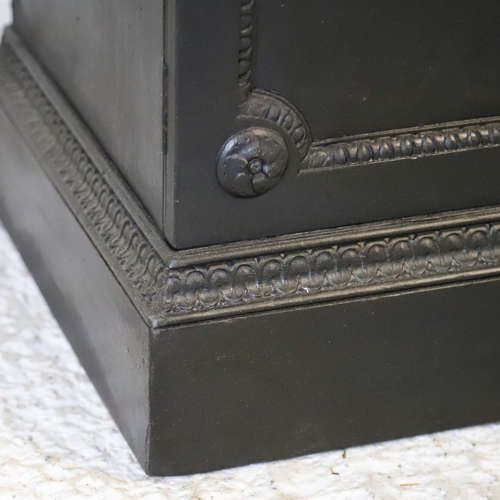
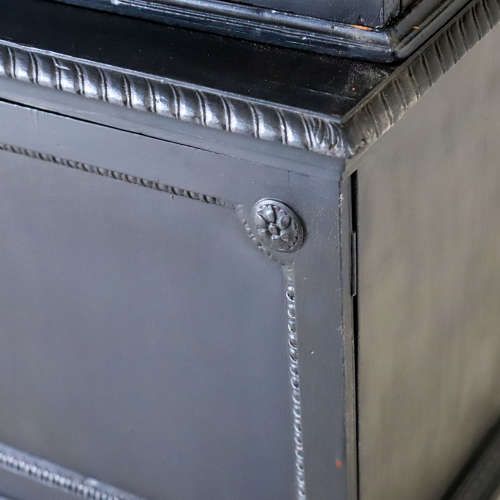
Decorative cornice and mirrored decorative plinth
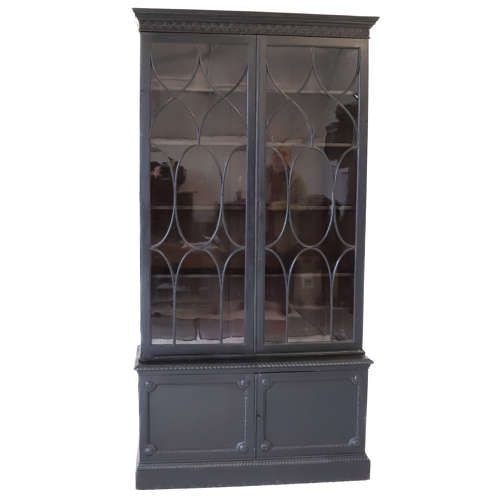
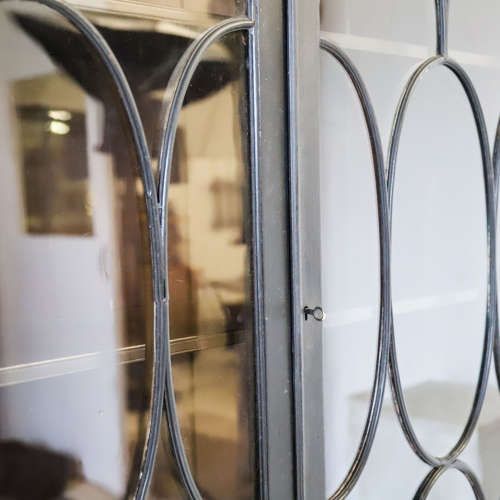
2 Astragal (1) glazing doors to upper section
4 shelves
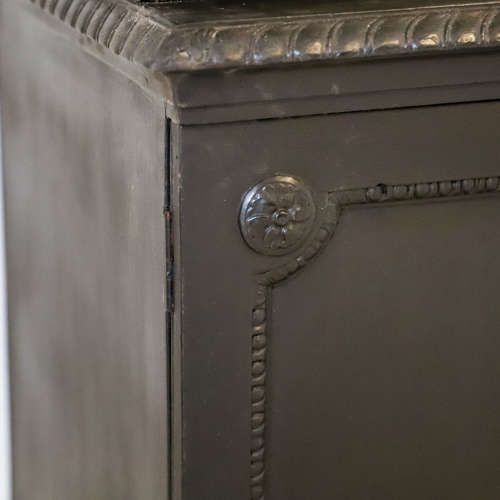
Lower section has 2 doors with decorative fielded panel and paterae
Central Shelf
W: 115cm (45.3") H: 223cm (87.8") D: 39cm (15.4")
The upper section has a fabulous decorative cornice above two doors with astragal glazing bars and four fitted shelves; the lower section has a decorative mould above two doors with decorative fielded panels and paterae and a single central shelf. The whole stands very well on a decorative plinth which mirrors the design to the cornice.
(1) Astragal
The word "astragal" comes from the Greek for "ankle-joint", astrágalos and is a small moulding used on glass for glazing bars. An astragal is a decorative moulding profile composed of a half-round surface surrounded by two flat plants called fillets. Occasionally, they may be referred to as miniature torus. It can mean an architectural element found at the top or base of a column, but it is also the term used for a framing device on furniture and woodwork.
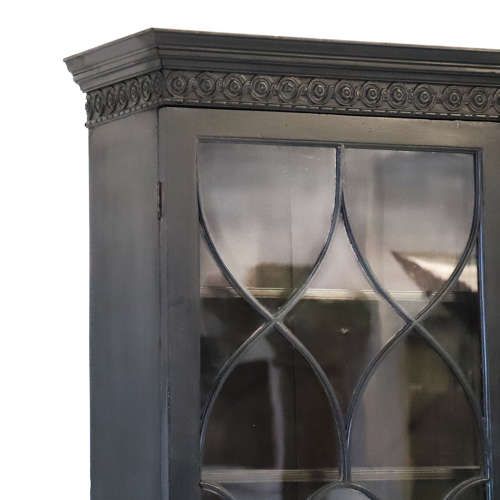
The use of astragal in antique furniture design is most prominently seen on glass. Some of the most famous examples of master cabinetry makers' use of astragal can be noted in the works of Thomas Chippendale, particularly within his display cabinets and his iconic chair backs.
Whites Antiques has dated this Black Painted Glazed Bookcase to the 1900s.
White's antiques collective is the perfect resource for both trade and private clients
You can view the stock and full dealer information on the Whites Antiques Profile Page
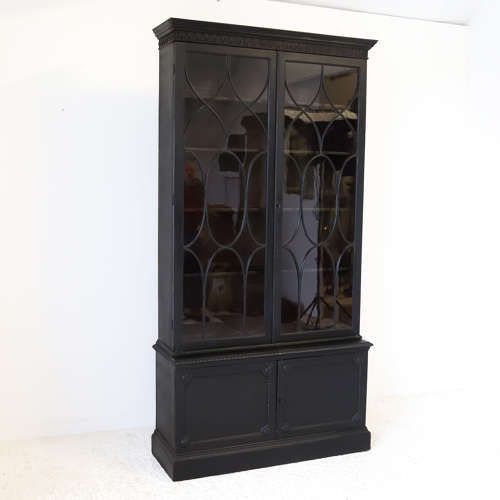
English Circa 1900 English Country House Bookcase in Black Paint