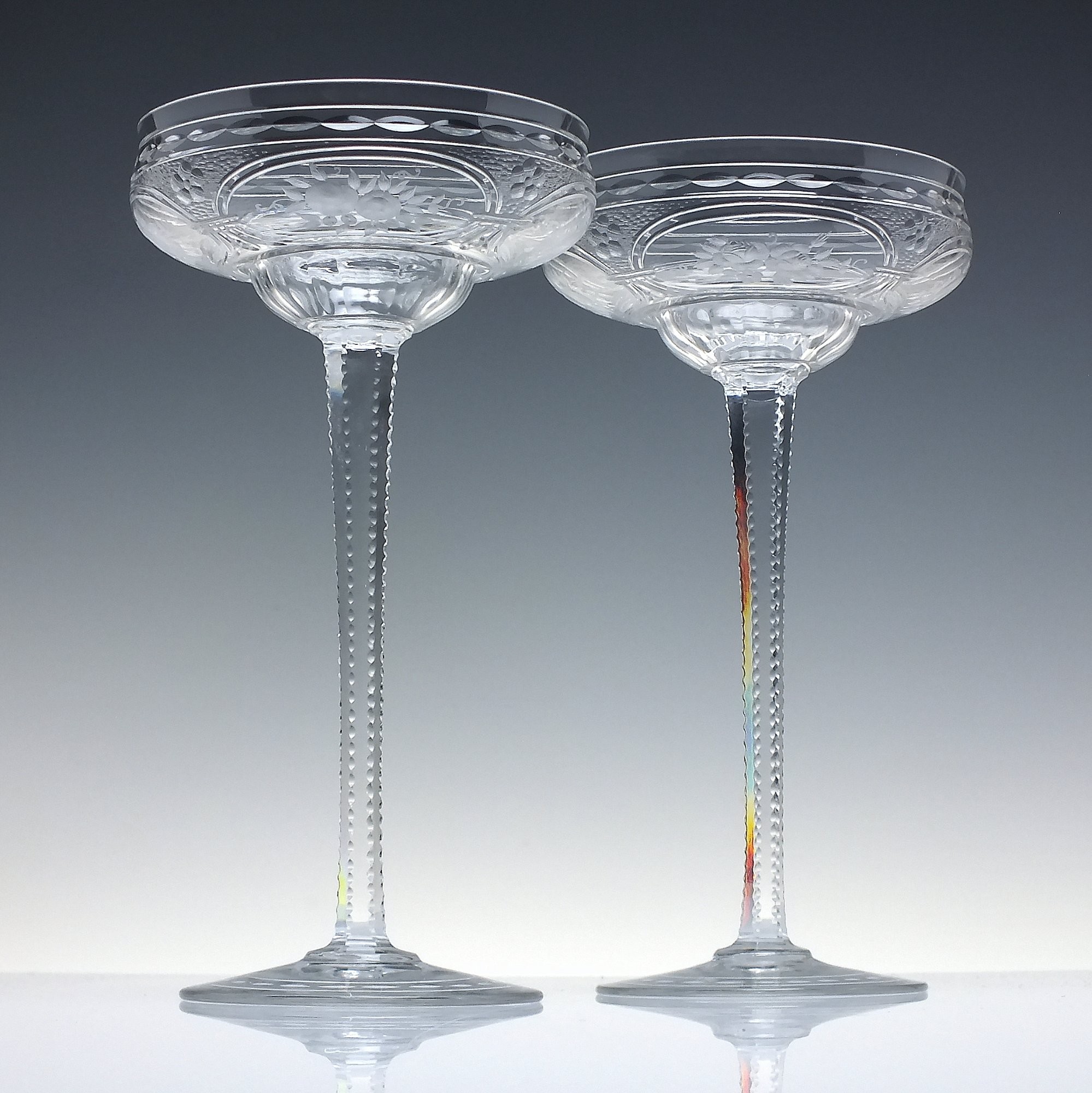
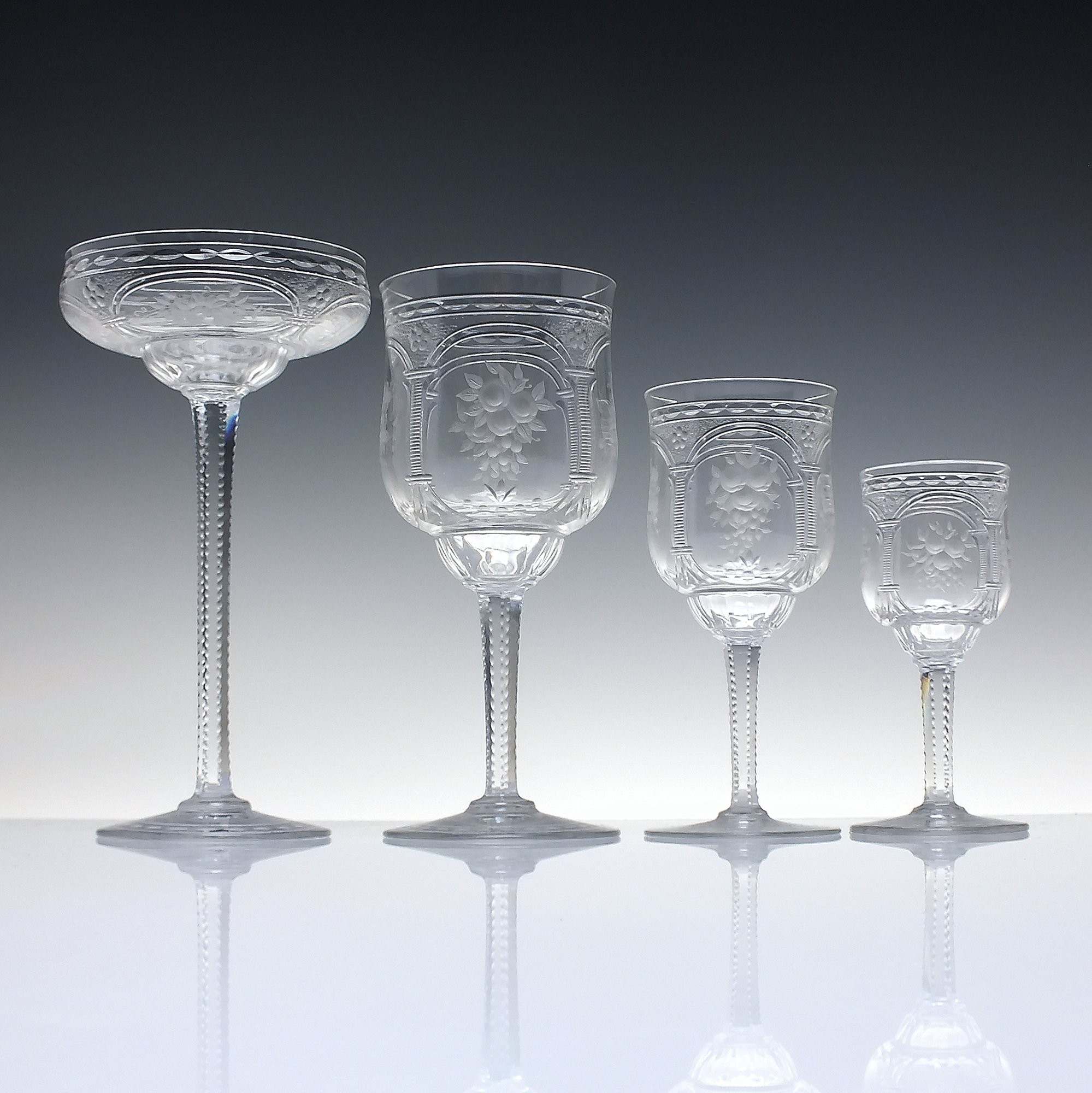
Exhibit Antiques has dated these Baccarat Crystal Champagne Coupes to the 1900s.
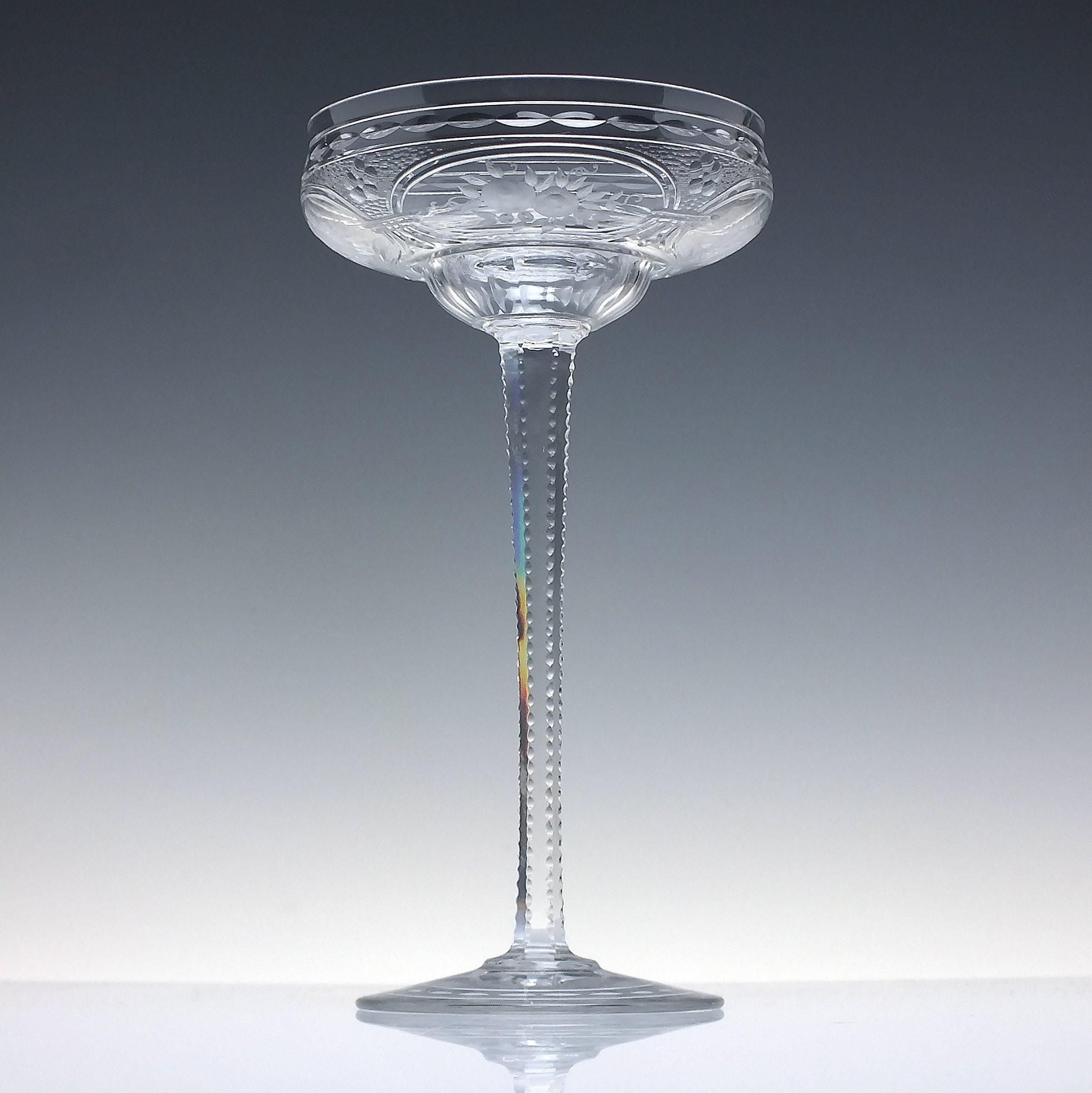
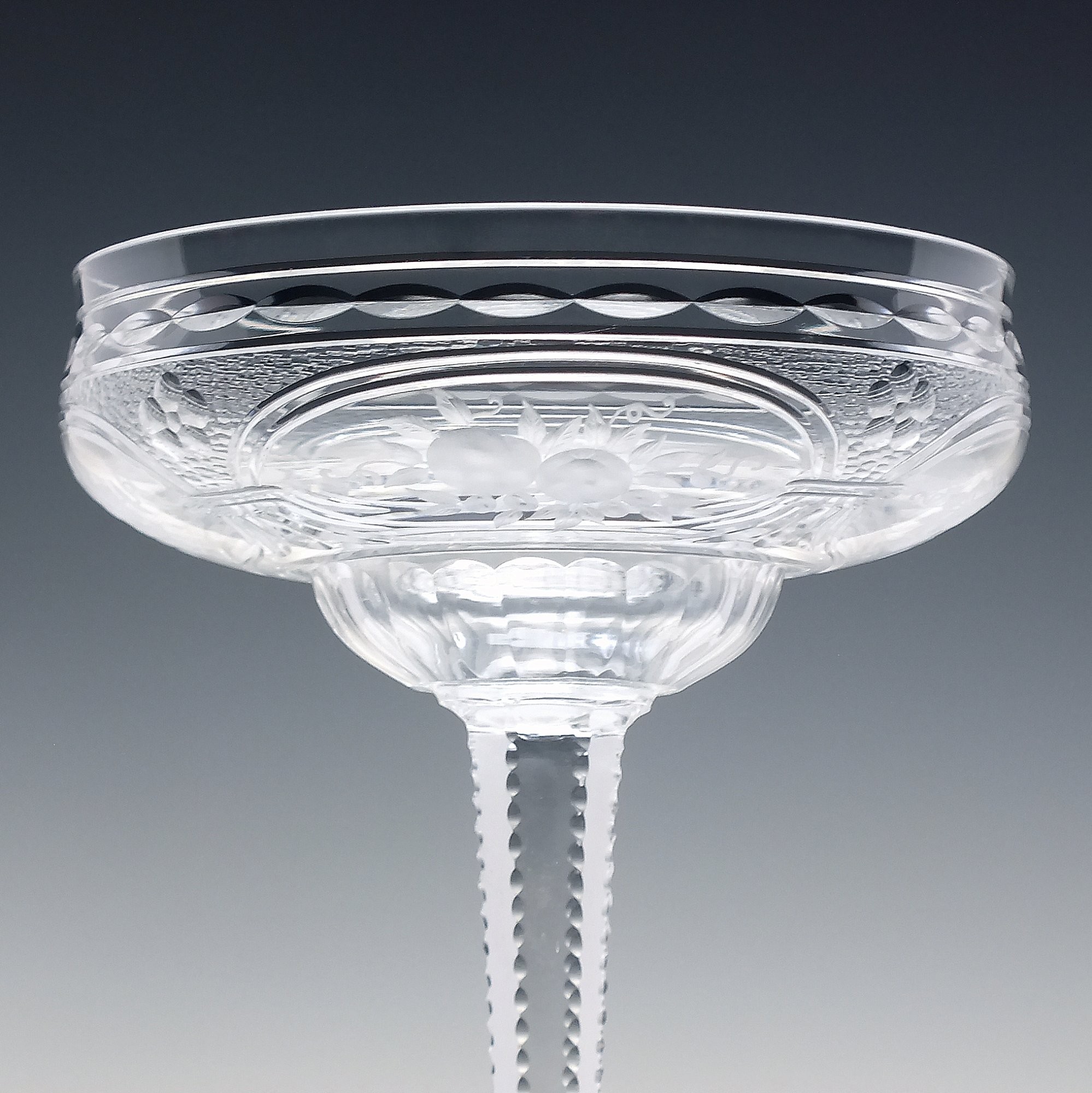
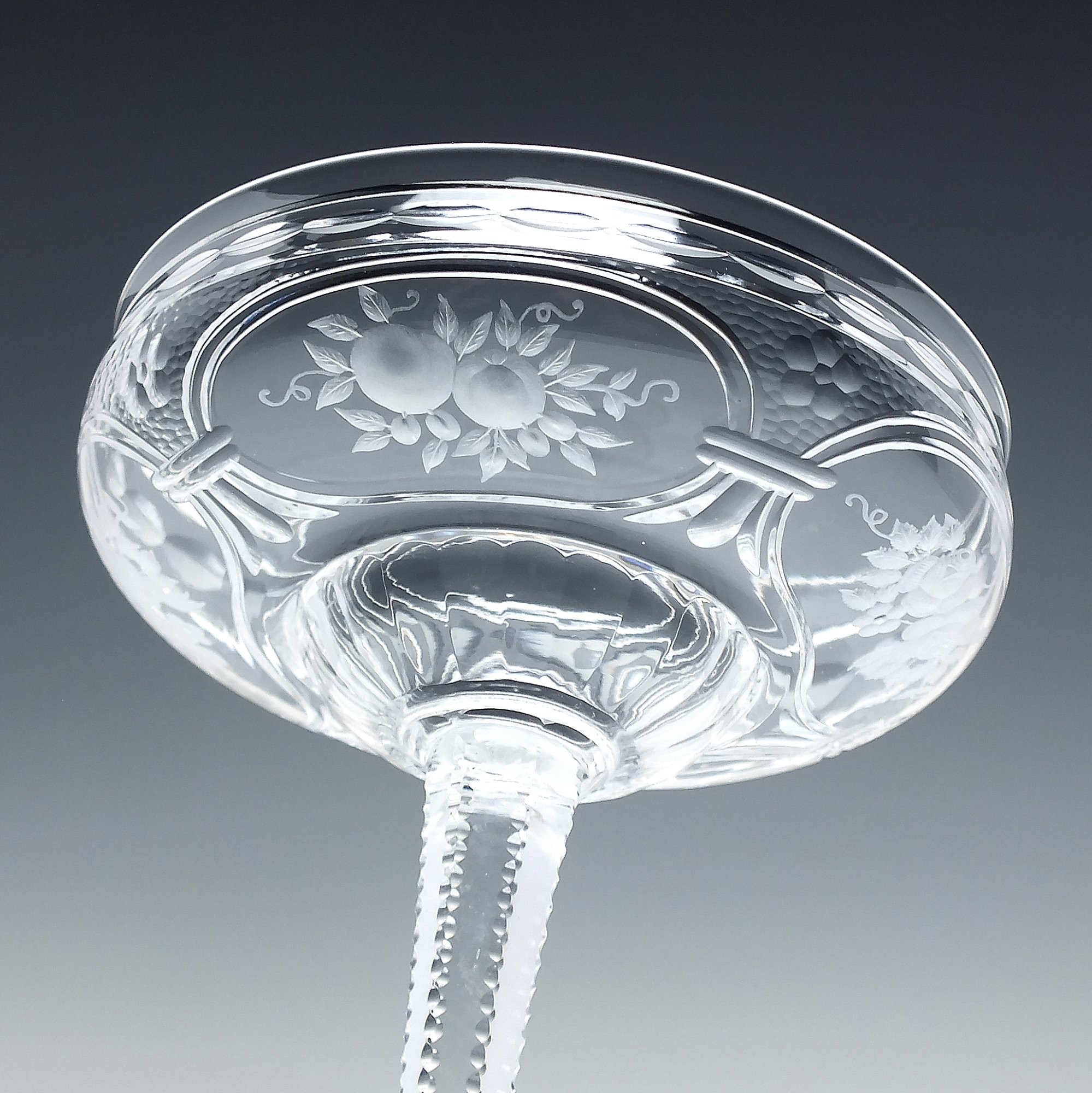
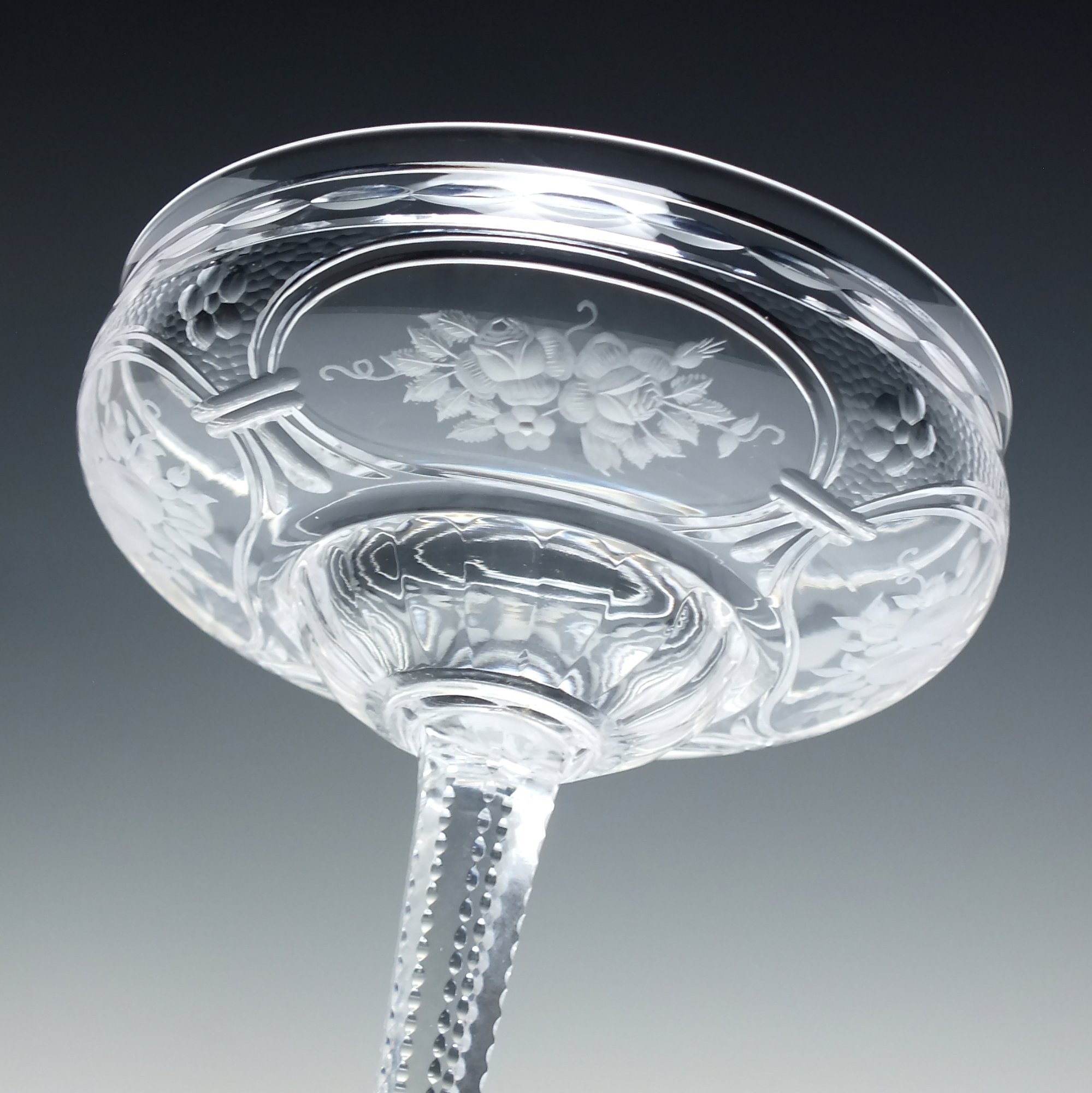
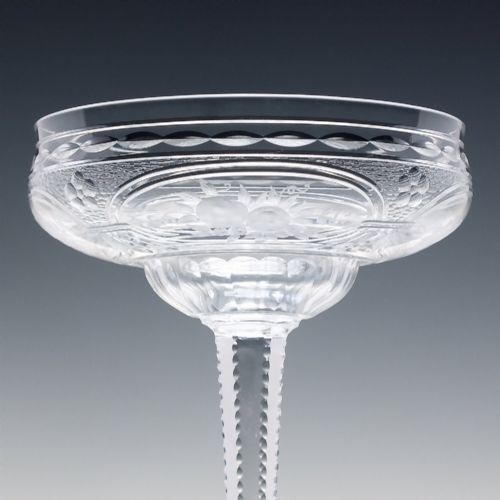
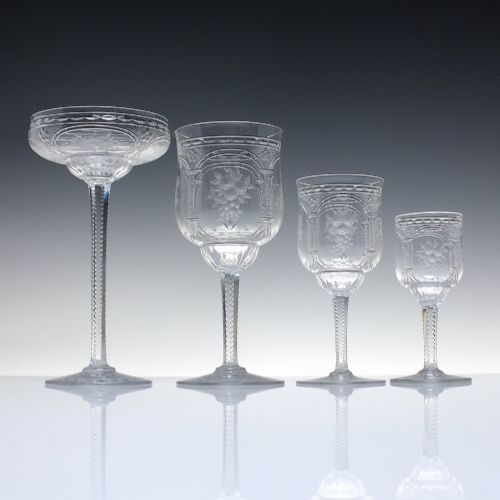
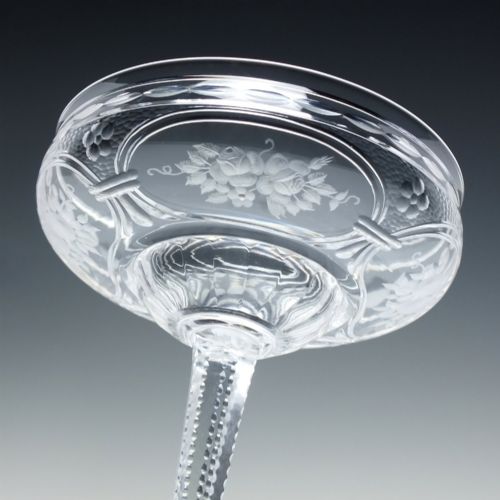
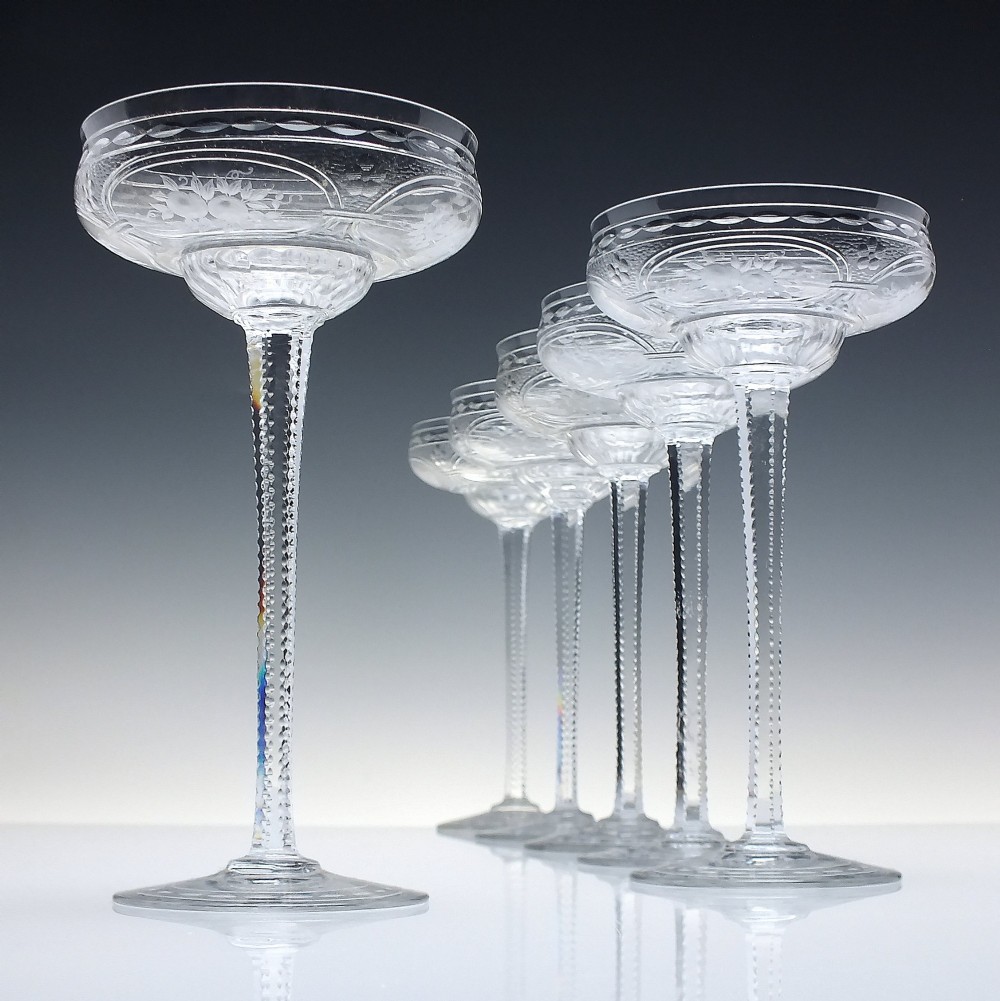
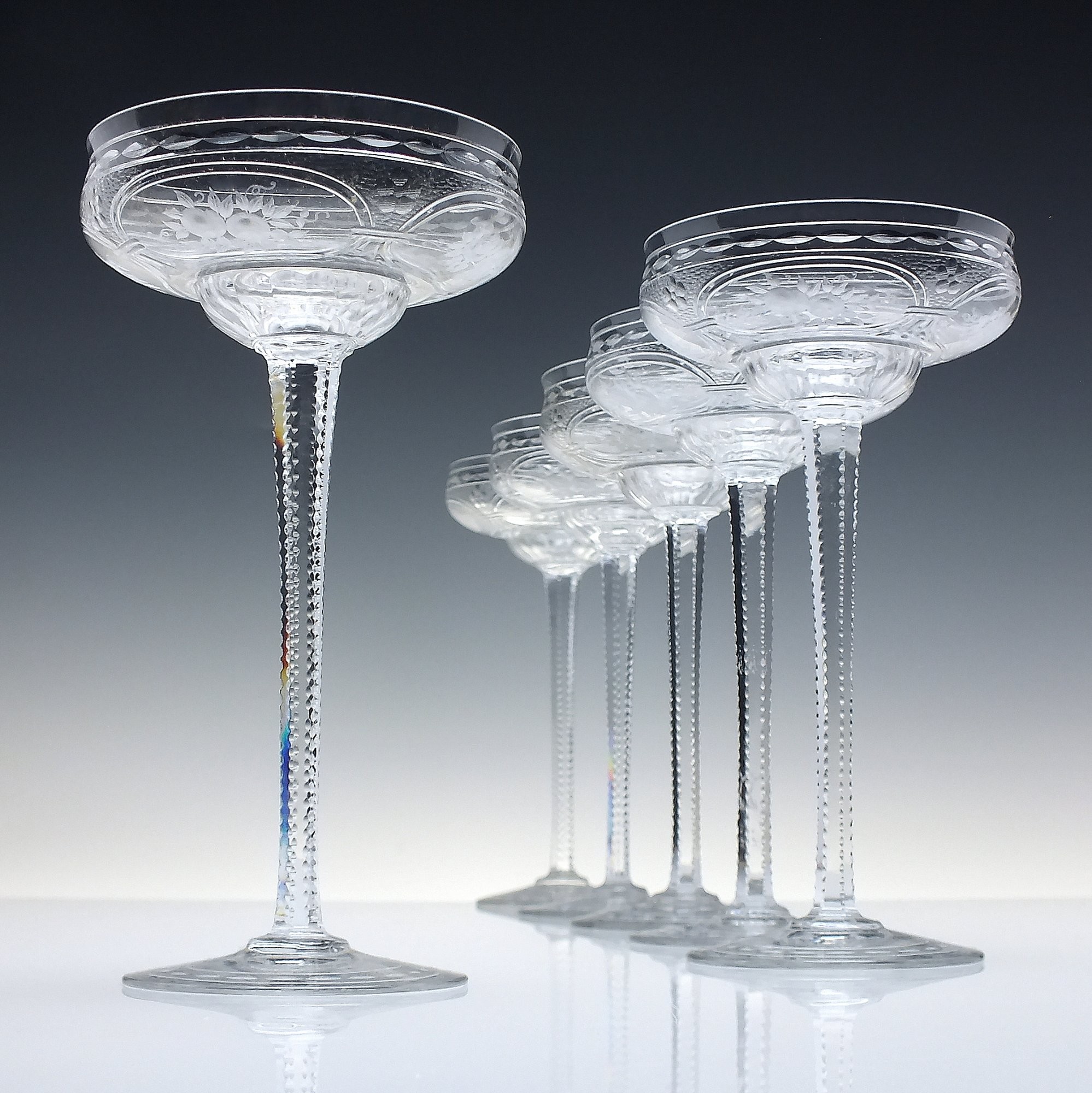
They have broad shallow bowls with a band of polished oval printie cuts between fine prism immediately below the rims. The bowl are finely cut and wheel engraved with the distinctive Vallée design. Repeating neoclassical arches supported by very finely prism cut columns form a series of individual reserves around each bowl, within which are alternating exceptional well engraved arrangements of fruit and flowers. The surrounding areas are finly cut and textured (the textured areas been individial riny 'dot' cuts).
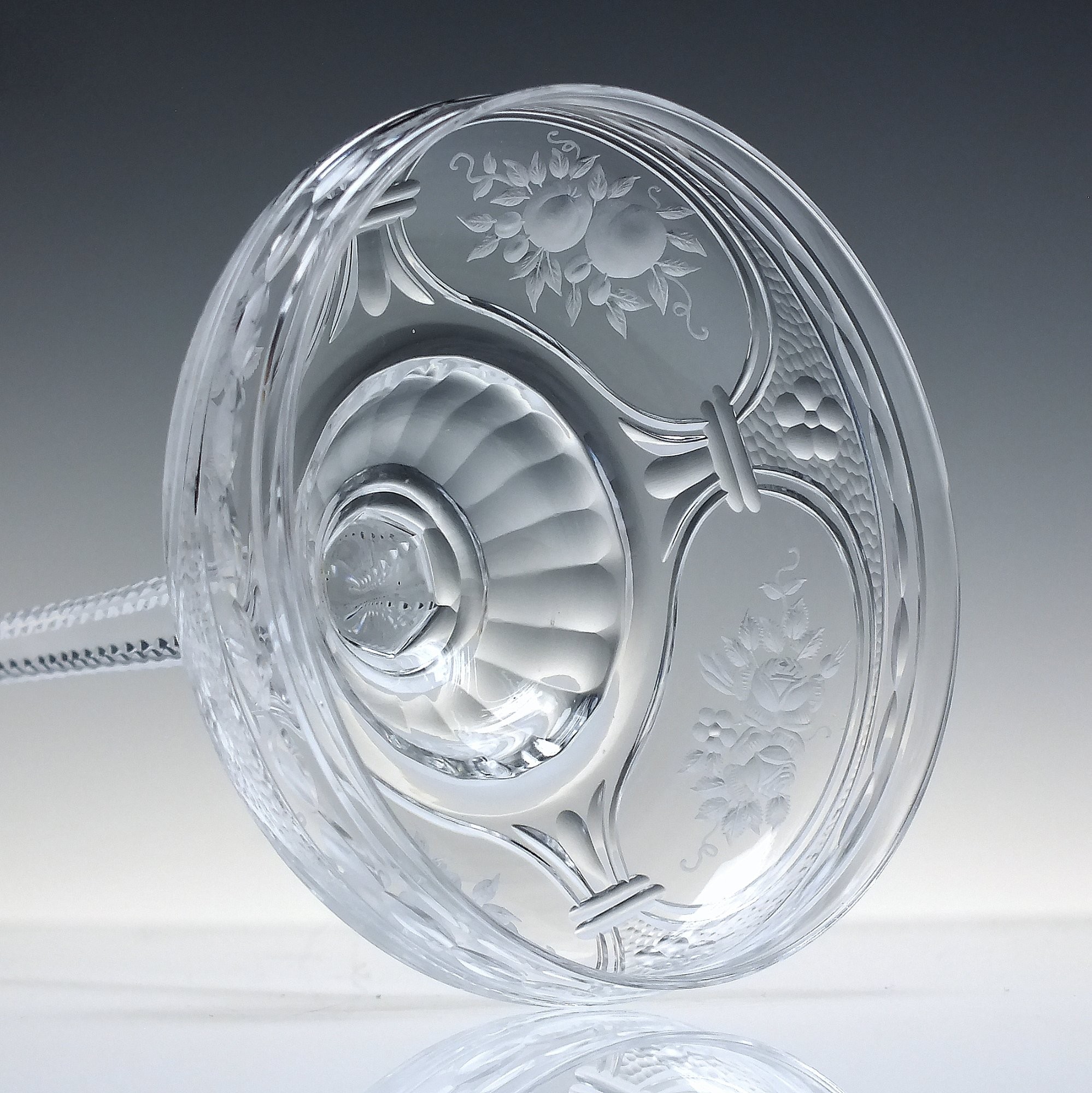
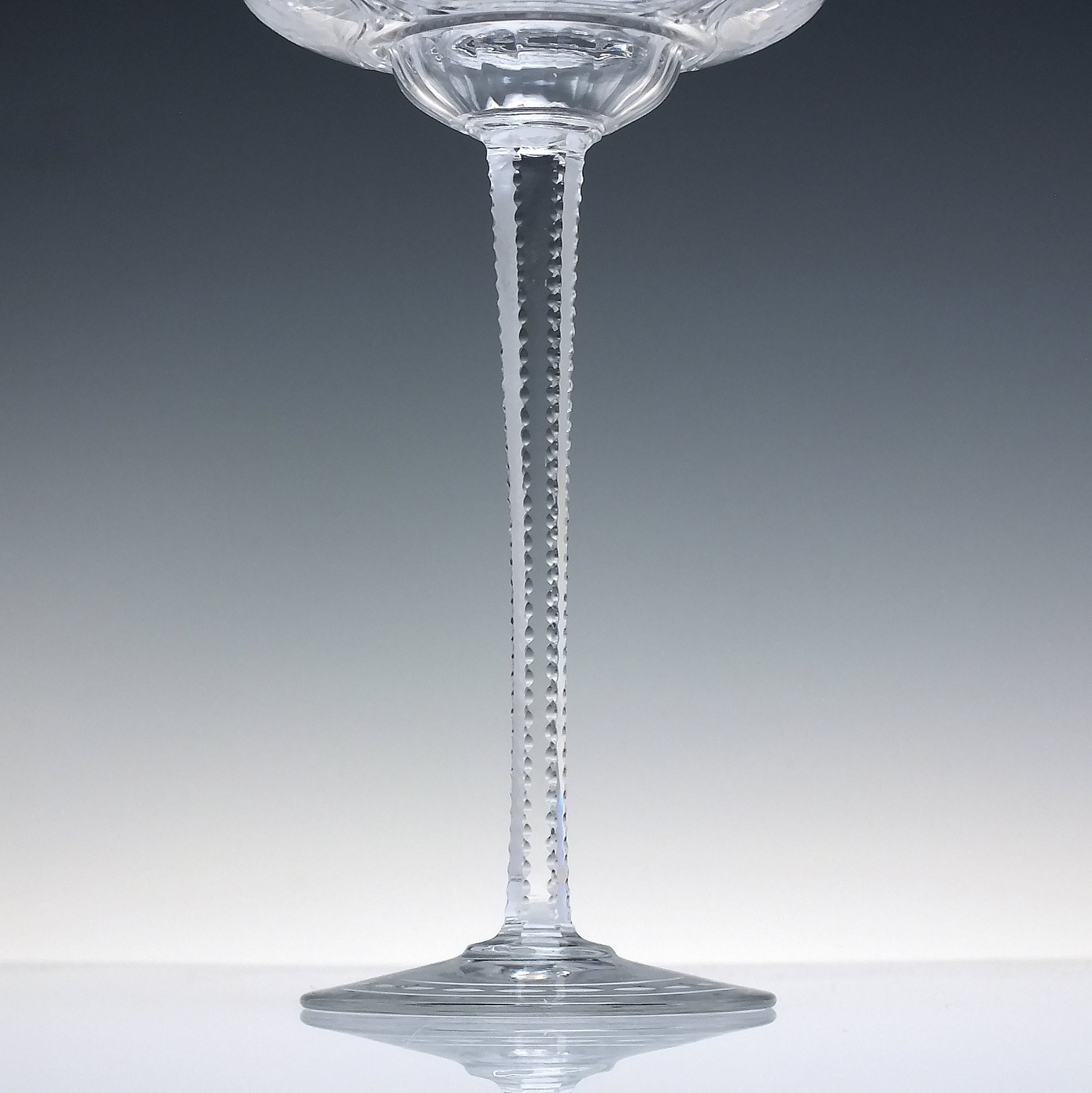
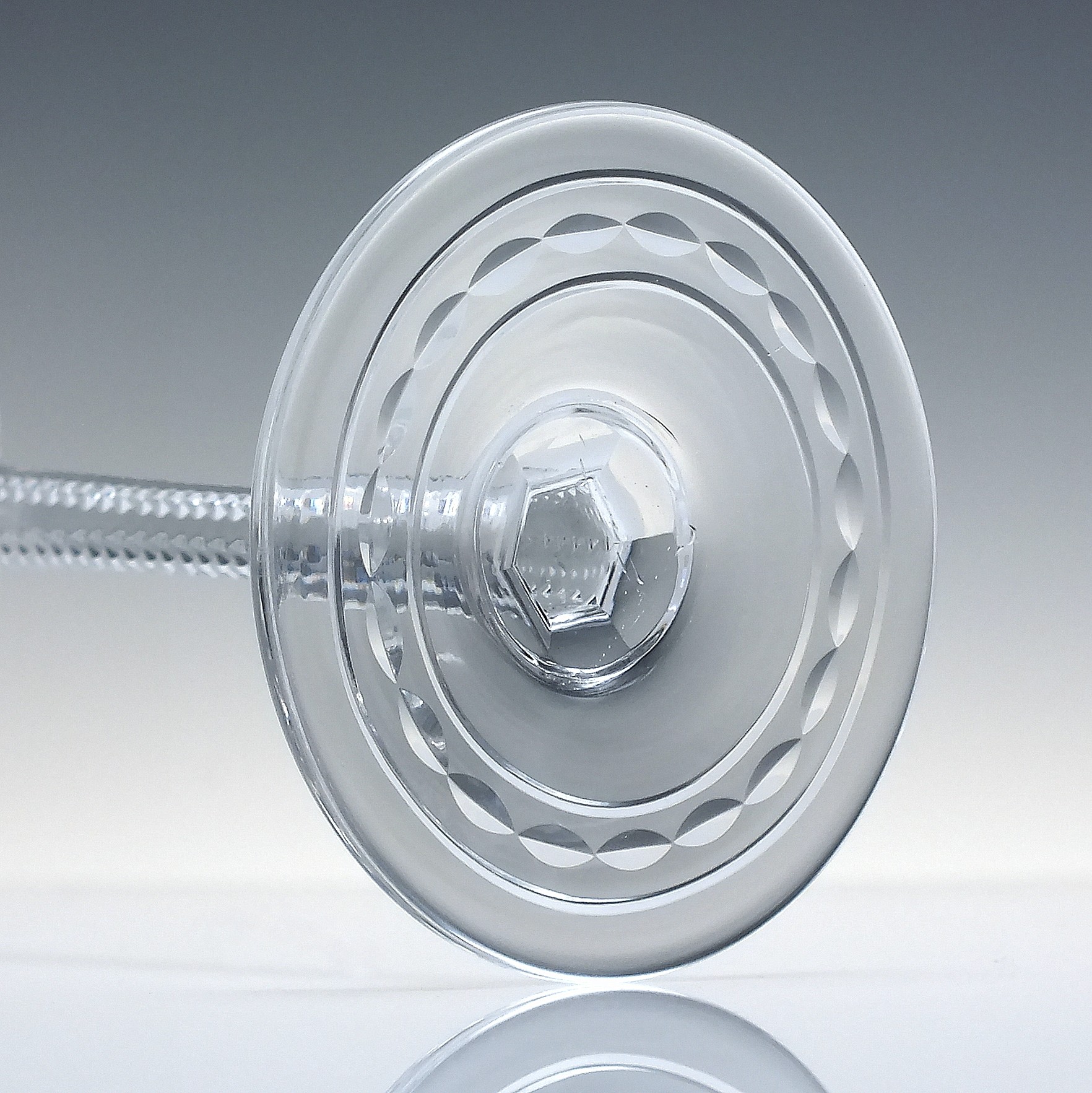
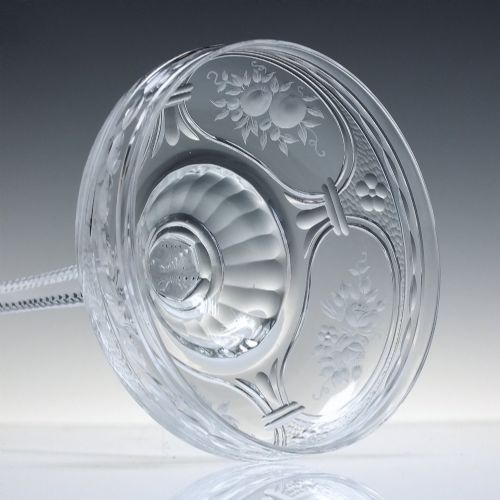
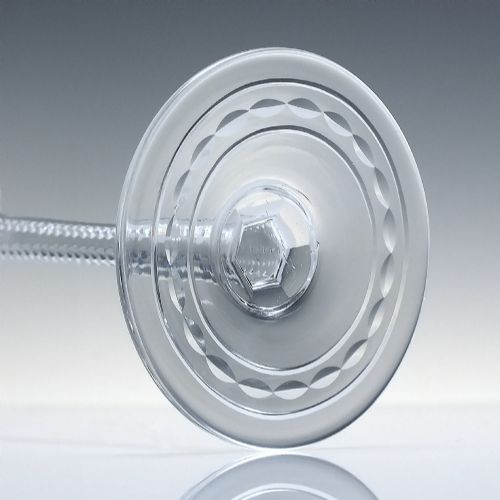
The undersides of the bowls are deeply cut with radiating flutes, forming substantial clear cups above exceptionally long slice cut hexagonal stems which have aloo been notch cut. The undersides of the feet are particularly distinctive, decorated with concentric wheel-cut rings surrounding a continuous band of polished oval printie cuts.
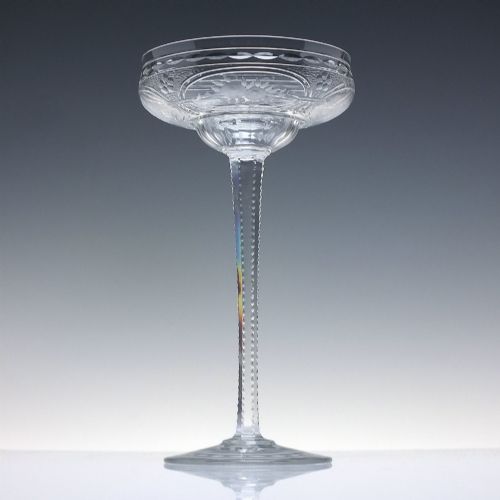
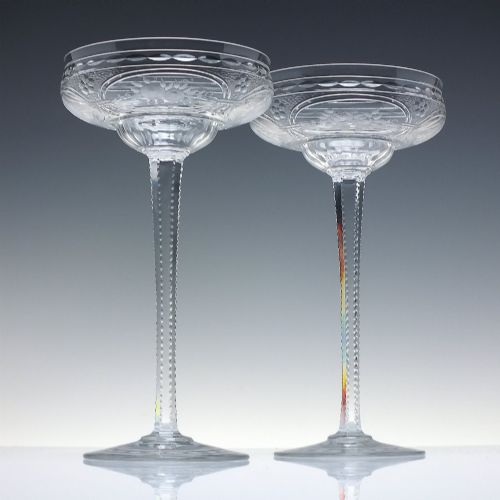
Standing approximately 7 inches (17.8 cm) high, these are exceptionally tall examples of the Vallée champagne glass. During our research we were unable to locate another single example of this exceptionally tall form.
The glasses are unmaked as Baccarat didnt start including the acid ettched mark until 1936.
A rare surviving set of six tall champagne glasses and an exceptionally elegant early example of Baccarat's celebrated Vallée pattern.
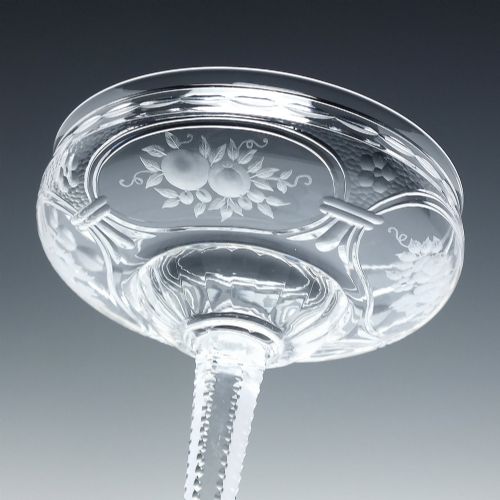
Extrondinary workmanship.
Date & Origin
France, c1902-10, Period of Belle Époque
Condition
Excellent. No chips, cracks, or restoration.
Dimensions
Height: 17.8 cm
Rim diameter: 9.3 cm
Foot diameter: 7.1 cm
Weight: 145 grams each
Historical Context
The Vallee pattern dates from around 1902, a period when Baccarat was at the height of its international reputation. Founded in Lorraine in 1764, the company developed its celebrated lead crystal production during the early 19th century and went on to become one of Europe's foremost manufacturers of luxury crystal.
By the beginning of the 20th century, Baccarat was supplying crystal to royal and imperial households and some of the most prestigious dining tables in Europe and beyond. Its international reputation had been built upon both technical excellence and the extraordinary skills of its glass cutters and engravers.
It was against this background that Vallée appeared around 1902. A museum-documented Baccarat Vallée service dating to circa 1902 confirms the early form of the pattern, with its characteristic classical columns and arches enclosing finely engraved compositions of flowers and fruit.
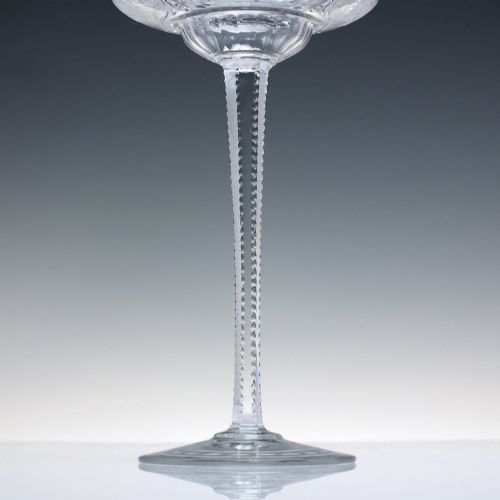
The earliest Vallée glasses are particularly elaborate. Extensive cutting is combined with crisp and finely defined wheel engraving, with the decoration extending beyond the principal panels to the lower bowl, stem and foot.
Vallée continued to be produced in various forms, with the later Vallée S pattern documented from 1923. Although these later glasses retained the characteristic arches, columns and engraved decoration of the original design, the cutting and engraving became generally less extensive and less defined than that found on the early examples. The c1902 glasses consequently represent a particularly elaborate early interpretation of the pattern.
These unusually tall champagne glasses belong to this early and more extensively worked period of Vallée production. Their finely defined fruit and flower engraving, deeply cut bowls, exceptionally long notched stems and elaborately worked feet demonstrate the considerable amount of skilled handwork involved in their manufacture.
Exhibit Antiques has dated these Baccarat Crystal Champagne Coupes to the 1900s.
Specialists in 18th & 19th century antique glass
You can view the stock and full dealer information on the Exhibit Antiques Profile Page
Rare Set of Six Nouveau Baccarat Vallee Tall Champagne Glasses C1902-10