


Clear Crystal Champagne Glasses
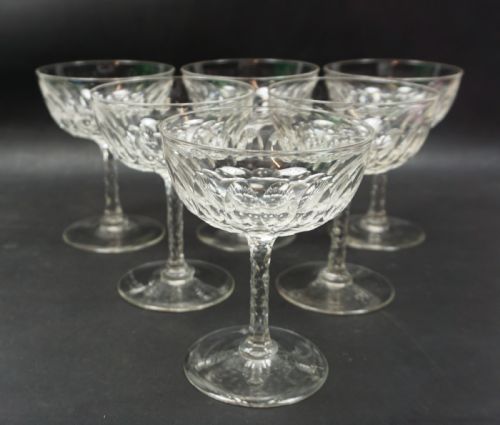
Clear crystal champagne glasses bring sparkle to a table, combining clear glass and lead crystal in varied bowls, flutes and coupes.
Clear Crystal Champagne Glasses
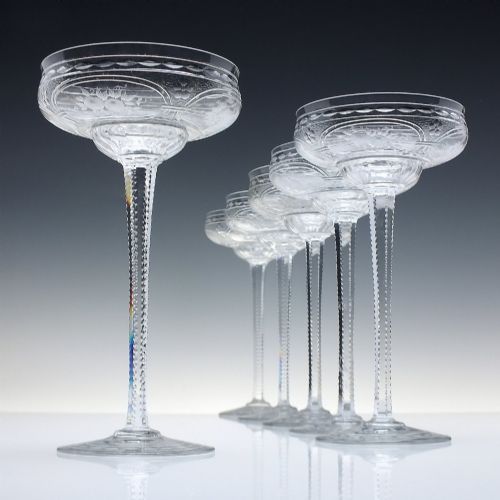
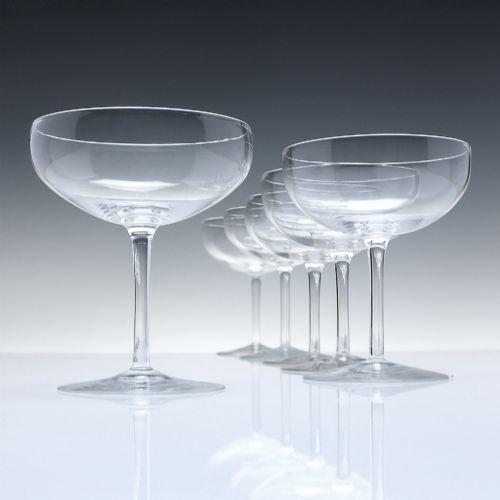
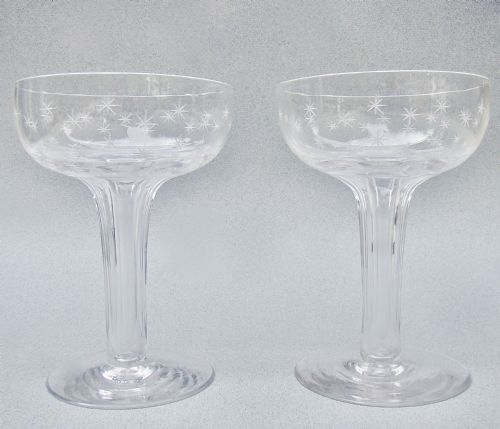
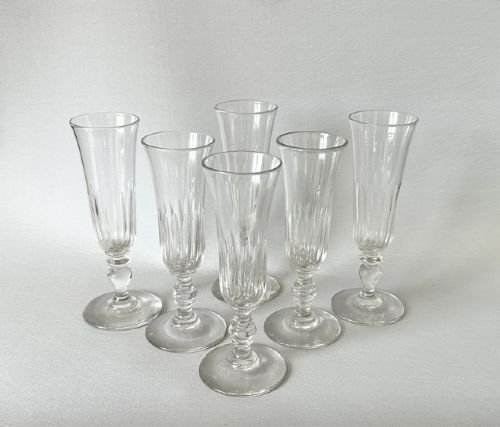
When you search for clear crystal champagne glasses, you encounter a range of drinking vessels spanning the Georgian, Victorian, Edwardian and Art Deco eras. These pieces appear as tall flutes, shallow coupes, and wide bowls designed for sparkling wine.
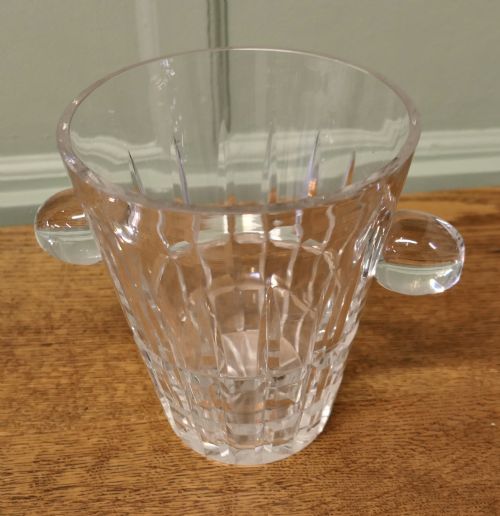
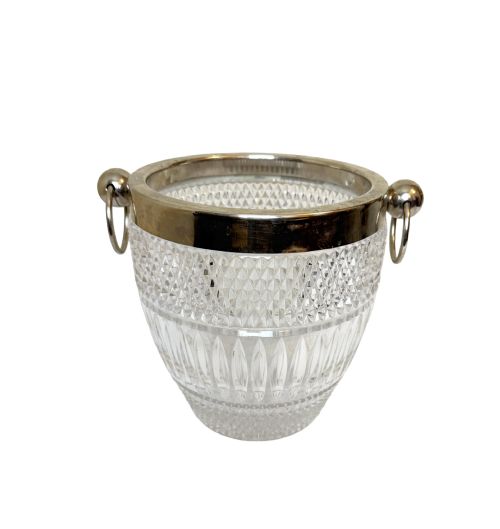
The selection includes matched sets and pairs originating from English and French makers. Forms stretch from eighteenth-century pedestal stems to twentieth-century ice buckets and coolers.
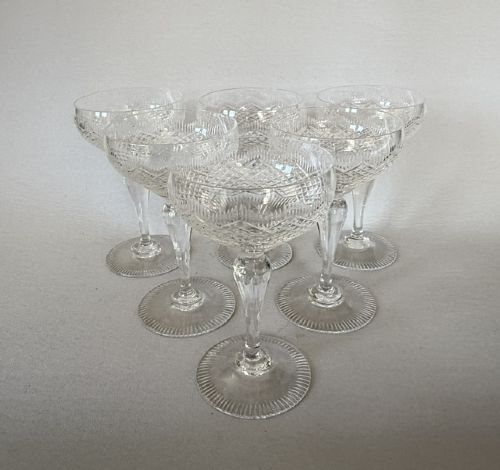
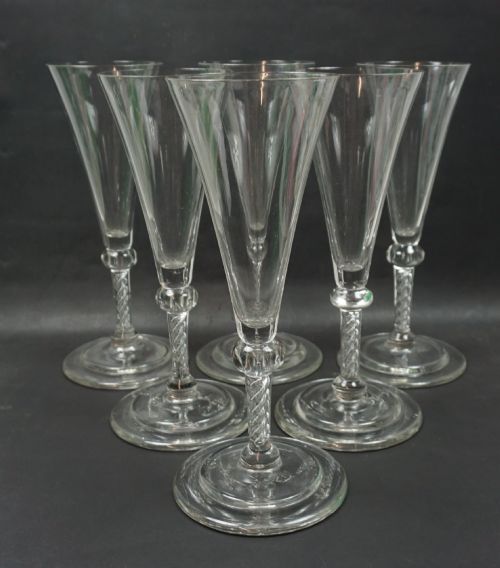
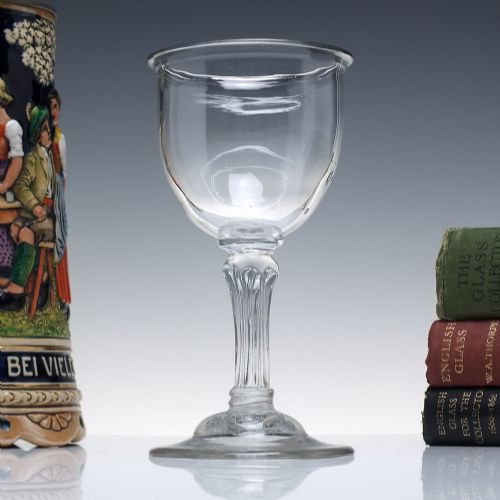
Victorian and Edwardian examples dominate the selection, often featuring wheel-engraved decoration or heavy facet cutting. Earlier Georgian pieces introduce air twist and mixed twist stems into the mix.
Distinctions in manufacture and form
Quality rests on the depth and crispness of the cutting, the clarity of the crystal, and the balance of the stem. Heavy lead crystal provides a ringing tone and substantial feel that lighter glass lacks.
Consistency across a matched set distinguishes finer groups from casual assemblages. The precision of engraved motifs, such as convolvulus or stars, separates standard production from exceptional output.
Listings feature lead crystal, cut glass, and silver plate across periods spanning from Georgian to Art Deco.
Richardsons Birmingham·Moser Crystal·Otto Prutscher·Wiener Werkstätte
The Clear Crystal Champagne Glasses Glossary
- Champagne coupe
- A shallow, broad-bowled glass designed for sparkling wine. This form was particularly popular during the Victorian and Edwardian periods.
- Air twist
- A decorative stem enclosing spiral threads of tiny air bubbles. This technique is characteristic of eighteenth-century Georgian glassware.
- Lead crystal
- Glass containing lead oxide, which increases brilliance and weight. It allows for deep, sharp wheel cutting.
- Latticinio
- A glassmaking technique featuring fine white or coloured glass threads embedded within clear glass. It creates delicate linear patterns within the vessel.
- Facet cut
- Flat polished planes cut into the surface of the glass. This finish catches and reflects light from multiple angles.
Clear Crystal Champagne Glasses: Frequently Asked Questions
How do I clean antique crystal champagne glasses?
Wash them by hand in warm water using a mild detergent, avoiding sudden temperature changes to protect the glass.
Dry them immediately with a lint-free cloth to maintain the clarity of the crystal and prevent water spots.
Are these glasses safe to use today?
Most antique crystal and glass pieces remain entirely functional for serving champagne and sparkling wine.
Inspect each piece for chips or cracks along the rim before use, handling older lead crystal with appropriate care.
What indicates an eighteenth-century piece?
Eighteenth-century examples often display distinctive stem formations, such as air twists or mixed twists, combined with heavy pedestal bases.
The handle and bowl proportions also reflect the smaller capacities and distinct manufacturing techniques of the Georgian era.