




Vintage Coastal Art
Vintage coastal art captures harbours, seascapes and maritime scenes through oil paintings, watercolours and folk art objects spanning the nineteenth and twentieth centuries.
Vintage Coastal Art
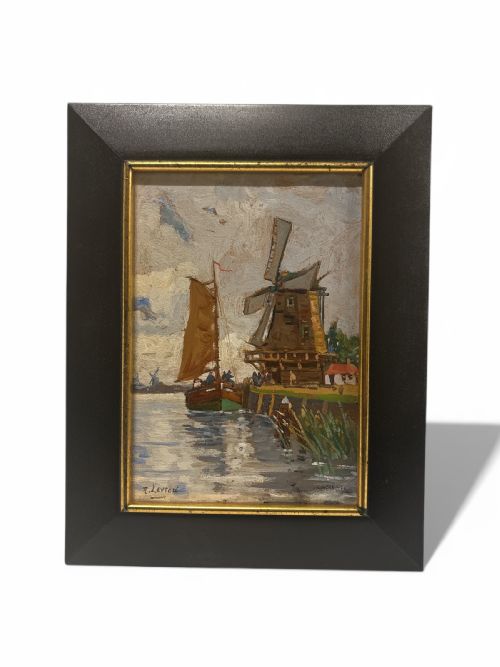
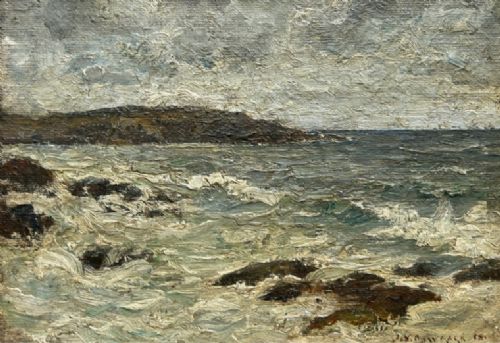
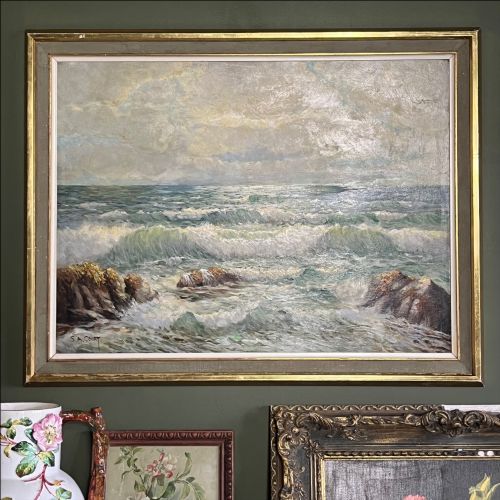
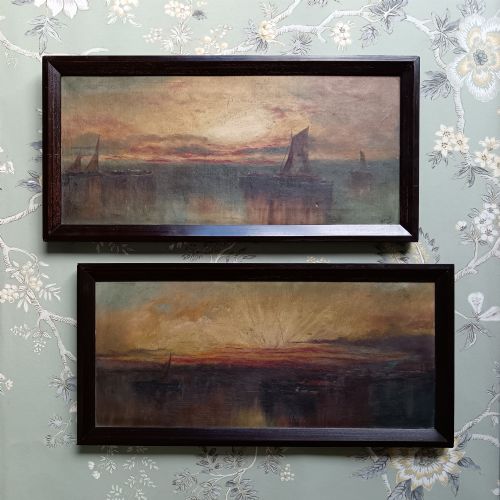
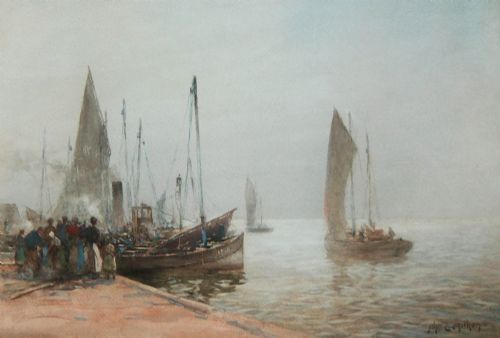
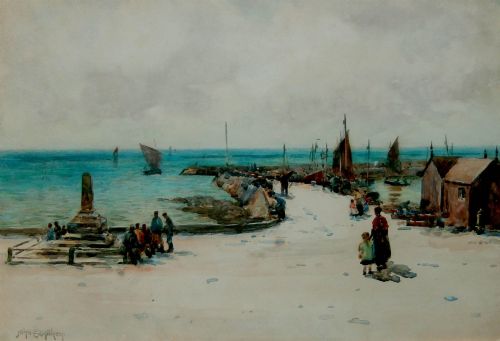
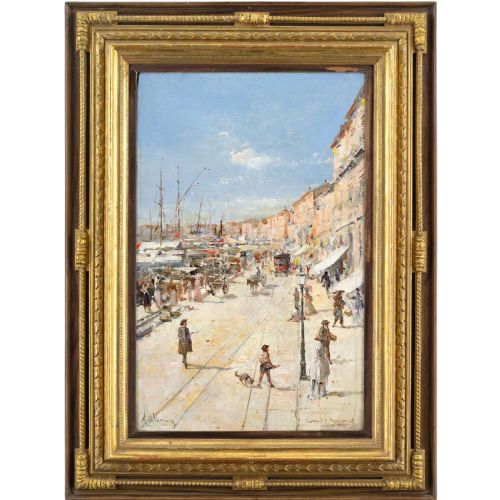
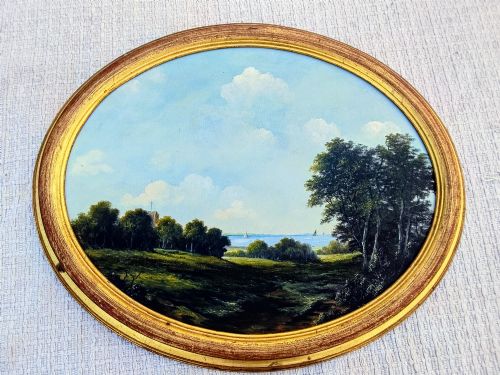
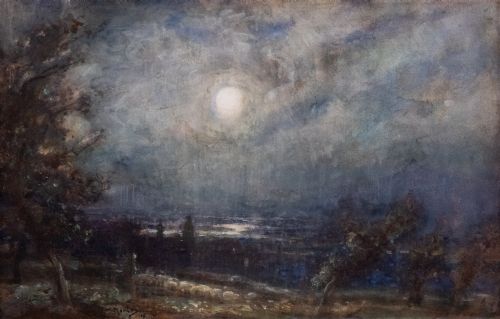
Vintage coastal art encompasses paintings and decorative objects recording harbours, boats and coastal landscapes from the nineteenth and twentieth centuries. Buyers encounter framed oil paintings on canvas and board alongside delicate watercolours and maritime folk art.
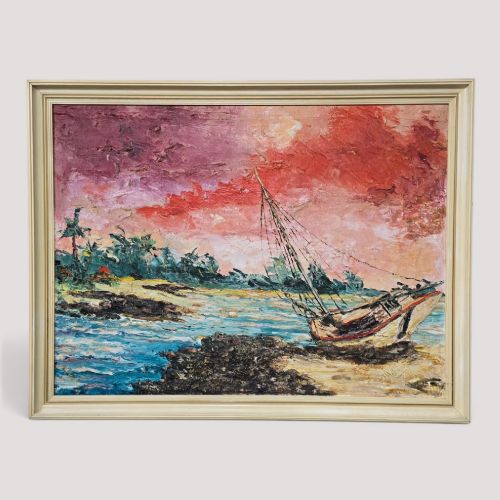
The selections span traditional British and European scenes, featuring depictions of St Ives, Whitby and foreign ports. Works range from nineteenth-century maritime canvases to mid-century modern interpretations of the open sea.
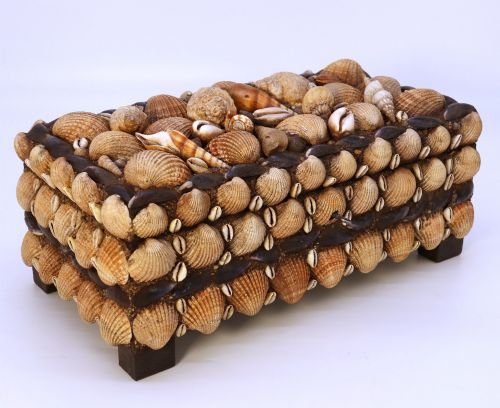
Beyond traditional paintings, the category includes three-dimensional objects like folk art shellwork boxes, ship dioramas and bottled models. These pieces reflect coastal life and maritime trade across successive decades.
How they were made
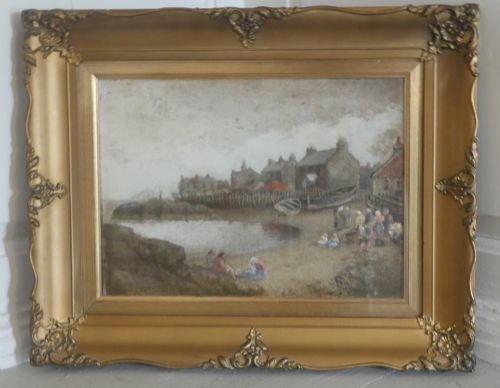
Artists applied oil paint and watercolour onto stretched canvas, paper and wooden boards, often working en plein air to capture immediate atmospheric conditions. Canvases frequently sit within period gilt wood frames that complement the maritime subjects.
Folk art items utilise natural materials gathered from the shore, combining shells and wood to construct decorative boxes, jars and architectural models. Hand-blown glass bottles house detailed ship dioramas assembled with wooden masts and textile rigging.
Listings feature oil paintings, watercolours and folk art objects spanning the nineteenth century to the 1960s, executed on canvas, paper and wood.
What varies in quality
Quality rests in the handling of light and water, where skilled brushwork conveys movement in waves and atmosphere in coastal skies. Masterful compositions capture depth and perspective, distinguishing accomplished artists from amateur recorders.
The integrity of framing and the preservation of original surfaces dictate the desirability of paintings and objects. Intricate detail in folk art shellwork and precise rigging in ship dioramas mark the upper tier of craftsmanship.
Kenneth Cozens·Clifford Hanney·Sidney A Court·James E Aitken·William Banks Fortescue·Thomas William Morley·Clive Browne·Peter Brannan·Paul Bret·Bernard Benedict Hemy·Thomas Maidment·Cecil Allan Mould·William Matthison·William Henry Williamson·John Holland·Frank Kelsey·Walter Goodin·Abraham Hulk I·F A Roylance
The Vintage Coastal Art Glossary
- En plein air
- Painting outdoors to capture natural light and direct observation of the coastal landscape. This method brings immediate atmosphere to oil paintings and watercolours.
- Maritime diorama
- A three-dimensional representation of ships or coastal scenes housed within a glass bottle or cabinet. Artisans construct these miniature models using wood, thread and paper.
- Impasto
- Paint applied thickly to a canvas or board, leaving visible brush or palette knife marks. This technique adds texture and movement to depictions of rocky seascapes.
- Shellwork
- Decorative art created by adhering seashells to wooden foundations or objects such as boxes and churches. Popular in coastal communities during the nineteenth and early twentieth centuries.
- Gilt wood
- Wood carved and coated with a thin layer of gold leaf or metallic paint. Frames treated this way frequently accompany nineteenth-century oil paintings.
Vintage Coastal Art: Frequently Asked Questions
What periods do these coastal artworks cover?
The selections span from the nineteenth century through the Edwardian era and into the mid-twentieth century. Works reflect changing artistic styles across these decades.
Paintings from the 1900s and 1920s sit alongside mid-century interpretations, offering a broad view of coastal depiction.
How are maritime dioramas constructed?
Makers build miniature wooden ships with fabric sails and thread rigging to fit through narrow bottle necks. Artisans then pull strings inside the glass to raise the masts into position.
These pieces often rest on wooden plinths and date from the early twentieth century.
Where were most of these scenes painted?
Artists painted British coastal locations including St Ives, Whitby, Scarborough and Looe. French, Italian and Sicilian harbours also appear frequently in the available watercolours and oils.
Painters travelled to working fishing ports to record daily maritime activities.
How should I display vintage shellwork boxes?
These delicate folk art objects require placement away from direct sunlight and excessive humidity to preserve the natural shells and wooden structures. Stable shelf placement protects fragile exterior decoration.
Keeping them in temperate interior environments ensures the longevity of nineteenth-century adhesives.