






Coastal Oil Painting
A coastal oil painting brings the atmosphere of the shore indoors through pigment applied to canvas or board.
The Nature of Coastal Oil Paintings
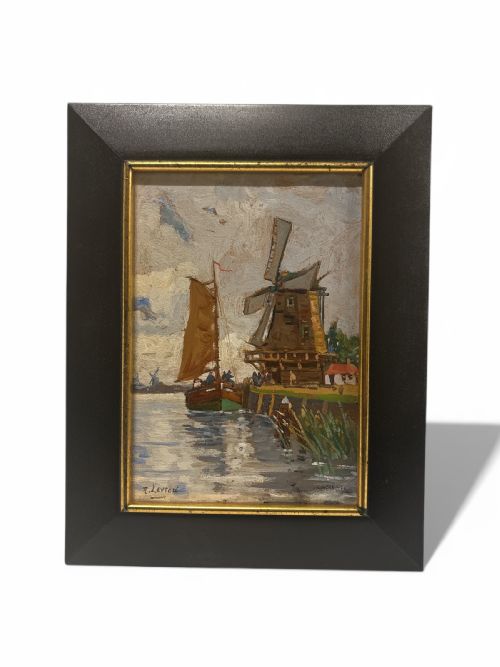
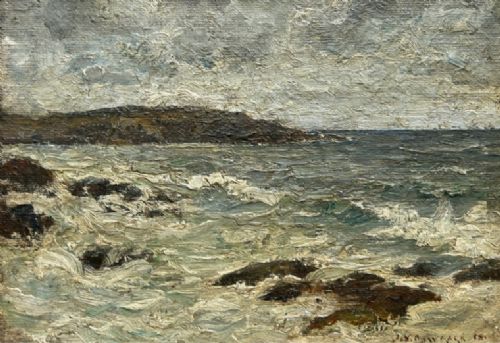
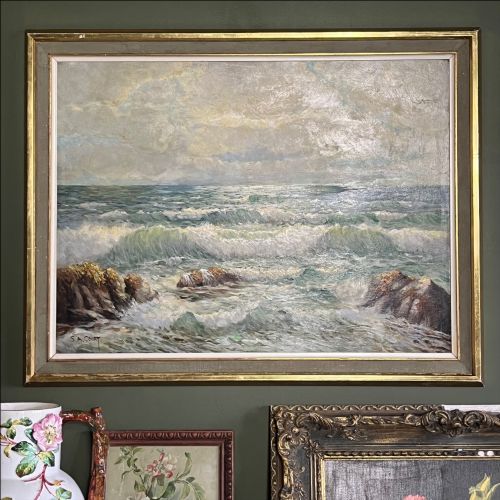
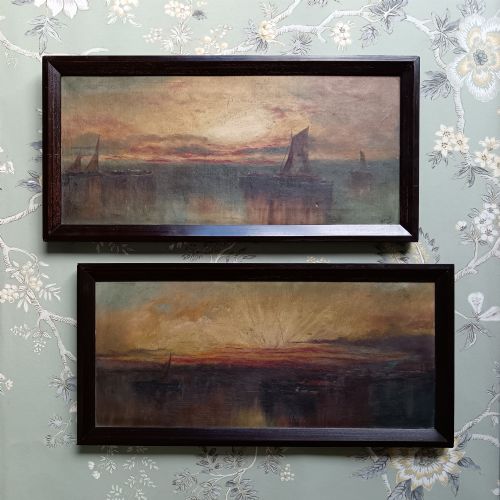
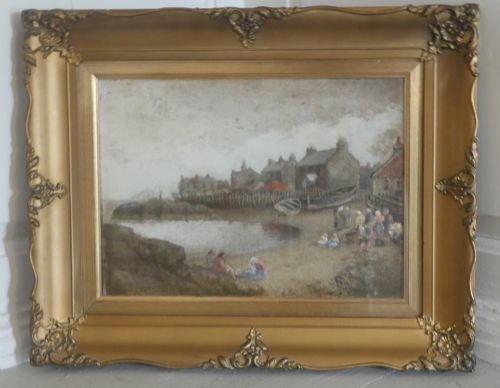
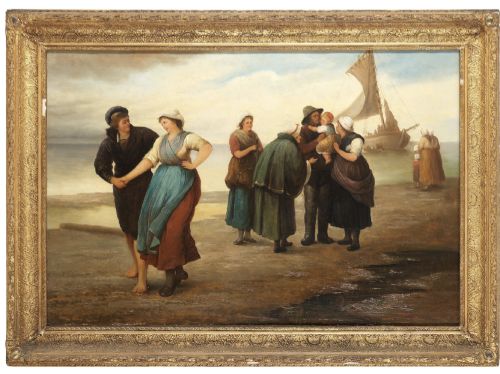
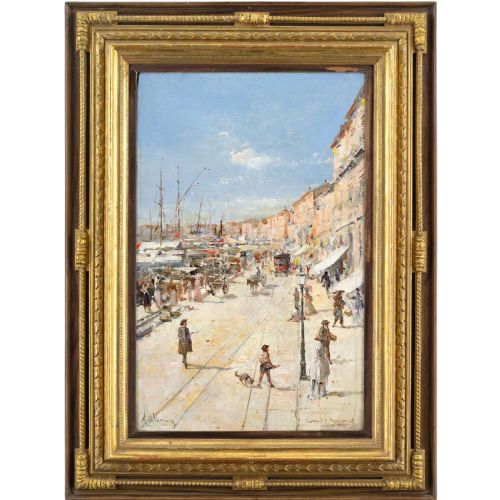
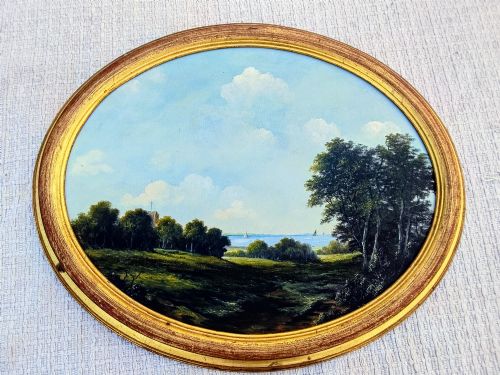
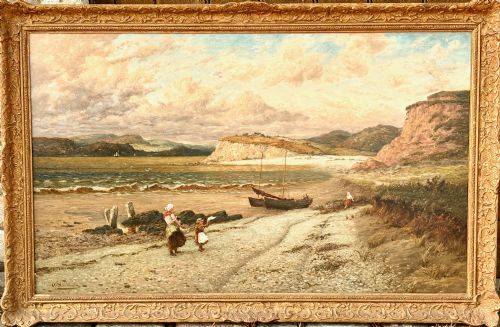
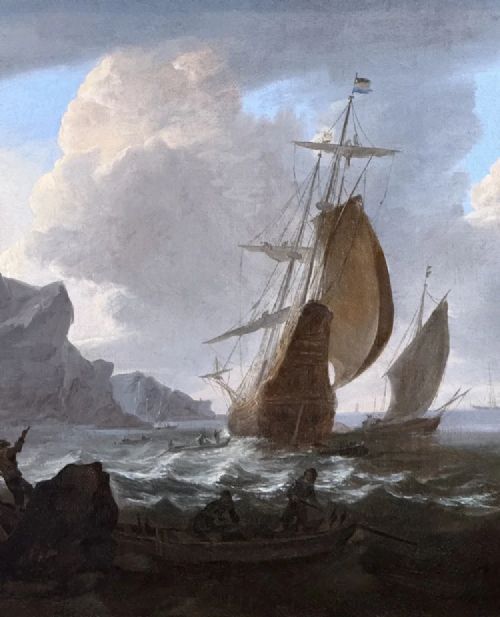
A coastal oil painting captures maritime views, beaches, harbours, and cliffs across various historical periods. The selection spans nineteenth-century realism, Victorian marine art, and mid-century British and French modernism.
The most common examples on this page date from the nineteenth century and the mid-twentieth century. Subjects range from quiet Dutch fisher girls and stormy seas to serene coastal paths and piers.
Makers and schools from Britain, France, Denmark, and Germany appear throughout the records. Works frequently depict specific locations such as Kimmeridge Bay, Tenby, and Scarborough alongside anonymous seascapes.
Materials and Technique
Artists utilised oil paint on diverse supports including canvas, canvas board, wood panels, and board. Canvases are often stretched over wooden frames, while smaller works frequently appear on prepared wooden boards.
Many pieces retain their original surrounds, which include wood and gilded frames featuring floral or rococo motifs. The application of paint varies from smooth nineteenth-century academic finishes to textured mid-century impressionist brushwork.
Retail Price Guide 2026
Typical UK retail prices for coastal oil painting, calculated from the Sellingantiques database of over a million retail prices indexed since 2003. This retail price guide relies exclusively on Sellingantiques data; no external sources or auction records are used, so the figures do not describe the wider market.
Nineteenth-century realism and mid-century impressionism represent the primary stylistic approaches found within the archive of sold pieces.
Judging Quality and Execution
The caliber of a piece rests upon the handling of light, atmosphere, and maritime perspective. Superior works convey the movement of water and the subtlety of coastal weather without relying on rigid formulas.
The relationship between the painting and its frame influences the overall integrity of the object. Period frames that complement the palette and era of the canvas add considerably to the visual weight of the work.
Peter Brannan·James Fry·Arthur Joseph Meadows·Benjamin Williams Leader
The Coastal Oil Painting Glossary
- Canvas
- A closely woven fabric stretched across a wooden frame to serve as a support for oil paint. It provides a flexible yet durable surface for brushwork.
- Board
- A rigid flat panel made of wood or compressed material used instead of canvas. Artists often utilised boards for smaller plein air studies.
- Impressionism
- A style of painting emphasising light and its changing qualities rather than minute detail. Practitioners prioritize visible brushstrokes and atmospheric conditions.
- Marine Art
- Works depicting ships, coastal views, and the sea. This genre encompasses both calm harbours and dramatic naval battles or storms.
- Gilt
- A thin layer of gold leaf applied to frame mouldings or wood surfaces. It provides a decorative border that isolates the painting from the surrounding wall.
Frequently Asked Questions
What subjects appear in these paintings?
The works depict beaches, harbours, cliffs, and maritime vessels. Scenes range from bustling fishing villages to quiet coastal paths and open seas.
Specific locations in Britain, France, and Denmark frequently anchor the compositions, alongside romantic or impressionistic interpretations of the shore.
How do I date a coastal oil painting?
Dating relies on stylistic markers, framing techniques, and the type of support used. Nineteenth-century works often feature detailed realism, whereas mid-century pieces show looser impressionist brushwork.
Signatures, inscriptions on the reverse, and the construction of the wooden stretcher or panel provide further chronological clues.
Where were these paintings displayed?
These artworks were originally created for domestic interiors, country houses, and Victorian drawing rooms. They brought the perceived health and tranquility of the seaside into urban homes.
Owners typically hung them in principal reception rooms where heavy gilt frames would complement formal interior decoration.
How should I care for an oil painting?
Protect the canvas or board from direct sunlight and dramatic fluctuations in humidity. Keep the surface clear of dust using a soft, dry brush without applying cleaning liquids.
Leave conservation work and the cleaning of aged varnish to professional restorers to avoid damaging the original pigment.