



Dutch Genre Painting
Dutch genre painting brings domestic scenes and tavern life into a room, offering a quiet window into past everyday moments.
What Dutch genre painting is
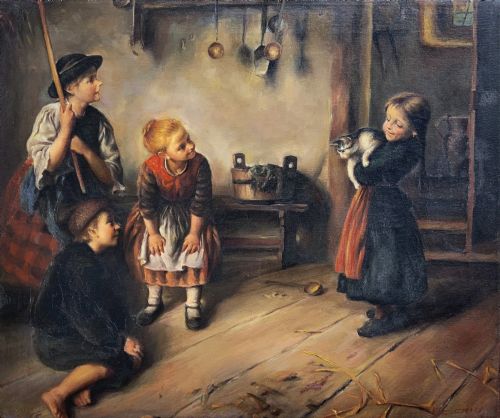
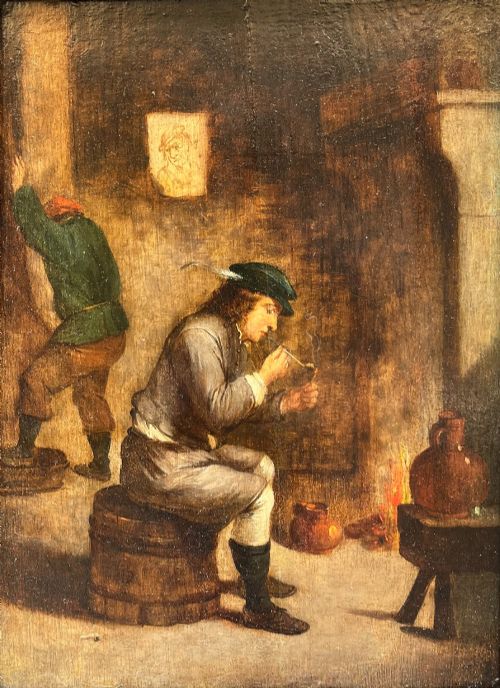
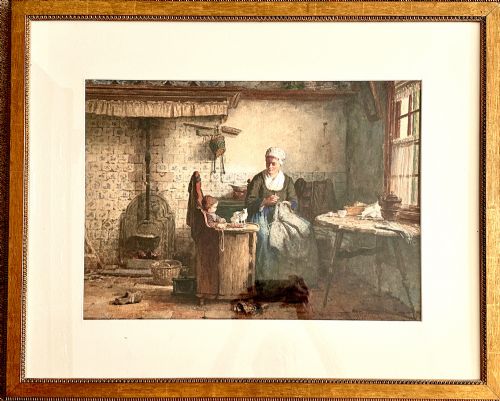
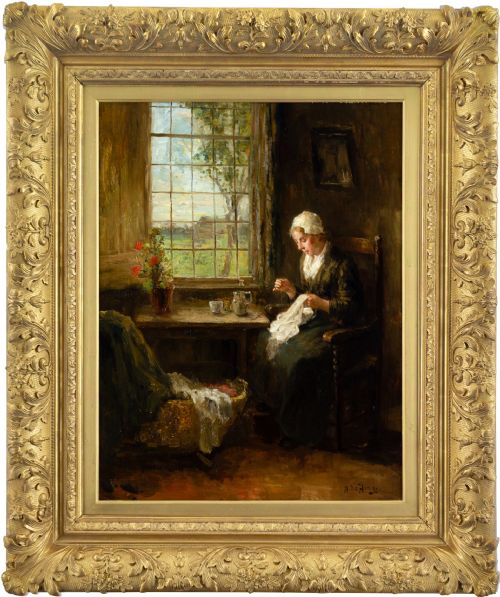
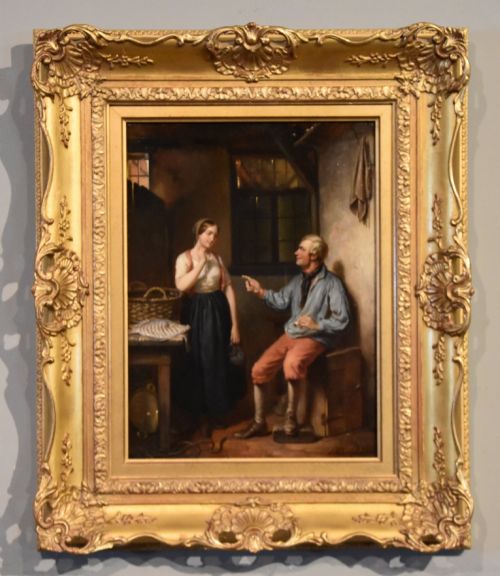
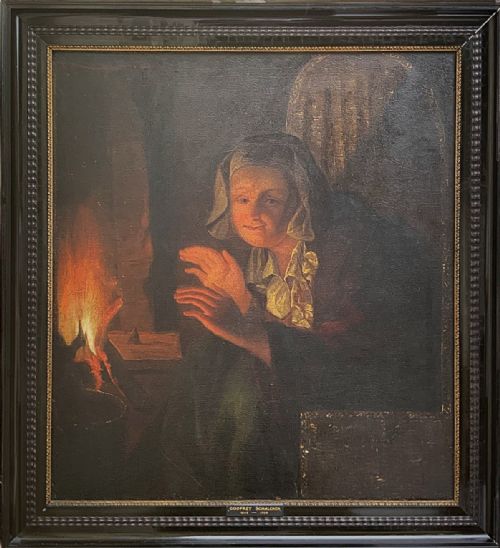
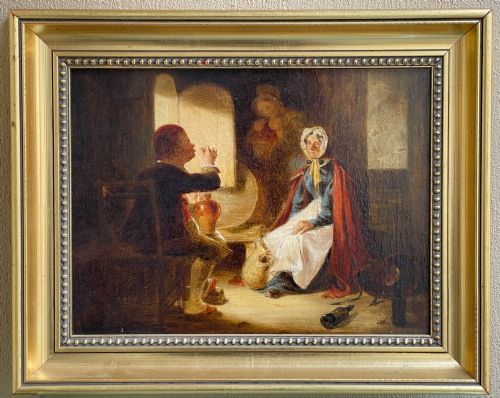
Dutch genre painting captures everyday scenes of domestic life, figures in taverns, and individual portraits set within specific historical aesthetics.
The pieces on this page span several periods, including the nineteenth century, seventeen-fifties, and nineteen-twenty, alongside Victorian examples.
Works appear in styles such as the Dutch Golden Age, nineteenth-century realism, the Hague School, and the Northern Renaissance revival.
How they were made
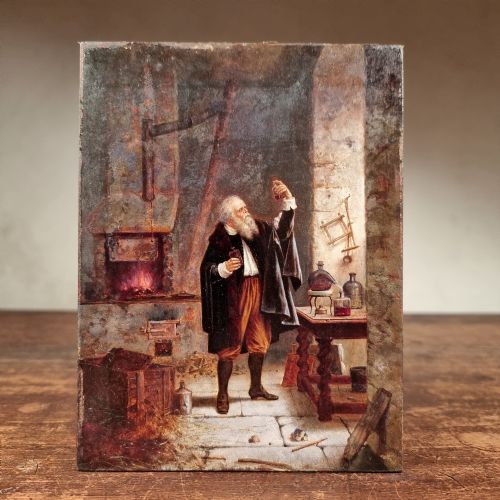
Artists worked primarily with oil paint applied to canvas, wood panels, or copper substrates, capturing fine details in portraiture and interior settings.
Many frames incorporate gilt and giltwood, complementing the rich tones of the oil paintings they enclose.
Retail Price Guide 2026
Typical UK retail prices for dutch genre painting, calculated from the Sellingantiques database of over a million retail prices indexed since 2003. This retail price guide relies exclusively on Sellingantiques data; no external sources or auction records are used, so the figures do not describe the wider market.
The listings on this site feature oil paint applied to canvas, wood, and copper across the nineteenth century, seventeen-fifty, and nineteen-twenty.
What varies in quality
Quality rests in the handling of light and shadow, the precision of brushwork in facial expressions, and the structural integrity of the canvas or wooden panel.
Works originating from established circles or following specific historical manners demonstrate greater depth in composition compared to simpler interpretations.
Bernard De Hoog·David Teniers·Joachim Bueckelaer·Jozef Israëls·Reinier de la Haye
The Dutch Genre Painting Glossary
- Genre painting
- Depiction of aspects of everyday life by depicting ordinary people engaged in common activities. These works focus on scenes from daily existence rather than grand historical or mythological narratives.
- Giltwood
- Wood that has been treated with gold leaf or a gold-coloured finish. This material is frequently found on the decorative frames enclosing period oil paintings.
- Hague School
- A group of artists from the second half of the nineteenth century who worked in The Hague. Their style was heavily influenced by the realism of the French Barbizon school.
- Northern Renaissance revival
- An artistic movement looking back to the visual traditions of northern Europe. It reinterprets earlier methods of portraiture and panel painting.
Frequently Asked Questions
What is a Dutch genre painting?
It is an artwork depicting everyday scenes, such as tavern interiors, domestic moments, or portraits of figures like musicians and fisher girls.
These pieces reflect specific historical styles ranging from the Dutch Golden Age to nineteenth-century realism and the Hague School.
What materials were used for these paintings?
Artists used oil paint on various supports including canvas, prepared wood panels, and copper plates.
Frames were frequently constructed from wood and embellished with gilt or giltwood finishes.
How do I identify the period of a painting?
Dating relies on stylistic clues, the type of support material used, and recorded artist circles or historical references.
Permanent markers like oak panels often point toward eighteenth-century origins, while canvas works frequently align with the Victorian era or nineteenth-century realism.
How should I care for an antique oil painting?
Keep the artwork away from direct sunlight and fluctuating humidity levels to protect both the oil paint and the wooden support or panel.
Dust the gilt frame gently with a dry, soft cloth without applying liquid cleaners directly to the painted surface.