



Beige Coastal Wall Art
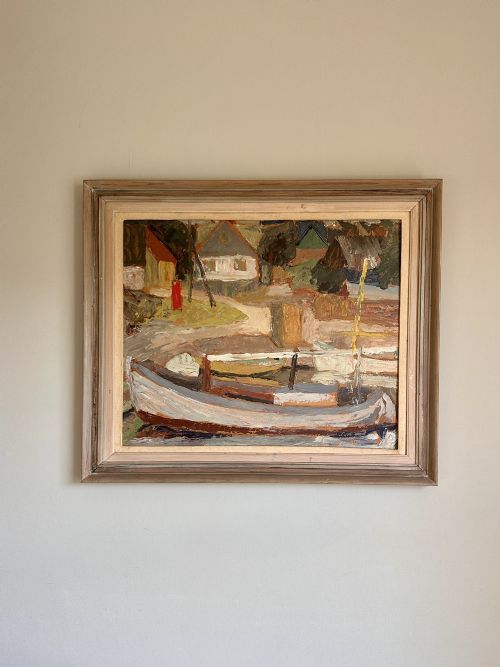
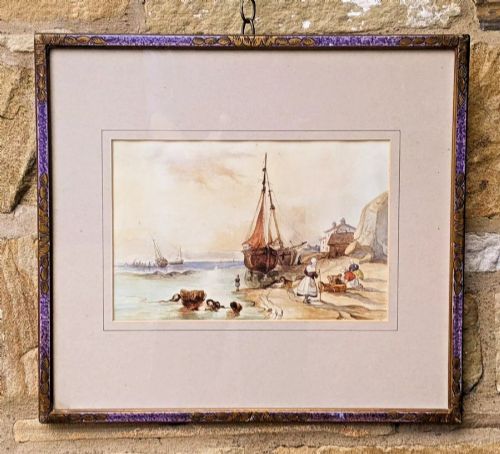
These beige coastal wall art pieces bring maritime life and shorelines into your rooms through historic paintings.
Beige Coastal Wall Art
When you search for beige coastal wall art, you encounter historic paintings capturing harbours, rivers, and shores. The pieces range from nineteenth-century watercolours to twentieth-century oils and gouache works.
You are most likely to meet watercolours on paper and oil paintings on canvas or board. These works depict scenes from British landscapes, Scottish waters, and Italian coastal towns.
The selection includes traditional marine art alongside modernist interpretations of sailboats and beaches. Artists render these coastal environments using restrained palettes dominated by neutral tones.
How they were made
Makers applied watercolour pigment, ink, and oil paint to paper, canvas, and wood panels. Some compositions incorporate gold leaf highlights to catch the light within the frame.
Artists utilised traditional techniques associated with the Scottish School, Newlyn School, and British Impressionism. They captured light and atmosphere using fluid washes of watercolour or textured strokes of oil paint.
Beige Coastal Wall Art Retail Price Guide 2026
Typical asking prices for beige coastal wall art among the pieces listed under this phrase on Sellingantiques today, from the lower quarter to the upper quarter. They describe what is for sale here now, not the wider market.
Sailboats brave low tides across the decades, frozen in gouache and oil.
What varies in quality
The distinction between ordinary and exceptional works lies in the handling of light, brushwork, and spatial depth. Stronger pieces demonstrate confident draughtsmanship and a sure command of tone.
Condition and preservation of the paper or canvas also influence the standing of a piece. Works retaining their original pigment vibrancy and clear attribution carry greater visual authority.
William Frederick Settle·Donald McIntyre·Leslie Rackham·William Greaves·Cuthbert Crossley
The Beige Coastal Wall Art Glossary
- Watercolour
- A paint consisting of a pigment suspended in a water-soluble vehicle. It is traditionally applied to paper to create translucent washes of colour.
- Gouache
- An opaque water-based paint that includes a white pigment filler, producing a heavier and more matte finish than standard watercolour.
- Newlyn School
- An art colony based in Cornwall during the late nineteenth and early twentieth centuries. Artists associated with this movement painted en plein air, focusing on coastal life and local fishermen.
- Marine art
- Depictions of ships, harbours, and seascapes. This genre encompasses historical shipping scenes and coastal landscapes.
Beige Coastal Wall Art: Frequently Asked Questions
What periods do these coastal paintings span?
The available works cover a timeline from the nineteenth century through the mid twentieth century. Artists worked across periods including the Victorian era, the interwar years, and the post-war decades.
This broad chronological range allows collectors to select pieces reflecting specific historical artistic movements, from traditional marine art to British modernism.
What materials were used in these artworks?
Makers worked primarily with oil paint and watercolour pigment on supports such as paper, wood, and canvas. Some examples incorporate ink and gold leaf.
These traditional materials dictate the handling and framing requirements necessary for preserving the longevity of each painting.
How should I hang and light these paintings?
Position these works away from direct sunlight to protect delicate watercolours and oil pigments from fading. Use picture lights or ambient room lighting to illuminate the neutral tones.
Pairing these historic coastal scenes with simple wall colours lets the subtle palettes of the paintings stand out.
How do I identify Newlyn School works?
Newlyn School paintings often depict Cornish coastal scenes, harbour life, and local fishermen using realistic oil techniques. Look for brushwork that captures natural light outdoors.
Signatures or historical association with the Cornish artist colony further confirm the provenance of these pieces.